

ARTS AND CULTURE INFORMATION GATEWAY
Immerse yourself in the colorful world of art and culture! From traditional heritage to contemporary works, discover uniqueness that reflects the nation's identity and identity
 Aras 6 Kiri, Wisma PERKESO, No 26, Jln Susur 5, Off Jalan Tun Abdul Razak, Larkin, 80200 Johor Bahru, Johor Darul Takzim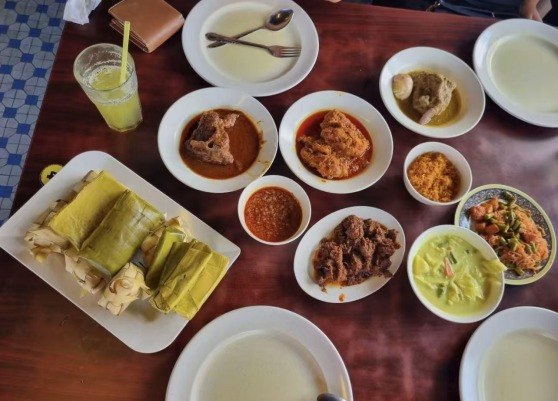
Picture
1
Video
No record
Today's Visitor
62
Number of Visitors
1593
Introduction and history
- Burasak, also known as buras or burasa, is a heritage food of the Bugis community, consisting of rice cooked with rich coconut milk. This process gives the dish its rich, savory (lemak) flavor and a texture that is dense yet soft, making it very different from lontong, which is plain, even though both are wrapped in banana leaves. Its preparation is quite meticulous: the rice, coconut milk, and a little salt for flavor are often partially cooked first before being wrapped neatly in banana leaf sheets, and this bundle is usually tied with raffia string to keep it from opening. The packets are then boiled for several hours until fully cooked and truly dense.
- This dish has a long history closely tied to the maritime traditions of the Bugis people. It is well-known among the Bugis community that began settling in Malaya in the 16th century, brought by these renowned traders and seafarers from the Sulawesi Islands, Indonesia. The food is said to have been a primary choice for provisions during voyages due to its dense nature and ability to be stored for long periods, making it an ideal source of energy for sea journeys. In the state of Johor, burasak has evolved from being a sailor's provision to a celebrated special occasion dish that symbolizes heritage. It is now one of the essential dishes served during major celebrations like Hari Raya Aidilfitri and Aidiladha. Burasak is rarely eaten on its own; it is often enjoyed with various other side dishes, such as chicken rendang, beef gulai, or serunding (meat floss), making it a complete and filling meal.
- Burasak plays a significant role that extends beyond its function as food; it is a symbol of unity and a clear marker of ethnic identity in the Bugis culture in Johor. This social function is especially evident during its preparation. Preparing and making burasak is a complex process, requiring cooperation and a long time, often taking many hours from cooking the coconut milk to boiling. Therefore, it often becomes an activity that strengthens family and community bonds, where recipes and skills are passed down from one generation to the next.
- In terms of diet, burasak serves as the main carbohydrate component in festive feasts and social gatherings. Its distinct savory taste makes it the perfect complement to other Bugis dishes. It is often served with flavorful side dishes like ayam masak likku (chicken cooked with grated galangal), spicy and sour wolf herring asam pedas, and coconut or meat serunding. This combination makes burasak an essential element that completes and perfects the entire feast.
-
Large pot
Steamer
Banana leaves
Raffia string or other ties
Rice
Coconut milk
Salt
This method produces a dish with a rich, savoury coconut flavour and a texture that is firm yet tender, setting it apart from the milder-tasting lontong, despite both being wrapped in banana leaves. The preparation requires careful attention: the rice, coconut milk, and a small amount of salt are first partially cooked, after which the mixture is neatly wrapped in young Nipah banana leaves. These parcels are then secured with raffia string to prevent them from coming undone. They are subsequently boiled for several hours until thoroughly cooked and achieve a dense, cohesive form.
Wash the rice until clean.
Cook the rice with coconut milk and salt until half-cooked, similar to making nasi lemak.
Take a few spoons of the half-cooked rice and place it on a banana leaf.
Wrap it neatly like a lepat pisang, ensuring the packet is flat and compact.
Gather several small packets and wrap them again into a larger bundle using a larger banana leaf.
Tie the large bundle securely with a string.
Boil the burasak bundles in a large pot for 7 to 10 hours to achieve a soft texture and ensure they last longer.
Each burasak should not be tied too tightly, as this may damage the banana leaf when the rice expands during the boiling process
-
Reference Source
Bahan Bacaan
Malik, H. (2021). Burasak: Bimbang mati ditelan zaman, pengusaha di Pontian pertahan keunikan menu tradisi. Astro Awani. https://www.astroawani.com/gaya-hidup/burasak-bimbang-mati-ditelan-zaman-pengusaha-di-pontian-pertahan-keunikan-menu-tradisi-391246
Suhana Mohd Ariffin. (2024). Sajian Burasak Pelengkap Juadah Aidilfitri. https://mediadigitaljohor.gov.my/sajian-burasak-pelengkap-juadah-aidilfitri/
Location
State JKKN Contact Information
Puan Norazlina binti Othman
Cultural Officer
Jabatan Kebudayaan dan Kesenian Negara, Johor
Aras 6 Kiri, Wisma PERKESO
No 26, Jalan Susur 5
Off Jalan Tun Abdul Razak, Larkin
80200 Johor Bahru
JOHOR DARUL TAKZIM
07-224 8270 / 223 1249
Use the form below to contact the Informant/Figure/Editor/Researcher directly. We will respond to your inquiry as soon as possible!


