

ARTS AND CULTURE INFORMATION GATEWAY
Immerse yourself in the colorful world of art and culture! From traditional heritage to contemporary works, discover uniqueness that reflects the nation's identity and identity
 Fakulti Muzik dan Seni Persembahan, Universiti Pendidikan Sultan Idris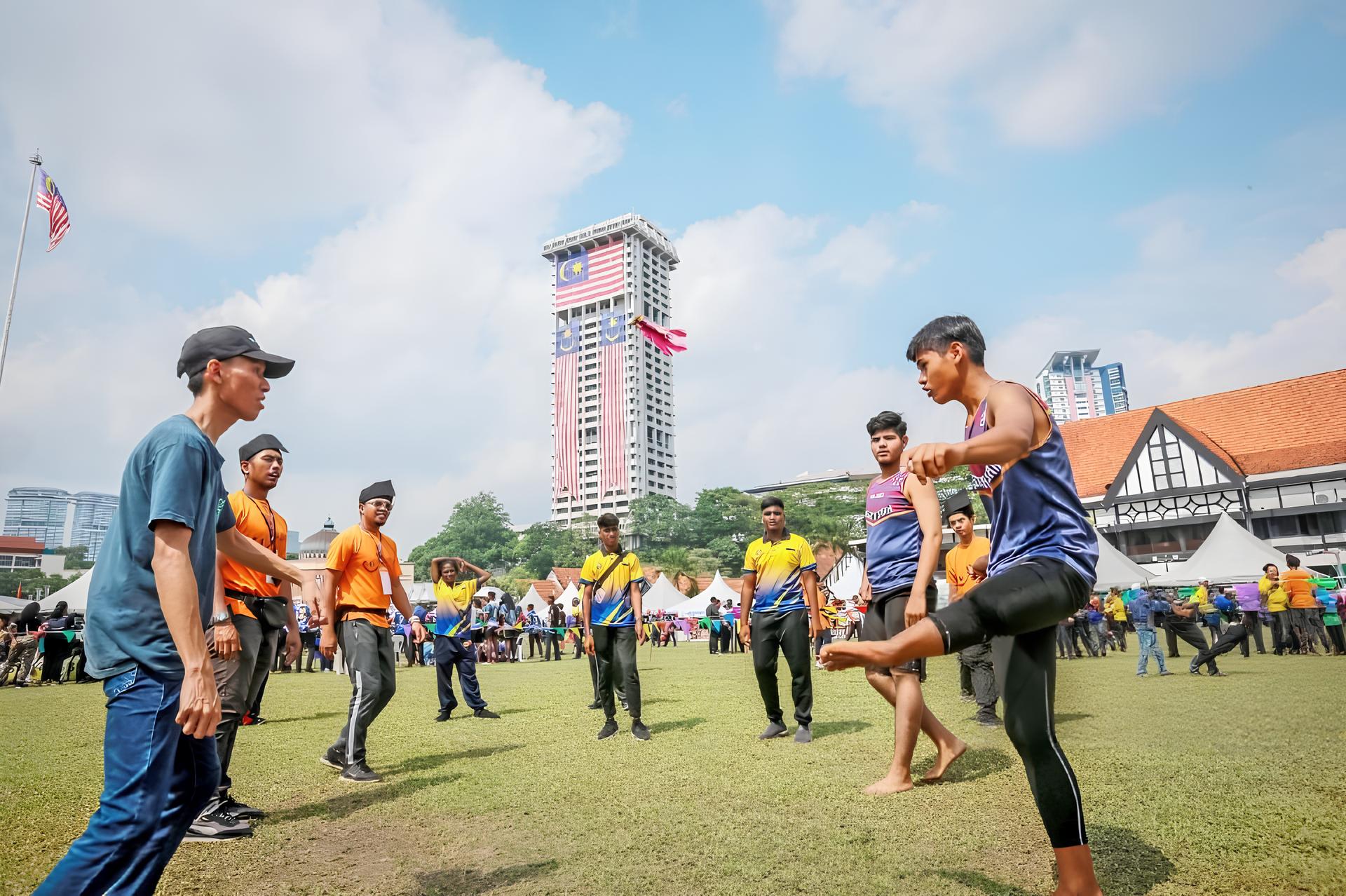

Picture
8
Video
No record
Today's Visitor
618
Number of Visitors
1754
Introduction and history
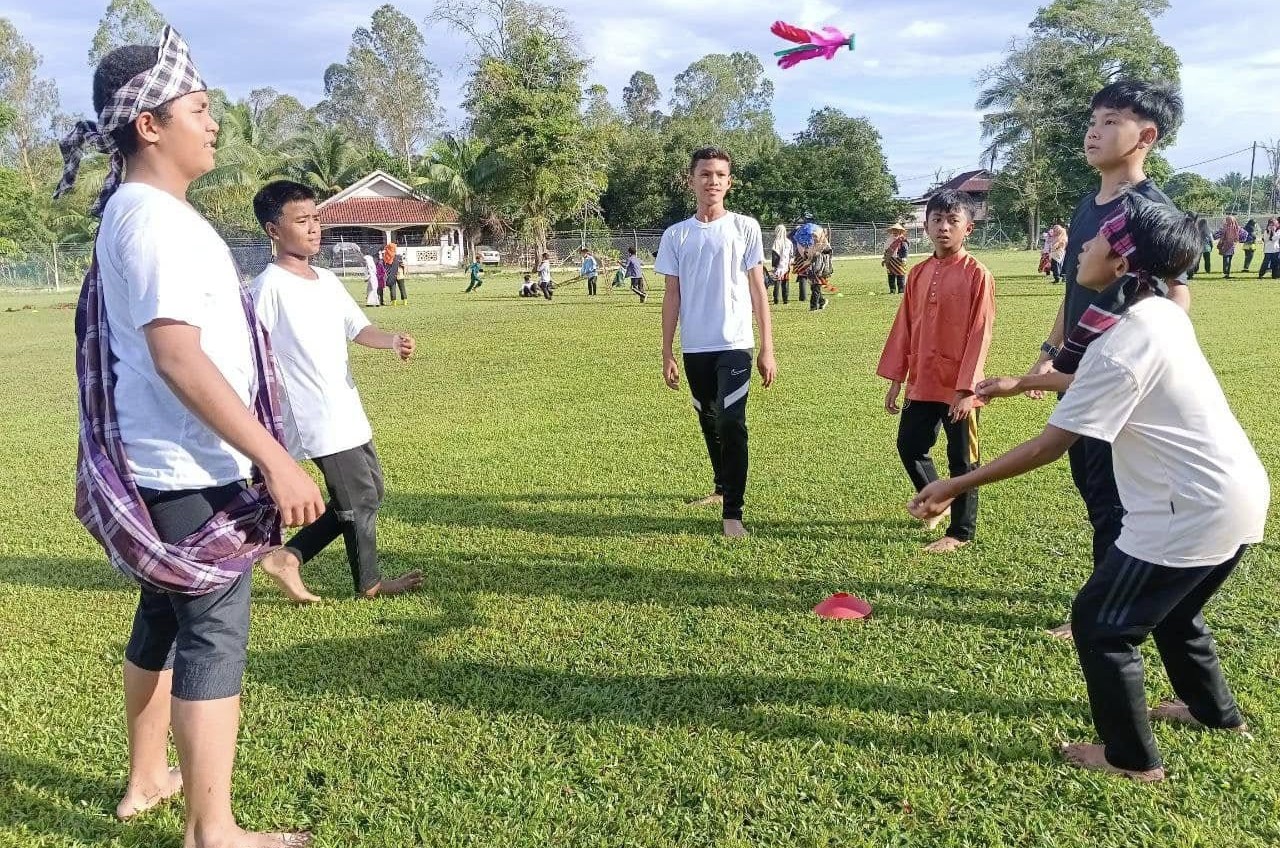
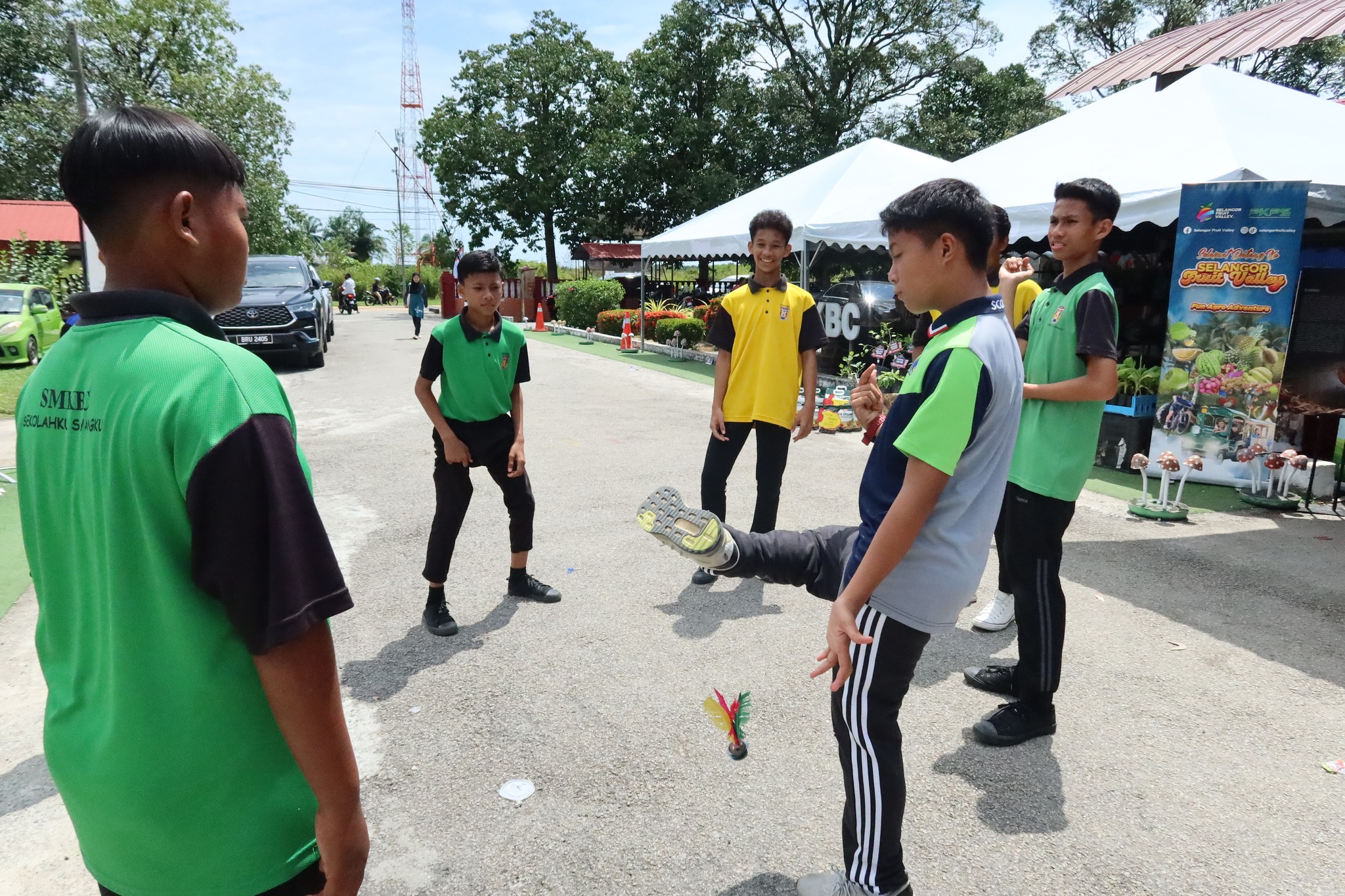
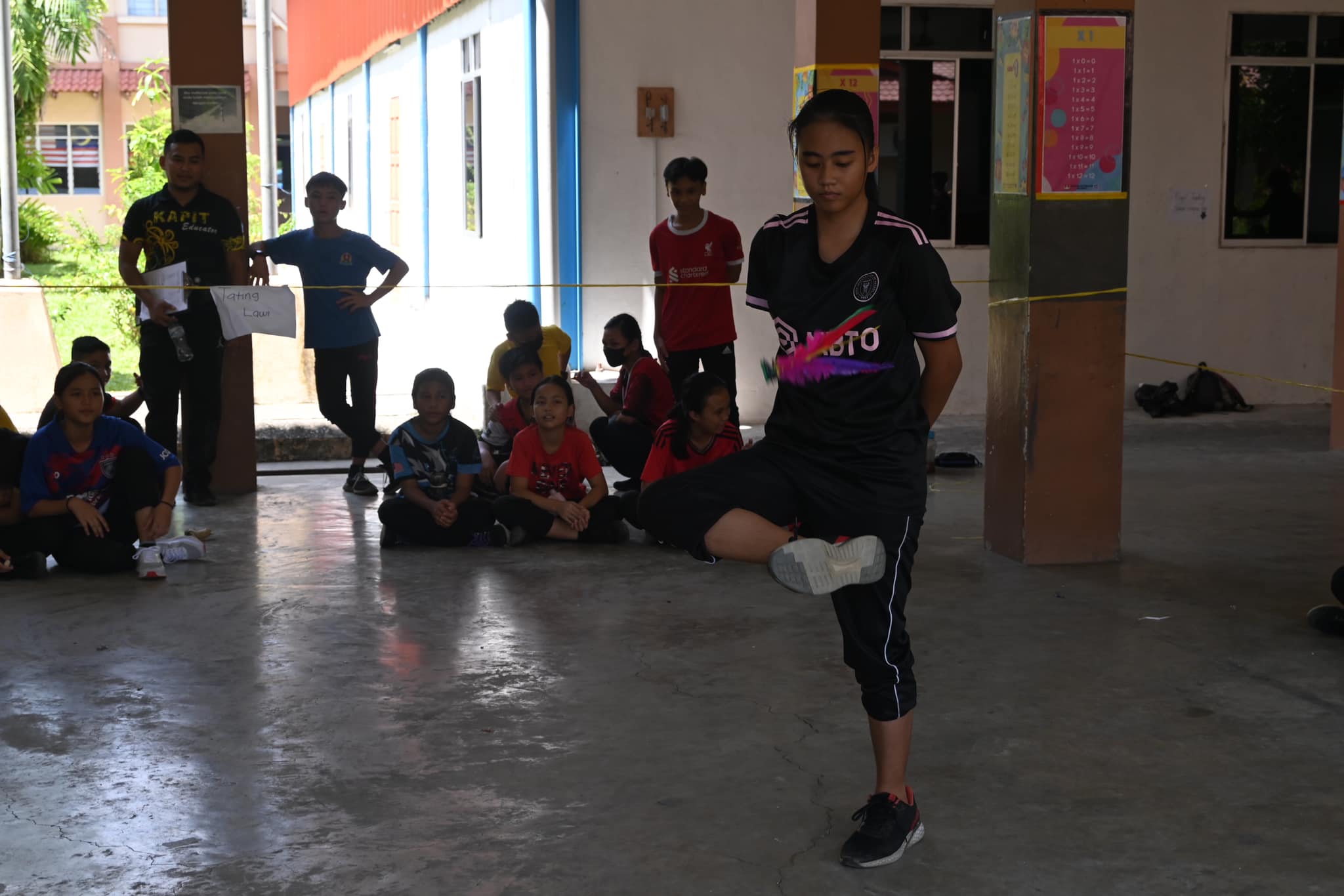
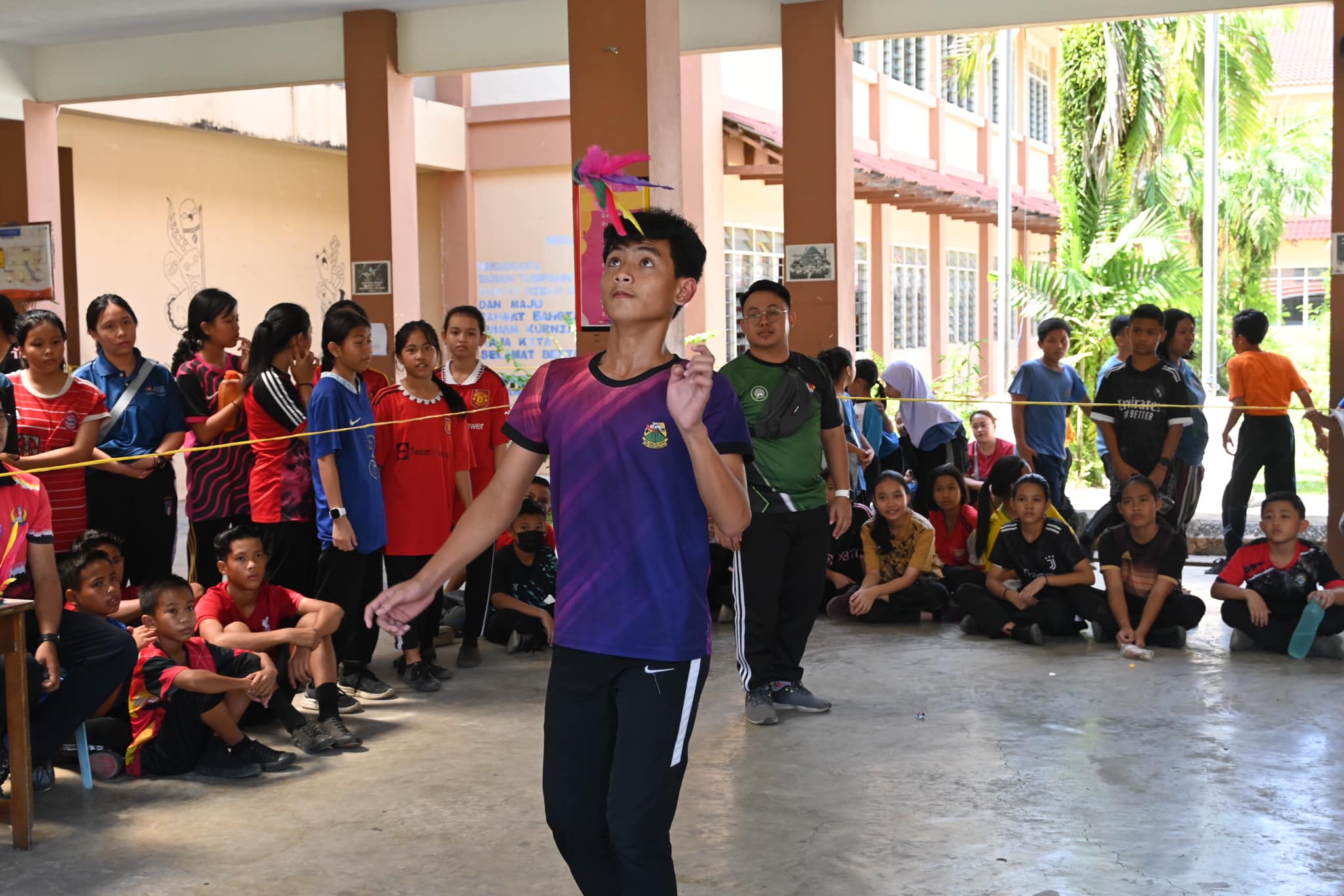
- Tating Lawi is one of the traditional games of the Malay community in Penang, passed down from generation to generation. This game belongs to the category of folk games that are simple in nature and more commonly favoured by boys, as it requires balancing skills, foot agility, and physical endurance. Nevertheless, it remains open to everyone regardless of age or gender. The uniqueness of this game lies in its simplicity and flexibility, as it can be played in any open space.
- Linguistically, the word Tating refers to the act of juggling or kicking an object repeatedly into the air without letting it fall to the ground. In contrast, Lawi refers to chicken feathers or the tail feathers of a rooster, which are the main materials used in making the playing object. Interestingly, this game is also known by various other names depending on location, such as Chapteh, Sepak Bulu Ayam, or Sepak Yem. Although different terms are used, the basic principle of the game remains the same: to keep the feathered object in the air using the feet or certain parts of the body without allowing it to touch the ground.
- The origins of the game can be traced back more than 2,000 years to China, where it is known as Jianzi. It is also referred to as Tī Jianzi, Tī Jian, or Jianqiú, which is regarded as a traditional national sport of the Chinese people. The game is believed to have developed from the ancient Chinese sport of Cuju during the Han Dynasty. The basic principle is for players to keep a weighted feathered shuttle in the air using their bodies, especially their feet, without relying on their hands.
- Subsequently, through trade and cultural exchange, the game spread across Southeast Asia and was adapted to local conditions. For instance, in the Philippines it is known as Sipa’, in Vietnam as Đá Cầu, in Thailand as Tek Tuan, in Korea as Jegichagi, and in Japan as Kemari. This diversity of names demonstrates that although variations exist according to local contexts, the fundamental principle of the game remains the same.
- In the Malaysian context, particularly in Penang, Tating Lawi is not only a daily pastime of the community. Still, it has also been elevated as one of the official traditional games under the category of “Yard Games.” It is frequently featured in cultural festivals, folk sports competitions and community events organised by the state government or cultural associations. This recognition makes Tating Lawi not just an ordinary folk pastime, but also a cultural identity symbol of Penang that must be preserved and passed down to future generations.
- Although it is no longer as popular as in the past due to competition from modern and digital games, Tating Lawi still survives as a heritage game occasionally played by children and people of various ages. Its continued presence within the community reflects the resilience of this traditional heritage as part of a collective identity that has been inherited across generations.
The game of Tating Lawi carries various functions and significant roles in community life, particularly in Penang. It is not merely a form of entertainment, but also an integral part of the local community's lifestyle and cultural identity. Its functions and roles include the following:
As Entertainment and Recreation
Tating Lawi serves as a leisurely and entertaining activity, especially for children and teenagers in villages. It is typically played during free time in front yards, fields, or open spaces, providing a source of enjoyment without requiring any significant cost.
Strengthening Social Bonding
This game functions as a medium for social interaction within the community. By playing in groups or larger gatherings, Tating Lawi fosters social connections, strengthens friendships, and reinforces family and neighbourhood ties.
Developing Physical and Mental Skills
From a physical perspective, the game trains coordination between the eyes and feet, strengthens leg muscles, enhances body balance, and improves agility. From a mental standpoint, it teaches players to remain focused, patient, and disciplined, as the game demands full concentration to prevent the object from falling to the ground.
Character Building and Personal Development
Tating Lawi also serves as a form of informal education. It instils values of patience, mental resilience, perseverance, and determination. Players who practice consistently acquire skills as well as greater self-confidence.
Cultural Heritage and Identity of Penang
This game is part of the community’s intangible cultural heritage, reflecting the creativity of past generations in inventing games from simple, readily available materials. In Penang, Tating Lawi has been elevated as an official traditional game frequently featured in folk sports competitions, cultural carnivals, and heritage programs. Its prominence underscores its role as a cultural identity symbol that must be preserved and passed on to younger generations.
-
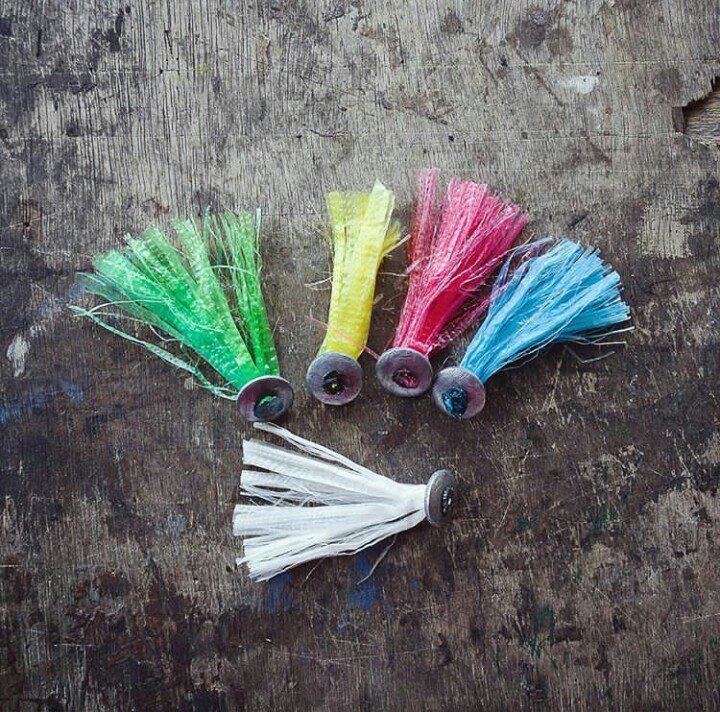
The main equipment in this game is the tating lawi itself, creatively crafted by the players. In the past, it was usually made traditionally from the following materials:
Rooster Feathers (Lawi Ayam)
The tail feathers of a rooster were chosen because they are longer, stiffer, and more easily displaced when kicked.
In some modern adaptations, discarded materials such as shredded plastic strips are used as substitutes for rooster feathers, as they are more durable and easier to obtain.
Rubber Bands or Small Coconut Shell Pieces
Used to tie the rooster feathers tightly together to form a compact bundle.
Coins or Small Weights
In certain variations, a coin is placed at the base of the feather bundle as a weight, making it easier to kick and more stable in the air.
Today, this base is sometimes made using thin steel discs shaped like coins to serve the same function.
Playing Court
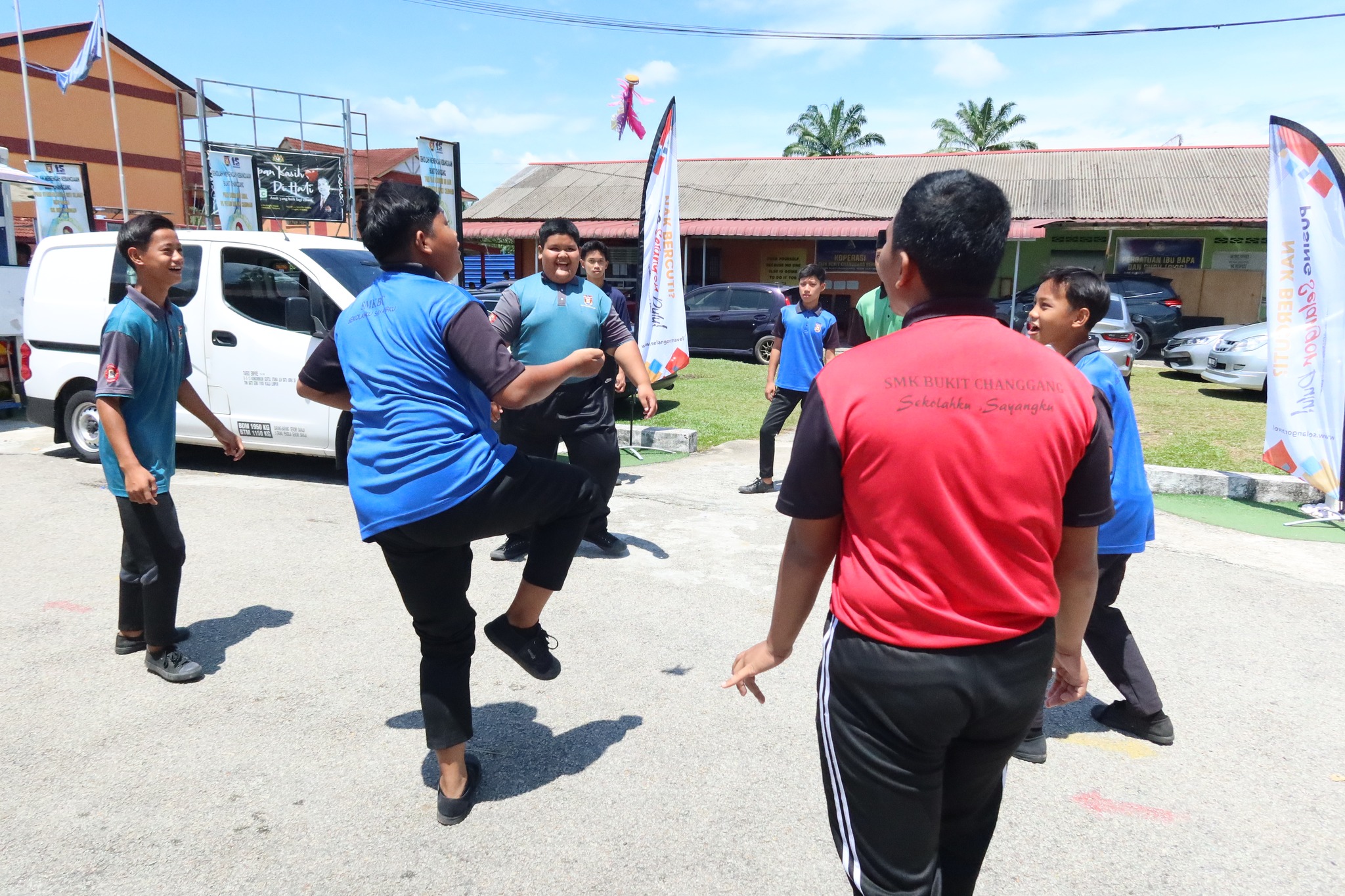
Tating Lawi does not require a specific court, as it can be played freely in various places such as house yards, grassy fields, cement floors, or multipurpose halls. What matters is that the playing area is spacious, flat, and comfortable enough for players to move freely.
In formal competitions, the court is usually designated in a more structured manner, either in a circular or rectangular shape, to mark the valid playing area. Such arrangements help ensure fairness and smoothness in organising the match.
Number of Players
Individual Play: Played solo to determine who can keep the tating lawi in the air the longest or with the highest number of kicks.
Group Play: Usually involves 2 to 6 players taking turns. In official competitions, the number of participants may be set according to age categories and skill levels.
The game is flexible and can be enjoyed individually or collectively, making it suitable for casual entertainment as well as more formal traditional competitions.
The game of Tating Lawi has rules that are simple to understand, yet it requires practice and skill to master. The basic rules are as follows:
Starting Position
Players stand in an open area while holding the tating lawi in their hand. Once ready, the player releases it into the air and begins juggling it with the foot.
Continuous Juggling or Kicks
Tating Lawi is traditionally played with three main juggling techniques or kicking styles: Sepak Beradik (Sibling Kick), Sepak Kuda (Horse Kick) and Sepak Sila (Cross-Leg Kick). Mastery of these techniques requires agility and precise foot control to ensure the tating lawi remains airborne.
Scoring System
Each successful kick or juggle that keeps the tating lawi in the air counts as one point. The player who achieves the highest number of kicks in a single round is declared the winner.
Group Matches
The game can be played individually or in groups. In individual play, players compete to keep the tating lawi airborne for as long as possible. In group play, turns are taken: when the tating lawi falls to the ground, the turn passes to the next player.
Variations and Additional Rules
The basic rules can be modified according to the creativity of organisers or players. For instance, matches may be determined by a set time limit, by using specific kicking styles, or through team-based competitions that require coordinated efforts to keep the tating lawi in play. Such variations make the game more exciting and challenging.
-
Reference Source
Bahan Bacaan
Ibrahim, M. F., Pei, G. K., Hashim, H. A., & Hamzah, N. A. (2023). Pendekatan pengajaran Teaching Games for Understanding melalui permainan tradisional. Pulau Pinang: Penerbit Universiti Sains Malaysia.
Iordanis, S. (2002, February 14). History of shuttlecock sport. Archived from the original on May 12, 2008. Retrieved August 20, 2008, from https://web.archive.org/web/20080512110541/http://www.jianzi.org/history.html
Kementerian Komunikasi dan Digital Malaysia. (n.d.). Tating Lawi. Retrieved September 8, 2025, from https://www.komunikasi.gov.my/en/program-semasa/65-bahankpkk/dokumen/537-tating-lawi
Memori Kedah. (n.d.). Tating Lawi: Permainan tradisional Kedah. Retrieved September 8, 2025.
Tokarski, W., Zhu, W., & Zarotis, G. F. (n.d.). Transcultural movement and sport research: The contribution of traditional Chinese movement and sports culture for modern sport. Retrieved from https://www.researchgate.net/publication/303388040
Zulkipli, M. Z. (2023, December 16). Kaki hantu, Tating Lawi antara permainan kian lenyap. Berita Harian. Retrieved from https://www.bharian.com.my/hujung-minggu/lain-lain/2023/12/1187719/kaki-hantu-tating-lawi-antara-permainan-kian-lenyap
Location
State JKKN Contact Information
Zurairi bin Hanip
Cultural Officer
Jabatan Kebudayaan dan Kesenian Negara, Pulau Pinang
Kompleks Pustaka Warisan Seni,
Lot No. 2180 Lintang P. Ramlee,
Off Jalan P.Ramlee
10460 PULAU PINANG
04-281 7791 /7792
Use the form below to contact the Informant/Figure/Editor/Researcher directly. We will respond to your inquiry as soon as possible!


