

ARTS AND CULTURE INFORMATION GATEWAY
Immerse yourself in the colorful world of art and culture! From traditional heritage to contemporary works, discover uniqueness that reflects the nation's identity and identity
 Fakulti Muzik dan Seni Persembahan, Universiti Pendidikan Sultan Idris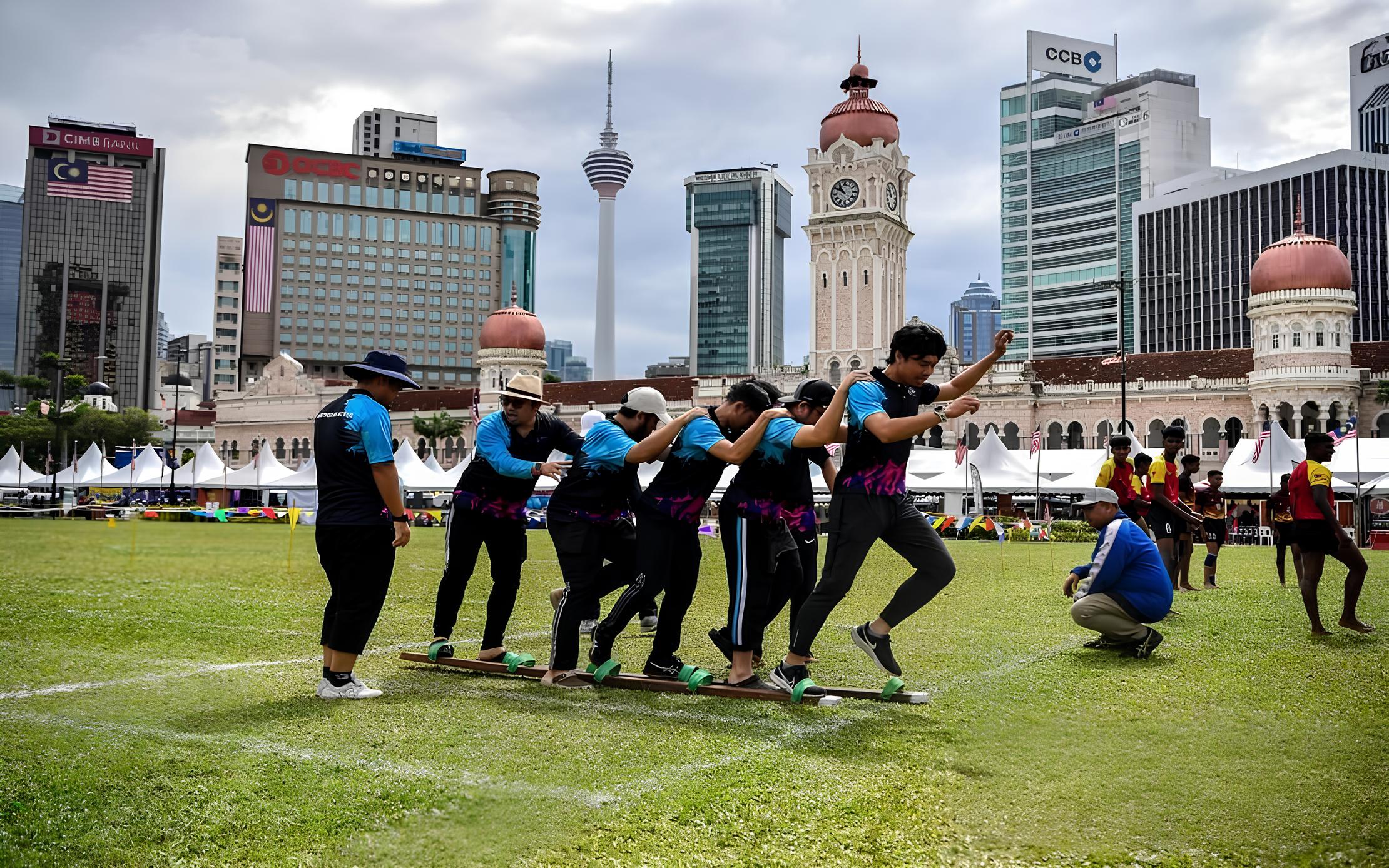
Picture
6
Video
No record
Today's Visitor
542
Number of Visitors
2225
Introduction and history
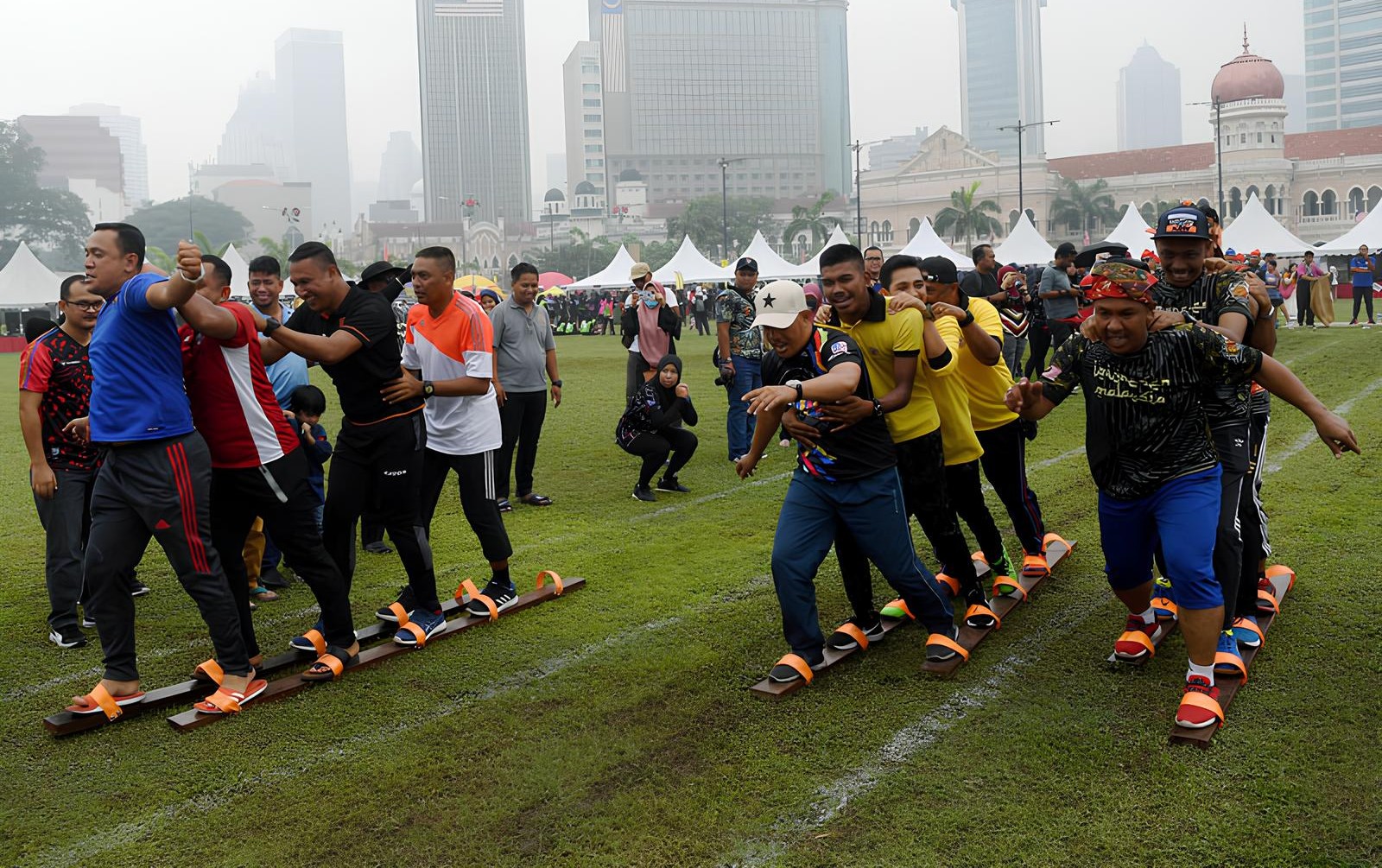
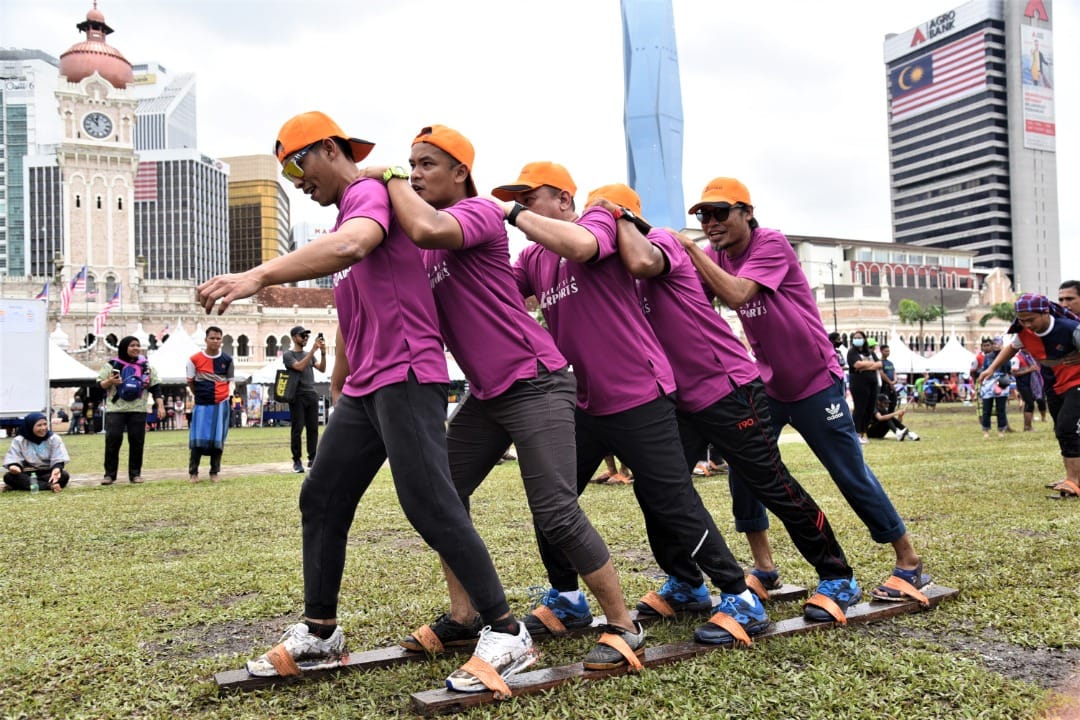
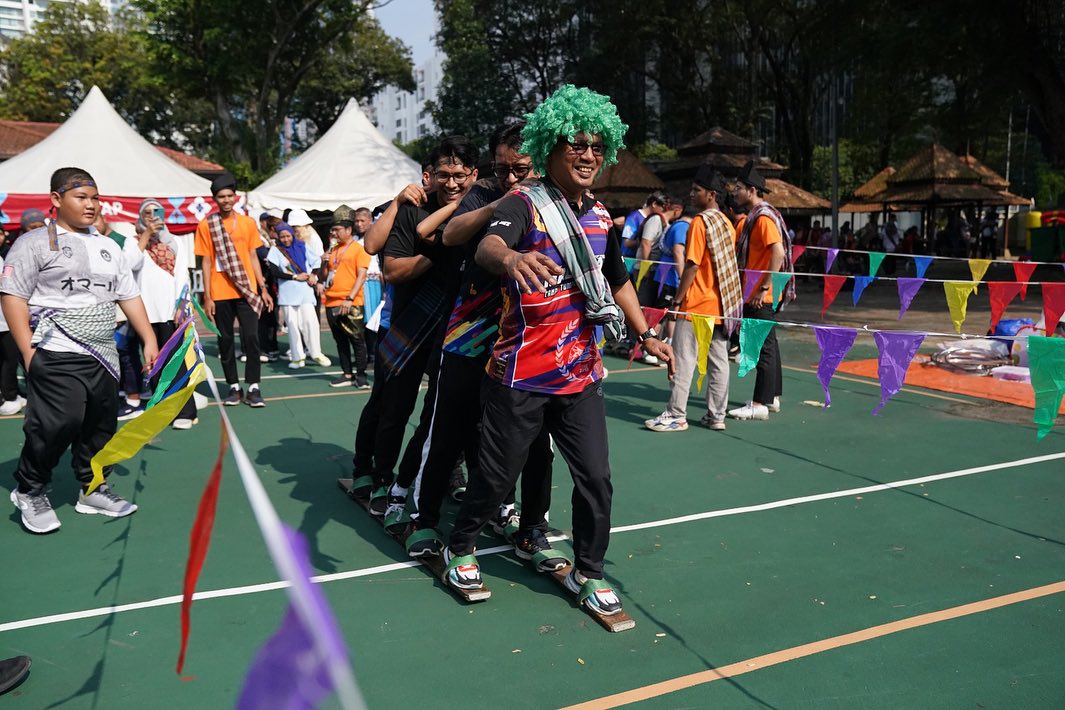
- The game of Terompah Gergasi (Giant Wooden Clogs), also known as Kaki Lipan, is a traditional group game. It uses long wooden clogs fitted with foot straps made of rubber or rope. Each team consists of three to five players standing on the same pair of clogs, placing their feet into the straps, and moving in unison towards the finish line. The uniqueness of this game lies in the high level of coordination, balance, and teamwork required among participants to ensure synchronized movement.
- The origins of the game are believed to trace back to the banks of the Rokan River in Riau and West Sumatra, Indonesia, before spreading widely across the archipelago. It gained national popularity in Indonesia during the 1970s, known by names such as Bakiak in Java, Terompah Galuak in Sumatra, and also Terompah Deret. Some sources suggest that the game was inspired by the traditional Japanese wooden sandals known as Geta, once worn by Japanese society, particularly Geisha. Although this influence cannot be fully verified, the similarity in the use of wood as footwear indicates possible cross-cultural inspiration.
- As the game spread, it eventually reached Malaysia through regional cultural exchange and traditional interaction. In Malaysia, it is more widely known as Terompah Gergasi and is often played by both children and adults during community events. It has become a form of folk entertainment in villages during festivities or traditional sports. With its emphasis on teamwork and cooperation, the game remains relevant today in school, folk sports festivals, family days, and cultural carnivals, serving as a symbol of the Nusantara’s traditional heritage.
In general, the game of Giant Wooden Clogs is a traditional activity that holds several important functions and roles within community life, particularly in the context of cultural traditions. Its main functions and roles include the following:
Medium of Recreation
This game serves as a form of leisure entertainment often played during festive occasions such as weddings, village celebrations, or traditional sports events. It not only entertains the players but also creates joy and excitement for the audience watching.
Strengthening Team Spirit
The success of a team in this game depends entirely on cooperation and coordinated steps among its members. Thus, it acts as a medium to cultivate communication, patience, and solidarity in striving towards a shared goal or victory.
Cultural Identity
As one of the folk games of the Nusantara, Giant Wooden Clogs symbolizes a traditional cultural heritage that must be preserved. It represents an intergenerational legacy, reflecting the creativity of past communities in creating recreational activities and traditional games.
Physical Fitness
This activity also contributes to physical health as it requires leg strength, body balance, and stamina. The act of stepping and running in a group not only provides fun but also helps enhance the players’ physical fitness.
-
Before the Giant Wooden Clogs game can be played, several basic pieces of equipment must be prepared. These items not only ensure the smooth running of the game but also provide comfort and safety for the players. The main equipment required includes the following:
Wooden Clogs
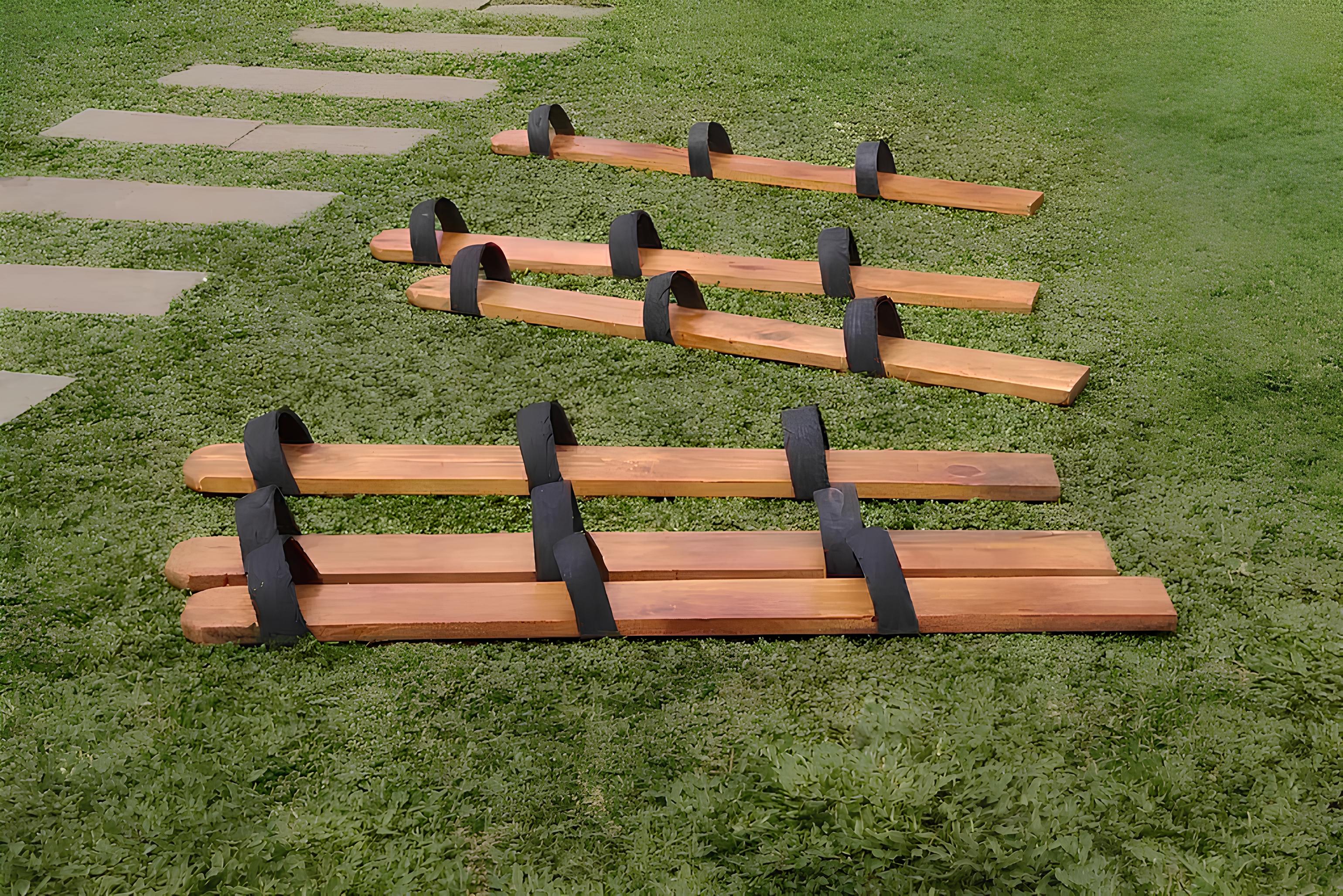
The giant clogs are made from long wooden boards measuring approximately 2–3 meters. On the top surface, there are three to five foot straps made of recycled rubber or strong rope. Each strap is arranged in parallel so that every player can position their feet uniformly.
Foot Straps or Holders
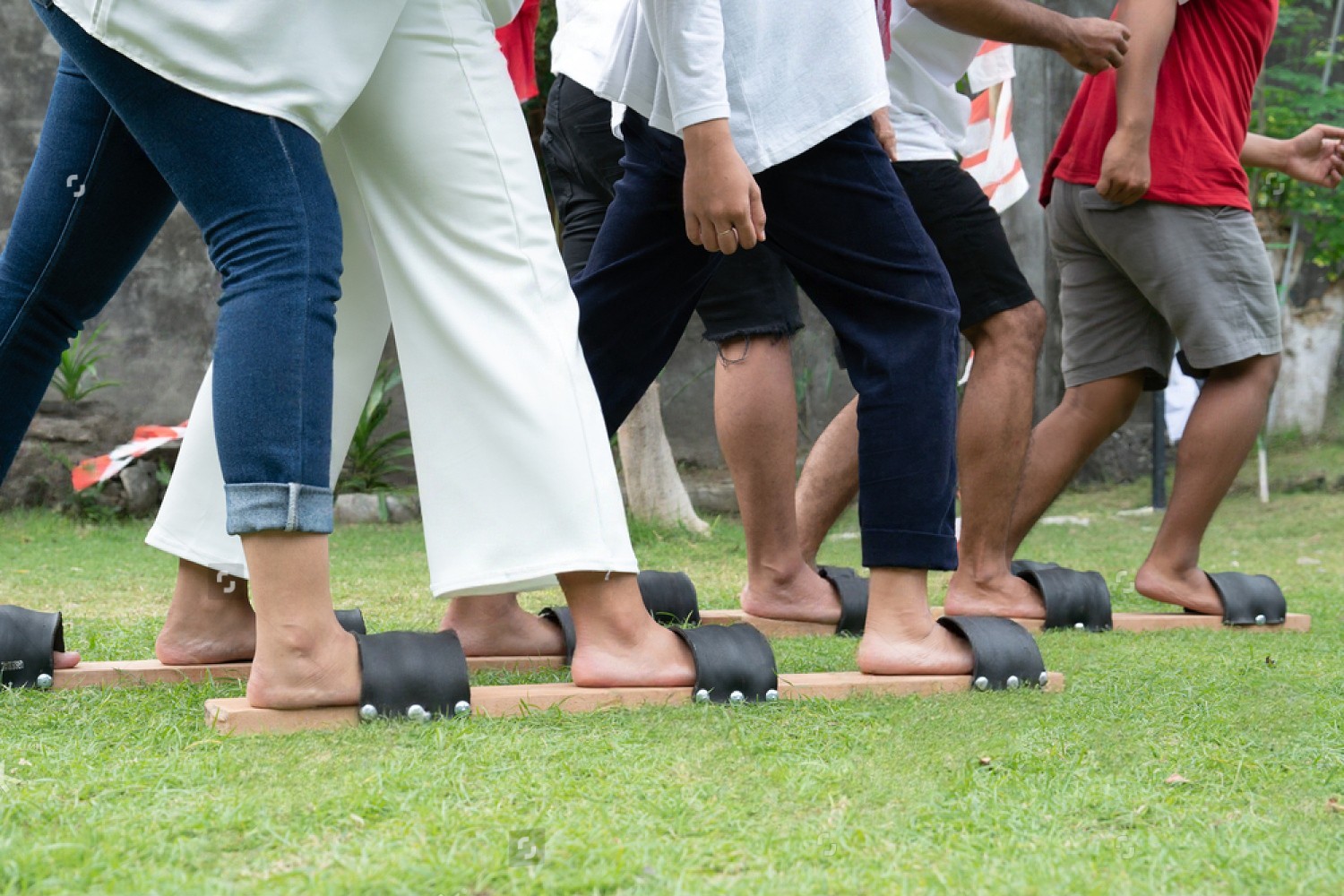
These serve to secure the players’ feet and prevent them from slipping out while stepping. The straps function to stabilize movement and ensure that all team members can move in unison.
Playing Area
The game requires an open space such as a field, sports court, or any flat ground free from obstacles. This space is important for the comfort and safety of players while moving.
Finish Line
A designated line is marked to indicate the final destination of the race. The team that reaches the finish line first with coordinated and orderly steps is declared the winner.
Number of Players
Each team typically consists of three to five players standing on a single pair of giant clogs. The number of players depends on the number of foot straps available on the wooden boards. A larger number of participants requires greater coordination to ensure synchronized and balanced steps.
The Giant Wooden Clogs game is played in teams and requires good coordination among all participants. It is usually conducted in the form of a race to determine which team can move the fastest and most synchronously to the finish line. The basic steps and rules of the game are as follows:
Team Formation
Each team consists of three to five players, depending on the number of foot straps available on the wooden clogs. All players must stand on the same pair of giant clogs.
Starting Position
Players place their feet into the straps on the clogs and stand in a straight line. To maintain stability, the players at the back usually hold onto the waist of the player in front of them.
Starting Signal
The game begins with the sound of a whistle or the referee’s command. All teams must start stepping in unison once the signal is given.
Movement Coordination
Players must move their feet in the same rhythm, right foot together, followed by the left. If the steps are not synchronized, the clogs may stop suddenly, or players may fall.
Objective of the Game
The team that manages to maintain proper coordination and reach the finish line first is declared the winner.
Additional Rules
Teams are not allowed to leave any player behind or change positions during the game.
If a player falls, the game may be paused briefly to restore balance.
Teams that move outside the designated lane or use unfair methods will be penalized or disqualified.
-
Reference Source
Bahan Bacaan
Jabatan Kebudayaan dan Kesenian Negara. (n.d.). Terompah gergasi. JKKN Pemetaan Warisan. Retrieved September 8, 2025, from https://www.jkkn.gov.my/pemetaan/?avada_portfolio=terompah-gergasi
Makorohim, M. F., Yulianti, M., & Alficandra, A. (2022). Terompah panjang as traditional games in the perspective of teenagers Riau. Jurnal SPORTIF: Jurnal Penelitian Pembelajaran, 8(1), 44–58. https://doi.org/10.29407/js_unpgri.v8i1.17657
Mohd Wahid, S. D. (2024). Sukan Rakyat (SUKRA), UiTM Cawangan Melaka Kampus Bandaraya. Universiti Teknologi MARA.
Prezi. (n.d.). Terompah gergasi. Retrieved September 8, 2025, from https://prezi.com/p/rdh0rmmjj88w/terompah-gergasi/
Location
State JKKN Contact Information
Cultural Officer
Jabatan Kebudayaan dan Kesenian Negara
Use the form below to contact the Informant/Figure/Editor/Researcher directly. We will respond to your inquiry as soon as possible!


