

ARTS AND CULTURE INFORMATION GATEWAY
Immerse yourself in the colorful world of art and culture! From traditional heritage to contemporary works, discover uniqueness that reflects the nation's identity and identity
 Fakulti Muzik dan Seni Persembahan, Universiti Pendidikan Sultan Idris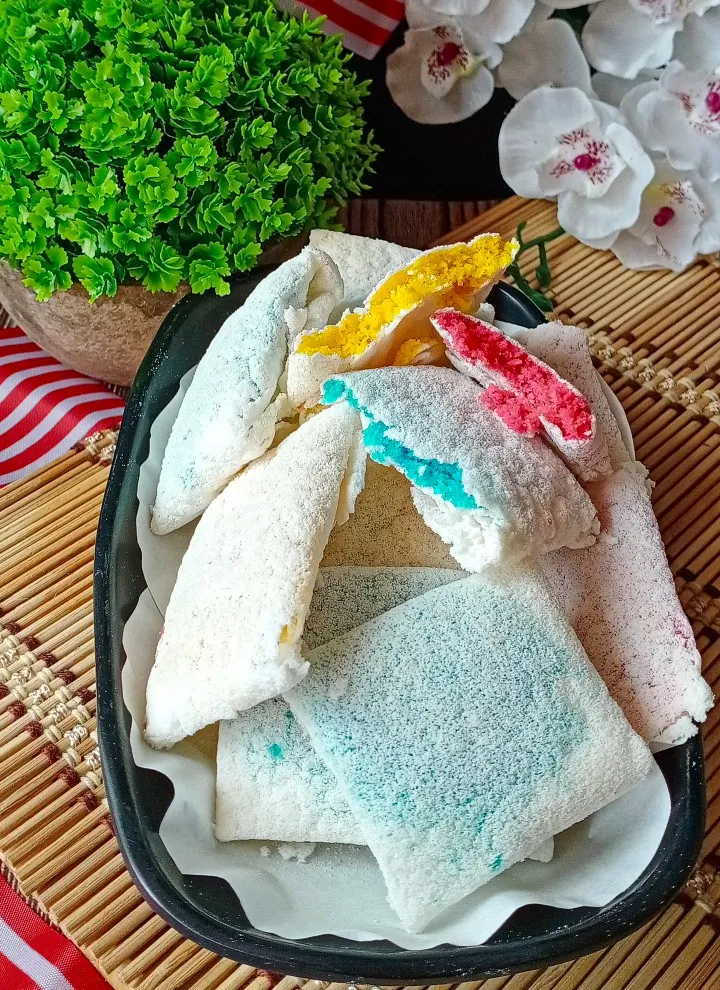

Picture
4
Video
No record
Today's Visitor
52
Number of Visitors
1085
Introduction and history
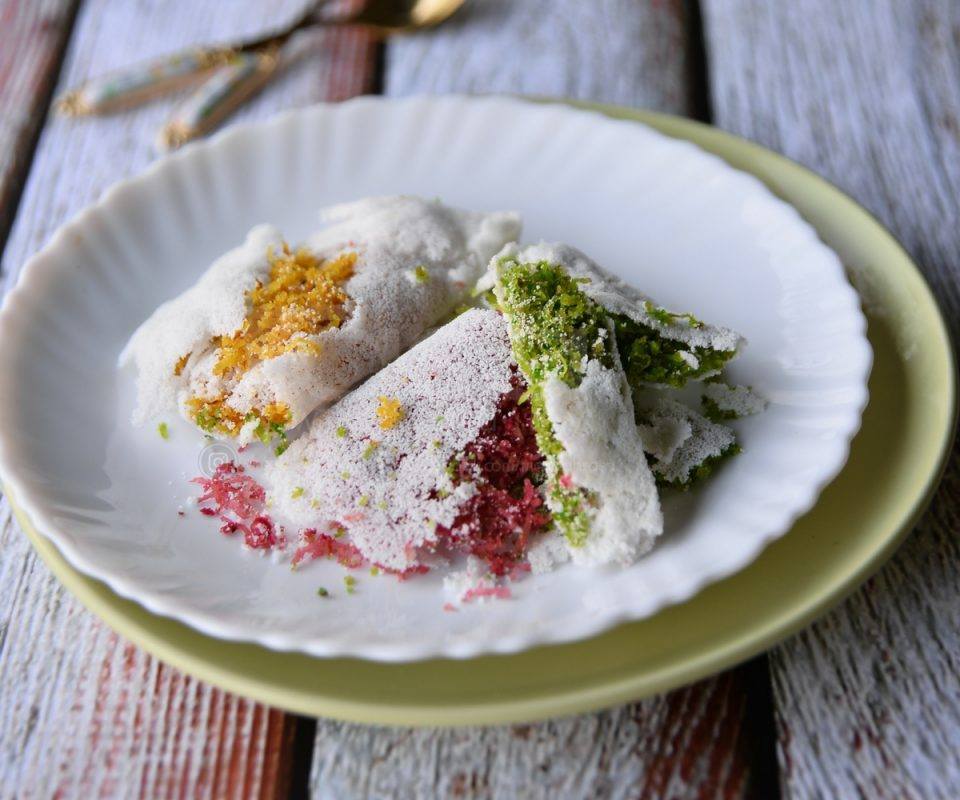
Kuih Bunga Pudak is a traditional Malay delicacy that originates from the state of Kedah, particularly popular in areas such as Jitra and Alor Setar. The cake is named after the pudak plant (pandanus), a species once commonly used as a cultural reference by the local community due to the unique shape and beauty of its flowers, which resemble the delicate layers of this cake. In appearance, Kuih Bunga Pudak features a thin, soft, and finely textured white outer skin, while inside it is filled with fragrant, sweetened grated coconut.
This cake is considered special not only for its appealing appearance and distinctive taste but also because it reflects the refined culinary artistry of the Kedah Malay community. Although the main ingredients, such as rice flour, coconut milk, sugar, and grated coconut, are relatively simple and easy to obtain, the preparation process requires great delicacy and skill. Each layer must be carefully crafted to ensure the cake does not tear or break during cooking.
Due to its complexity, Kuih Bunga Pudak is now regarded as a traditional dessert of high commercial value. Only a handful of traditional cake makers or older generations in Kedah still maintain the art of making this cake. Nevertheless, for those who cherish it, demand remains strong, and Kuih Bunga Pudak continues to stand as a symbol of the authenticity and enduring beauty of Kedah’s Malay culinary heritage.
For ages, Kuih Bunga Pudak has held an important place as a special delicacy within Kedah society. It was not only served during festive seasons such as Hari Raya Aidilfitri, weddings, or large banquets, but was also commonly enjoyed as an accompaniment during family tea time. With its rich, sweet flavour and soft texture, this kuih is especially suitable as a dessert or light snack.
In addition, Kuih Bunga Pudak carries significant social value in the culture of the Kedah Malay community. In the past, it was often given as a gift to honour distinguished guests visiting one’s home. There was even a practice of presenting it as a parting gift so that guests could enjoy it as a snack on their journey home. In this way, Kuih Bunga Pudak was more than just food, it symbolised respect, affection, and the hospitality of the host towards their visitors.
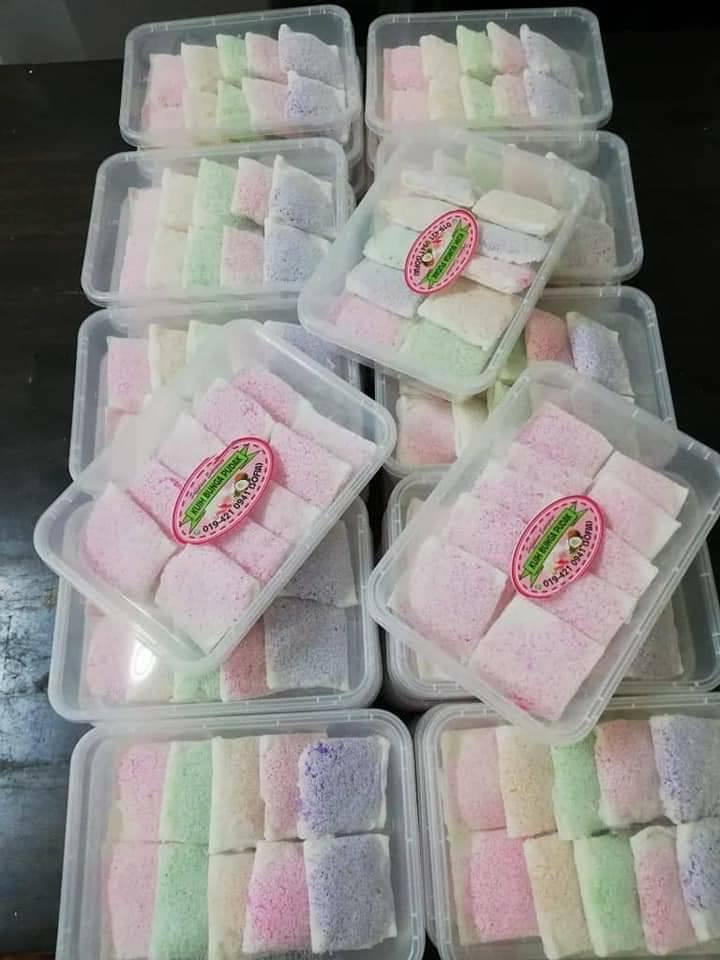
From an economic perspective, Kuih Bunga Pudak also holds commercial value. Although increasingly rare, it can still be found in certain traditional kuih shops in Kedah, especially during festive seasons or through special orders. For some small-scale entrepreneurs, producing Kuih Bunga Pudak provides a valuable source of income, as it is considered a delicacy that is difficult to find nowadays. Its production and sale not only help supplement household earnings but also play a role in preserving traditional Malay food heritage from fading with time.
-
To prepare Kuih Bunga Pudak, the ingredients are actually simple, similar to other traditional Malay cakes made from glutinous rice flour, coconut, and sugar. However, what makes this cake unique is the way these ingredients are processed, resulting in a thin, delicate outer layer with a fragrant and sweet coconut filling. Generally, the ingredients can be divided into two main parts: the dough for the skin and the coconut filling.
Ingredients for the Skin
250 grams glutinous rice flour
150 ml plain water
1 teaspoon fine salt
A few drops of food colouring (optional, if you wish to add colour to the skin)
Ingredients for the Filling
1 medium-aged grated white coconut
3 drops of food colouring (yellow, green, blue, red—according to preference and taste)
1 cup granulated sugar
½ teaspoon salt
In general, there are four main processes involved: (1) preparing the filling, (2) preparing the flour for the skin, (3) wrapping the filling, and (4) serving. This distinctive method sets Kuih Bunga Pudak apart from other traditional cakes, as it does not rely on wet dough or steaming. Instead, it depends on the skill of the maker in controlling the heat, perfecting the texture, and folding the skin with precision.
Step 1: Preparing the Filling
Grate a medium-aged white coconut and mix it with granulated sugar.
Divide the mixture into several portions if different colours are desired (e.g., red, blue, yellow).
Add a few drops of food colouring to each portion and mix well.
Dry-fry (sangai) the coconut filling in a pan over low heat until completely dry.
Remove from the heat and let it cool.
Tip: To ensure that Kuih Bunga Pudak lasts longer, the filling must be completely dry. Moist filling will cause the cakes to spoil quickly.
Place the glutinous rice flour into a large bowl.
Dissolve salt in water, then sprinkle the water gradually over the flour.
Mix and rub the flour until it resembles fine bread crumbs (it should not form a wet dough).
Let the mixture rest for about 30 minutes before use.
Step 3: Wrapping the Filling
Heat a clean pan over low heat.
Using a fine sieve or special sifter, sprinkle the prepared glutinous rice flour evenly over the hot surface of the pan.
Spread the flour thinly to form a delicate layer resembling the skin of the cakes.
Quickly place a small portion of the coloured coconut filling in the centre.
Fold the skin neatly over the filling to form a rectangular or oval-shaped bundle.
Step 4: Serving
Once all the filling has been wrapped, Kuih Bunga Pudak is ready to be served.
This cake is best enjoyed as an afternoon tea snack or given as a gift to guests.
-
Reference Source
Bahan Bacaan
Chik, C. T., & Bachok, S. (2022). Cabaran penyediaan makanan warisan. Dalam Pelestarian makanan warisan Melayu: Diwarisi sejak zaman ke zaman, peliharalah hidangan setiap satu, jadikan panduan juga rujukan (hlm. 80).
Cookpad. (n.d.). Kuih bunga pudak. Cookpad. Diakses pada 16 Ogos 2025, daripada https://cookpad.com/my/recipes/15444143
Fauzi, F. A., Jamil, J., & Majid, H. N. A. (2022). Dari Perlis ke Sabah: Warna-warni kuih-muih warisan Malaysia. Dalam Pelestarian makanan warisan Melayu: Diwarisi sejak zaman ke zaman, peliharalah hidangan setiap satu, jadikan panduan juga rujukan (hlm. 133).
MyResipi. (n.d.). Kuih bunga pudak. MyResipi. Diakses pada 16 Ogos 2025, daripada https://myresipi.com/kuih-bunga-pudak/
Location
State JKKN Contact Information
Encik Mohammad Salleh bin Mahmud
Cultural Officer
Jabatan Kebudayaan dan Kesenian Negara, Kedah
Kompleks JKKN Kedah
Lot PTD 400, Pumpong
05250 Alor Setar
KEDAH DARUL AMAN
011-10899646
Use the form below to contact the Informant/Figure/Editor/Researcher directly. We will respond to your inquiry as soon as possible!


