

ARTS AND CULTURE INFORMATION GATEWAY
Immerse yourself in the colorful world of art and culture! From traditional heritage to contemporary works, discover uniqueness that reflects the nation's identity and identity
KUIH BUTIR NANGKA
 Fakulti Muzik dan Seni Persembahan, Universiti Pendidikan Sultan Idris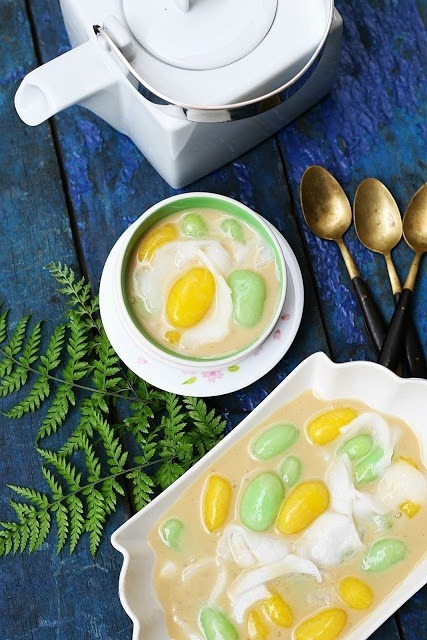
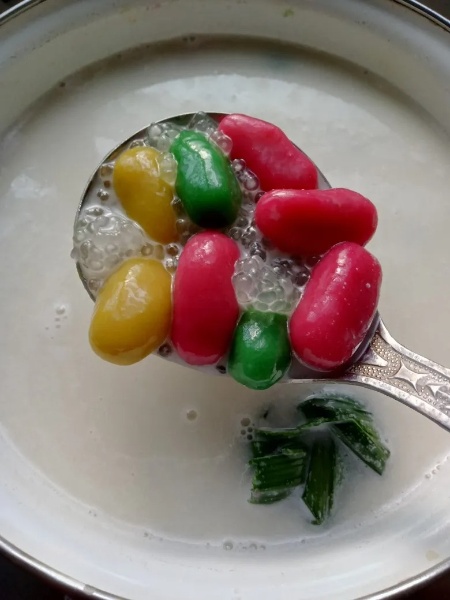
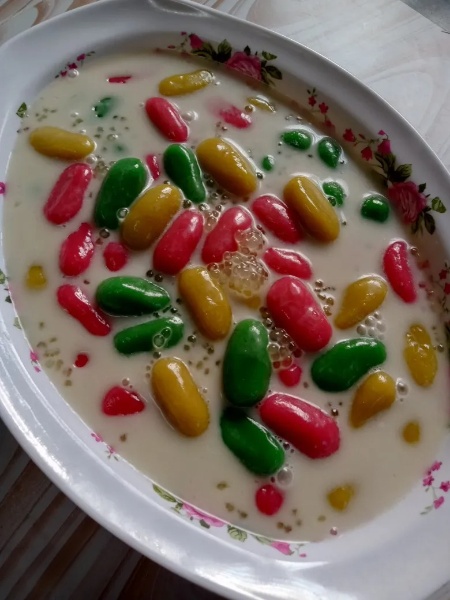
Picture
10
Video
No record
Today's Visitor
60
Number of Visitors
948
Introduction and history
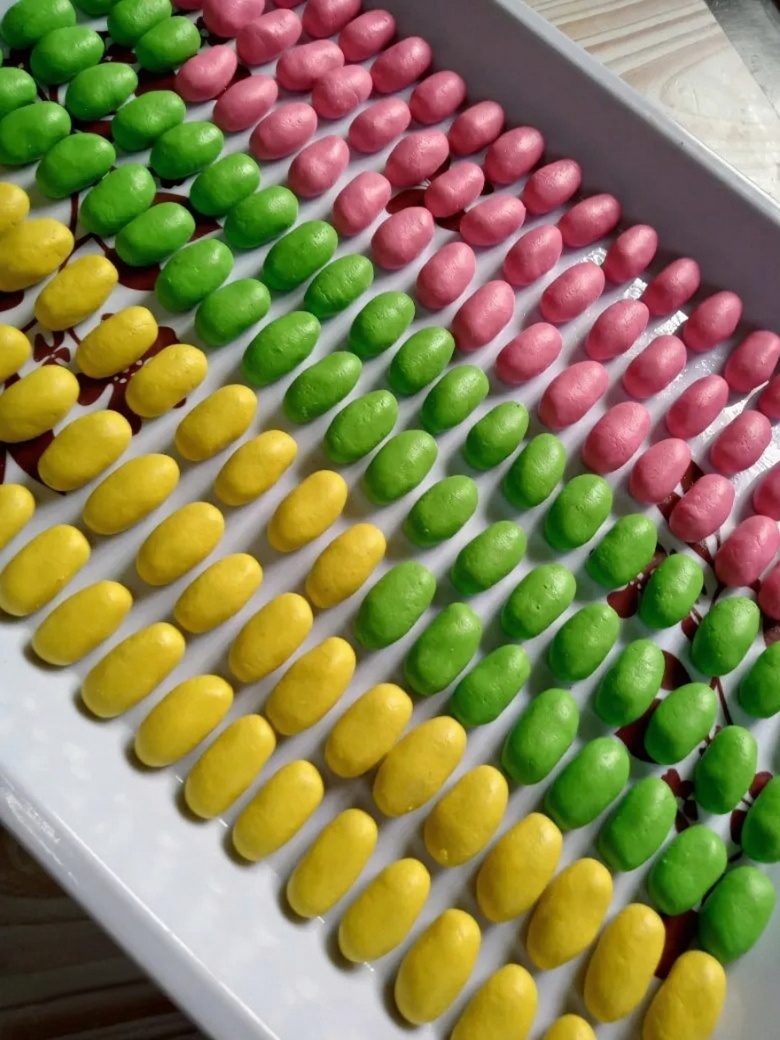
Butir Nangka is a traditional sweet delicacy that is widely popular among the Malay community, especially in the state of Kelantan and several other states on the East Coast of Peninsular Malaysia. This dish is famous for its small, oval-shaped form, resembling the seed of a jackfruit. It is therefore named "butir nangka" (jackfruit seed). Typically, it is green in color due to the use of pandan leaf juice, but in modern variations, it is also prepared in a variety of appealing colors such as yellow, pink, and purple.
As a traditional sweet delicacy, this dish is usually served as a dessert that completes a meal, particularly after the main course, during festive gatherings or communal feasts. In addition, it is also a popular choice for breaking fast during the month of Ramadan. Its rich, creamy sweetness, along with the glutinous rice and coconut milk content, makes it an instant source of energy that is perfect for consumption after a day of fasting.
From a cultural perspective, Kuih Butir Nangka is often associated with the spirit of communal cooperation in the past. The preparation process, which involves rolling the dough, filling the stuffing, and cooking together in a group is reflects the values of togetherness and strong cooperation among family members and the local community.
-
To prepare Kuih Butir Nangka, the ingredients are divided into two main components: the dough and the coconut milk sauce. Each component plays an important role in creating the flavor, texture, and balance of sweetness and richness that define this traditional delicacy.
Ingredients for the Dough:
2 cups glutinous rice flour
½ cup pandan juice (extracted from blended pandan leaves)
Green, yellow, and red food coloring
A pinch of salt
Ingredients for the Coconut Milk Sauce:
50 g sago pearls
2 cups thick coconut milk
2 pandan leaves
2 tablespoons granulated sugar
300 ml fresh canned milk (optional)
A pinch of salt
1 teaspoon rice flour (to thicken the sauce)
The preparation of Kuih Butir Nangka involves six main stages: preparing the sago, making the dough, shaping the dough, cooking the dough, preparing the coconut milk sauce, and assembling the final dish. Below are the detailed steps:
Step 1: Preparing the Sago
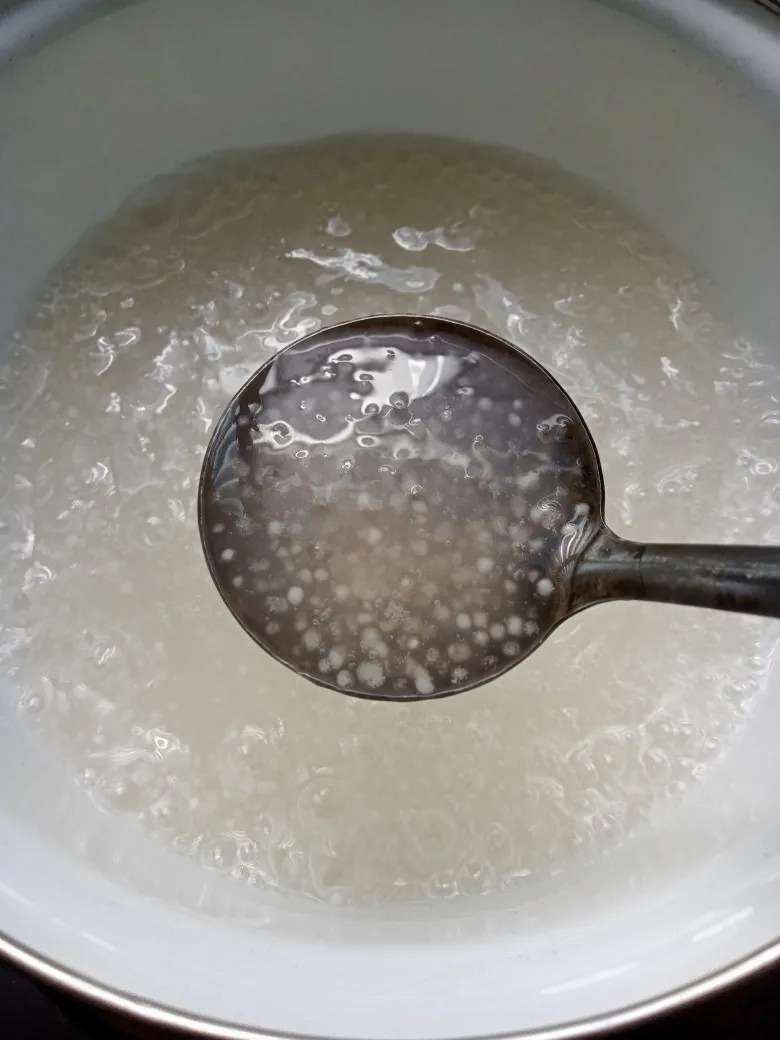
Cook the sago pearls in boiling water until they turn completely translucent.
Once cooked, strain the sago and rinse it under running water using a fine sieve to remove excess starch.
Drain well and set aside.
Step 2: Preparing the Dough
- In a large mixing bowl, combine glutinous rice flour, wheat flour, and a pinch of salt.
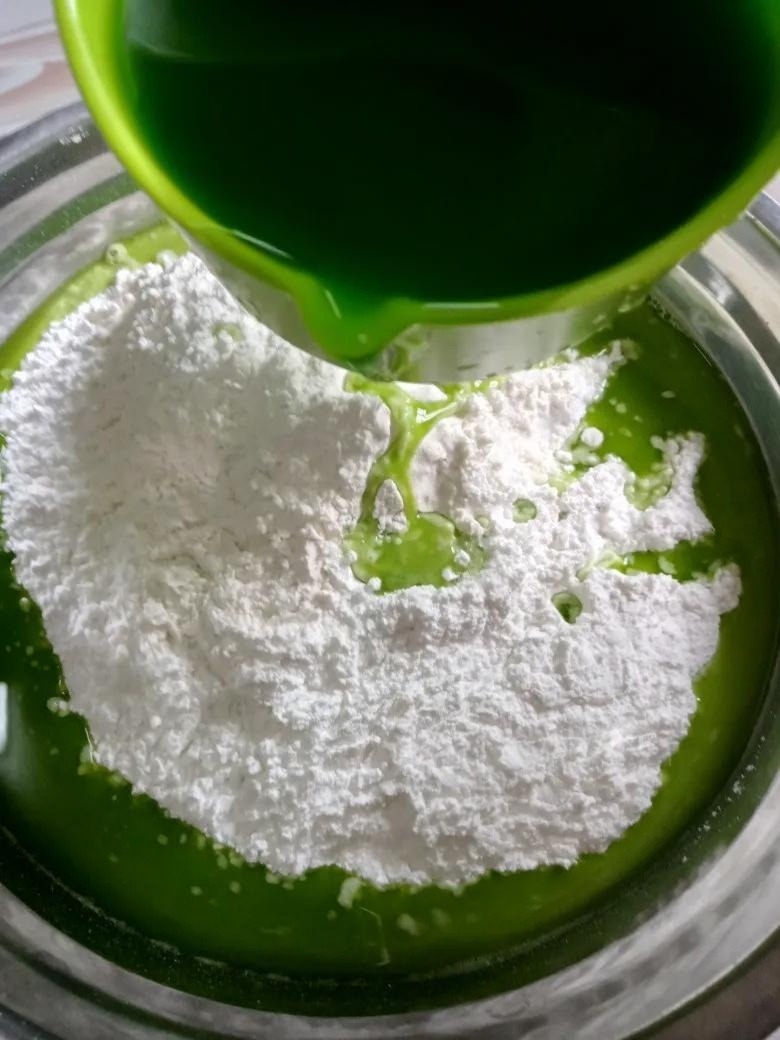
- Gradually add pandan juice along with plain water, kneading slowly until a soft, non-sticky dough forms
- Step 3: Shaping the Dough
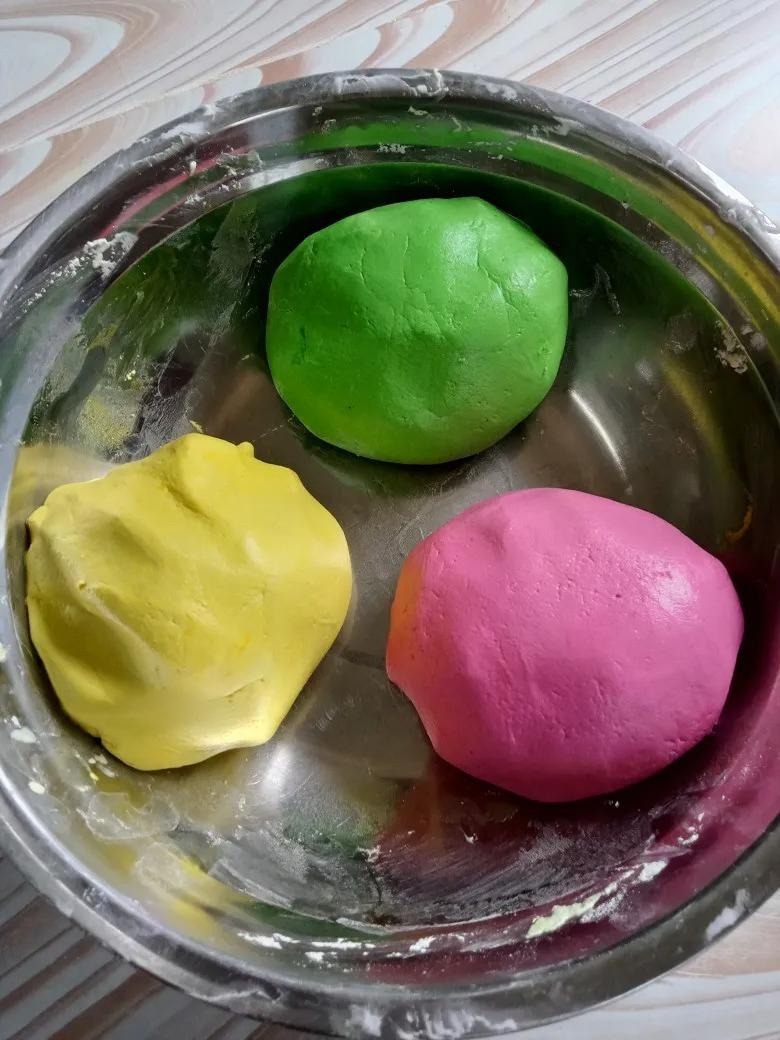
Divide the dough into several small portions and color each portion as desired (e.g., green, yellow, or pink).
Pinch off a small piece of dough and roll it into an elongated shape of about 2 cm, resembling a jackfruit seed.
Step 4: Boiling the Dough
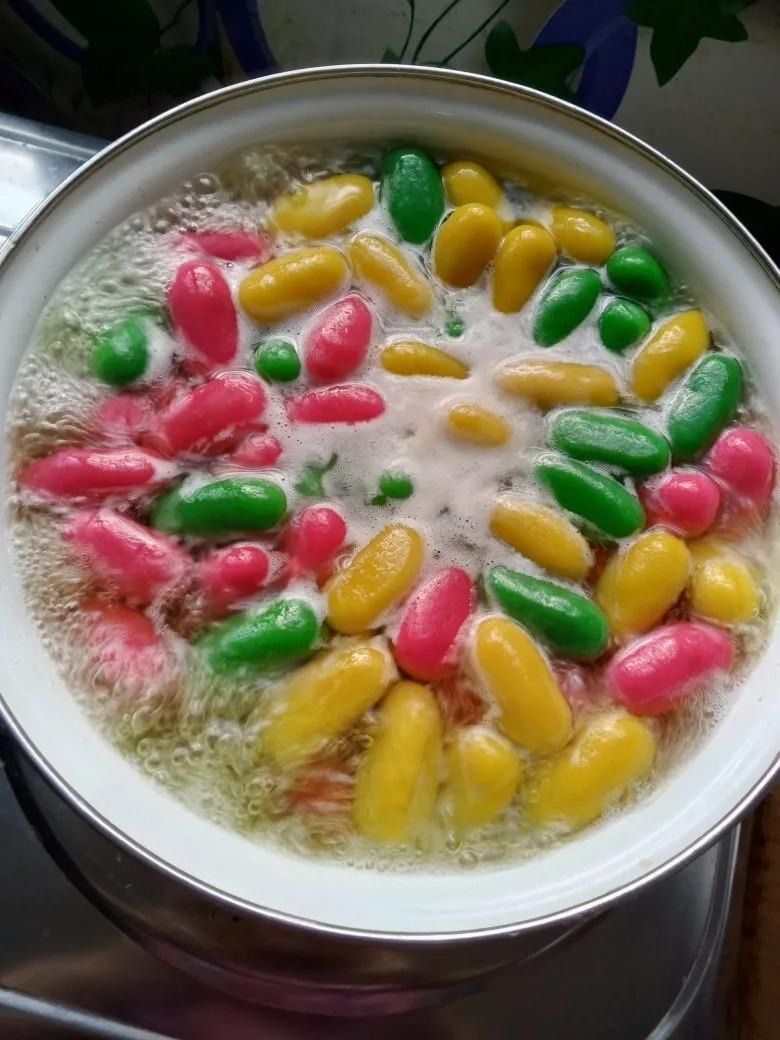
Bring a large pot of water to a boil.
Drop the shaped dough pieces into the boiling water, stirring gently to prevent them from sticking together.
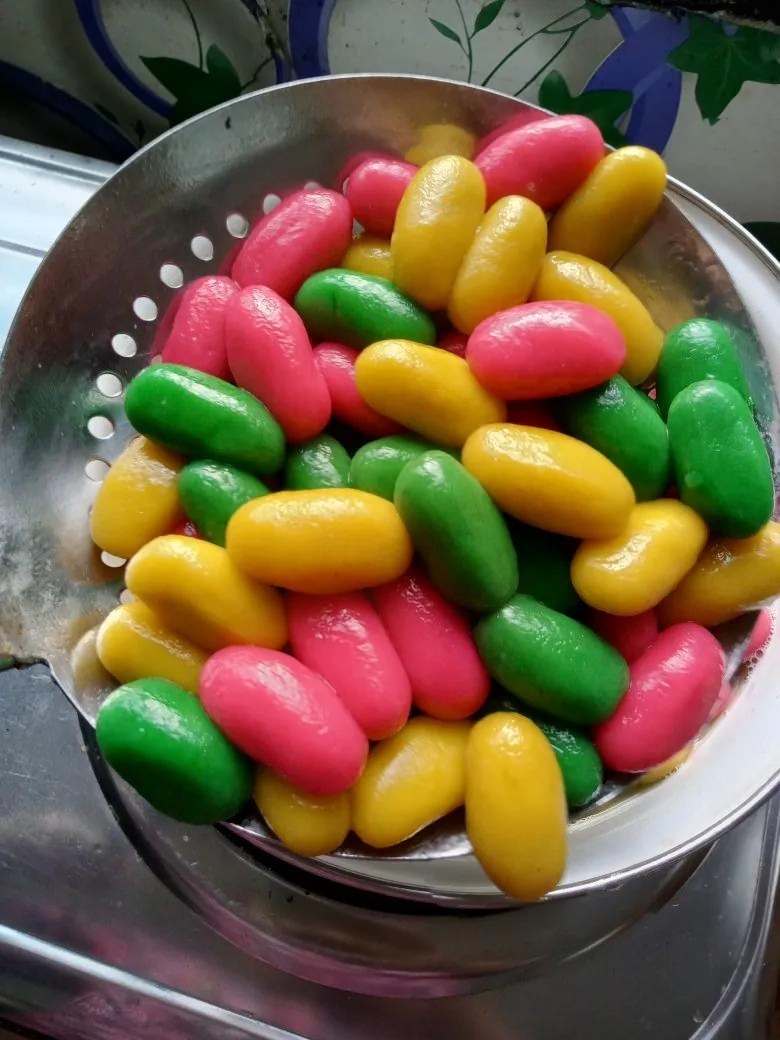
When the dough pieces float to the surface, they are cooked.
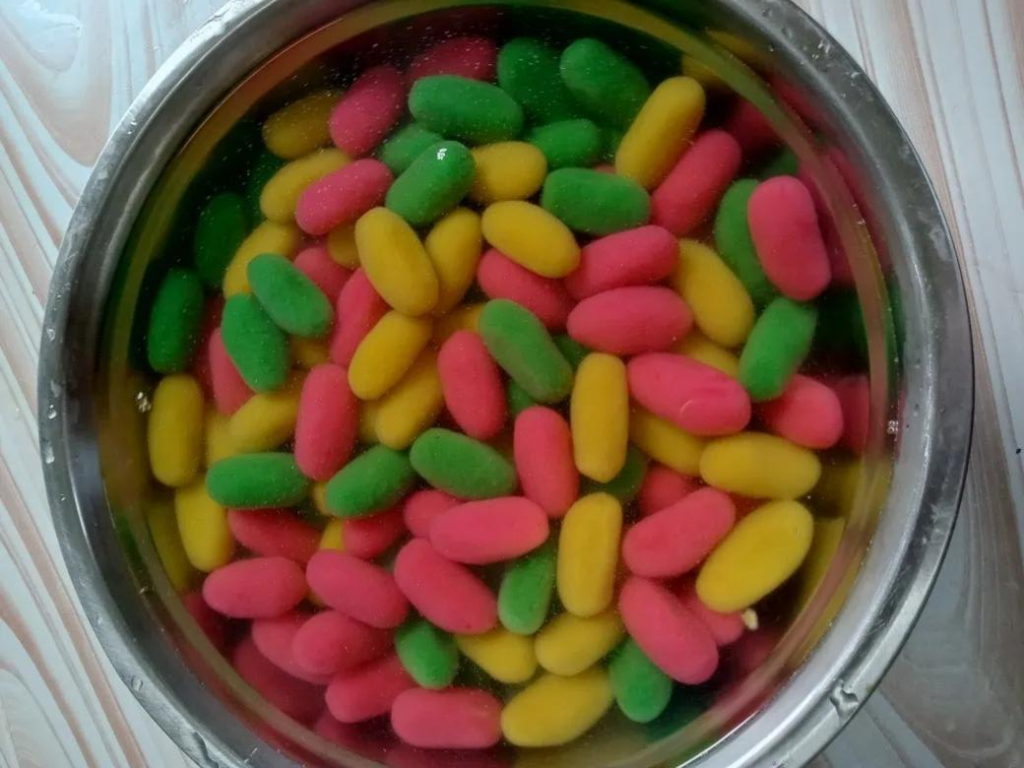
Remove and drain them, then immediately immerse them in cold water to prevent sticking.
Step 5: Preparing the Coconut Milk Sauce
In a separate pot, combine coconut milk, sugar, a pinch of salt, and pandan leaves.
Cook over medium heat, stirring continuously to prevent the coconut milk from curdling.
Once the sauce begins to boil, add the cooked dough pieces (jackfruit seeds) into the coconut milk and stir gently.
Step 6: Adding the Sago
Finally, add the cooked sago pearls into the coconut milk sauce together with the dough pieces.
Stir until everything is evenly mixed and heated through.
Kuih Butir Nangka is ready to be served, either warm or chilled according to preference.
-
Reference Source
Bahan Bacaan
Che Nom. (n.d.). Butir nangka. Resepi Che Nom. https://resepichenom.com/resepi/butir-nangka
Cookpad. (n.d.). Resipi butir nangka. https://cookpad.com/my/recipes/15330142
RASA. (n.d.). Resipi bubur butir nangka sedap, begini cara masaknya!. RASA. https://www.rasa.my/resipi-bubur-butir-nangka-sedap-begini-cara-masaknya/
Roufs, T. G., & Roufs, K. S. (2014). Sweet treats around the world: An encyclopedia of food and culture. ABC-CLIO. https://doi.org/10.4324/9781315701425
Location
State JKKN Contact Information
Encik Wan Mohd Rosli bin Wan Sidik
Cultural Officer
Jabatan Kebudayaan dan Kesenian Negara, Kelantan
Kompleks JKKN Kelantan
Lot 1993, Seksyen 49,Tanjong Chat,
15200, Kota Bharu,
KELANTAN DARUL NAIM
09-741 7000
Use the form below to contact the Informant/Figure/Editor/Researcher directly. We will respond to your inquiry as soon as possible!


