

ARTS AND CULTURE INFORMATION GATEWAY
Immerse yourself in the colorful world of art and culture! From traditional heritage to contemporary works, discover uniqueness that reflects the nation's identity and identity
DODOL
 -
-
Picture
1
Video
No record
Today's Visitor
53
Number of Visitors
1620
Introduction and history
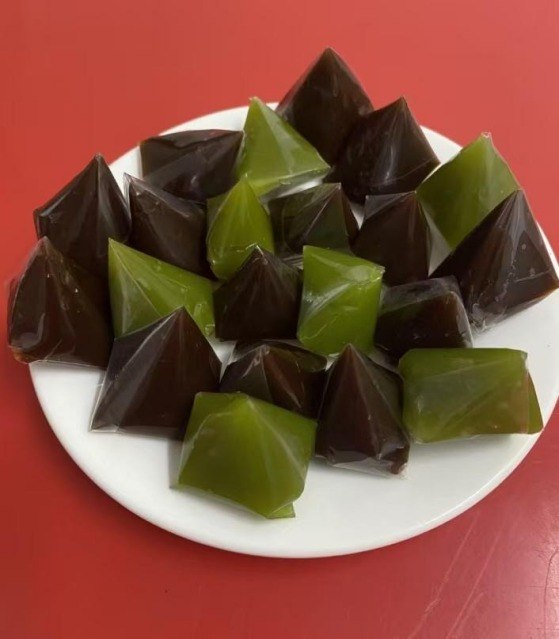
- Dodol is a traditional sweet delicacy known for its chewy texture and rich caramel-like flavour. It is widely popular throughout the Nusantara region, including Indonesia, Malaysia, and Singapore, though it is particularly prominent in Melaka and northern Johor. Traditionally associated with the Malay and Javanese communities, it has also been adapted by other groups such as the Baba Nyonya. Historical records trace the origins of dodol to around 1926 in Betawi (present-day Jakarta, Indonesia) during the Dutch colonial era.
- Dodol is categorized as a sweet food and is made from basic ingredients: coconut milk, glutinous rice flour, and gula melaka (palm sugar), along with a little salt. The cooking process is extremely long and requires a lot of energy. All these ingredients must be combined through a continuous stirring method for about three to four hours at a high temperature.
- As a result of this process, the mixture's texture will change to become thick, dense, sticky, and sweet. There are various color versions of dodol, mostly dark brown (from gula melaka), green (from pandan), or yellow, and it is also often diversified with flavors like durian or banana.
- Dodol plays an important role in Malay culture, especially as a symbol of celebration. It is very synonymous with Hari Raya Aidilfitri celebrations and is often served at special functions like weddings.
- Due to its difficult and time-consuming cooking process, it often becomes a communal activity (gotong-royong). Family members and neighbors will gather and take turns stirring the dodol, which in turn strengthens social bonds.
- Dodol now has high demand among locals and foreign tourists alike, making it a popular souvenir. Traditionally, if the dodol is to be stored, the cooked dodol is poured into a topong (a small basket) made from withered screwpine leaves, known as a 'tampin'. This packaging method allows the dodol to be kept for one to two weeks before being served.
-
Coconut milk
Glutinous rice flour (or rice flour)
Gula Melaka (Palm sugar)
Granulated sugar
Salt (a little, to balance the taste)
Optional Flavorings: Such as durian, pandan paste, or banana.
Initial Stage
All main ingredients (coconut milk, glutinous rice flour, gula melaka, granulated sugar, and salt) are mixed together in a large wok or pot.
Stirring Process
This mixture is cooked over a high flame. The most critical process is that it must be stirred continuously without stopping.
This stirring process requires a lot of energy and time, lasting for approximately three to four hours.
The mixture is stirred until its texture transforms, becoming very thick, dense, sticky, shiny (when the oil from the coconut milk emerges), and no longer sticks to the wok.
Cooling
The finished and cooked dodol is then poured into trays, containers, or traditionally into a 'tampin' (small basket from screw pine leaves) to be cooled and allowed to set before it can be cut and served.
-
Reference Source
Bahan Bacaan
Ismail, N., Ab. Karim, M.S., Che Ishak, F.A. et al. The Malay’s traditional sweet, dodol: a review of the Malaysia’s heritage delicacy alongside with the rendition of neighbouring countries. J. Ethn. Food 8, 19 (2021). https://doi.org/10.1186/s42779-021-00095-3
Informan
Hamidah Food Industry (Mamamidah). KM 15, Bukit Dodol, 77300, Umbai, Melaka. (+60 12-916 9505)
Dodol Citarasa Asli. 31, Jalan PBP 1/2, Taman Bertam Perdana, 75200 Melaka. (+60 12-624 9904)
Location
State JKKN Contact Information
Nur Al-Farani binti Rosli
Cultural Officer
Jabatan Kebudayaan dan Kesenian Negara, Melaka
Kompleks JKKN Melaka
Hang Tuah Jaya, Lebuh Ayer Keroh,
75450 MELAKA
06 - 763 6308
Use the form below to contact the Informant/Figure/Editor/Researcher directly. We will respond to your inquiry as soon as possible!


