

ARTS AND CULTURE INFORMATION GATEWAY
Immerse yourself in the colorful world of art and culture! From traditional heritage to contemporary works, discover uniqueness that reflects the nation's identity and identity
 Kompleks JKKN Pulau Pinang, Kompleks Pusaka Warisan Seni, Lot No. 2180 Jalan Rawang, Off Jalan P.Ramlee 10460 Pulau Pinang.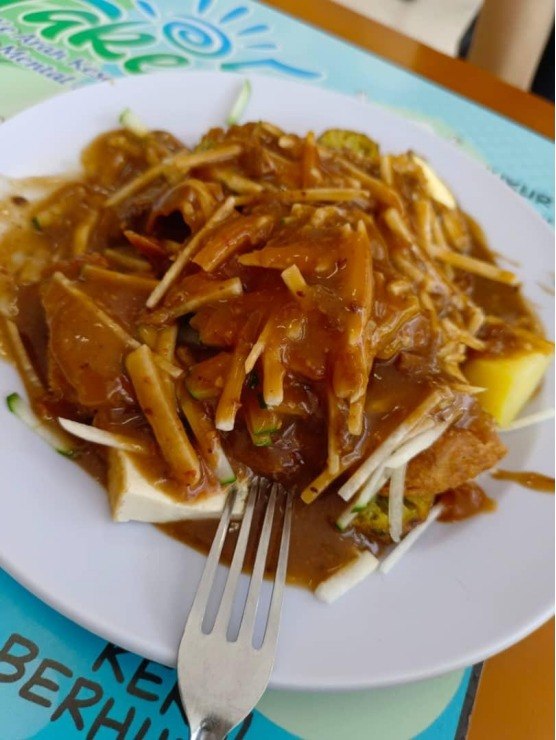
Picture
1
Video
No record
Today's Visitor
409
Number of Visitors
1777
Introduction and history
- Pasembor, also known as the Malaysian Indian Salad, is a traditional dish renowned in Penang. The term Pasembor is specifically used in the northern region of Peninsular Malaysia, particularly in Penang, where it is considered a street food icon. In other states, it is more commonly known as Rojak Mamak. According to Yeap et al. (2019) and Zulkifli et al. (2018), Penang is widely recognized as a gastronomic haven representing multiple ethnic groups and is distinguished by its unique historical development of local culinary traditions.
- This salad consists of prawn fritters, shredded cucumber, onions, boiled potatoes, tofu, bean sprouts, dried shrimp, spiced fried crab, and fried squid, served with a sweet and spicy peanut sauce. The sauce shares similarities with Gado-gado or Satay sauce. It is typically consumed in the evening as a tea-time snack or as a vegetable dish if served without seafood.
- Pasembor is widely believed to have originated from the Indian Muslim community. One theory proposes that the name may be associated with early immigrants from India, possibly from a district known as Chembur in Mumbai. The history of this dish is closely connected to the long-standing presence of Indian Muslim (Mamak) hawkers who have been active in Penang’s street-food trade for several decades.
- Traditionally, Mamak hawkers used motorcycles as mobile counters to prepare and sell this dish. Today, most hawkers operate from small trucks or permanent stalls, particularly around Padang Kota Lama (The Esplanade) and Gurney Drive. This dish has become a famous traditional food in Penang, reflecting the cultural diversity and unique local palate. At present, rojak mamak can be found in virtually all eateries operated by the Indian Muslim community throughout Malaysia.
Originally, Penang Pasembor was a cheap, accessible street food for locals. It has since evolved into a symbol of Penang's traditional cuisine, attracting tourists eager to taste unique local flavors. It is frequently featured in food festivals and used to promote Malaysian culture and culinary diversity.
-
Prawn fritters (Cucur Udang)
Shredded cucumber
Boiled potatoes
Fried tofu
Bean sprouts
Dried shrimp
Spiced fried crab
Fried squid
Large onions
Peanut Sauce: (Peanuts, dried chilies, sugar, tamarind juice, and spices)
All deep-fried ingredients (prawn fritters, tofu, crab, squid) are prepared in advance.
Fresh ingredients like cucumber, onions, and bean sprouts are cleaned and shredded/sliced.
Peanuts are fried and ground; they are then cooked with dried chili paste, tamarind juice, sugar, and spices until the sauce thickens to a rich consistency.
To serve, the ingredients are cut into bite-sized pieces, arranged on a plate, and generously ladled with the warm, spicy-sweet peanut sauce.
-
Reference Source
Bahan Bacaan
MalaysianChefs. (2024, April 26). Pasembor – Famous Malaysian cuisine. https://malaysianchefs.com/pasembor-famous-malaysian-cuisine/
Wan-Mohd-Isa, M. A., & Abdul-Majid, H. (2009). Heritage route along ethnic lines: The case of Penang. Historic Environment, 22(2), 28–34. https://www.aicomos.com/wp-content/uploads/Heritage-route-along-ethnic-lines-the-case-of-Penang.pdf
Yeap, J. A. L, Ong, K. S. G, Yapp, E. & Ooi, S. K. (2019). Hungry for more: Understanding young domestic travellers’ return for Penang street food. British Food Journal. 122(3).
Zulkifli, A. H., Ismail, W. R. W., Hashim, N. H., & Marzuki, M. (2018). In Traditional food blunders: Kuih bahulu losing its authentic touch. Technology, Science, Social Science Humanities TESSHI 2018, Penang, Malaysia
Yeap, J. A. L, Ong, K. S. G, Yapp, E. & Ooi, S. K. (2019). Hungry for more: Understanding young domestic travellers’ return for Penang street food. British Food Journal. 122(3).
Zulkifli, A. H., Ismail, W. R. W., Hashim, N. H., & Marzuki, M. (2018). In Traditional food blunders: Kuih bahulu losing its authentic touch. Technology, Science, Social Science Humanities TESSHI 2018, Penang, Malaysia
Informan
Kareem Pasembur Rojak, Lebuh Union, George Town. Michelin Selected 2023. (+60 19-480 7728)
Gani Famous Pasembur, Medan Renong, Padang Kota Lama (The Esplanade). (+60 16-477 5786)
Location
State JKKN Contact Information
Zurairi bin Hanip
Cultural Officer
Jabatan Kebudayaan dan Kesenian Negara, Pulau Pinang
Kompleks Pustaka Warisan Seni,
Lot No. 2180 Lintang P. Ramlee,
Off Jalan P.Ramlee
10460 PULAU PINANG
04-281 7791 /7792
Use the form below to contact the Informant/Figure/Editor/Researcher directly. We will respond to your inquiry as soon as possible!


