

ARTS AND CULTURE INFORMATION GATEWAY
Immerse yourself in the colorful world of art and culture! From traditional heritage to contemporary works, discover uniqueness that reflects the nation's identity and identity
PERMAINAN CAPLONG (BEDIL BULUH)
 Fakulti Muzik dan Seni Persembahan, Universiti Pendidikan Sultan Idris
Picture
4
Video
No record
Today's Visitor
112
Number of Visitors
1173
Introduction and history
- The Caplong game is one of the treasured traditional heritage games widely recognised among the Malay community, particularly in rural and village areas. It is also known as Bedil Buluh or Caplom in certain states, reflecting the creativity and ingenuity of children in the past who utilised natural resources for recreational purposes. Unlike modern toys that are purchased, Caplong requires players to build the device themselves from raw materials, instilling values of craftsmanship and hands-on skills from a young age.
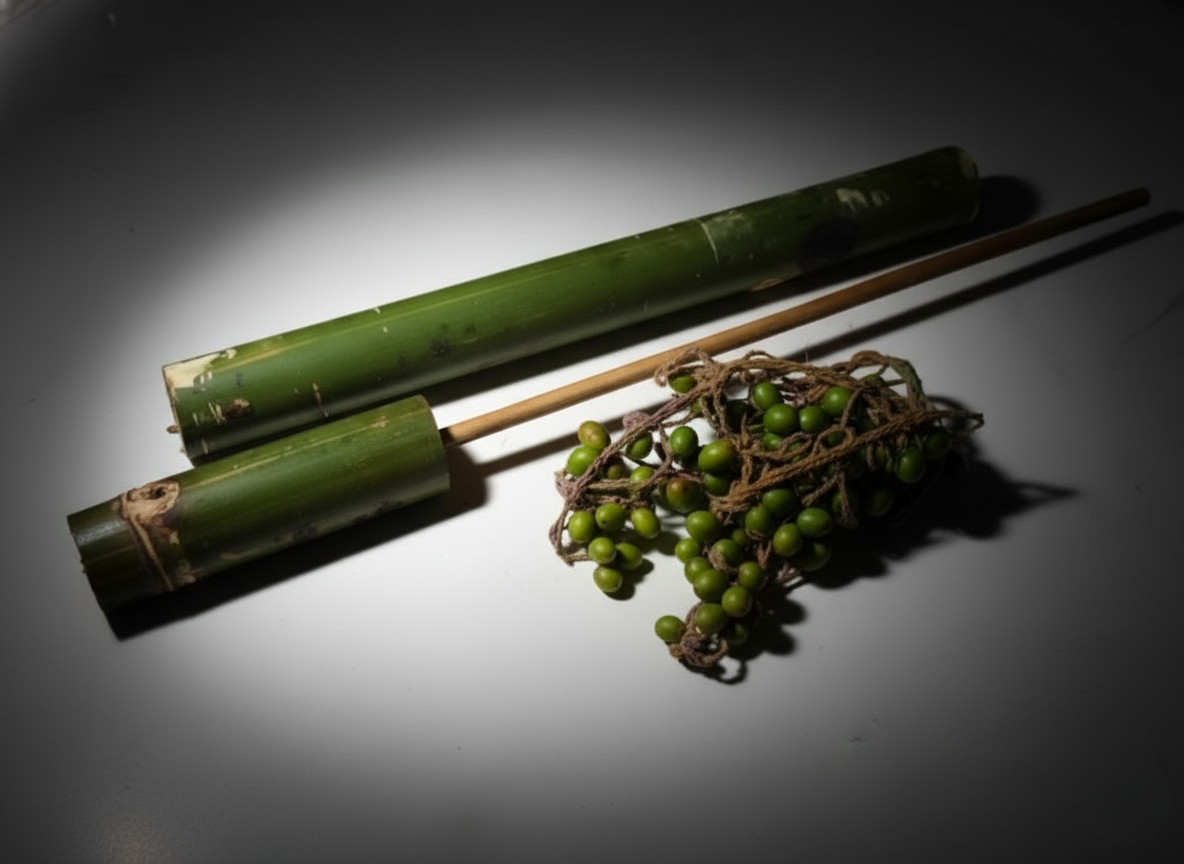
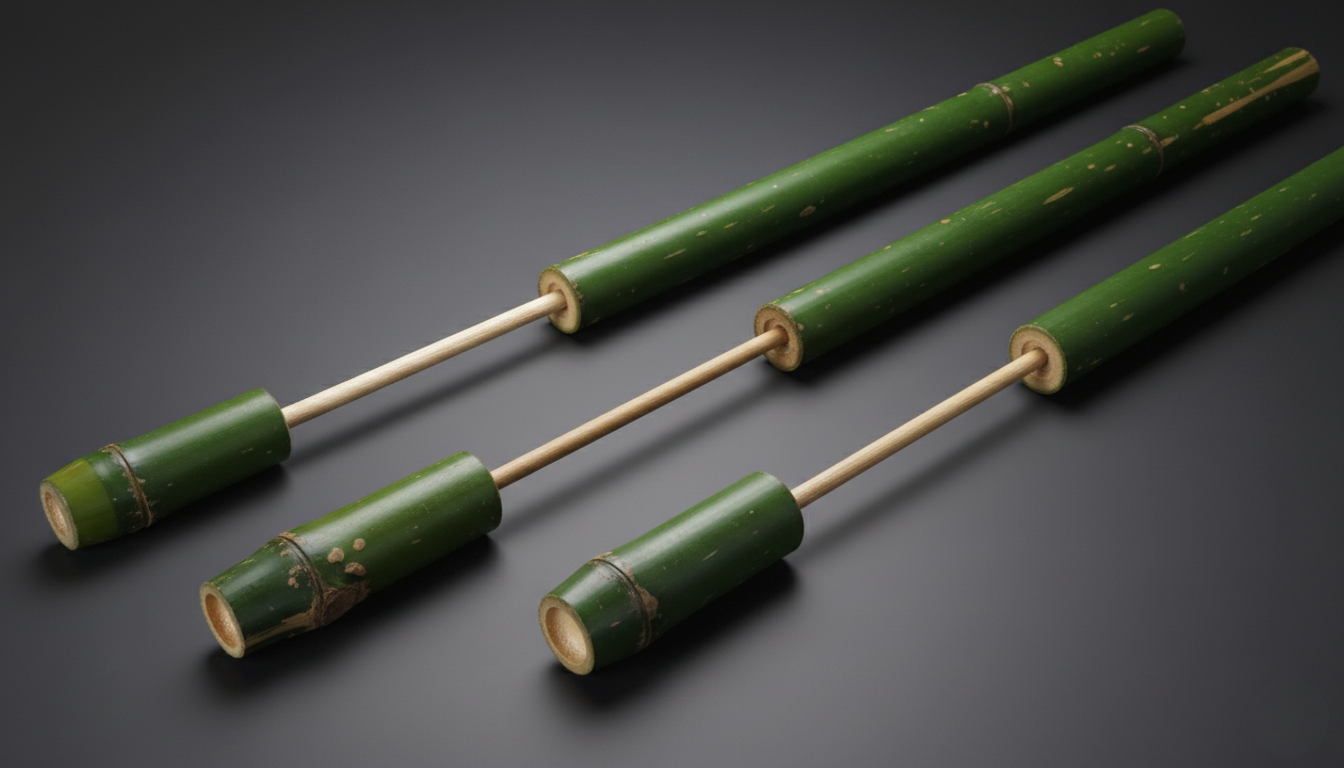
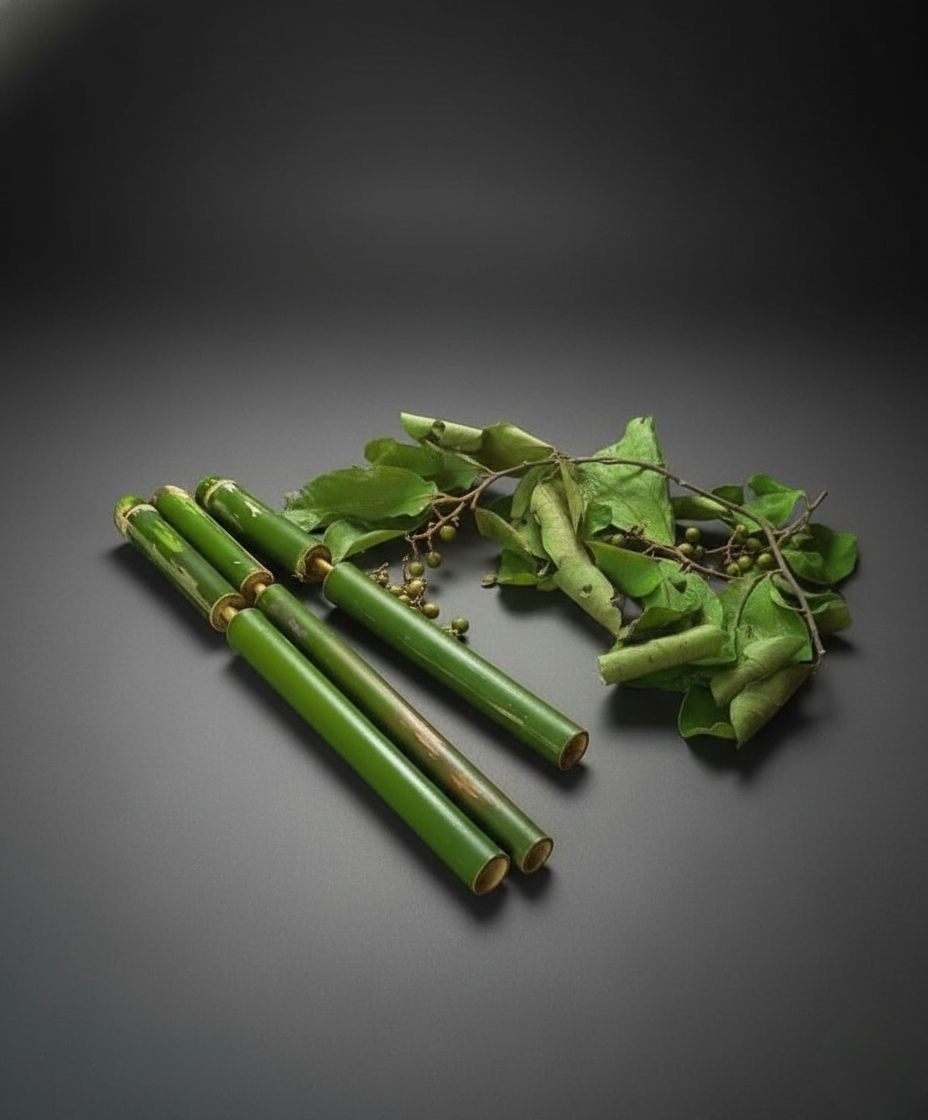
- Caplong is a simple shooting device made from a piece of bamboo or PVC pipe as the main barrel, paired with a smaller plunger stick used to generate force. Its uniqueness lies in its straightforward yet effective application of physics specifically, the use of trapped air pressure inside the bamboo chamber to propel a projectile forward. The projectile commonly used is the small, hard cenerai fruit, though it may also be replaced with compressed balls of wet paper. When the plunger is thrust forcefully into the barrel, the resulting air pressure shoots the projectile out at high speed, producing a sharp popping sound resembling “Cap Lom.” This distinct sound is believed to be the origin of the game’s traditional name.
- The primary purpose of Caplong is to create a playful simulation of mock battles, allowing children to imagine themselves as heroes defending or attacking a fort. It is typically played in groups and incorporates elements of strategy, cooperation, and enjoyable hide-and-seek tactics. Beyond physical agility in running and hiding, Caplong also tests players’ accuracy and precision in aiming. Through this game, children learn not only the skill of crafting their own tools but also essential social skills involving teamwork and interaction.
- More than just a form of entertainment, Caplong holds a significant sociocultural role in traditional communities. It serves as a medium for communication and social interaction that strengthens friendships across different age groups. The communal process of constructing the Caplong, often done cooperatively such as teaches values such as knowledge sharing and patience. Caplong stands as a testament to the rural way of life, where entertainment was creatively derived from nature using bamboo and cenerai fruits rather than complex technology.
- However, Caplong now faces challenges to its sustainability due to modernisation and the rise of digital technology. Interest in physical, outdoor games like this has declined, placing the tradition at risk of disappearing. Therefore, efforts to revive Caplong through cultural activities, community programmes, and heritage exhibitions are crucial. Through such initiatives, younger generations can appreciate the historical significance, craftsmanship, and scientific principles embedded in this traditional game—ensuring that Caplong remains a cherished nostalgic heritage within Malaysian society.
In general, the Caplong game serves several important functions and cultural roles, including:
A Recreational Activity for Children
Caplong provides an enjoyable outdoor pastime for children, especially those living in villages or rural areas. The game involves running, hiding, and active physical movement, all of which contribute to physical fitness and healthy outdoor play.
Encouraging Social Interaction
The game is usually played in groups or teams, promoting cooperation and teamwork. It encourages players to engage in strategic planning, communicate effectively through giving and receiving instructions, and develop tolerance when dealing with both victory and defeat.
Enhancing Motor Skills and Creativity
The process of making a Caplong device is a learning experience in itself. Children learn practical crafting skills such as measuring, cutting, and smoothing bamboo. This hands-on activity not only improves their fine motor skills but also fosters creativity as they design and build their own toy.
Training Cognitive Skills and Strategic Thinking
As a shooting and mock-battle game, Caplong requires players to plan strategies, identify targets, and make quick decisions. These elements help develop cognitive skills, mental agility, and problem-solving abilities.
Developing Targeting Accuracy
The game introduces basic scientific concepts such as air pressure and thrust. Players learn that a stronger push creates higher air pressure, resulting in a faster projectile and a louder popping sound. This indirect exposure to physics helps improve hand-eye coordination and precision when aiming at moving or stationary targets.
-
The Caplong device is simple to make, as it requires only natural materials such as bamboo. To produce a good-quality Caplong, the following materials are typically used:
Bamboo (Caplong Barrel)
This is the main component that functions as the barrel or body of the Caplong. The bamboo selected is usually small, straight, and has walls of suitable thickness—not too thick and not too thin—with a length of approximately 20 to 40 cm. This ensures that the barrel is light, durable, and capable of producing strong air pressure when used.
Small Bamboo Stick (Plunger)
The plunger is the stick used to push the projectile into the Caplong. It must be slightly smaller than the inner diameter of the bamboo barrel but large enough to compress air effectively inside. The stick should be smooth, straight, and sturdy to ensure efficient air pressure generation and safe operation.
Cenerai Fruit (Projectile)
The cenerai fruit is the most commonly used projectile. It is a small forest fruit whose diameter closely matches the internal size of the bamboo barrel, allowing it to fit snugly for optimal air compression. However, the cenerai fruit may also be replaced with alternative materials such as wet, compressed paper or small rubber seeds of similar size.
The Caplong game is carried out in two main stages: the preparation stage (loading the projectile) and the action stage (shooting). Each step plays a crucial role in generating sufficient air pressure to propel the projectile effectively.
Preparation Stage (Loading the Projectile)
At this stage, the player must prepare two projectiles to create a sealed air chamber inside the Caplong.
Inserting the First Projectile
Take one projectile (either a cenerai fruit or a compressed wet paper ball).
Insert it into the front end of the Caplong.
This first projectile acts as the rear air barrier.
Pushing the First Projectile to the Back
Use the plunger to push the projectile deep into the bamboo, almost reaching the back end.
This step positions the first projectile firmly, allowing an air chamber to form in front of it.
Inserting the Second Projectile
Take the second projectile and insert it into the front opening of the Caplong.
This second projectile is the main pellet that will be fired.
Creating the Trapped Air Chamber
At this stage, there is a pocket of air trapped between the first (rear) and second (front) projectile.
This trapped air becomes the source of pressure, which—when compressed, forces the front projectile out with high speed and accuracy.
Action Stage (Shooting)
Once the Caplong is properly loaded, the player is ready to shoot.
Aiming at the Target
Point the Caplong towards the target, whether it is an opposing player in a mock battle or a static target such as a tin can for accuracy training.
Pushing the Plunger Rapidly
Place the plunger against the back of the second projectile.
Push the plunger forward forcefully and as quickly as possible.
This sudden motion rapidly compresses the air chamber.
Firing Process
The quick thrust causes the trapped air between the two projectiles to compress intensely.
The high air pressure overcomes the friction holding the front projectile, propelling it outward with force.
Context of Group Play (Mock Battle Game)
When Caplong is played as a group battle game, the rules become more exciting and interactive:
Players are divided into two teams.
Each team finds cover and launches attacks at their opponents from a safe distance.
Soft projectiles (small fruits or wet paper pellets) are used for safety.
A player hit by a projectile is considered “tagged” or “out,” depending on agreed rules.
The winning team is determined by the number of members still “alive” or not yet hit by enemy fire.
-
Reference Source
Bahan Bacaan
Sulaiman, R., Rahim, A., Zahari, S. S., Roslan, N. F., Tarmizi, M. S. H. A., Ismail, A., & Saad, M. H. (2023). Visual thinking from children's traditional games through cultural social concepts. International Journal of Art and Design, 7(2), 139–150.
Zahari, S. S., Roslan, N. F., Ahmad Tarmizi, M. S. H., Ismail, A., Mohd Salleh, A. N. R., & Saad, M. H. (2023). Pemikiran visual daripada permainan tradisional kanak-kanak menerusi konsep sosial budaya. International Journal of Art and Design (IJAD), 7(2), 141–152.
Young Tourism One Love. (2013, July). Permainan Caplong: Dulu budak-budak kena kreatif! Retrieved from https://youngtourismonelove.blogspot.com/2013/07/permainan-caplong-dulu-budak-budak-kena.html
Location
State JKKN Contact Information
Cultural Officer
Jabatan Kebudayaan dan Kesenian Negara
Use the form below to contact the Informant/Figure/Editor/Researcher directly. We will respond to your inquiry as soon as possible!


