

ARTS AND CULTURE INFORMATION GATEWAY
Immerse yourself in the colorful world of art and culture! From traditional heritage to contemporary works, discover uniqueness that reflects the nation's identity and identity
CARI CUCU - NENEK SI BONGKOK TIGA
 Fakulti Muzik dan Seni Persembahan, Universiti Pendidikan Sultan Idris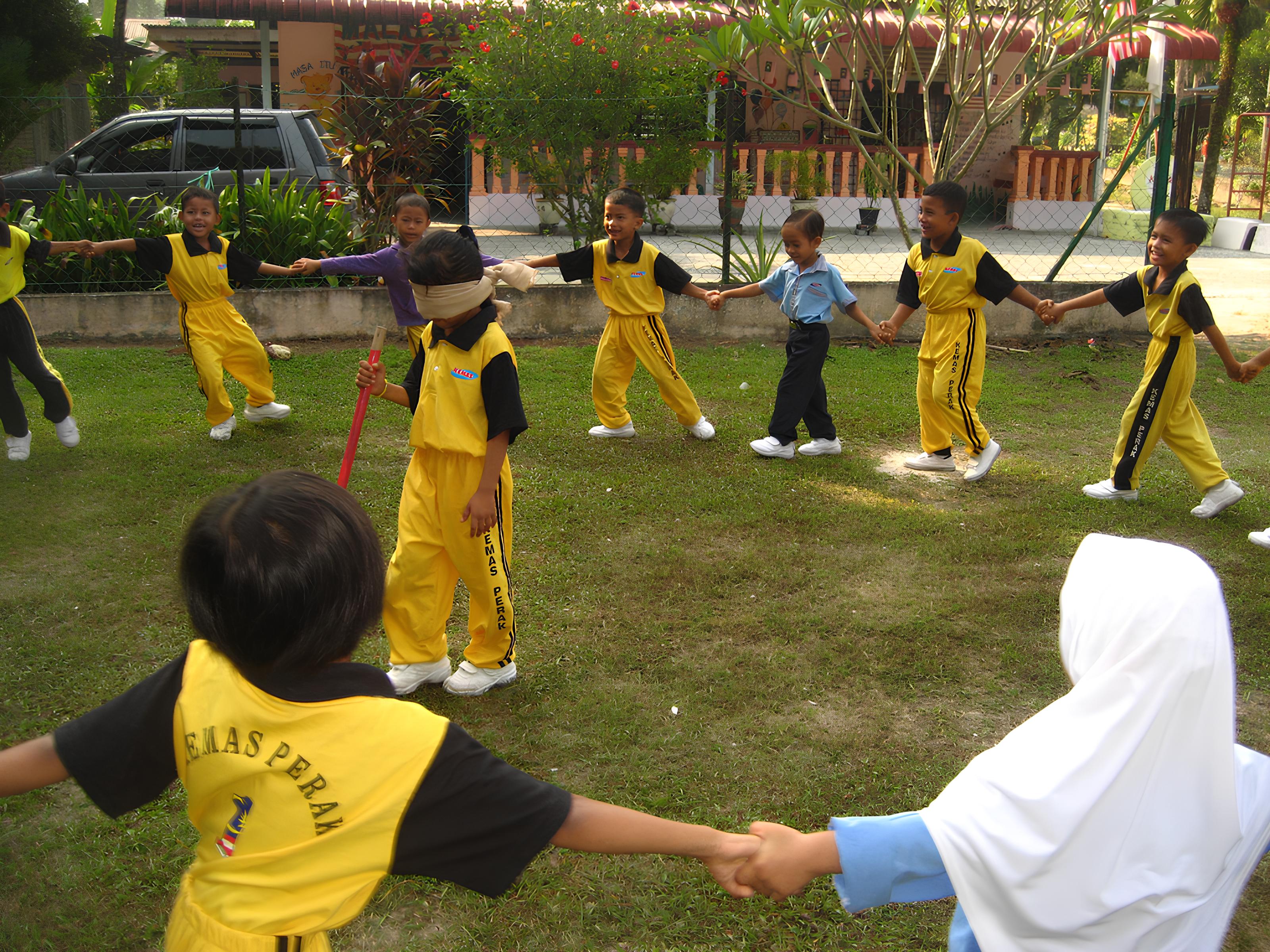
Picture
6
Video
No record
Today's Visitor
81
Number of Visitors
1301
Introduction and history
The traditional game cari cucu–nenek si bongkok tiga is one of the Malay children’s heritage games rooted in the community’s oral tradition. This game combines rhythmic singing with role-playing, making it unique and different from purely physical games. It is usually played in open spaces such as house yards, village halls, or open fields, especially in the late afternoon or during bright moonlit nights when children gather after helping their families during the day. The number of players is not limited; in fact, the more participants there are, the more lively and exciting the atmosphere becomes.
The traditional game cari cucu–nenek si bongkok tiga not only serves as a form of entertainment but also plays an important role in the social, emotional, and physical development of Malay children. Essentially, this game provides a fun recreational activity, fills leisure time, and strengthens friendships among peers. Through rhythmic singing and interactive play, children can create a joyful atmosphere, reduce stress, and learn to socialise within larger groups.
From a social perspective, the game functions as an effective tool for socialisation. Children are taught to cooperate in groups, respect turns, and understand their respective roles within the game. The sense of teamwork that arises from these activities helps build a strong feeling of belonging, which is vital in shaping good relationships among peers and the wider community.
-
The traditional game of "cari cucu–nenek si bongkok tiga" essentially does not require any complicated equipment. Like most folk games passed down through generations, it relies on children’s creativity and the resources available around them.
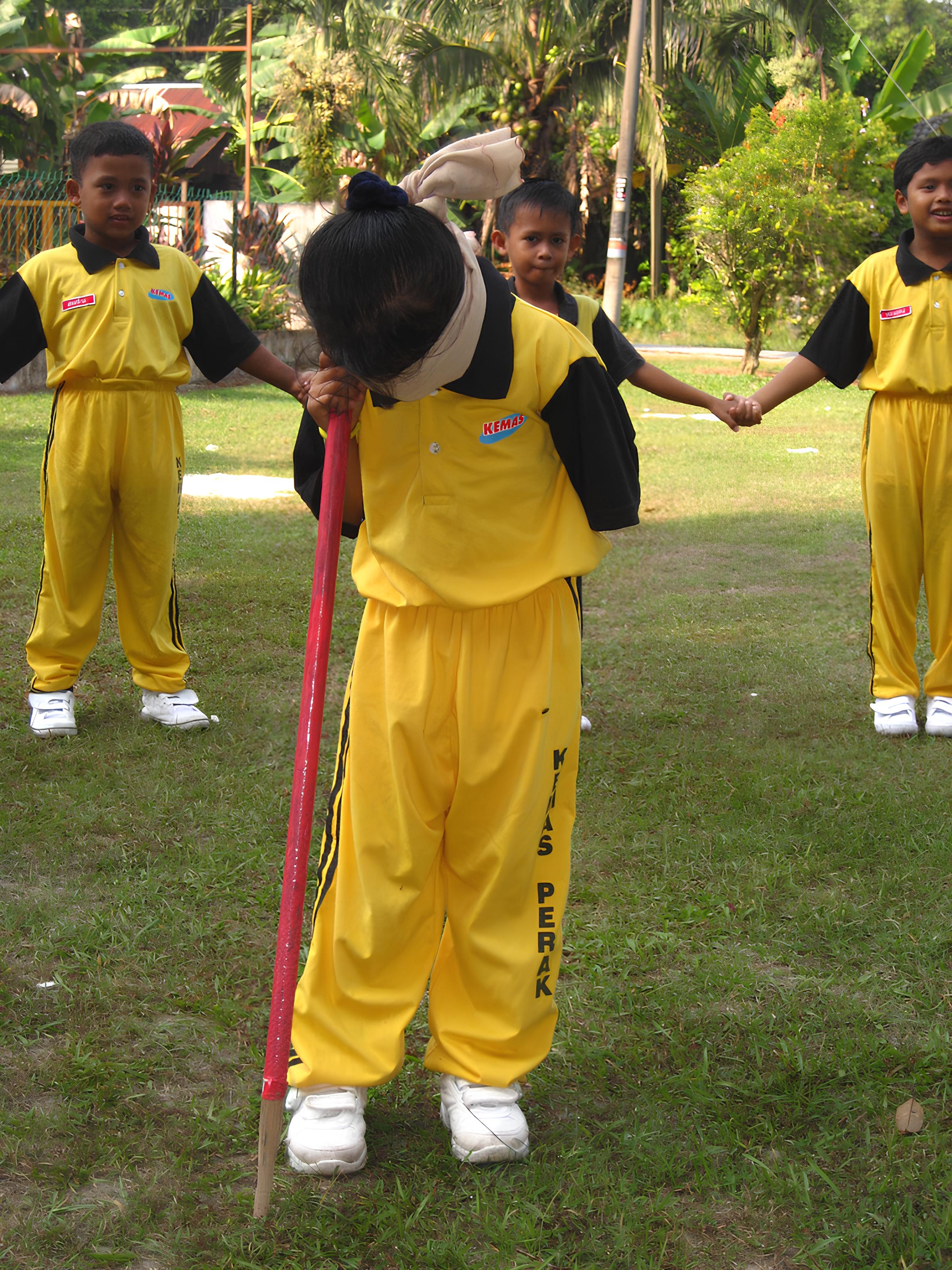
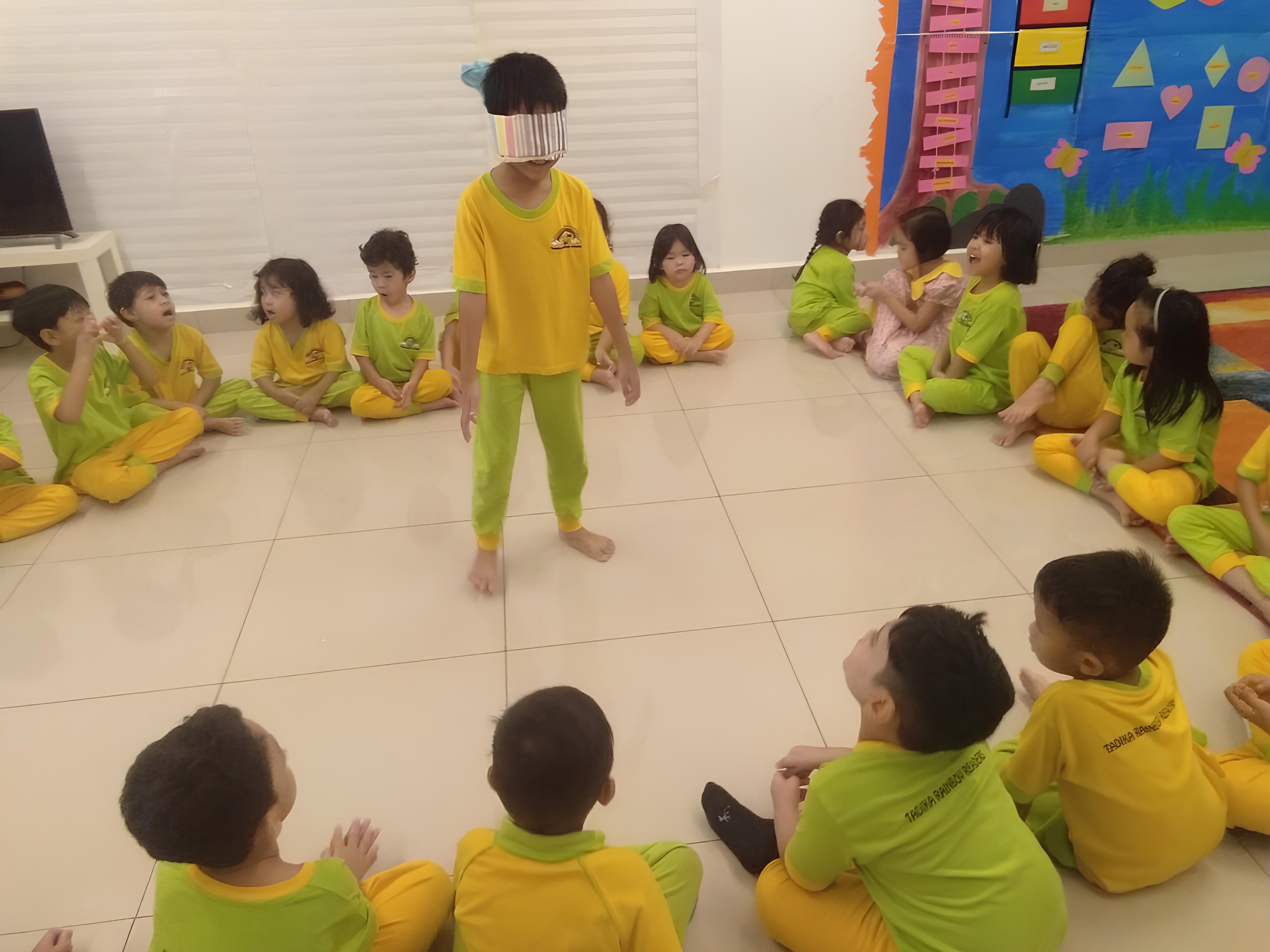
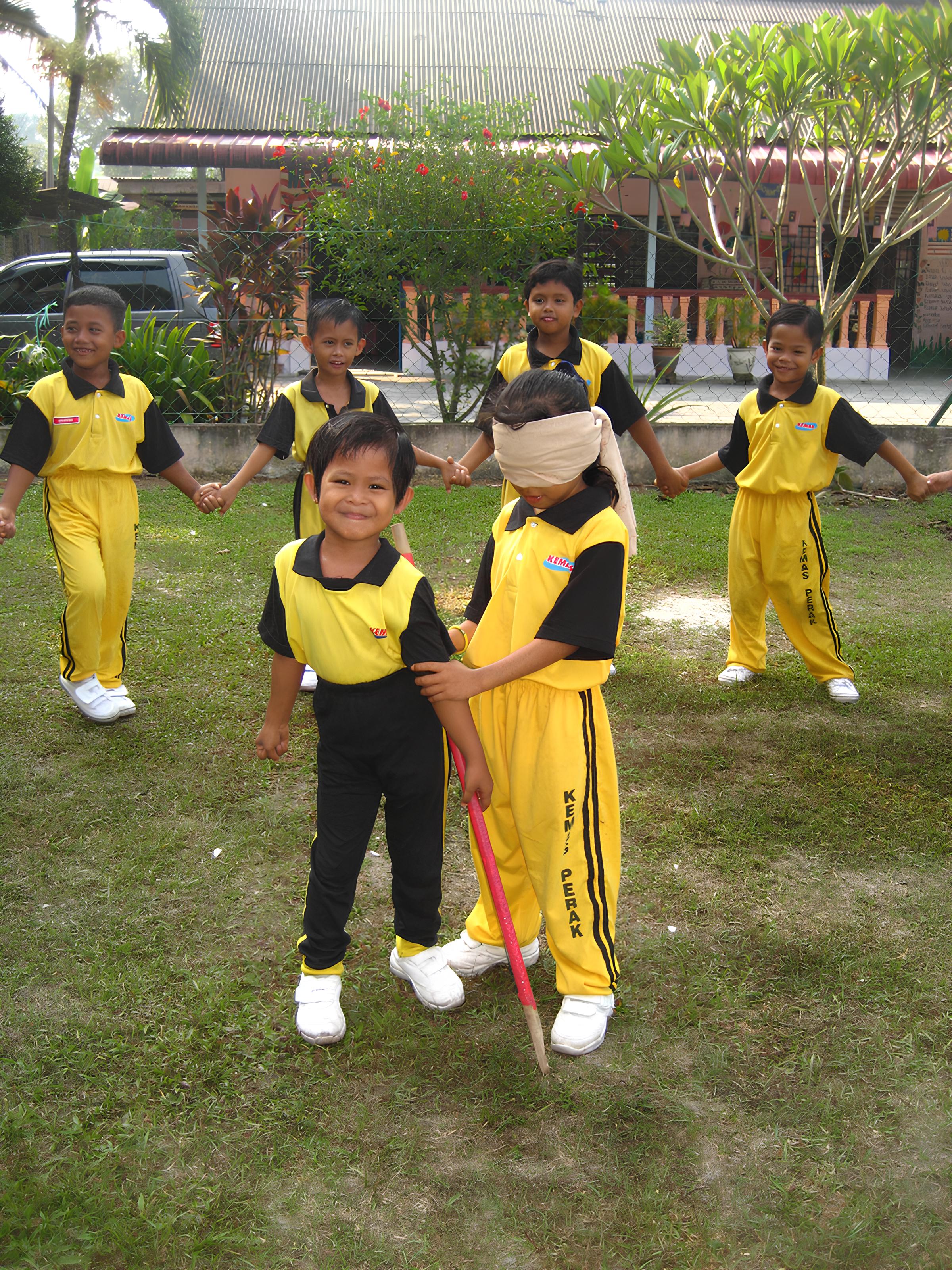
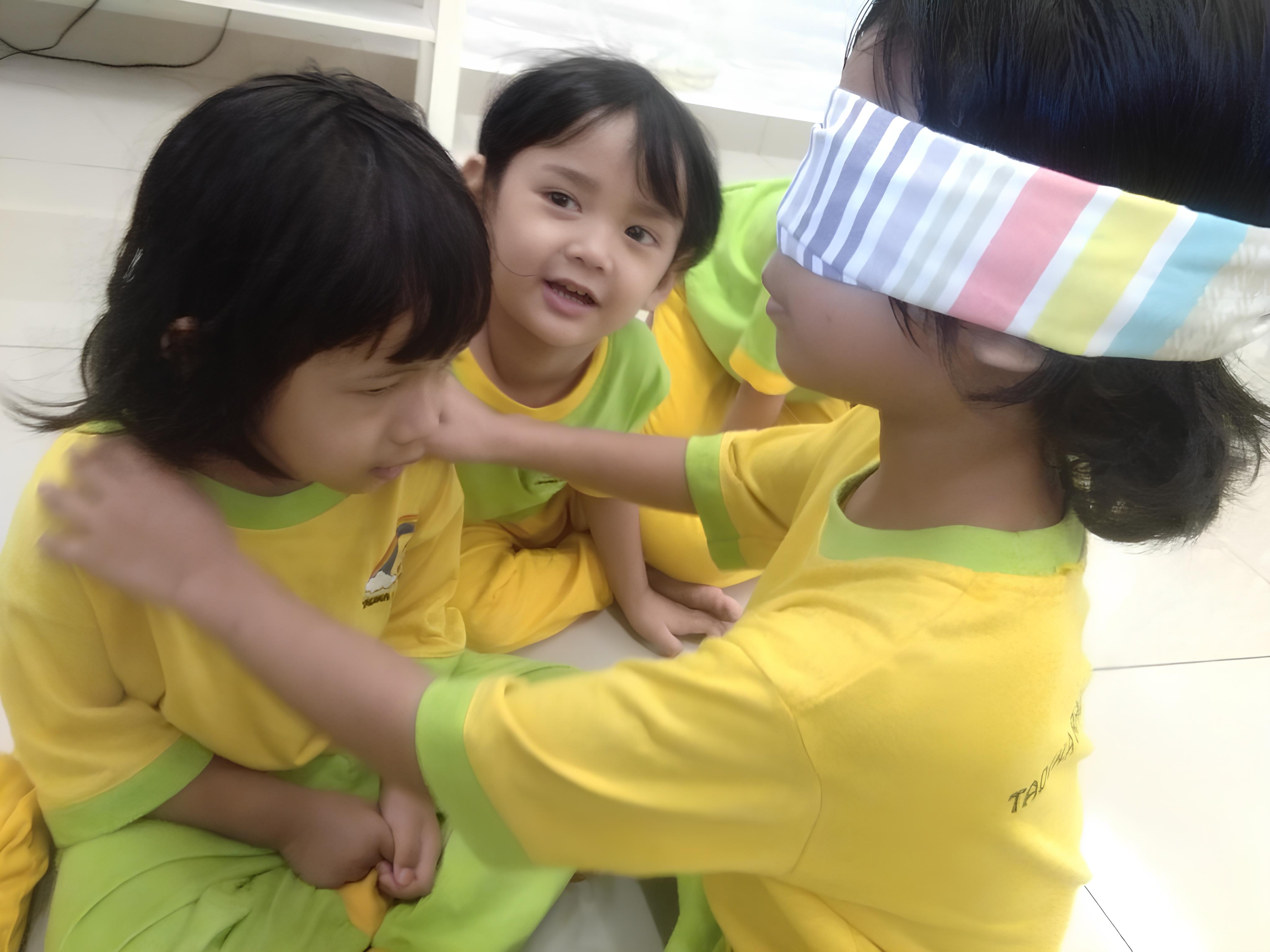
To carry out this game, only a few basic items are needed. Among them is a piece of cloth or a handkerchief used to cover the eyes of the player taking the role of the “nenek”. The blindfold is important as it challenges the player to rely on other senses, such as touch and hearing, in order to identify which “cucu” has been caught.
Additionally, the game utilises a wooden stick held by the “nenek.” The stick not only symbolises the physical condition of a bent old woman but also adds a dramatic and entertaining element to the game. Meanwhile, the other children only need an open area as the playing ground and knowledge of the lyrics to the song “Nenek Si Bongkok Tiga” to be sung together as part of the game.
The game cari cucu–nenek si bongkok tiga is played in groups and requires at least four players. A larger number of participants makes the game more lively and challenging. It can be played by both boys and girls in open, comfortable spaces free from obstacles.
Selection of the “nenek”
Before the game begins, one player is chosen to play the role of the grandmother “nenek.” This selection can be made through a simple draw, such as the Lai Lai Li Tam Plong game. The player who loses in the draw will have their eyes covered with a handkerchief or piece of cloth to mark them as the “nenek” A stick is then given to them to hold, and they must act like a bent and blind old woman.
Game Formation
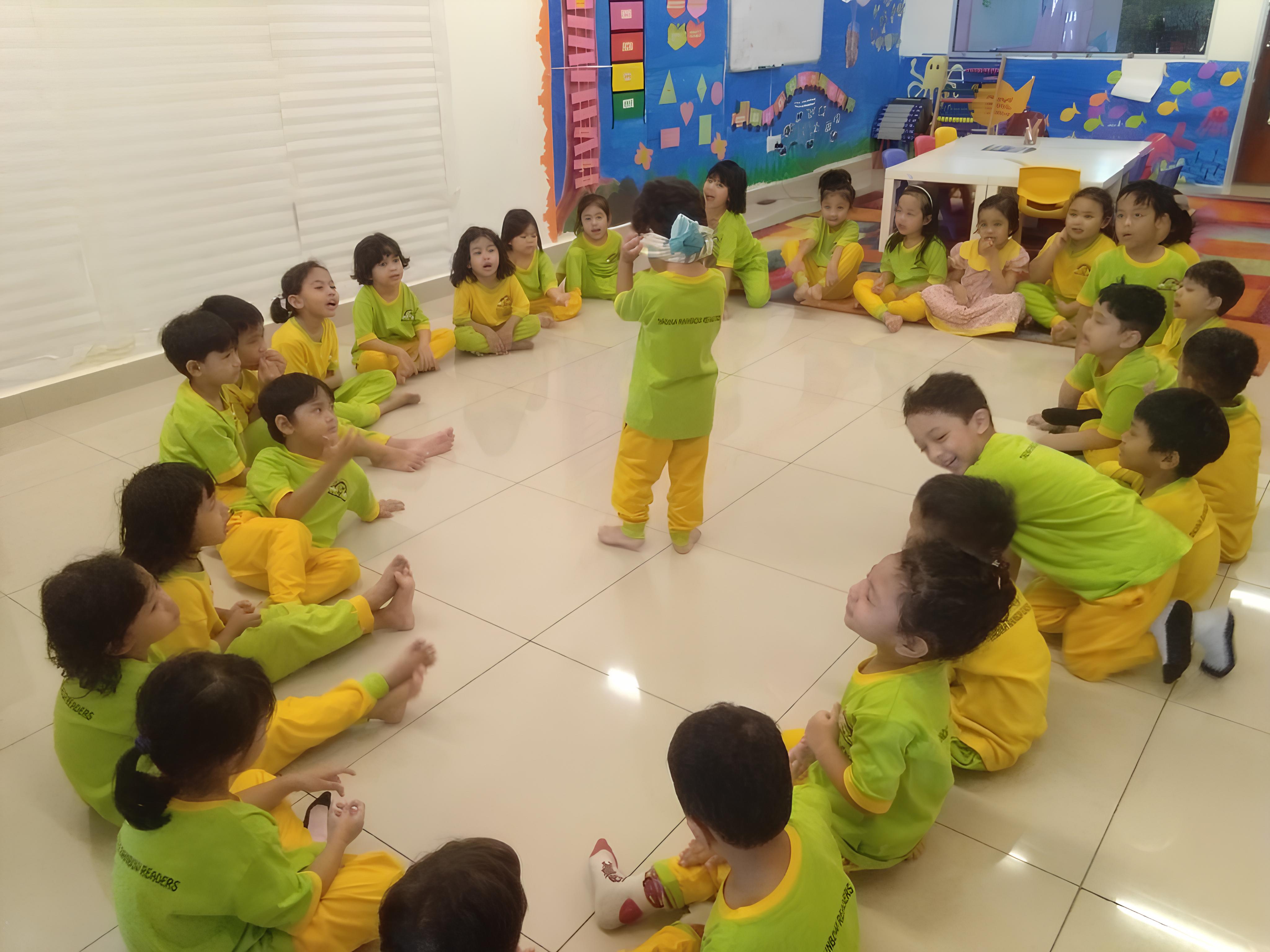
The other players form a circle while holding hands. The “nenek” stands in the middle of the circle, eyes covered, and holds a stick in hand. The game begins with all players singing the following song while moving around the “nenek”:
- Nenek-nenek si bongkok tiga,
Siang mengantuk malam berjaga,
Mencari cucu di mana ada,
Nenekku kahwin dengan anak raja.- During the singing, the “nenek” remains silent while moving the stick, bending her body, and acting out the role of an old woman. Once the song ends, all players stop, squat down, and remain silent.
- 3. The Grandmother’s “Nenek” Turn
Next, the “nenek” sings the following verse:
- Cucu-cucu tak dapat lari,
- Nenek tua banyak sakti,
- Sekarang nenek mencari ganti,
- Siapa yang kena dia yang jadi.
After this, the “nenek” begins to grope around the circle to find a “grandchild.” Any player touched must remain still and is not allowed to run away. The “nenek” will then attempt to guess the player's identity, either through touch or by asking the player to make a sound for recognition.
Rules of the Game
The “nenek” must not remove the blindfold throughout the game.
A player who is caught cannot run away while the “nenek” is guessing.
If the “nenek” correctly identifies the player, that player will become the new “grandmother.”
If the guess is wrong, the “nenek” is allowed three attempts before moving on to another player.
Other players are not allowed to reveal or give away the identity of the player being touched.
5. Techniques of Play
The game emphasises coordination and concentration. Players form a circle while singing, while the “nenek” acts like an old woman by walking slowly, bending over, and tapping the stick. The fun arises when all players laugh and try to avoid being caught, but must remain silent when it is the “grandmother’s” turn to search for a grandchild.
6. Safety Measures
To ensure safety, the game should be played in an open area free from obstacles such as stones, glass, or sharp objects that could cause injury. The play area should also be clearly marked to prevent players from moving too far. Participants are encouraged to wear proper sports attire and suitable footwear to minimise the risk of accidents.
-
Reference Source
Bahan Bacaan
Md Noh, M., & Muhammad, M. (2021). Character portrayal and Malay women characters in Malay classical cinema during studio era: ‘Musang Berjanggut’ (1959), ‘Tun Fatimah’ (1962). ESTEEM Journal of Social Sciences and Humanities, 5(1), 26–39.
Shamsuddin, A. (1992). Lagu-lagu permainan tradisional Melayu. Kuala Lumpur: Dewan Bahasa dan Pustaka.
Wikipedia. (n.d.). Permainan cari cucu. In Wikipedia bahasa Melayu. Retrieved August 29, 2025, from https://ms.wikipedia.org/wiki/Permainan_cari_cucu
Aishahasyikin. (n.d.). Aishah Asyikin blogspot. Retrieved August 29, 2025, from https://aishahasyikin.blogspot.com/
ABC Taman Hatiku. (2012, August). Nenek-nenek si bongkok tiga (senarai permainan). Retrieved August 29, 2025, from https://abctamanhatiku.blogspot.com/2012/08/nenek-nenek-si-bongkok-tiga-senarai.html
Traditional Games CCT. (2013, March). Nenek si bongkok tiga. Retrieved August 29, 2025, from https://traditionalgamescct.blogspot.com/2013/03/nenek-si-bongkok-tiga.html
Location
State JKKN Contact Information
Cultural Officer
Jabatan Kebudayaan dan Kesenian Negara
Use the form below to contact the Informant/Figure/Editor/Researcher directly. We will respond to your inquiry as soon as possible!


