Picture

6

Video

No record

Today's Visitor

2

Number of Visitors

2

Introduction and history

Music is one of the branches of art that has held a significant place in human civilization since the earliest days of history. Across societies, music is not merely a form of entertainment, but it also occupies sacred spaces, rituals, and official ceremonies that connect human beings with spiritual powers or governing institutions. In the Malay world, music developed in tandem with the rise of kingdoms and sultanates, becoming a symbol of authority, cultural identity, and royal heritage. This demonstrates that in traditional societies, music was never marginal or considered trivial, but rather held high esteem as an integral part of cultural and political systems.

Within the Malay context, one of the most influential traditions of court music is the Nobat. Nobat is not the music of the common people, but rather a royal orchestra with an exclusive status, as it is performed only within the royal court. It has been preserved for more than 400 years, making Nobat one of the oldest surviving Malay art forms. The tradition of Nobat continues to be practiced in several states, particularly Kedah, Perak, and Kelantan, with Kedah being recognized as the state that has maintained this practice the longest and most consistently.

Nobat is considered unique because it can only be played by selected musicians known as Orang Kalur. Their membership is not based on talent alone but is inherited through lineage, passed down from one generation to the next. The strict taboos surrounding Nobat make it highly exclusive and laden with symbolic meaning. It is therefore unsurprising that the general public knows of Nobat mainly through hearsay or stories. At the same time, those living near royal centers such as Alor Setar or Kuala Kangsar are more familiar with its sound.

Historically, various records mention the existence of Nobat in the region. According to Malaya in History, July 1962 edition, Nobat in Kedah has been known for about four centuries. In the classical chronicle Sejarah Melayu (The Malay Annals) dated around 1658, it is stated that during the reign of Sultan Muhammad Shah, who ruled Melaka circa 1435, Nobat was already played in the palace and functioned as the official court orchestra. The text also associates the origin of Nobat with a gift presented by the queen of Bentan to Sri Tri Buana, the first ruler of Singapura (Temasek). The gift was said to be the Nobat itself, which from then on was performed in Malay royal courts.

However, modern scholars tend to dismiss this legend as a historical fact. Contemporary perspectives argue that the story in the Sejarah Melayu is more mythological and symbolic rather than a concrete historical record. Instead, a more plausible theory suggests that Nobat was introduced to the Malay Peninsula through Arab traders and Islamic missionaries who were actively engaged in commerce and religious dissemination from the 13th century onwards. This theory is supported by several indications, including the similarity between Nobat in the Malay world and Naubat in India, believed to have been brought by noble Arab traders. In addition, historical records show that Nobat musical notations (known as Dai) were written in Jawi script. Nobat was also frequently performed at times coinciding with Islamic prayers—Subuh (dawn), Maghrib (sunset), Isyak (night), and on Fridays—further emphasizing its close connection with Islamic traditions and its dissemination through trade and cultural networks.

The etymology of Nobat also has several interpretations. The first suggests that the word Nobat originates from the Persian term Naubat, meaning “Nine Types.” The term refers to an orchestra consisting of nine musical instruments. In Persian and Indian traditions, Naubat was performed in courts as a symbol of royal power, and this influence is believed to have been absorbed into the Malay courts. Another interpretation proposes that Nobat derives from the Sanskrit word Nao-Bat, which means “a combination of nine musical modes.” In Hindi or Punjabi, the word Nau means “nine,” while Bat means “variety” or “sound.” Thus, Nobat in this interpretation conveys the meaning of “nine modes of sound,” reflecting its nature as a complete royal orchestra. Although interpretations vary, what is certain is that the term Nobat reflects cross-cultural influences from Persia, India, Arabia, and the Malay world, eventually shaping the court music identity we know today.

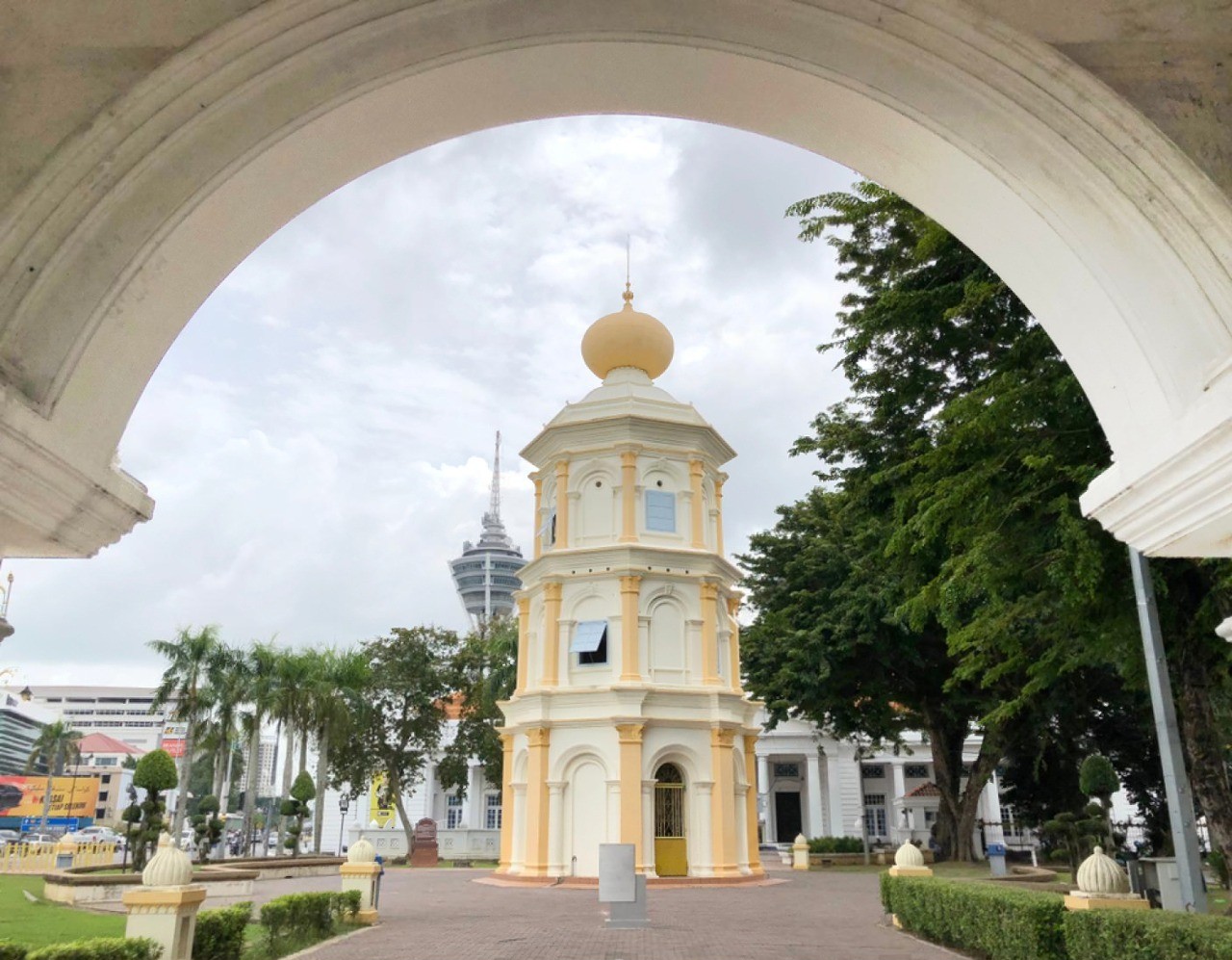
The presence of Nobat in Kedah is also associated with the construction of a special building known as the Balai Nobat. This was one of the earliest structures erected in Alor Setar after the town was founded by Sultan Muhammad Jiwa Zainal Abidin Muazzam Shah (the 19th Sultan of Kedah, reigned 1710–1778). The Balai Nobat served as the official storage place for Nobat instruments when not in use. Alongside Balai Nobat, other major buildings were also constructed during this period, including Istana Kota Setar, the Balai Besar, and the State Mosque. Old records reveal early photographs of the Balai Nobat, but details of its original form remain unclear due to the absence of comprehensive documentation.

The building underwent several renovations:

  • During the reign of Sultan Ahmad Tajuddin Mukarram Shah (1854–1879): The Balai Nobat was renovated into a five-storey wooden structure with a zinc roof.

  • During the reign of Sultan Abdul Hamid Halim Shah (1882–1943): In 1906, it was rebuilt as a three-storey building made of stone and metal, while retaining its original design. Islamic architectural influence was highlighted through the addition of a dome at its peak.


According to historical records, the Balai Nobat that still stands today was constructed in Hijrah year 1325 (circa 1907 CE), during the reign of Sultan Abdul Hamid Halim Shah. Before the existence of this dedicated building, Nobat performances were believed to have taken place at the verandah of the Old Kedah Palace, behind the current Balai Besar. Some historians also suggest that the earliest Nobat performances were held in a small structure near the Makam Langgar royal burial site.

Beyond the instruments and music, the Nobat tradition also emphasizes a structured hierarchy among its players. Each ensemble is led by a chief known as the Penghulu, or in Kedah specifically, the Kalur Besar. The Kalur Besar plays a crucial role in coordinating the group, ensuring that all musicians perform their duties properly. He is also required to master all Nobat instruments and understand the customs and regulations of performance.

Supporting him is the Kalur Kecil, who is usually skilled in playing the Serunai, the principal melodic instrument. Other players are known as Orang Nobat or Orang Kalur, depending on the state. In Kedah, the term Orang Nobat is more commonly used, while in Perak, all players are referred to as Orang Kalur, with their leader titled Datuk Seri Guna.

Traditionally, Orang Nobat and Orang Kalur are regarded as Orang Raja (“people of the king”), holding a privileged status within the royal hierarchy. They are not merely musicians but also custodians of the Nobat instruments, responsible for their cleaning, care, and safekeeping in the Balai Nobat. Due to the sacred nature of Nobat, only these appointed individuals are permitted to handle and play the instruments.

Typically, Nobat players are divided into three groups, with each group consisting of six members. They rotate their duties according to a set schedule. During performances, the Tok Kalau or Kalur Besar will hold the Mahaguru (the symbolic spiritual authority of Nobat), while the Penghulu serves as the manager and liaison between the musicians and the palace. This organizational structure underscores the discipline and etiquette observed by Nobat players, showing that Nobat is not simply music, but a deeply institutionalized practice within royal tradition.

In conclusion, the history of Nobat in Kedah and the wider Malay world demonstrates that it is a form of court music rooted in the interaction between local traditions and external influences, particularly Persian, Indian, and Arab. From its legendary origins in the Sejarah Melayu to its present-day practice, Nobat represents the continuity of a royal heritage that is not only central to Kedah but also integral to the cultural history of the Malay world as a whole.

Functions and Roles

Nobat functions as an exclusive royal orchestra because it is performed only within the palace. The musicians who handle the Nobat are known as Orang Kalur, consisting of specially chosen individuals who usually inherit this responsibility through lineage. Due to its exclusivity, the sound of Nobat is most familiar to communities living near the royal centers and palaces. At the same time, those outside these areas know little of it, as Nobat is never performed for the general public.

The role of Nobat became more prominent after the independence of Malaya. In 1957, during the installation of the first Yang di-Pertuan Agong, Tuanku Abdul Rahman ibni Almarhum Tuanku Muhammad (the Yang di-Pertuan Besar of Negeri Sembilan), Nobat was performed at the Istana Negara as the official royal ceremonial music. This event affirmed Nobat’s status as the national court music of Malaysia.

Beyond being a royal orchestra performed in the palace, Nobat is a cultural heritage with a special place in the structure of Malay governance and tradition. Its exclusivity is reinforced by symbolism, strict regulations, and taboos that distinguish it from folk music or popular entertainment. The functions and roles of Nobat can be understood through several dimensions: political, sacred, cultural, and symbolic identity.

1. Symbol of Sovereignty and Royal Authority
The most important role of Nobat is as a symbol of the Sultan’s sovereignty. Since ancient times, Nobat has been regarded as royal music that may only be played when the Sultan is present or officiating in a ceremony. Its sound marks the presence of the ruler and signifies legitimate royal authority. Thus, Nobat serves as a medium of confirming the ruler’s power, similar to the regalia or other instruments of sovereignty. In the context of enthronement, Nobat functions as proof of legitimacy. A ruler crowned without the accompaniment of Nobat is considered not to possess full sovereign authority. Therefore, Nobat is not merely accompaniment music, but a ceremonial instrument essential for the completion of a royal enthronement.

2. A Sacred and Spiritual Instrument
Nobat also serves as a sacred instrument with spiritual significance. It can only be performed by Orang Kalur, musicians chosen from specific hereditary lines who are bound by strict taboos. For example, Nobat instruments cannot be played outside official ceremonies, must not be touched by ordinary people, and are believed to bring misfortune if such taboos are violated.

The spiritual association of Nobat is also reflected in the times it is performed, which often coincide with Islamic prayer times such as Subuh (dawn), Maghrib (sunset), and Isyak (night), as well as on Fridays and at the beginning of the Islamic month. This shows that Nobat is not only linked to political authority but also closely tied to religious and spiritual symbolism, reinforcing the Sultan’s status as a sovereign ruler endowed with divine blessing (berkat).

3. Accompanying Royal Ceremonies
In addition to enthronement, Nobat plays an important role in various royal ceremonies. Its melodies accompany royal weddings, the birth of royal heirs, the Sultan’s birthday celebrations, and the welcoming of honored guests. In this way, Nobat is not a form of entertainment but an official ceremonial soundscape that elevates the dignity of the event. Its sound also has a psychological effect on the audience, evoking reverence, respect, and awe toward the royal institution. Within the palace, Nobat creates an aura of grandeur and sanctity, making every ceremony more majestic and authoritative.


4. Cultural Identity and State Heritage
Another function of Nobat is as a marker of cultural identity. Kedah, for instance, is renowned as the state that has preserved the Nobat tradition the longest. It symbolizes the state’s uniqueness compared to other states in Malaysia. Moreover, when Nobat was performed at the national level during the installation of the first Yang di-Pertuan Agong in 1957, it strengthened Malaysia’s identity as a monarchy rooted in Malay tradition.

Nobat also distinguishes Malay courts from other royal institutions in Southeast Asia. While some neighboring regions have their own forms of court music, Nobat—with its distinctive structure, instruments, and taboos—stands out as a unique cultural heritage.

5. Symbol of Continuity
Nobat acts as a bridge between the past and the present. It is living proof that Malay artistic traditions that emerged hundreds of years ago continue to be preserved today. Each time Nobat is performed in a ceremony, it reminds society of the unbroken continuity of royal heritage and history. In this sense, Nobat functions as a medium of historical memory, ensuring that current generations remain connected to and appreciative of ancestral legacies.

6. Sacredness and Taboos
Finally, the role of Nobat cannot be separated from the sacred aura believed to surround it. Instruments such as the serunai, nafiri, gendang, and gong are regarded as having inherent mystical power. The taboos imposed on their use are not merely to safeguard their sanctity but also to preserve their special status so that they are not reduced to ordinary entertainment. For this reason, Nobat may never be performed for public amusement; if such taboos are broken, it is believed that misfortune or calamity may occur.


Traditional Attire/ Accessories

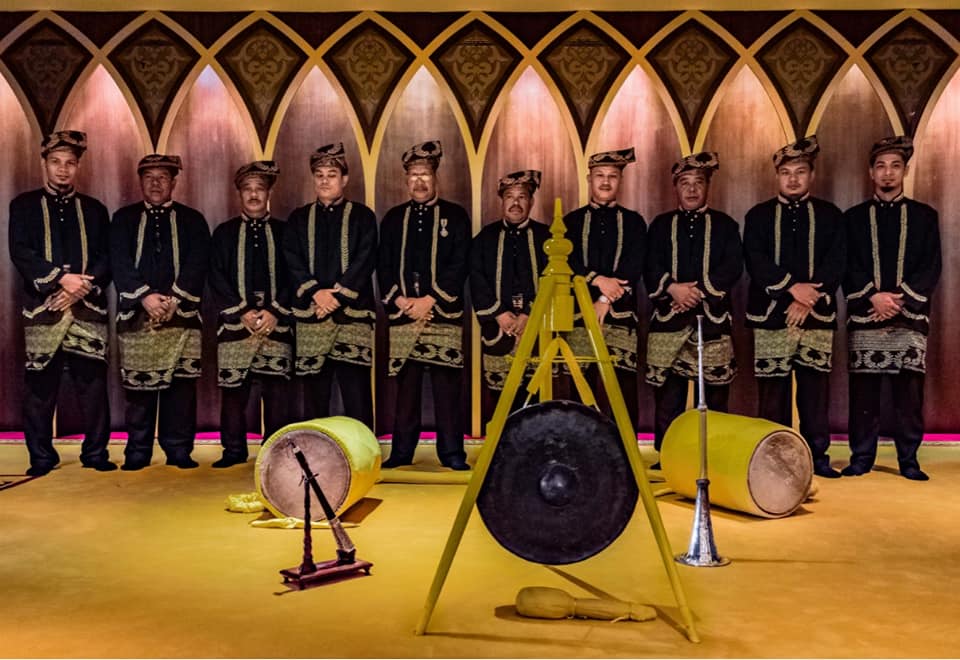
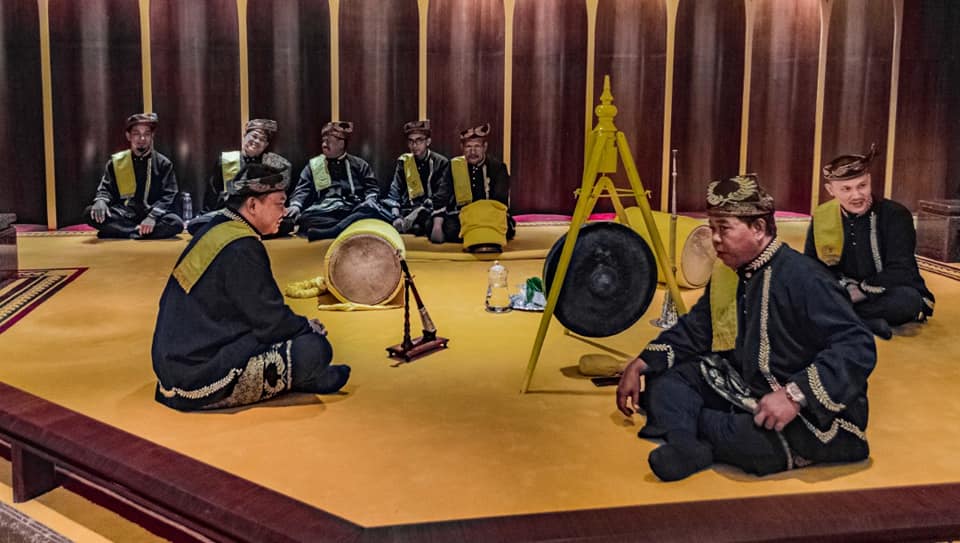
The attire and accessories of Nobat musicians serve as symbols of status and highlight the exclusivity of this tradition. Nobat players are not permitted to dress casually; instead, they are required to wear official court attire that reflects values of modesty, uniformity, and grandeur.

In general, the official attire of Nobat musicians consists of:

  • A black Baju Melayu paired with black trousers.

  • Yellow stripes on the sleeves of the shirt denoting rank distinction.

  • A batik handkerchief, worn as an important accessory symbolizing dignity and traditional identity.

For the Penghulu Nobat (chief of Nobat), the attire is similar but more distinguished, as it features two yellow stripes on the sleeves. His batik handkerchief is embroidered with gold thread, signifying his higher rank within the Nobat hierarchy.

For the Tok Kalau Besar, the attire resembles that of the Penghulu but with only one yellow stripe on the sleeve. Meanwhile, other Nobat players, known as Orang Nobat, wear plain black attire with a simple batik handkerchief, without any gold embroidery. These distinctions function as markers of rank among Nobat musicians, reflecting the discipline and meticulousness embedded in palace traditions.

The choice of colors and accessories in Nobat attire is not merely a matter of aesthetics, but one imbued with deep symbolic meaning. The black attire represents seriousness, strength, and secrecy, aligning with the sacred nature of Nobat. The yellow stripes signify sovereignty, grandeur, and royal authority, as yellow has long been regarded as the royal color in Malay tradition.

The use of the batik handkerchief reflects the integration of local tradition with symbols of dignity and grandeur. Specifically, for the Penghulu, who possesses a batik handkerchief embroidered with gold thread, it signifies his important role as the leader who serves as the link between the Nobat ensemble and the royal court. In other words, every detail of the attire and accessories of the Nobat musicians carries profound meaning and symbolism, rather than functioning merely as a uniform.

Equipment/ Ingredients

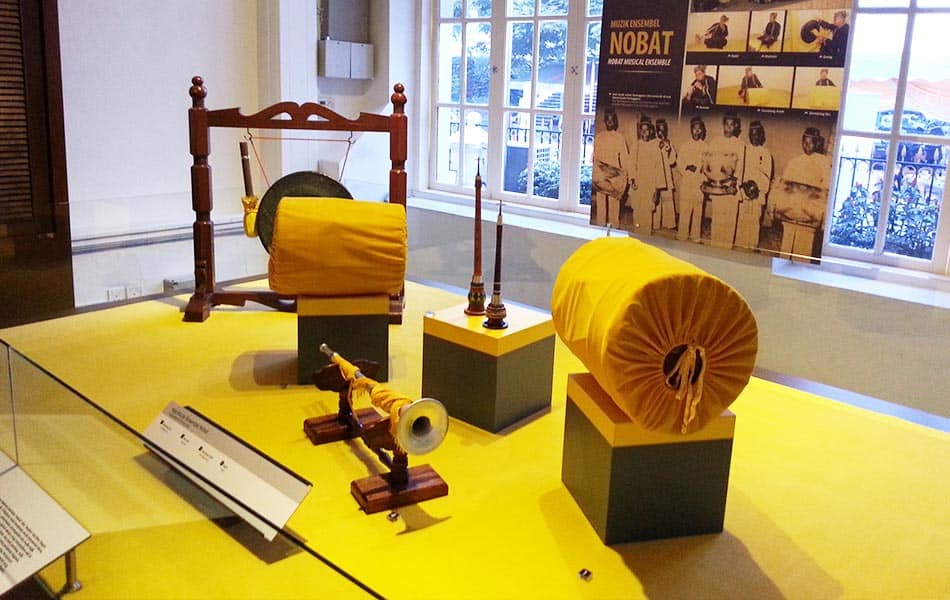
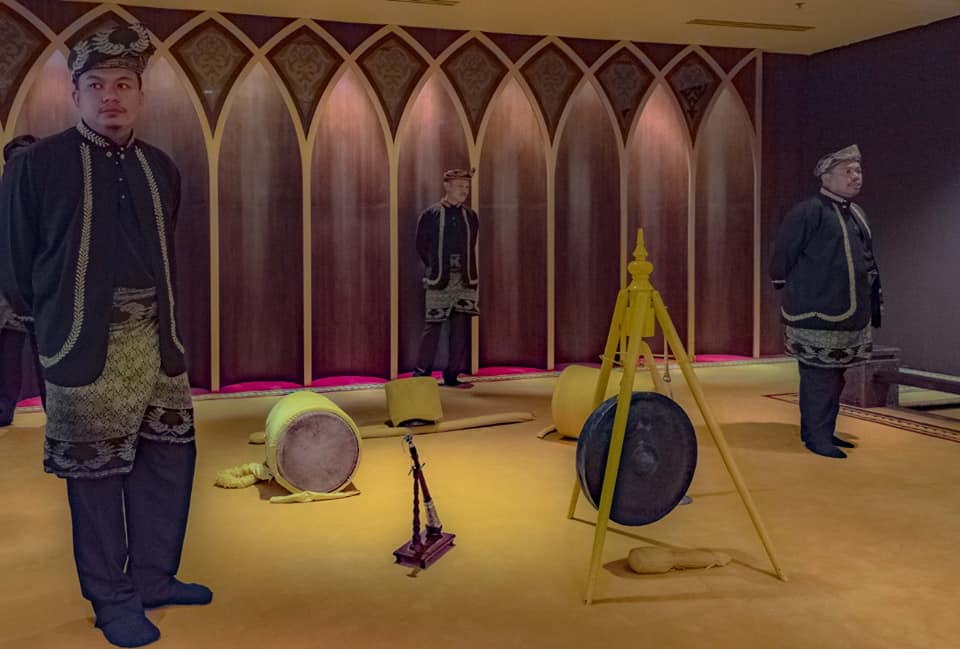
Originally, the Kedah Royal Nobat consisted of nine instruments, but the number was reduced to six during the reign of Sultan Muhammad Jiwa Zainal Abidin Muazzam Shah, the 19th Sultan of Kedah (1710–1778). This reduction was intended to eliminate Hindu influences from the sound of Nobat music and to harmonize the tradition with the spirit of Islamic culture and local identity. Today, the Kedah Nobat ensemble consists of six principal instruments:


  1. Nahara (Large Drum)

The Nahara is the large drum regarded as the “mother” of all Nobat instruments. It is the heartbeat of the ensemble, producing the foundational rhythm that structures the flow of the music. Its position is highly revered, to the extent that only selected musicians are permitted to strike it.


  1. Nafiri

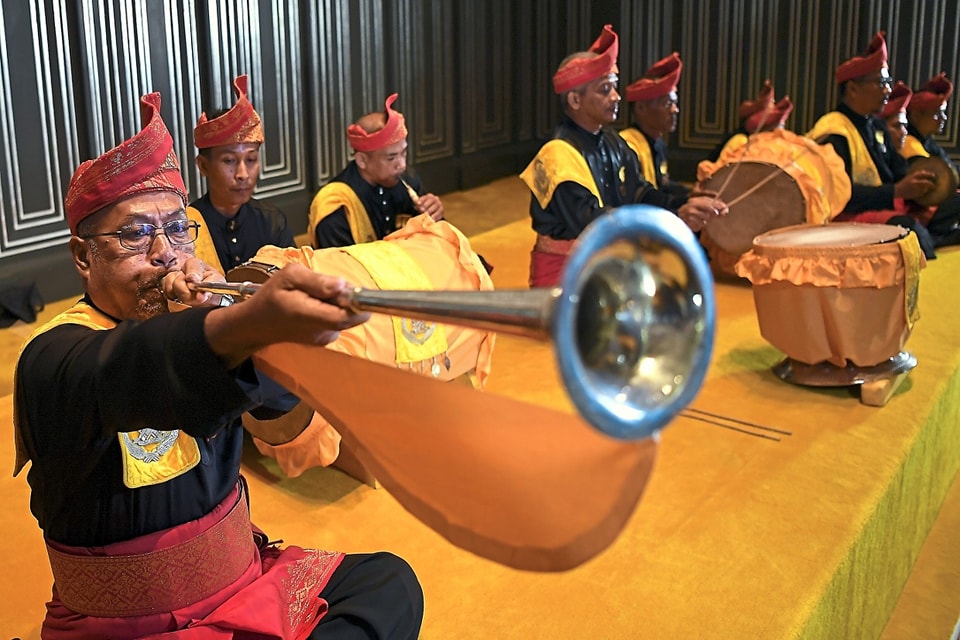
The Nafiri is a long trumpet made of metal. It produces a piercing, resonant sound and is often used to initiate a piece or to signal the beginning of a royal ceremony. The Nafiri holds great symbolic significance, as its first blast is considered the official marker of a ceremonial opening.


  1. Gong

The Gong functions as a closing or structural marker within a composition. Its deep, reverberating tone adds a dramatic effect, enhancing the grandeur of the Nobat performance.


  1. Gendang Ibu and Gendang Anak

In addition to the Nahara, two other important drums in Kedah Nobat are the Gendang Ibu (Mother Drum) and the Gendang Anak (Child Drum). These are played as a pair: the Gendang Ibu maintains the main rhythm, while the Gendang Anak enriches the texture with rhythmic variations. Together, they provide harmony and depth to the Nobat performance.


  1. Serunai

The Serunai is the only woodwind instrument in the Kedah Nobat. Its melodious and plaintive sound carries the main melody of the ensemble. The Serunai is played using the circular breathing technique, which allows for continuous, uninterrupted tones. Historically, there were two types of Serunai: one that played melodic tunes and another called the Serunai Selurus (without melody). However, the Serunai Selurus was abolished during Sultan Muhammad Jiwa’s reforms that reduced the ensemble.


  1. Semambu (Non-Sounding Instrument)

In addition to the principal sounding instruments, the Kedah Nobat includes an object of great symbolic significance: the Semambu. The Semambu is a hard rattan staff that does not produce sound but serves as the Mahaguru (Grand Master) or sacred emblem of the Nobat. It must always be present alongside the other instruments during performances and is held by the Tok Kalau Besar. Without the Semambu, the Nobat performance is considered incomplete.

Three instruments that were once part of the Kedah Nobat but were abolished during the reign of Sultan Muhammad Jiwa are:

  1. The Serunai Selurus (non-melodic serunai).

  2. The large Cheng-cheng (cymbals made of brass).

  3. The small Cheng-cheng.

    The removal of these instruments was carried out to eliminate musical sounds resembling Hindu traditions, thereby aligning the Nobat more closely with Islamic values and local Malay cultural identity.


    Method / Preparation Method / Presentation Method

    Nobat is performed only during official royal ceremonies such as the enthronement of the Sultan, royal weddings, the birth celebrations of royal heirs, and on designated state occasions. 


    Arrangement of the Performance
    A Nobat ensemble typically consists of six active musicians playing the principal instruments: the Nahara (large drum), Nafiri (trumpet), Gong, Gendang Ibu (mother drum), Gendang Anak (child drum), and Serunai (oboe), accompanied symbolically by the Semambu (rattan staff), which serves as the Mahaguru. The musicians sit in an arranged formation, either facing one another or in a circular position, depending on the palace space, with the Tok Kalau Besar acting as the leader. Performances usually begin with the piercing sound of the Nafiri to signal the opening, followed by the beats of the drums and the melodic strains of the Serunai. The gong resounds at specific moments to mark structural divisions or to close a piece.

    Nobat performances are never carried out arbitrarily, as each piece is tied to a specific context. Some pieces are reserved exclusively for the Sultan’s procession, while others are designated for certain days, such as Thursdays or Subuh (dawn). Thus, the performance of Nobat depends not only on musical technique but also on the ceremonial and cultural context in which it is played.

    Nobat Repertoire

    The Kedah Royal Nobat maintains a repertoire of traditional pieces transmitted orally through generations. These pieces are not written in modern notation but are preserved through memorization, repetition, and the master-apprentice system within the Orang Kalur community. Among the principal pieces performed are:


    1. Raja Berangkat (Gendang Berangkat) – performed when the Sultan departs, marking his official procession.

    2. Puteri Mandi Mayang – a ceremonial piece associated with refined palace traditions.

    3. Rama-Rama Terbang Tinggi – a graceful melody symbolizing beauty.

    4. Kumbang Si Kumali (Kumbang Kembali) – a melody reflecting the cycles of nature.

    5. Arak-Arak Atandis (Arak-Arak Untandai/Enteals) – a processional piece performed when accompanying the Sultan or during ceremonial parades.

    6. Aleh-Aleh Panjang – a formal piece with a longer, sustained tempo, played in major ceremonies.

    7. Aleh-Aleh Pandak – a shorter version, performed in simpler events.

    8. Dang Gendang – a lively piece symbolizing valor.

    9. Lenggang Che Kobat – a lilting rhythm, often accompanying more relaxed ceremonial settings.

    10. Jong Ber-Aleh – a symbolic melody, possibly associated with journeys or maritime voyages.

    11. Anak Raja Membasuh Kaki – performed during ceremonies linked to symbolic purification rituals.

    12. Gendang Perang – a bold, martial rhythm associated with heroism.

    13. Nobat Tabal – reserved specifically for the Sultan’s enthronement.

    14. Nobat Raja – performed to signify the Sultan’s presence as the reigning sovereign.

    15. Nobat Khamis – played on Thursdays, reflecting its connection with weekly traditions.

    16. Nobat Suboh – performed at dawn, associated with spiritual dimensions.

      Each piece serves a distinct role in complementing royal rituals, and not all are performed at once. The selection of pieces depends on the ceremonial context—whether for processions, enthronements, celebrations, or spiritual occasions. This demonstrates that Nobat is not merely music, but a ritualized soundscape rich in symbolic meaning.


      Figures and Achievements

      -

      Reference Source

      Bahan Bacaan

      Bernama. (2018, October 19). A 'Nobat' performance like no other. Bernama. https://www.bernama.com/en/news.php?id=1655818


      BiblioLore. (2024, April 25). The nobat in Malay court life. BiblioLore. https://bibliolore.org/2024/04/25/the-nobat-in-malay-court-life


      En-Academic. (n.d.). Kedah Sultanate. En-Academic.com. https://en-academic.com/dic.nsf/enwiki/2947772


      JKKN. (n.d.). Nobat dalam adat istiadat Diraja Kedah. Pemetaan Budaya. Retrieved August 24, 2025, from https://pemetaanbudaya.jkkn.gov.my/senibudaya/detail/988


      Balai Nobat. (n.d.). In Wikipedia Bahasa Melayu. Retrieved August 24, 2025, from https://ms.wikipedia.org/wiki/Balai_Nobat


      Naubat (nobat). (n.d.). In Encyclopaedia Britannica. Retrieved August 24, 2025, from https://www.britannica.com/art/nobat

      Location

      Informant/Figure/Editor/Researcher
      Get Directions

      State JKKN Contact Information

      Encik Mohammad Salleh bin Mahmud

      Cultural Officer

      Jabatan Kebudayaan dan Kesenian Negara, Kedah
      Kompleks JKKN Kedah Lot PTD 400, Pumpong 05250 Alor Setar KEDAH DARUL AMAN

      011-10899646

      or

      Use the form below to contact the Informant/Figure/Editor/Researcher directly. We will respond to your inquiry as soon as possible!