

ARTS AND CULTURE INFORMATION GATEWAY
Immerse yourself in the colorful world of art and culture! From traditional heritage to contemporary works, discover uniqueness that reflects the nation's identity and identity
PAKAIAN TRADISIONAL DUSUN LABUK
 Fakulti Muzik dan Seni Persembahan, Universiti Pendidikan Sultan Idris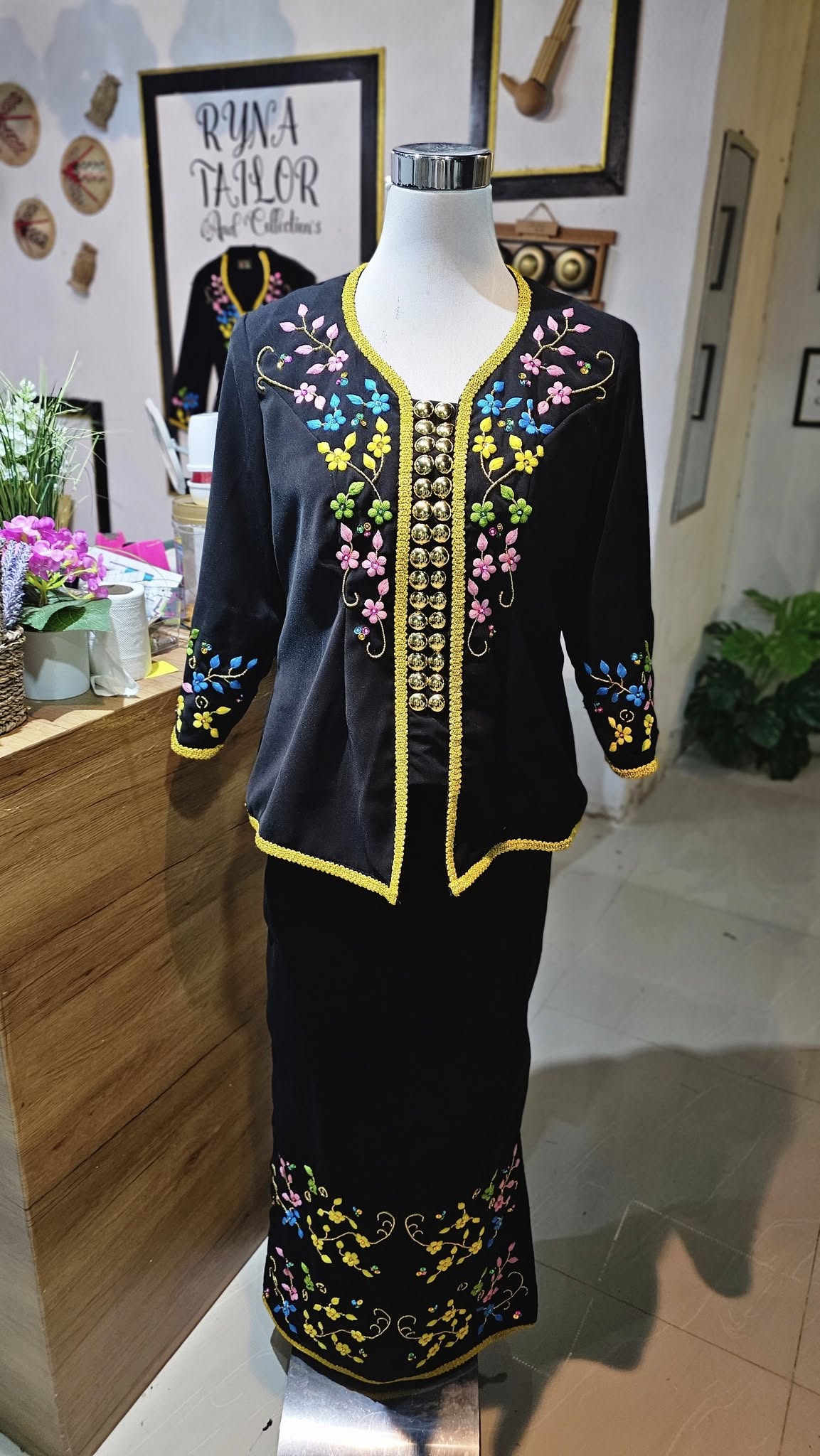
Picture
5
Video
No record
Today's Visitor
759
Number of Visitors
5481
Introduction and history
The Dusun Labuk is one of the sub-ethnic groups under the larger Dusun community of Sabah, Malaysia. They predominantly reside in the Labuk and Sugut areas within the Beluran district, with smaller populations found in Telupid, Sandakan, and Kinabatangan. The name “Labuk” originates from the Labuk River, the main river flowing through eastern Sabah which has long served as a lifeline for this community across generations.
The Dusun Labuk people belong to the Kadazandusun ethnolinguistic group, sharing cultural roots, language, and traditions with other Dusun subgroups such as Dusun Liwan, Dusun Tindal, Dusun Tatana, Dusun Kimaragang, and others. However, they possess a distinct dialect, unique customs, and traditional attire that differentiate them as a special group within Sabah’s rich cultural mosaic.
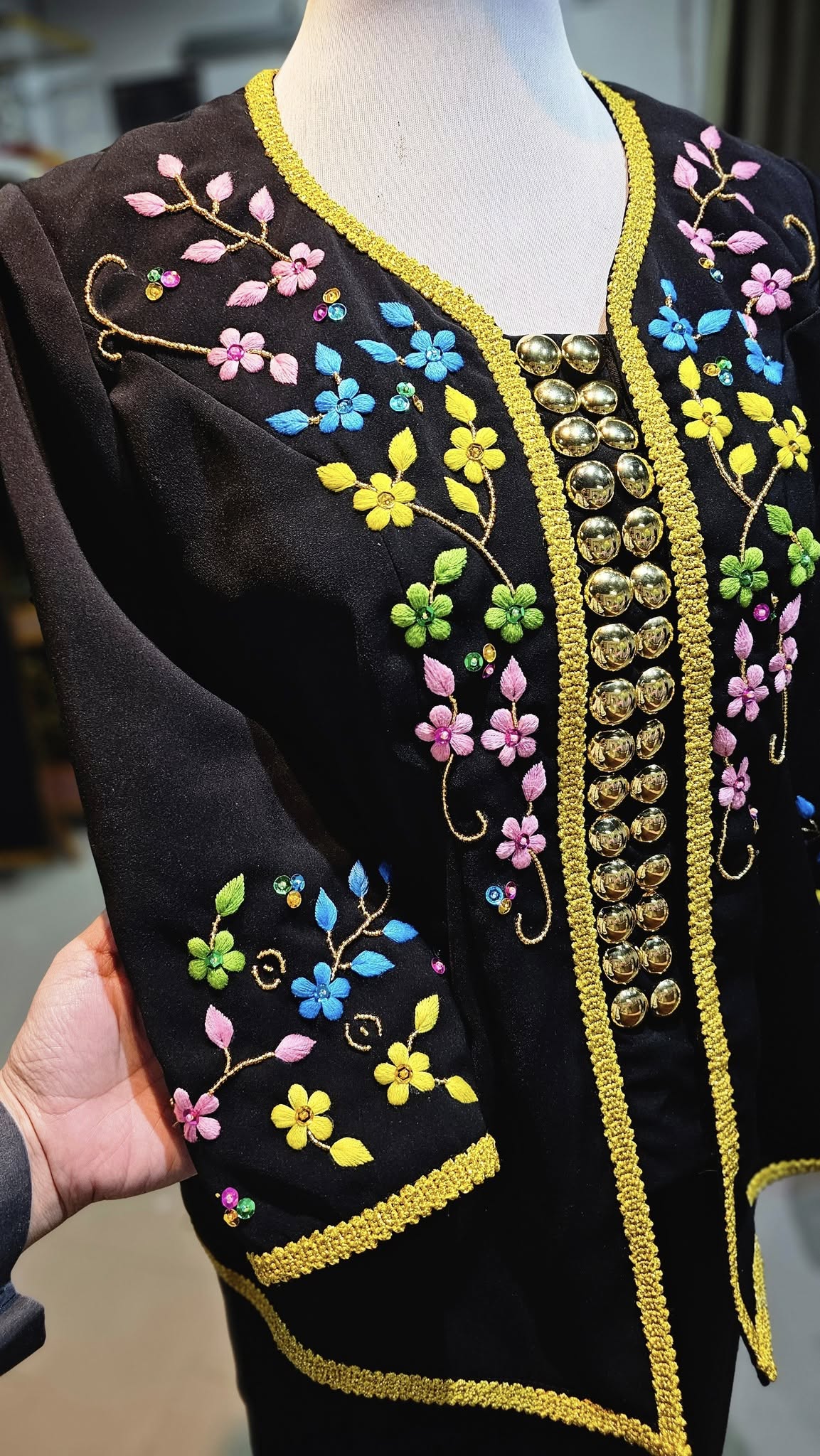
In terms of traditional dress, the Dusun Labuk have a distinctive ethnic costume known as Sabung Labuk or Baju Labuk. Its uniqueness lies in its handcrafted embroidery that highlights the Gosing flower motif, an iconic design that serves as the symbolic hallmark of this attire. The women’s costume features a long-sleeved blouse with an extended cut and a long skirt called Tapi, resembling the traditional baju impit or kebaya. The men’s attire, on the other hand, takes the form of a long-sleeved shirt known as baju gaung and black trousers called Soruai, adorned with golden trimmings.
During the 1980s, Sabung Labuk was worn in a modest style with minimal accessories, typically paired only with a kambot, a traditional belt made of British silver coins. At that time, it was considered one of the most minimalist traditional outfits in Sabah. However, as times changed, the costume evolved through the inclusion of new traditional accessories that remain deeply rooted in the community’s oral traditions and heritage.
Today, the women’s Baju Labuk is complemented by accessories such as kamboot (belts), simpagot (formerly made from bullet casings or kumpas), simbong (earrings), kalung (necklaces), and golong sulaus (bracelets). The wearing of these accessories follows specific customs and meanings. For instance, the use of four kamboots, simpagot, and golong sulaus represents the four primary colours of the Gosing flower. Over-accessorising, however, is deemed inappropriate as it diminishes the aesthetic and symbolic purity of the original motif.
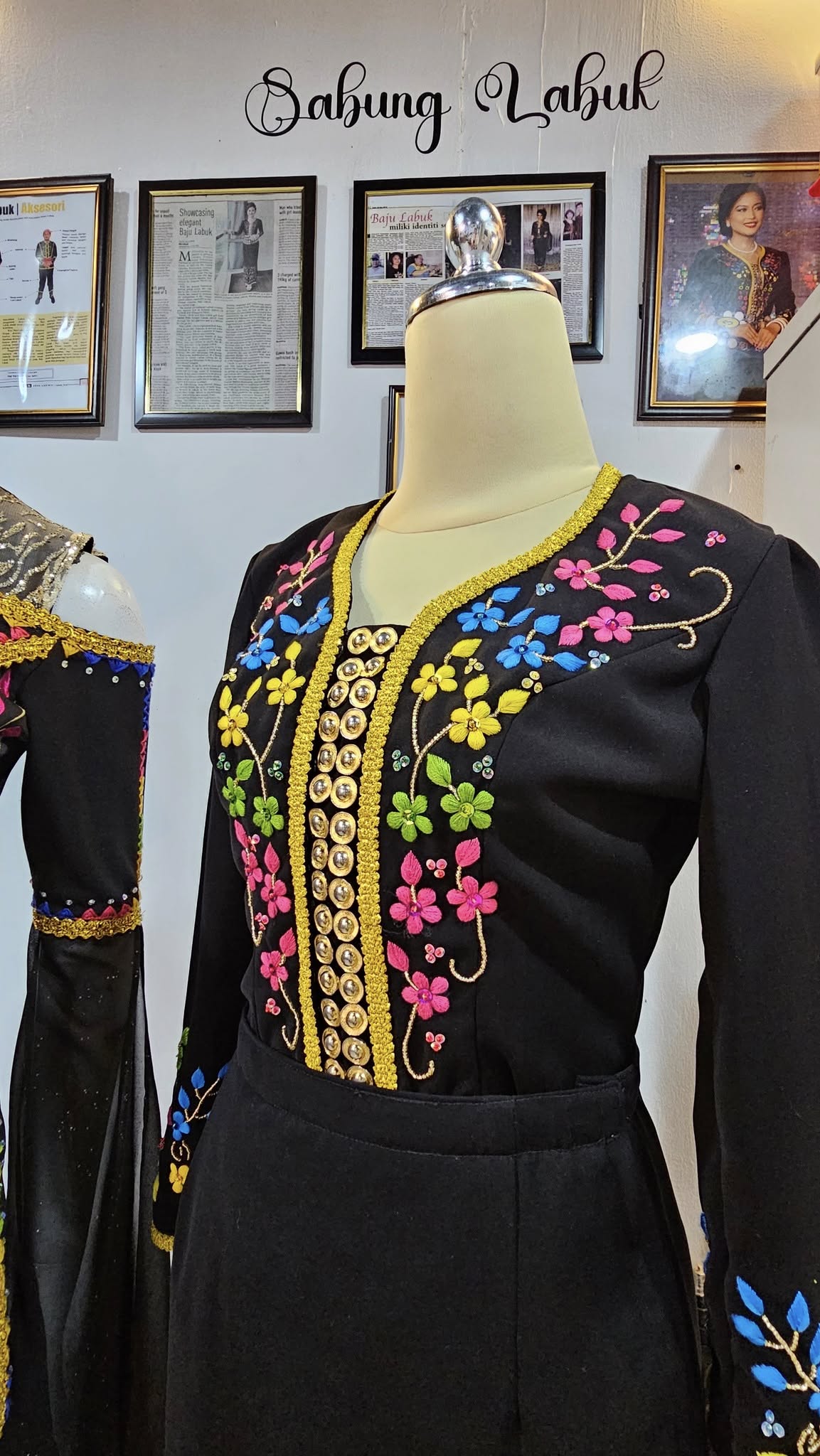
Each detail of this attire carries profound cultural meaning. For example, the embroidered “V” shape extending from the waist to the shoulders symbolises the concept of kopiiso ginavo, which means the spirit of unity and mutual understanding, values that underpin the progress and harmony of the Dusun Labuk community. Although blue and green are considered distinct colours, the Dusun Labuk dialect refers to both as otomou, reflecting their philosophical belief that, despite differences in subethnic background, they all share the same traditional roots.
In recent years, Sabung Labuk has gained attention not only among the Dusun Labuk themselves but also from other ethnic groups in Sabah. The elegance of its design, the fineness of its handmade embroidery, and the uniqueness of the Gosing motif have elevated it beyond traditional wear to become a modern cultural symbol and commercial fashion item. The attire is now frequently showcased in ethnic fashion shows, state ceremonies, Unduk Ngadau beauty pageants, and cultural heritage exhibitions, representing the identity of the Dusun Labuk people on a broader stage.
This development demonstrates that Sabung Labuk is more than a traditional costume; it is a living heritage that continues to evolve alongside modernity without compromising its authenticity. Recognition of this attire has encouraged more young Dusun Labuk individuals to relearn the traditional embroidery techniques and to appreciate the symbolic meanings behind each pattern and colour. Collaborative efforts among the community, heritage researchers, and local cultural institutions have also played a crucial role in preserving the authenticity of Sabung Labuk as a proud emblem of ethnic identity and Sabah’s textile artistry.
The traditional attire of the Dusun Labuk people is more than mere clothing, it is a symbol of identity and a manifestation of cultural values deeply rooted in social, spiritual, and aesthetic dimensions. It reflects the continuity of ancestral heritage, emphasising modesty, unity, and communal harmony among the Dusun Labuk people. Accordingly, the Sabung Labuk serves several important cultural and ceremonial functions, as outlined below:
Ceremonial and Festival Attire
The Sabung Labuk is commonly worn during Pesta Kaamatan (the Harvest Festival) and various customary rituals to honour the spirit of the rice, known as Bambarayon, and to express gratitude for a bountiful harvest.
Traditional Wedding Attire
This costume is often chosen as the primary outfit for brides and grooms during traditional wedding ceremonies.
Performance and Pageant Attire
The Sabung Labuk is frequently showcased in Unduk Ngadau beauty pageants, traditional dance performances, and cultural events, highlighting the distinct identity and artistic heritage of the Dusun Labuk people at the state level.
Symbol of Ethnic Identity and Pride
The attire serves as a marker of Dusun Labuk identity, distinguished from other Dusun sub-ethnic groups through its unique Gosing flower embroidery pattern.
Emblem of Unity and Communal Values
The V-shaped embroidery across the chest symbolises kopiiso ginavo, meaning “unity and togetherness”, a fundamental value that underpins the social harmony and collective spirit of the Dusun Labuk community.
The traditional attire of the Dusun Labuk people is incomplete without its accompanying traditional accessories. Among the accessories worn with this costume are as follows:
Male Accessories
Dasar / Singal
Dasar and Singal are traditional head coverings for Dusun Labuk men, made from woven or cotton fabric in dark tones. Both differ in style and occasion:
The Dasar is worn with the fabric folded to cover the entire head, giving a more formal and polished appearance.
The Singal leaves the top of the head uncovered and is commonly worn by dancers or during informal and relaxed occasions.
Waist Cloth
Male wearers also adorn a red waist cloth made of cotton, wrapped around the waist outside the shirt. It functions similarly to a traditional sash, serving as a decorative element and as a belt to secure the sabung labuk attire.
Taangkos / Tagkos
The Taangkos or Tagkos is a slender traditional bracelet worn by men as an ornamental accessory. Traditionally crafted from metal, modern versions may use thread or fishing line in red hues.
Female Accessories
Simbong
The Simbong is a traditional earring worn by Dusun Labuk women. Typically made of metal or copper, it features a rounded, clam shell-like shape.
Kalung
The Kalung is a necklace crafted from silver, copper, or plated metal materials. Worn around the neck, it elevates the aesthetic value of the Sabung Labuk attire, signifying elegance and social refinement.
Kamboot
The Kamboot is a waist accessory that was originally made from British silver coins but is now fashioned from locally minted silver coins. Traditionally worn in four strands, it represents the four colours of the Gosing flower motif.
Simpagot
The Simpagot is a traditional belt for Dusun Labuk women, wrapped around the waist as the main fastening element of the costume. In earlier times, it was made from repurposed bullet casings (kumpas), but modern designs use copper or lightweight synthetic materials for practicality.
Golong Sulau
The Golong Sulau is a traditional bracelet made of copper or silver, usually worn in pairs on both wrists. In contemporary versions, white plastic replicas are also produced as lighter alternatives, especially for cultural performances or fashion showcases.
Fundamentally, this traditional costume is made from black velvet or thick cotton fabric as its base material, providing a soft texture that complements the shape and tailored structure of the attire. The base fabric is then adorned with luxurious decorative elements such as golden lace (les Labuk), brass buttons, and fine hand embroidery using colourful threads and sequins. The main elements involved in the making of the Sabung Labuk costume are as follows:
Traditional Hand-Embroidery Technique
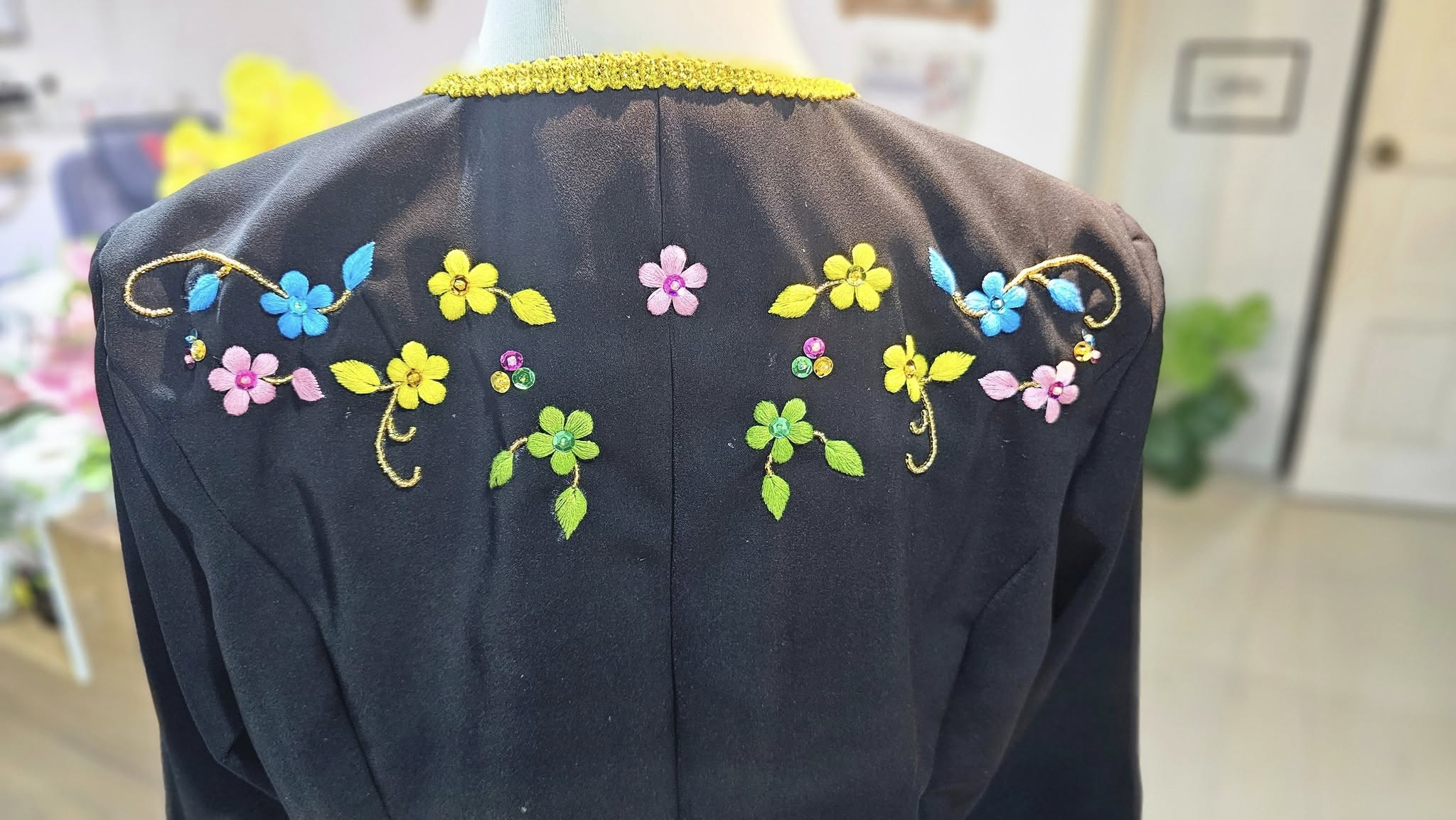
All patterns and motifs are produced entirely by hand, using fine and meticulous traditional embroidery techniques.
Labuk Embroidery Pattern
The design follows the original bunga Gosing (Gosing flower) pattern that has been documented and verified by the Dusun Labuk community to ensure the authenticity and preservation of the traditional costume.
Gosing Flower Motif
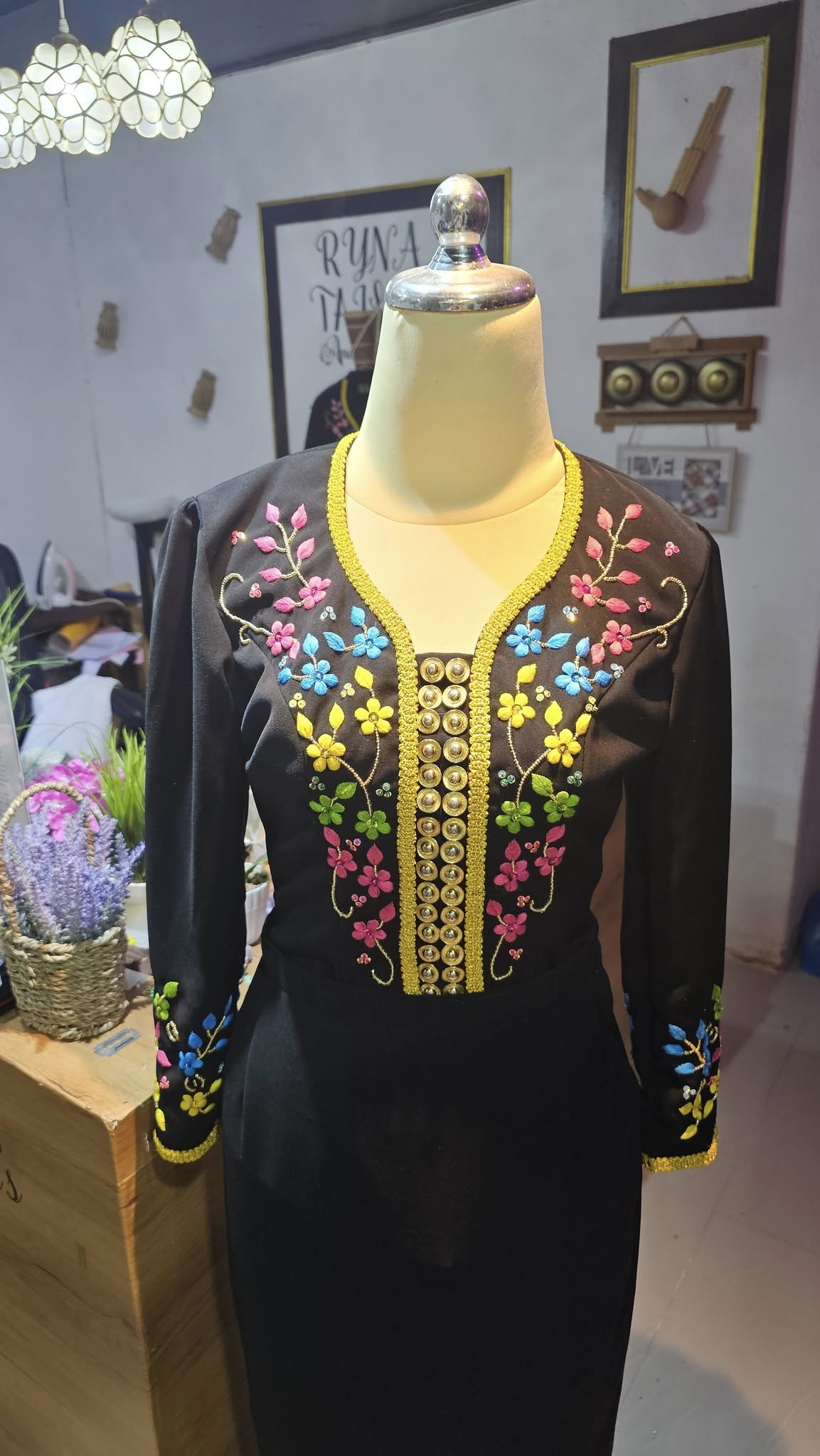
The principal motif forming the core of the Sabung Labuk design. The embroidery incorporates four traditional colours: pink, blue, green, and yellow, each carrying its own symbolic meaning within Dusun Labuk customs and worldview.
Golden Flower Stems
The stems of the flower motif are embroidered with golden beads, adding brilliance and aesthetic refinement to the overall Gosing pattern.
Golden Lace (Les Labuk)
Every edge of the blouse and sleeves is adorned with meticulously handcrafted golden lace, now made by local artisans. This craftsmanship ensures that each piece of attire is distinct, exclusive, and of high artistic value.
Brass Buttons
Placed along the front of the garment, these golden-hued buttons serve both functional and decorative purposes, accentuating the classic and elegant character of this traditional costume.
The Sabung Labuk traditional costume requires precision and care in wearing, as each part of the attire and its accessories carries distinct functional, symbolic, and aesthetic significance. The following outlines the proper way of wearing the Sabung Labuk attire:
Men’s Sabung Labuk Attire
Men’s Sabung Labuk Shirt
The male costume consists of a long-sleeved black shirt made from velvet or thick cotton fabric. The neckline and sleeve edges are decorated with golden thread embroidery, golden lace (les Labuk), and motifs of the Gosing flower.
Soruai (Trousers)
Men wear long, loose-fitting trousers called soruai, made from the same black fabric as the shirt. The hem of the trousers is similarly embroidered to match the top.
Waist Cloth and Belt
Around the waist, a red cloth is wrapped over the shirt in the style of a traditional sash (bengkung). Sometimes, a kambot or simpagot is worn over it depending on the wearer’s preference or the formality of the occasion.
Head Cover (Dasar / Singal)
Dusun Labuk men wear a head covering known as dasar or singal, made from woven or dark-colored cotton fabric. The dasar, which fully covers the top of the head, is worn for formal occasions such as weddings or ceremonial events. The singal, which leaves the top of the head uncovered, is worn for relaxed gatherings or traditional dance performances.
Complementary Accessories
The look is completed with Taangkos or Tagkos, a slim traditional bracelet made of metal. In modern versions, red-colored string or fishing line is used,
Women’s Sabung Labuk Attire
Women’s Sabung Labuk Blouse
The women’s blouse is a short, long-sleeved top made from black velvet or thick cotton. The neckline, chest, sleeves, and hem are adorned with embroidered Gosing flower motifs in pink, blue, green, and yellow, with golden beads accentuating the flower stems. The blouse edges are further embellished with golden lace and brass buttons, enhancing its luxurious appearance.
Tapi (Skirt)
The blouse is paired with a long black skirt known as Tapi. The lower edge of the Tapi is also decorated with Gosing flower embroidery to create a cohesive and elegant ensemble.
Waist Accessories
The waist is wrapped with simpagot and kamboot belts. The kamboot is worn in four strands, symbolising the four colours of the Gosing flower, representing balance and harmony in a woman’s life. The simpagot is worn in one or two strands only, as excessive use is considered improper and contrary to traditional customs.
Neck and Hand Accessories
The chest is adorned with layered silver necklaces or bead chains, while the ears are decorated with simbong (earrings). Both wrists are fitted with golong sulau — traditional metal bracelets or modern white plastic versions used as lighter alternatives for stage performances.
Hairstyle and Presentation
The hair is neatly styled into a bun and may be decorated with flowers or colourful fabric to enhance the overall appearance. During formal occasions, Dusun Labuk women traditionally appear barefoot, as a mark of respect and authenticity that reflects the community’s original cultural expression.
-
Reference Source
Bahan Bacaan
Ang Ngar Jiu, S., & Jan, C. C. (2010). Different yet similar: A study on Mongindong performed by Dirts, Gustimin, Pariama and Tulai from Murok Village and Baba Village on the Labuk River, Sabah. Pertanika Journal of Social Sciences & Humanities, 18(1).
Boutin, M. E., & Pekkanen, I. (1993). Phonological descriptions of Sabah languages: Studies from ten languages, Bonggi, Ida'an, Kadazan/Dusun, Kalabuan, Kimaragang, Labuk-Kinabatangan Kadazan, Lotud, Tagal, Tatana', Tombonuwo. SIL International.
Cense, A. A., & Uhlenbeck, E. M. (1958). Dusun. In Critical survey of studies on the languages of Borneo (pp. 24–27). Dordrecht, Netherlands: Springer.
Lastage. (2017, September 24). Keunikan baju tradisi suku kaum Labuk [Facebook post]. Facebook. https://web.facebook.com/lastage2017/posts/keunikan-baju-tradisi-suku-kaum-labuk/793284369502055/
Sabah Media. (2025, May 30). Pesona bunga Gosing Sabung Labuk serlah tangan emas Dusun Labuk. Sabah Media. https://sabahmedia.com/2025/05/30/pesona-bunga-gosing-sabung-labuk-serlah-tangan-emas-dusun-labuk/
Sabung Labuk Official. (2024, February 26). Baju tradisional Dusun Labuk dengan motif bunga Gosing [Instagram post]. Instagram. https://www.instagram.com/p/C4hU8xnrMm2/?hl=en
Location
State JKKN Contact Information
Puan Nurshahrinna Syahrial
Cultural Officer
Jabatan Kebudayaan dan Kesenian Negara, Sabah
Kompleks JKKN Sabah,
Jalan Tasik off KM4 Jalan Penampang,
88200 Kota Kinabalu
SABAH
088-205070
Use the form below to contact the Informant/Figure/Editor/Researcher directly. We will respond to your inquiry as soon as possible!


