

ARTS AND CULTURE INFORMATION GATEWAY
Immerse yourself in the colorful world of art and culture! From traditional heritage to contemporary works, discover uniqueness that reflects the nation's identity and identity
BAJU KEBAYA PERLIS
 Fakulti Muzik dan Seni Persembahan, Universiti Pendidikan Sultan Idris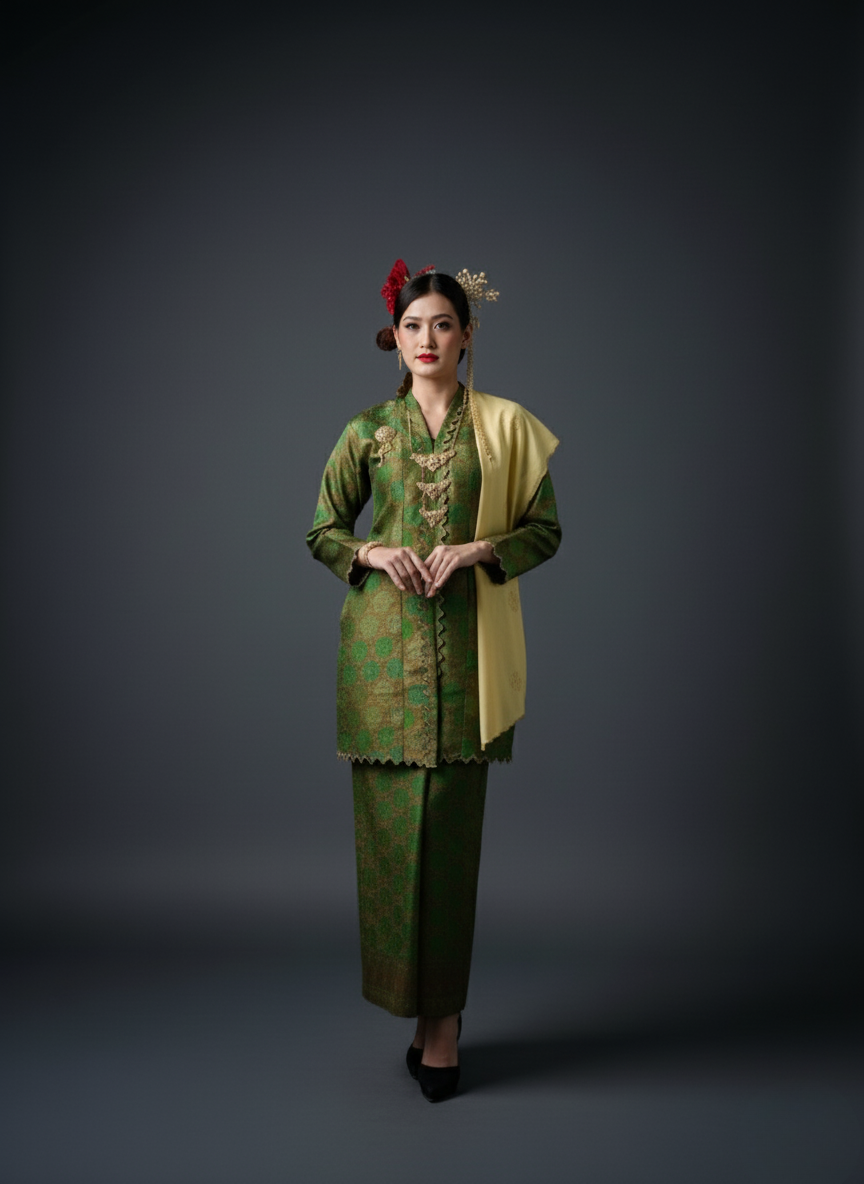
Picture
4
Video
No record
Today's Visitor
3
Number of Visitors
287
Introduction and history

Source: Amsalib Pisali
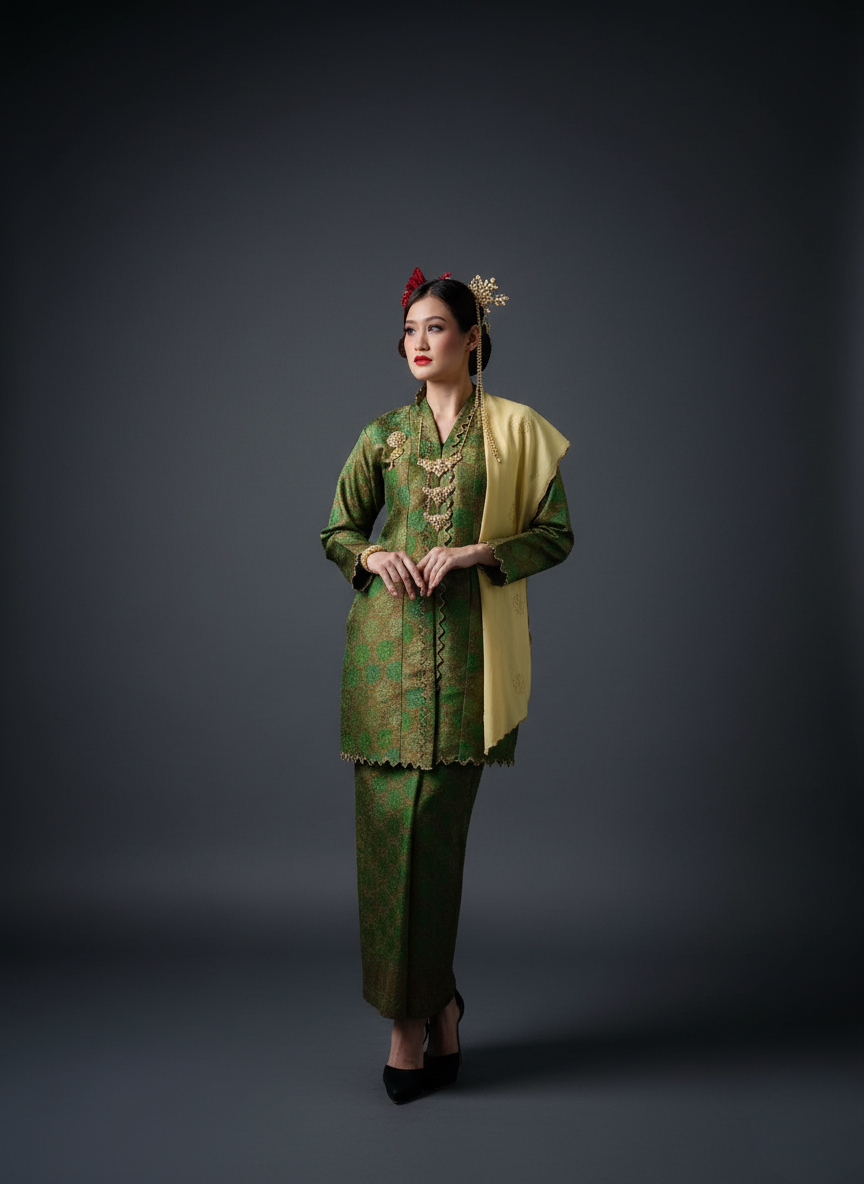
The Kebaya Perlis is one of the primary traditional garments worn by Malay women in the state of Perlis, alongside the Kurung Perlis. Both of these attires reflect the evolution of local fashion influenced by the kebaya and kurung designs of the northern Malay Peninsula, particularly from Kedah. However, the Kebaya Perlis features its own distinct cut and characteristics that set it apart from kebayas of other states.
The history of the Kebaya Perlis dates back to before the 1930s and reached its prominence during the reign of Raja Syed Alwi ibni Almarhum Raja Syed Safi Jamalullail, the fourth Raja of Perlis (1904–1943). During this period, the kebaya was commonly worn by women of the royal family and nobility at various celebratory events such as feasts and formal palace ceremonies. Meanwhile, the general populace typically wore the Baju Kurung Perlis for daily and religious occasions.
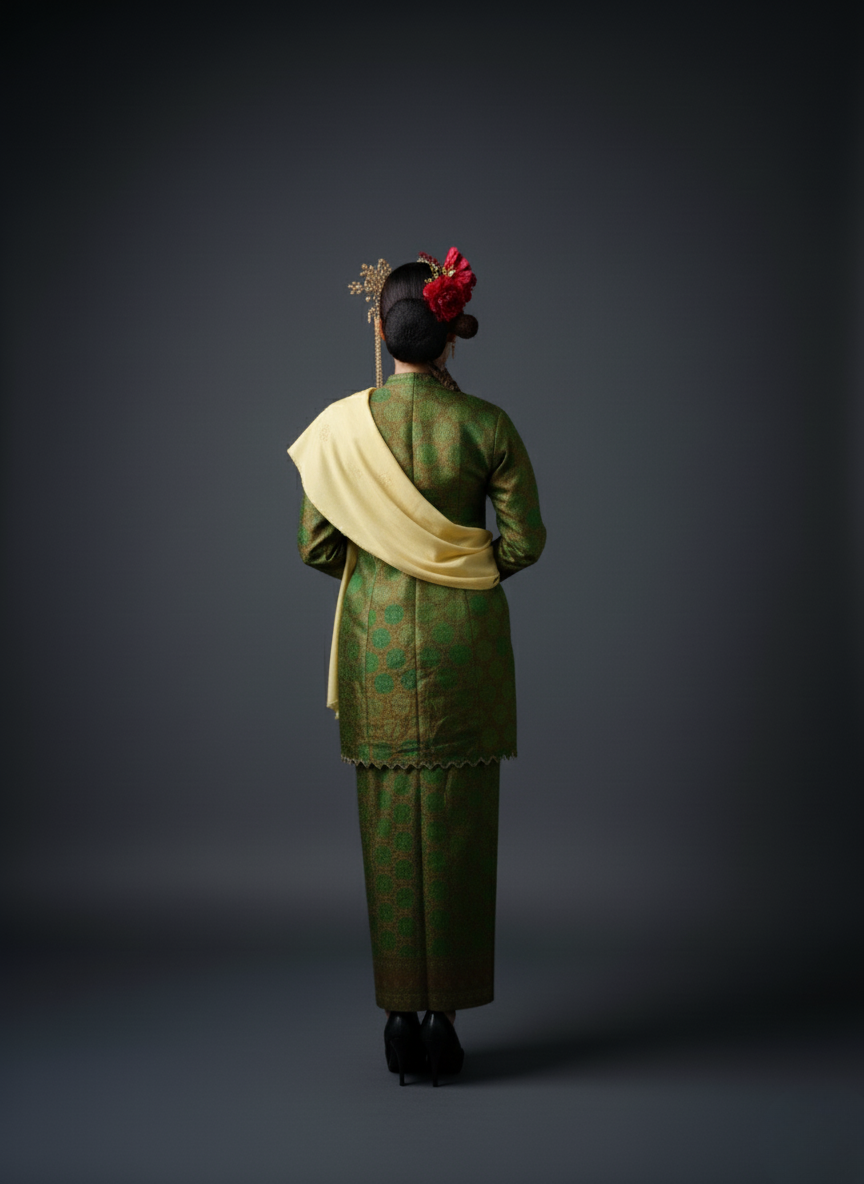
In terms of design, the Kebaya Perlis differs from both the modern and kebaya nyonya styles. The front part resembles that of traditional kebaya, featuring a central overlapping panel fastened with brooches as the main decorative element. However, the back portion closely resembles the Baju Kurung, as it includes kekek (side gussets) and lacks shoulder seams or slits. This back construction gives the garment a neat structure and makes it comfortable to wear.
Another distinctive feature of the Kebaya Perlis is its use of a front gusset rather than the side gussets found in modern kebayas. This unique characteristic makes the garment suitable for women of various body shapes, as it is neither too tight nor figure-revealing. The length of the blouse extends below the hips, while the sleeves and sides are designed to be slightly loose for added comfort.
Traditionally, the Kebaya Perlis was made from soft cotton or Kasarubia fabric. The traditional Kasarubia material has a unique texture, lightweight but slightly sheer. Over time, as textile technology advanced and standards of modesty evolved, this material was replaced by thicker, more durable fabrics suitable for modern wear. Nevertheless, the original principles of its design have been carefully preserved to maintain the authenticity of this traditional garment.
In terms of measurement, the Kebaya Perlis is tailored based on specific dimensions, including shoulder-to-waist length, waist, hip, blouse length, armhole, sleeve length, and wrist circumference. While there are minor differences between the measurement methods of the traditional and modern versions, the overall silhouette remains faithful to the original kebaya form.
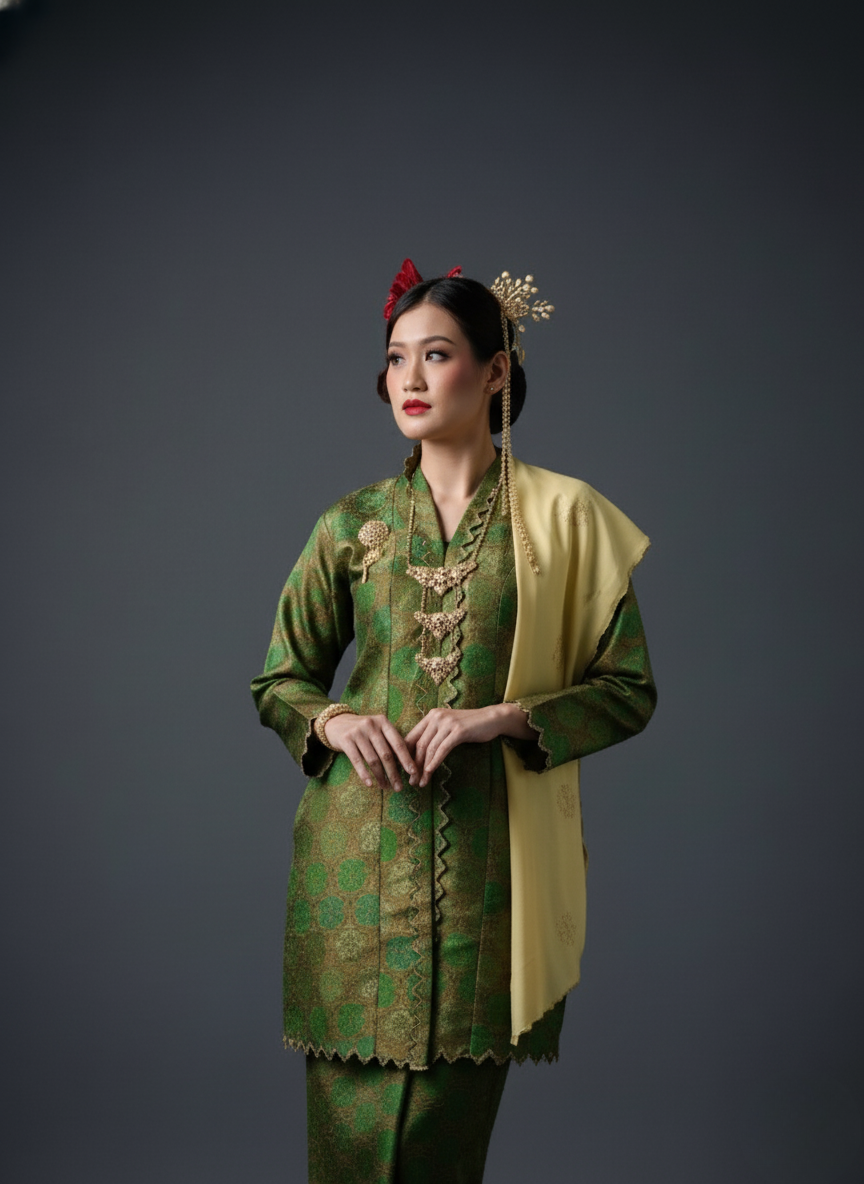
Additionally, the Kebaya Perlis is adorned with brooches along the front panel as a central decorative feature. These are typically pinned diagonally across the overlapping folds of the blouse. There are two main variations of styling: the first features a visible front fold with the brooches fastened along it, while the second style overlaps the fold without visible stitching. Both methods are still widely practiced today and are considered authentic representations of the Kebaya Perlis design.
Overall, the Kebaya Perlis stands as a significant textile heritage of the state of Perlis and has been officially recognized as its traditional attire. It not only represents the historical continuity of Malay fashion in northern Peninsular Malaysia but also reflects the diversity of tailoring techniques and stylistic adaptations according to social status and ceremonial context within the Perlis community since the early 20th century.
The Kebaya Perlis is more than just the everyday attire of Malay women in Perlis during the past; it also plays a significant role in the social, cultural, and identity landscape of the state. It has been worn in various contexts, both in daily life and during formal or ceremonial occasions. The following outlines the main functions and roles of the Kebaya Perlis:
Ceremonial and Royal Attire
Since the reign of Raja Syed Alwi (1904–1943), the Kebaya Perlis has been worn by members of the royal family and the nobility during official palace ceremonies such as royal banquets, festive celebrations, and the welcoming of esteemed guests. Its neat and modest design makes it particularly suitable for formal and protocol-driven events.
Attire of the Nobility and Upper-Class Women
In the early 20th century, the Kebaya Perlis symbolized the social status of aristocratic women and members of the royal household. It was worn as formal daily attire or as an elegant outfit for public appearances, distinguishing women of high social standing from commoners, who typically wore the Baju Kurung Perlis. Today, however, the kebaya has transcended class boundaries and is widely embraced by the general public as part of the evolving textile culture of Perlis.
Attire for Celebrations and Festive Occasions
The Kebaya Perlis is also commonly worn during traditional events such as feasts, engagements, and weddings, not only by women in Perlis but across Malaysia. It is especially popular during the celebration of Hari Raya Aidilfitri. In this context, it serves not merely as a fashionable garment but as a formal attire that aligns with the customs and decorum of Perlis Malay society.
Everyday Attire for Modest Women (Simplified Version)
A simpler version of the Kebaya Perlis is worn by local women as daily attire, particularly for household activities or when visiting neighbors. Its loose and comfortable design makes it practical and versatile for everyday use.
Cultural Heritage Identity of Perlis
The Kebaya Perlis has been officially recognized as the traditional attire of the state of Perlis. It continues to be featured in cultural programs, heritage performances, as well as in national celebrations such as Independence Day and the Perlis Ruler’s Birthday. It stands as a cultural symbol that distinguishes Perlis from other northern Malay states in Peninsular Malaysia.
Official Attire for Female Officers and Staff in Perlis
In modern contexts, the Kebaya Perlis is also adopted as the official uniform for female officers in state government departments, schools, and local institutions, especially during state ceremonies and official events.
Source for Research and Documentation of Malay Textile Heritage
The Kebaya Perlis serves as an important reference in the study of traditional Malay textile design, particularly for students and researchers in the field of costume heritage. Its design preserves the structure of the classic kebaya while incorporating unique local adaptations, making it a valuable model in the documentation of Malay textile evolution.
Accessories play an important role in completing the appearance of the Kebaya Perlis, especially among women of noble and royal lineage in the past. These accessories not only serve as ornaments but also help structure and secure the garment so that it appears neat and well-fitted on the wearer. The main accessories traditionally worn with the Kebaya Perlis include the following:
Kerongsang (Tiga Serangkai or Diagonal Style)
The kerongsang is the most essential accessory and the defining element of the Kebaya Perlis. It is used to fasten the front opening of the blouse, keeping the folds of the kebaya securely closed. The unique feature of the Kebaya Perlis kerongsang lies in its diagonal arrangement along the front fold of the blouse, rather than vertically as seen in other kebaya styles. There are two traditional methods of wearing it:
First version: The front of the blouse has a visible fold, and the kerongsang is pinned along the fold.
Second version: The fold overlaps directly without additional stitching, but the kerongsang remains diagonally placed as the main decorative focus. The kerongsang is typically made of gold, suasa (a gold-copper alloy), or silver, intricately engraved with floral motifs. It often consists of three connected brooches, known as kerongsang tiga serangkai.
Earrings
Earrings are worn as ear adornments, usually crafted from gold or silver. Their designs are simple yet refined, often inspired by northern Malay floral motifs such as bunga tanjung or fern leaves, which are common in traditional metalwork.
Necklace
Gold or silver necklaces are worn to complement the neckline of the kebaya. They are typically designed in modest styles so as not to overshadow the kerongsang, which remains the central decorative highlight of the chest area.
Bracelets and Rings
Bracelets are worn one or two on each wrist, usually made from gold or silver, while rings are worn on the middle or ring finger. Both accessories serve to enhance the wearer’s elegance without compromising the kebaya’s understated sophistication.
Hairpins (Cucuk Sanggul) and Hair Flowers
Traditionally, Perlis women styled their hair in a high bun at the back of the head, adorned with gold or silver cucuk sanggul (hairpins) and artificial jasmine or rose flowers. These embellishments were often used during festive occasions or cultural performances to accentuate feminine grace and poise.
Shawl or Long Veil
To cover the head and shoulders, Perlis women wore a light shawl made of chiffon, voile, or fine gauze. The color of the shawl was carefully coordinated with the kebaya and sarong to achieve a harmonious and modest overall appearance.
The Kebaya Perlis has been crafted using various materials throughout different periods, depending on its function, the wearer’s social status, and the availability of fabrics at the time. Generally, the materials used must be soft, lightweight, and easy to iron so that the kebaya maintains a neat and well-fitted appearance on the body. The following is a comparison between the traditional materials of the past and the modern materials currently used in the making of the Kebaya Perlis:
Traditional Materials (Before the 1930s to the 1950s)
Traditional Cotton Fabric
Widely used due to its lightweight nature, ease of sewing, and suitability for the hot and humid tropical climate. Traditional cotton is soft against the skin, providing comfort for daily wear.
Kasarubia Fabric
This was a special material used primarily for the kebaya of the noble and aristocratic class. Traditional Kasarubia had a slightly coarse exterior texture but was soft on the inside, making it appear thick yet comfortable to wear. This type of fabric is now rare and is considered a valuable textile heritage material.
Silk and Velvet (for Royal and Ceremonial Use)
For ceremonial kebayas and royal functions, silk and velvet fabrics were used to evoke luxury and refinement. These fabrics were often embellished with fine hand embroidery or sequins along the sleeve edges and blouse hems.
Modern Materials (From the 1960s to Present)
Modern Cotton (Thick Cotton or Stretch Cotton)
Modern cotton is thicker and more durable than its traditional counterpart. It is opaque and easy to iron, making it the preferred choice for both official and everyday wear.
Linen or Polyester Blends
These fabrics are used for their easy maintenance, wrinkle resistance, and longer durability. They are commonly chosen for kebayas worn by government officials, school uniforms, and formal institutional events.
Satin and Chiffon
Satin and chiffon are popular choices for modern kebayas because of their flowing texture and soft sheen. They are frequently used for official ceremonies, cultural performances, and royal celebrations in Perlis.
Songket and Batik (for the Sarong)
Although not part of the kebaya itself, the kain sarung (skirt) worn with the Kebaya Perlis is typically made from songket bunga tabur or finely patterned floral batik. These patterns enhance the overall beauty of the outfit without compromising the authenticity of its traditional design.
General Characteristics in Material Selection
The fabric must be soft, lightweight, and easy to shape, allowing the kebaya to drape neatly without appearing stiff.
The material should not be too thick to ensure comfort in Perlis’s tropical climate.
The colour palette typically includes soft tones such as white, cream, light blue, green, or pink, reflecting the modest yet refined aesthetic preferences of northern Malay society.
The wearing of the Kebaya Perlis requires meticulous attention to detail to ensure that the arrangement of folds, the placement of the brooches, and the overall shape of the attire appear neat while maintaining its traditional characteristics. Although the design of the kebaya is relatively simple, the correct method of wearing it is essential to ensure that the garment drapes properly on the body and accentuates its original silhouette. The following are the basic steps and methods for wearing the Kebaya Perlis:
Step 1: Wearing the Sarung (Lower Part)
The kain sarung (skirt) forms the lower part of the attire, usually made from songket bunga tabur or finely patterned batik fabric.
The cloth is wrapped around the waist with an overlapping front fold (wiron) facing the wearer’s right side.
The folds should be straight and well-aligned to match the centerline of the kebaya.
A fine pin or a small sash is used on the inside to secure the wrap and prevent it from loosening.
The length of the kain sarung should reach the ankles to allow easy movement while maintaining modesty.
Step 2: Wearing the Kebaya Perlis (Upper Part)
The kebaya is worn from the shoulders down, extending to just below the hips or the knees, depending on the design.
Ensure that the kekek (side panels) and pesak (front gussets) are properly adjusted so the blouse lies flat without wrinkles.
The sleeves should reach the wrists, with the cuffs neatly pressed and straightened.
For the traditional kebaya, soft fabrics such as Kasarubia or cotton allow the garment to drape naturally on the body without being tightly fitted.
Step 3: Fastening the Kerongsang (Chest Area)
The front part of the kebaya may be folded either with overlapping folds or a flat front without a slit.
The kerongsang tiga serangkai (three-piece brooch) is pinned diagonally from the neckline down toward the midsection.
Ensure that the brooches are not placed too close together or too far apart so the kebaya folds remain properly secured.
As the brooch serves as the main focal point of the attire, its arrangement must be symmetrical and aligned with the body’s natural proportions.
Step 4: Completing the Look
A shawl or long veil may be draped over the shoulders or worn on the head to complete the traditional appearance.
Additional accessories such as earrings, necklaces, bracelets, and rings are worn according to the formality of the occasion.
Low-heeled shoes or embellished slippers are typically worn for formal events, while modest closed-toe shoes are preferred for casual occasions.
The overall appearance must be tidy, the kebaya should be well-ironed, the sarong folds evenly balanced, and the color of accessories must harmonize with the kebaya and kain sarung.
Distinctive Features of the Perlis Traditional Style
The Kebaya Perlis does not have shoulder slits, making it easier to wear compared to modern kebaya designs.
Its back portion resembles the baju kurung and lacks internal stiffeners, maintaining a loose and comfortable fit.
This style of dressing makes the kebaya suitable for women of all body shapes, including plus-sized figures, without altering its original structure.
Overall, the traditional method of wearing the Kebaya Perlis highlights the precision of tailoring and the harmonious balance between the kain sarung, kebaya, and accessories. Proper wearing ensures that this attire not only appears elegant and refined but also preserves the authenticity of its original design, a heritage that dates back to the reign of Raja Syed Alwi in the early 20th century.
Reference Source
Bahan Bacaan
Ahmad, H., Zain, M., Haimi, D. Z., Mohd Tajuddin, R., & Mohamad Ba’ai, N. (2015). Analisis kandungan rupa bentuk fesyen pakaian Melayu di Malaysia.
Hussin, H., Nawawi, N. M., & Haji Mohamed, A. (2013). Evolusi dan tipologi pakaian wanita Melayu di Semenanjung Malaysia. Bangi: Institut Alam & Tamadun Melayu (ATMA), Universiti Kebangsaan Malaysia.
Ismail, S. Z. (2009). Konsep adat pakaian cara Melayu: Sentuhan tenunan dalam busana Melayu.
Baju kurung dan kebaya Perlis. Laman Web Rasmi Geopark Perlis. https://geopark.perlis.gov.my/tour-item/baju-kurung-dan-kebaya-perlis/
Mohd Amin, N. (2023). Kebaya in the Nusantara archipelago. eLingua, 2.
Ramli, I. (1994). Adat istana di Perlis. Jurnal Warisan Indera Kayangan, 1–6.
Sahad, M. N., Abdullah, S., Jamaluddin, J., & Abdullah, S. (n.d.). Warisan adat istiadat sambutan Hari Keputeraan Raja Perlis: Antara budaya dan agama.
Yusof, Z., Nawawi, N. M., & Aris, A. (2018, June). Malay kebaya: The history and influences of other silhouette. In Proceedings of the Art and Design International Conference (AnDIC 2016) (pp. 445–452). Singapore: Springer Singapore.
Tokoh (jika ada temu bual tokoh)
Location
State JKKN Contact Information
Siti Rohayu binti Muhamad
Cultural Officer
Jabatan Kebudayaan dan Kesenian Negara, Perlis
Kompleks JKKN Perlis
Persiaran Wawasan Kangar
01000 Kangar
PERLIS
019-504 0015
Use the form below to contact the Informant/Figure/Editor/Researcher directly. We will respond to your inquiry as soon as possible!


