

ARTS AND CULTURE INFORMATION GATEWAY
Immerse yourself in the colorful world of art and culture! From traditional heritage to contemporary works, discover uniqueness that reflects the nation's identity and identity
KEBAYA SETENGAH TIANG
 Fakulti Muzik dan Seni Persembahan, Universiti Pendidikan Sultan Idris
Picture
5
Video
No record
Today's Visitor
15
Number of Visitors
184
Introduction and history
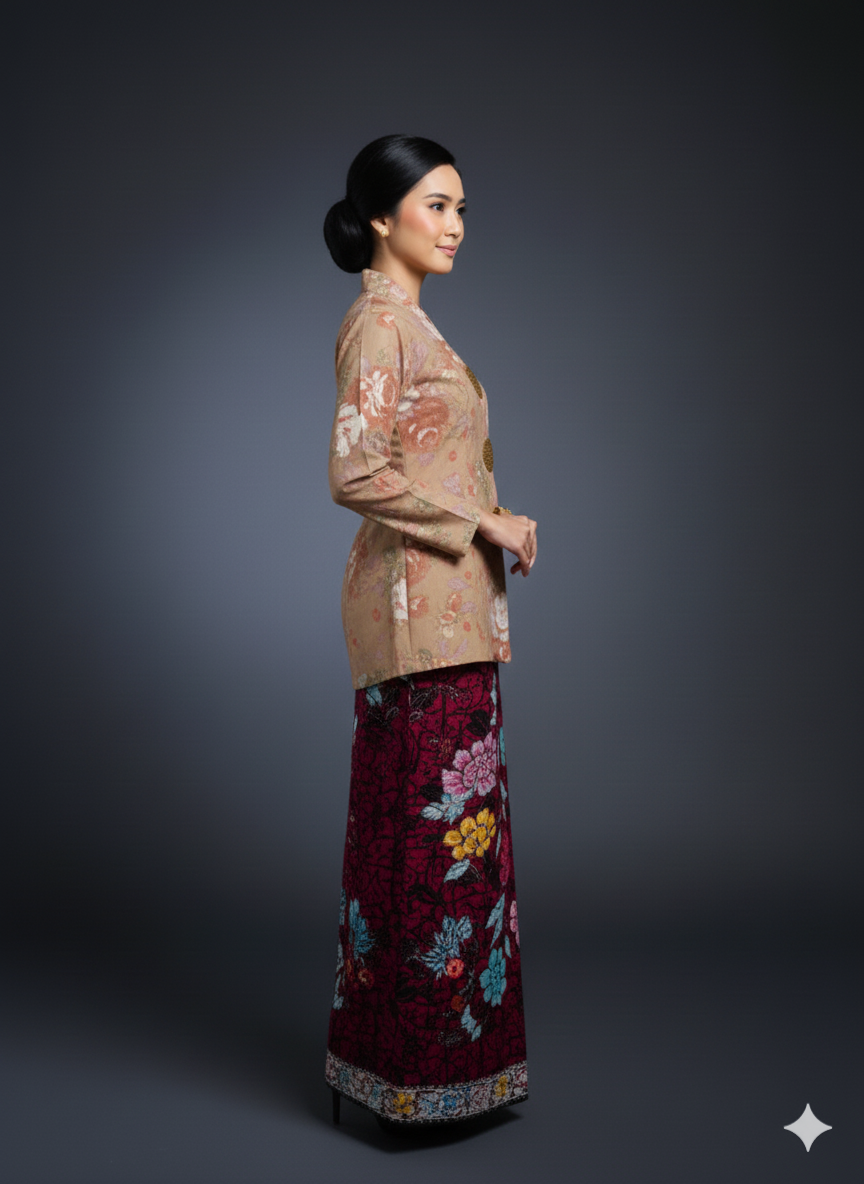
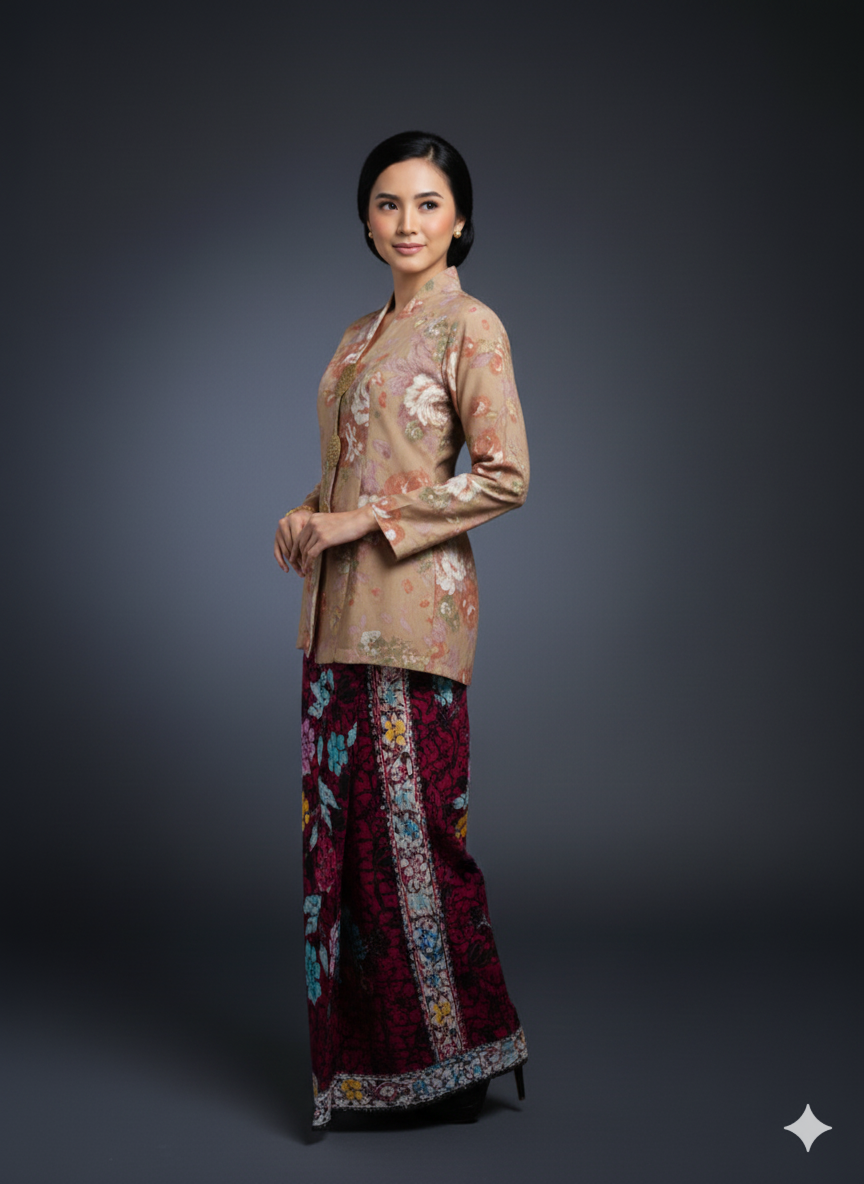
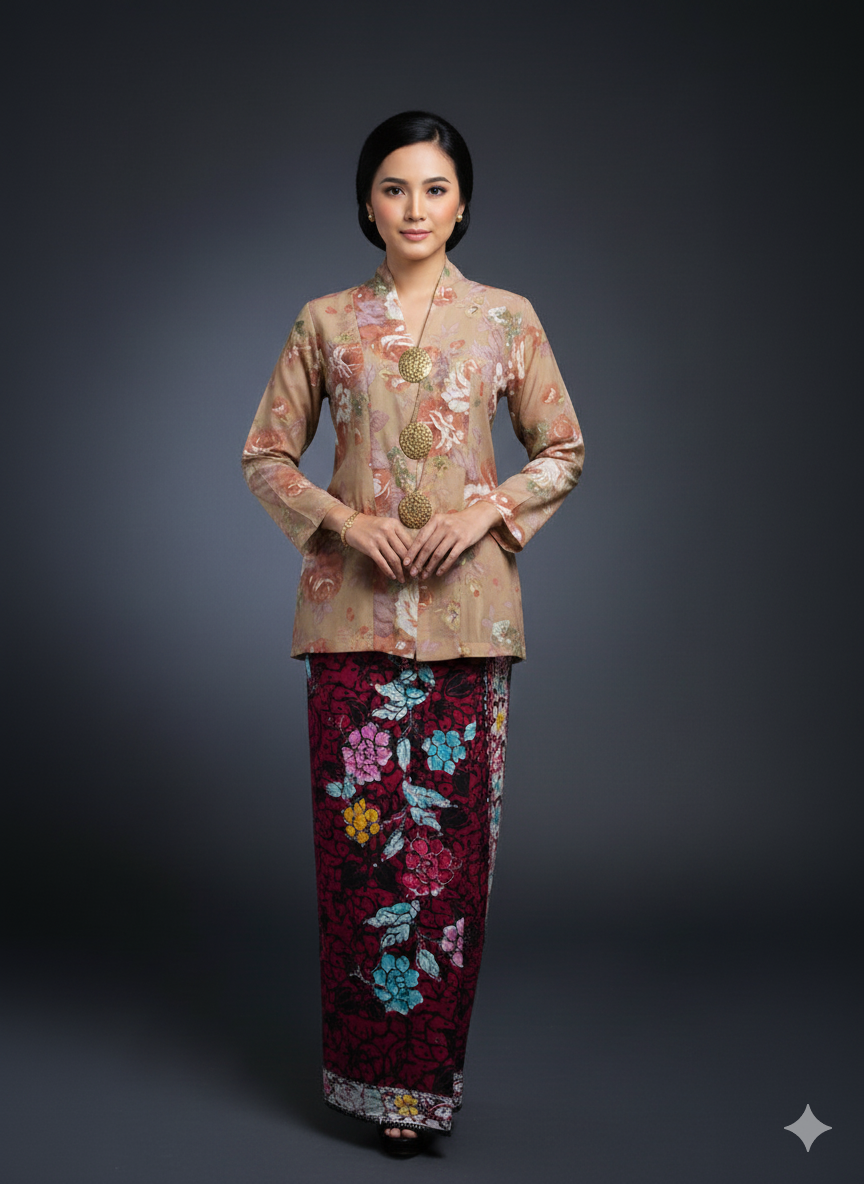
The Kebaya Setengah Tiang is one of the traditional women’s garments of Negeri Sembilan, notable for its uniqueness and distinct cultural identity. The name setengah tiang (“half-mast”) refers to its length, which falls between that of the short kebaya and the long kebaya. It is longer than the short kebaya but does not reach the knee or calf like the long kebaya. This intermediate cut offers comfort and ease of movement while preserving the modesty and refinement expected of Malay women.
The origins of the Kebaya Setengah Tiang can be traced back to the 1930s, when it was worn by members of the Negeri Sembilan royal family. Among its early wearers were Her Royal Highness Tunku Ampuan Durah binti Almarhum Tunku Besar Burhanuddin, consort to Tuanku Munawir, the ninth Yang di-Pertuan Besar of Negeri Sembilan; Her Majesty Tuanku Kurshiah binti Almarhum Tunku Besar Burhanuddin, the first Raja Permaisuri Agong of the Federation of Malaya; and Her Majesty Tunku Ampuan Najihah binti Almarhum Tunku Besar Burhanuddin, the tenth Raja Permaisuri Agong of Malaysia.
Nevertheless, scholars and cultural practitioners believe that the garment had been worn much earlier, given the longstanding ties between Negeri Sembilan and the Minangkabau community of West Sumatra, particularly through the Adat Perpatih system introduced by Minangkabau migrants since the fifteenth century. The prominence of the Kebaya Setengah Tiang became more evident in the nineteenth and early twentieth centuries, when it was not only the choice of noblewomen and the royal household but also worn by ordinary women in society. It was frequently donned at adat perpatih ceremonies, weddings, festive celebrations, and other communal gatherings.
Beyond its defining feature as a setengah tiang, this kebaya possesses distinctive characteristics that set it apart from other kebaya styles in Malaysia. Its lower hemline is straight, with sleeves that flare slightly at the ends, while the front panel includes a tongue-like extension resembling that of the long kebaya. Traditionally, the garment extended to the ankles; however, its uniqueness lay in the nine-panel cut, straight inserts at the front, gussets, and a concealed chest opening that ensured modesty.
The Kebaya Setengah Tiang also features the distinctive belah potong sembilan (nine-panel cut), which showcases the refinement of traditional tailoring techniques. In terms of fabric, it is commonly made from brocade, handwoven songket, or sheer voile, depending on whether it is intended for formal occasions or everyday use. It is typically paired with a batik sarong tied in the tindih kasih style, a fold that overlaps from right to left in accordance with Islamic practice, reflecting both aesthetic elegance and the cultural values of Negeri Sembilan society.
Today, the Kebaya Setengah Tiang is recognized not only as part of the traditional dress identity of Negeri Sembilan women but also as a timeless fashion icon that continues to remain relevant. The garment has undergone various modern adaptations in terms of fabric, pattern, and style, yet its traditional features have been preserved as the foundation of its design. Its endurance is evident in its versatility, worn not only at adat ceremonies and social events but also featured on fashion runways, cultural performances, and heritage showcases, thereby extending its influence on a national scale. With its graceful design, elegance, and adaptability across different settings, the Kebaya Setengah Tiang has become a cherished garment embraced by women throughout Malaysia.
The Kebaya Setengah Tiang serves several important functions and roles, among which are the following:
Symbol of Social Status and Custom
The Kebaya Setengah Tiang functions as a symbol of social standing and cultural tradition within the society of Negeri Sembilan. It was once worn by members of the royal household, including the Tunku Ampuan of Negeri Sembilan, signifying its status as a prestigious garment that reflected the dignity and high stature of its wearer. However, its use was not confined to the nobility; it was also widely worn by common women. This duality established the Kebaya Setengah Tiang as a garment that transcended social classes while firmly rooted in cultural values and the Adat Perpatih system.
Practical Function in Daily Life
Traditionally, the Kebaya Setengah Tiang was worn by women in their everyday activities, such as managing household duties and working in the paddy fields. Its modest cut, neither too long nor too short, provided comfort and freedom of movement, unlike the longer kebaya, which often restricted mobility. The “half-mast” design thus made the garment highly practical, while the use of lightweight fabrics such as cotton or voile ensured comfort in Malaysia’s tropical climate. By the early 1950s, the Kebaya Setengah Tiang had grown in popularity, serving not only as daily wear but also as attire for weddings, adat ceremonies, and communal gatherings. This versatility underscored its role as a multifunctional garment in the daily lives of Negeri Sembilan women.
Role in Festivals and Community Ceremonies
Beyond its practical and symbolic value, the Kebaya Setengah Tiang also played a significant role in festivals and community events. It was a favored choice among women during the celebrations of Hari Raya Aidilfitri and Aidiladha, when more luxurious fabrics such as songket or brocade, often adorned with intricate embroidery, were chosen to express understated elegance. In addition, the garment was worn at important social occasions such as weddings, engagements, cradle ceremonies (majlis berendoi), and adat rituals. This made the Kebaya Setengah Tiang not only a cultural icon but also a versatile garment that remained relevant in both social and ceremonial contexts of Negeri Sembilan society.
The accessories worn with the Kebaya Setengah Tiang play a vital role in completing the ensemble and enhancing the wearer’s elegance. The following are the main accessories commonly used:
Telepok
Function: The telepok is a traditional head ornament of Negeri Sembilan, made from cloth folded or tied in a distinctive style.
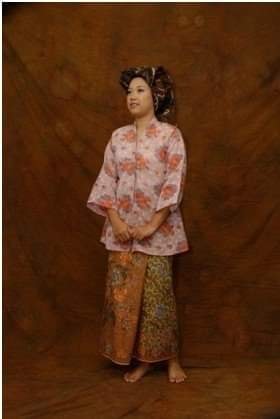
Symbolism: It serves as a marker of identity for women in Negeri Sembilan and was historically worn both in daily life, such as while working in the paddy fields, and on more formal occasions, including adat ceremonies and traditional weddings. Unlike the horn-shaped tengkolok worn by Minangkabau women in West Sumatra, the telepok underscores the uniqueness of Negeri Sembilan’s women’s attire.
Cucuk Sanggul (Hairpins)
Function: Women’s hair was traditionally styled in a high bun and adorned with cucuk sanggul (hairpins), sometimes complemented with fresh flowers such as jasmine or roses.
Symbolism: The cucuk sanggul was often favored by young women and was particularly appropriate for formal occasions, weddings, and festive celebrations.
Kerongsang Tiga Serangkai (Three-Piece Brooch)
Function: The kerongsang is an essential accessory, used to fasten the front opening of the kebaya securely.
Design: The most popular type is the kerongsang tiga serangkai, consisting of one larger brooch (the “mother”) and two smaller ones (the “children”). These were commonly crafted from gold, silver, or decorated with gemstones.
Symbolism: Beyond its practical function, the kerongsang also symbolized status and enhanced the beauty of the garment.
Dokoh
Function: The dokoh is a traditional chest ornament resembling a necklace with plate-like pendants, worn across the chest, especially at weddings and formal ceremonies. It often served as an alternative to the three-piece kerongsang.
Design: It typically features intricate designs inspired by floral, foliage, or other traditional motifs, giving a luxurious appearance.
Symbolism: The dokoh signifies wealth, elegance, and the elevated stature of the wearer.
Rantai Panjang (Long Necklace)
Function: The long necklace was worn either with the dokoh or on its own as a complementary accessory.
Style: It lent a simpler yet elegant appearance, making it suitable for less formal occasions.
Earrings
Function: The earrings, usually made of gold or silver, were worn to complete the look, particularly by women who did not wear headscarves.
Symbolism: They symbolized modest luxury and the refinement of Malay women. In contemporary practice, however, with many women choosing to wear the headscarf in line with Islamic values, earrings are less frequently worn openly.
Bracelets/Bangles
Function: Bracelets, typically crafted from gold or silver, were worn to adorn the wrists.
Symbolism: They highlighted femininity and the delicate cultural refinement of Malay women.
Traditional Footwear
Function: Footwear such as decorated sandals, low-heeled shoes, or traditional wooden clogs (bakiak) were often worn with the kebaya.
Symbolism: Although simple, these choices maintained modesty while completing the traditional look
The Kebaya Setengah Tiang is crafted from a variety of fabrics selected according to function, comfort, and the wearer’s social status. The following are the materials most commonly used:
Cotton and Voile (Kasa Rubia)
Usage: These lightweight and breathable fabrics were typically used for everyday wear due to their thin texture, comfort, and suitability for the tropical climate.
Function: Ideal for women working in the paddy fields or managing household tasks, as they do not trap heat and are easy to style.
Brocade
Usage: A luxurious fabric with raised patterns that provides an elegant texture.
Function: Commonly worn for formal occasions, weddings, and cultural ceremonies, as it conveys prestige and grandeur.
Handwoven Songket
Usage: Songket was the preferred fabric for ceremonial attire, as it is handwoven with gold or silver threads.
Symbolism: Beyond its opulent appearance, songket represents high status and serves as a cultural emblem of pride in Negeri Sembilan.
Silk
Usage: Reserved for the nobility or high-ranking individuals, particularly for prestigious events.
Function: The fine, lustrous texture of silk enhances elegance and accentuates the refined tailoring of the kebaya.
Batik Sarong (Skirt) and Telepok
Usage: The Kebaya Setengah Tiang is typically paired with a batik sarong as the bottom garment.
Styling: The sarong is tied in the tindih kasih style, where the folds overlap from right to left in layered pleats, symbolically aligned with Islamic practice.
Design: Batik sarongs commonly feature motifs such as floral patterns, bamboo shoots (pucuk rebung), or other traditional designs that reflect local identity.
Alternatives: In formal ceremonies, songket sarongs were often worn as a more prestigious option.
Telepok: The telepok, the traditional headpiece of Negeri Sembilan women, was also commonly fashioned from batik fabric, further highlighting the cultural val
In general, the way of wearing the Kebaya Setengah Tiang is not very different from other traditional Malay garments. However, it requires particular care and precision, especially in the arrangement of the telepok. The following are the detailed steps:
Wearing the Batik Sarong
The first step is to put on the batik sarong or, for formal occasions, a songket sarong.
The sarong is tied using the tindih kasih style, where the folds overlap from right to left in layered pleats.
The sarong must be securely fastened at the waist to ensure comfort and prevent it from loosening during wear.
Putting on the Kebaya Setengah Tiang
The kebaya is then worn over the sarong. Its straight cut and half-mast length should be adjusted neatly so that it falls gracefully on the body.
The front opening of the kebaya, which is naturally parted, should be properly aligned before fastening.
Fastening the Kerongsang
A three-piece brooch (kerongsang tiga serangkai) is used to fasten the kebaya at the front so that it remains securely closed.
The larger brooch (the “mother”) is placed at the upper chest, while the two smaller brooches (the “children”) are positioned below it.
Besides its practical role in closing the kebaya, the brooch also enhances the overall aesthetic of the attire.
Wearing the Dokoh or Long Necklace (Optional)
A dokoh, a chest ornament with plate-like pendants, may be worn across the chest, particularly for weddings and adat ceremonies.
As a simpler alternative, a long necklace can be worn either in combination with the dokoh or on its own.
Wearing Earrings
Traditionally, earrings made of gold or silver were worn to enhance the elegance of women who did not cover their heads with a headscarf.
In a modern context, however, women who wear the hijab generally forgo earrings in public as a gesture of modesty.
Wearing the Bracelets
Gold or silver bracelets are worn on the wrists to complement the kebaya.
These can be worn in pairs or in multiples to accentuate the refinement of traditional Malay feminine style.
Wearing the Telepok (Traditional Headpiece)
The telepok is an essential head ornament, traditionally worn during adat ceremonies, weddings, or even for daily household tasks.
It distinguishes itself from the horn-shaped tengkolok of the Minangkabau, highlighting the local originality of Negeri Sembilan attire.
To wear it, a quarter-length of sarong cloth is draped from the back of the neck to the hairline.
The two front ends of the cloth are then overlapped on the right and left sides, before the hanging front portion is pulled back to complete the arrangement.
Wearing the Cucuk Sanggul (Hairpin)
Women’s hair is styled in a high bun and adorned with cucuk sanggul, often accompanied by fresh flowers such as jasmine or roses.
The hairpin is generally fastened on the right side, while flowers are placed on the left side of the bun to balance the look.
Wearing Traditional Footwear
The appearance is completed with traditional footwear such as decorated sandals, bakiak (wooden clogs), or low-heeled shoes.
These choices maintain modesty while balancing elegance with practicality.
Reference Source
Bahan Bacaan
Bernama. (2024, May 16). Uniknya Kebaya Setengah Tiang. https://bernama.com/bm/news.php?id=2426467
Jabatan Perdana Menteri Malaysia. (2022, January 24). Busana tradisional Negeri Sembilan: Kebaya setengah tiang dan telepok. Majlis Keselamatan Negara. https://www.mkn.gov.my/web/ms/2022/01/24/busana-tradisional-negeri-sembilan-kebaya-setengah-tiang-dan-telepok/
Majalah WM. (2023, September 19). Cerita kebaya dan asal usulnya. https://majalahwm.com/cerita-kebaya-dan-asal-usulnya/
Metro, H. (2024, July 7). Uniknya kebaya setengah tiang. Harian Metro. https://www.hmetro.com.my/mutakhir/2024/07/1110807/uniknya-kebaya-setengah-tiang
Sunarti, L., Sari, N. F. L., & Haghia, R. S. (2021, November). Kebaya setengah tiang: Minang cultural identity in a traditional costume of Negeri Sembilan, Malaysia. In Proceedings of the Tenth International Conference on Languages and Arts (ICLA 2021) (pp. 251–260). Atlantis Press. https://doi.org/10.2991/assehr.k.211220.043
Zakaria, A., & Berawi, M. M. (2017). Busana tradisional Negeri Sembilan. UUM Press.
Location
State JKKN Contact Information
Rosdianah binti Roman
Cultural Officer
Jabatan Kebudayaan dan Kesenian Negara, Negeri Sembilan
Kompleks JKKN Negeri Sembilan
Jalan Sungai Ujong
70200 Seremban
NEGERI SEMBILAN DARUL KHUSUS
06-767 6793/763 6308 / 761 0593
Use the form below to contact the Informant/Figure/Editor/Researcher directly. We will respond to your inquiry as soon as possible!


