

ARTS AND CULTURE INFORMATION GATEWAY
Immerse yourself in the colorful world of art and culture! From traditional heritage to contemporary works, discover uniqueness that reflects the nation's identity and identity
BZJU MELAYU CEKAK MUSANG
 Fakulti Muzik dan Seni Persembahan, Universiti Pendidikan Sultan Idris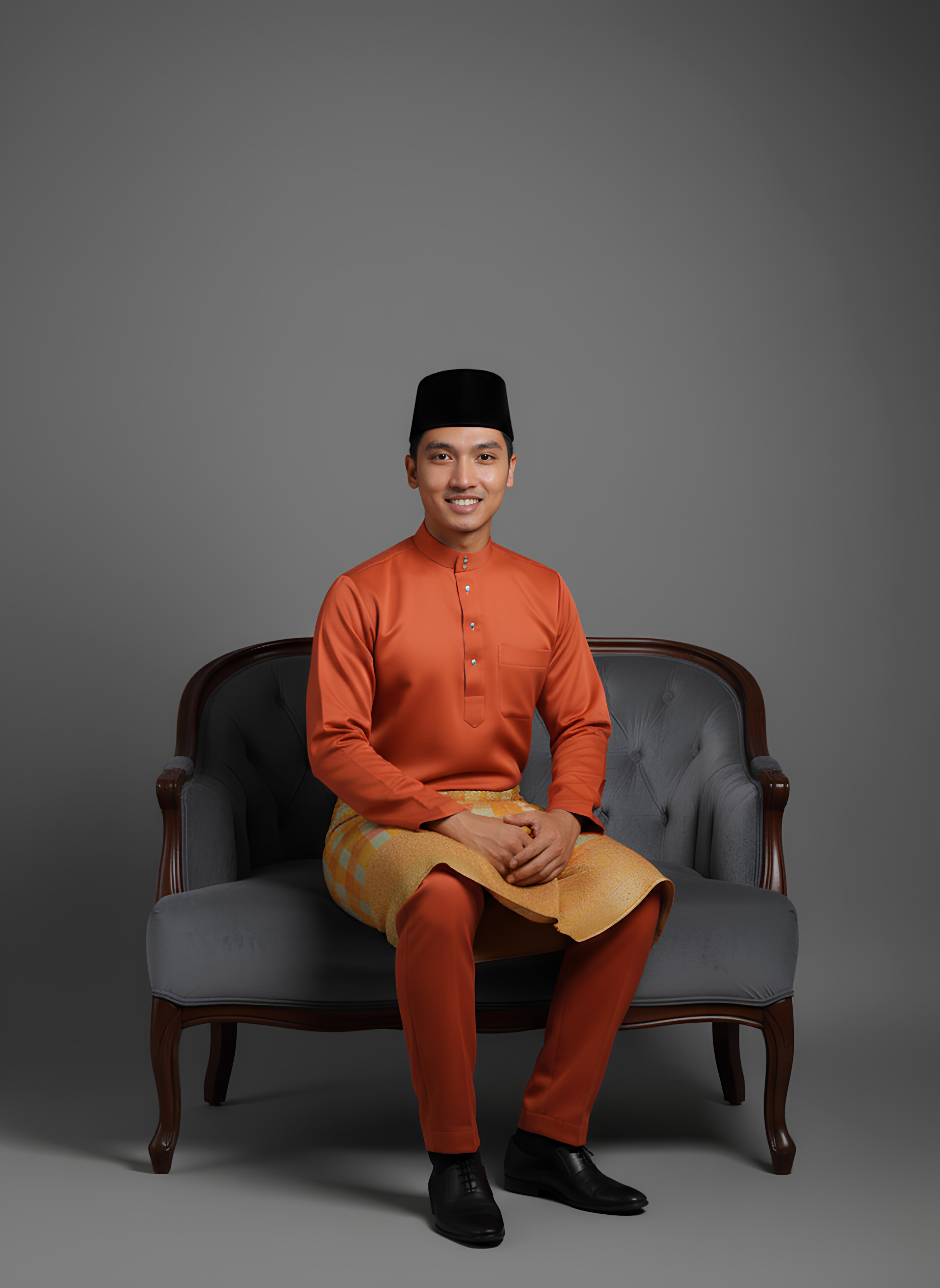



Picture
9
Video
No record
Today's Visitor
786
Number of Visitors
1860
Introduction and history
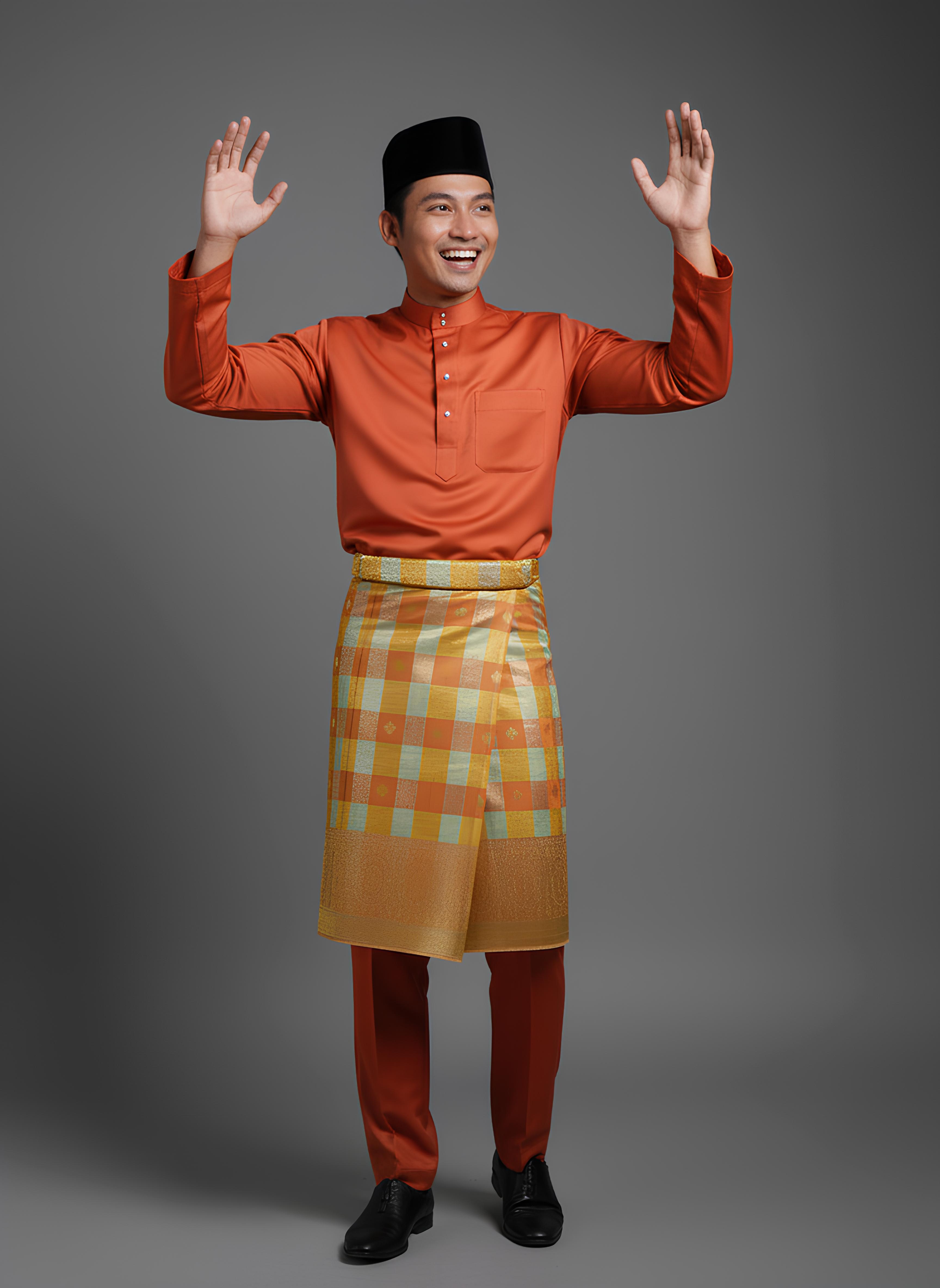
Photo 1: Baju Melayu Cekak Musang

Source: Amsalib Pisali
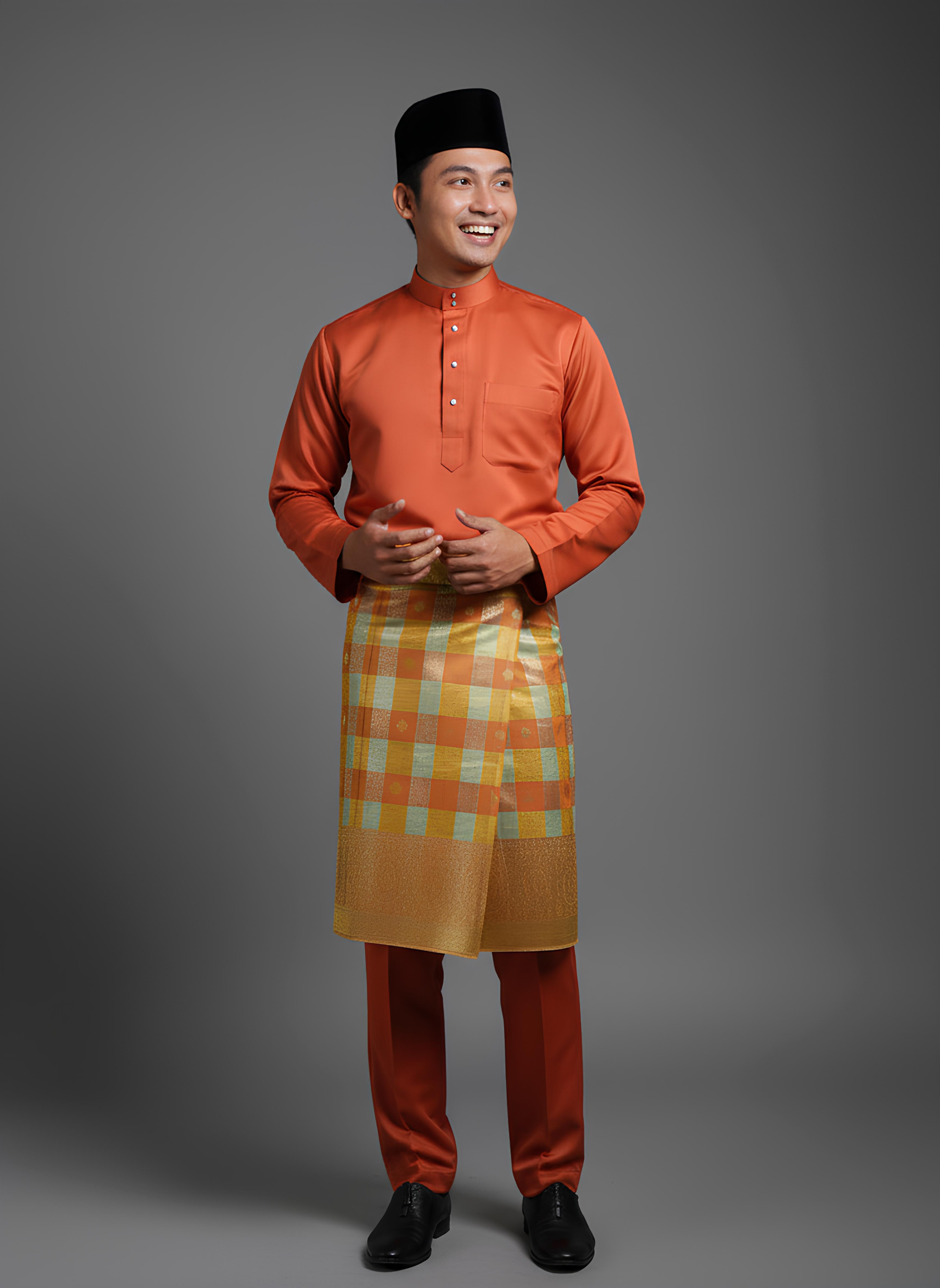
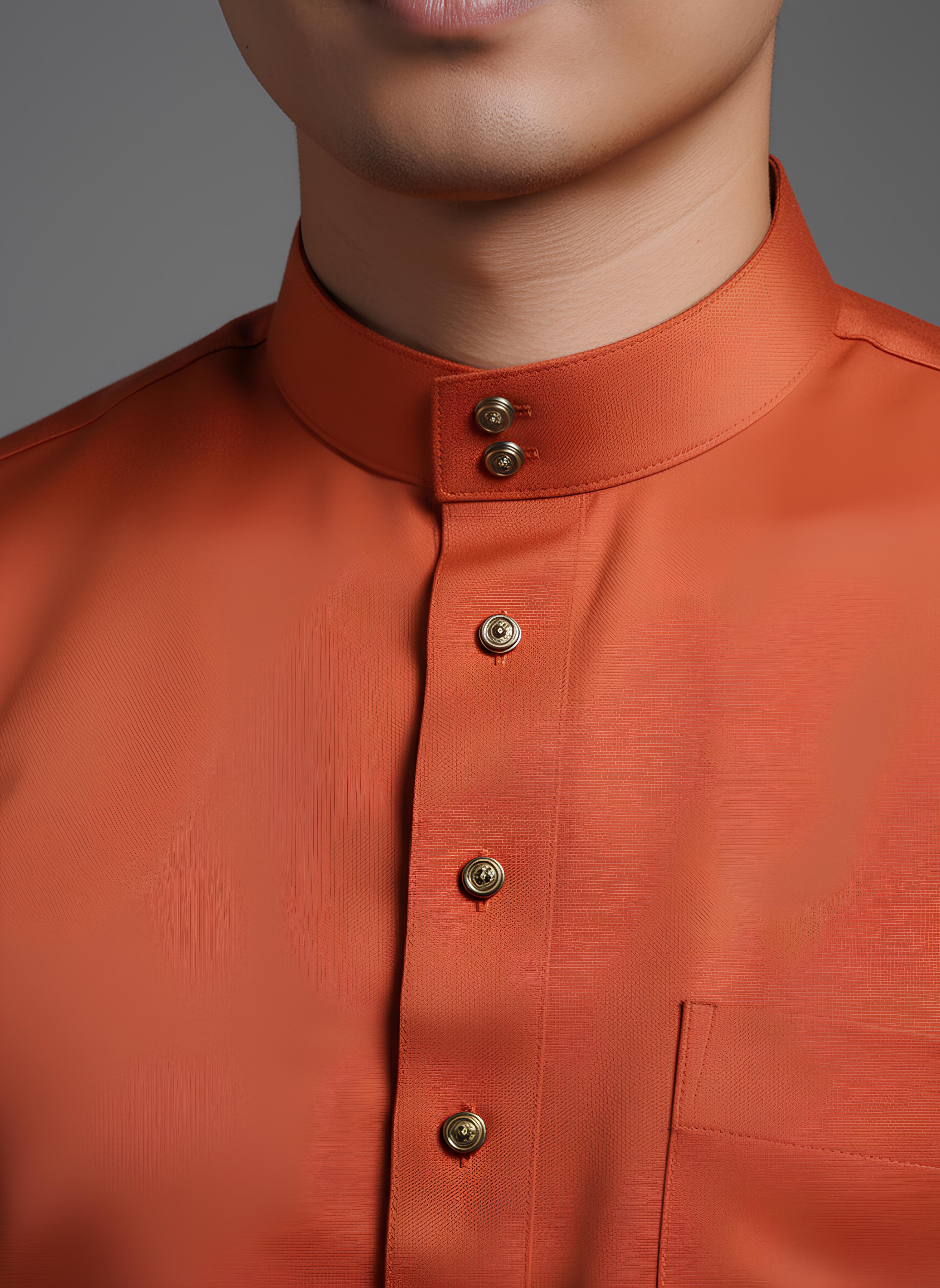
The Baju Melayu Cekak Musang is a traditional Malay men’s garment that has been elevated to the status of Malaysia’s national attire. Its distinctive feature lies in the collar design, which is upright, neat, and closely fitted around the neck, with a front placket fastened by five buttons. This design enhances the wearer’s appearance, often giving him a more elegant and dignified look.
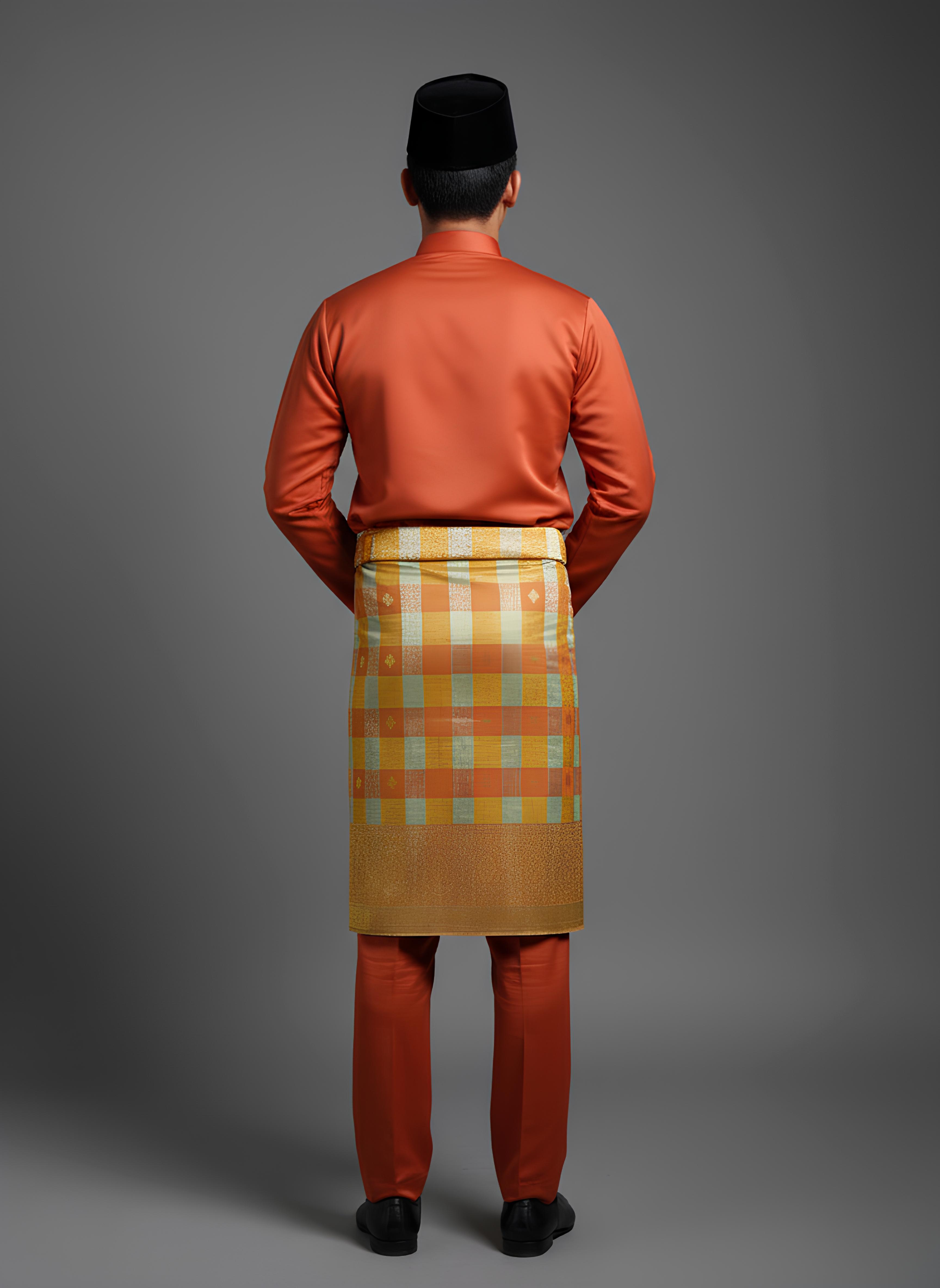
The name Cekak Musang is inspired by the firm, upright neck of the civet cat (musang), symbolizing strength, discipline, and authority. Typically, the Baju Melayu Cekak Musang consists of a long-sleeved shirt and loose trousers, complemented by a samping (a decorative sarong-like cloth) tied at the waist and completed with a songkok (traditional headgear). Compared to the Baju Melayu Teluk Belanga, this style is regarded as more formal and distinguished, making it the preferred choice for official ceremonies, festive occasions such as Eid al-Fitr and Eid al-Adha, weddings, and Friday prayers.
The origins of the Baju Melayu Cekak Musang can be traced back to the Johor Sultanate in the 19th century. While traditional Malay attire had existed since the era of the Malacca Sultanate, the specific Cekak Musang design, as it is known today, emerged in Teluk Belanga, Singapore, which at the time served as the administrative center of the Temenggong of Johor. Its creation is credited to Haji Wan Othman bin Haji Wan Ali, who is regarded as the pioneer of this style. He introduced a shirt distinguished by a tall, upright collar and a front opening fastened with several buttons, features that set it apart from the rounded neckline and single-button fastening of the Baju Melayu Teluk Belanga. This innovative design was originally referred to as Baju Wan, and Haji Wan Othman himself wore it when appearing before the Sultan at the Teluk Belanga Palace.
Sultan Abu Bakar, who ruled Johor from 1862 to 1895 and is honored as the Father of Modern Johor, was deeply captivated by the elegance and refinement of this design. Recognizing its potential as formal court attire, he valued its smart and dignified appearance, especially when complemented by gold buttons inlaid with precious stones. As a result, Sultan Abu Bakar officially endorsed the design as royal attire, bestowing upon it the name Baju Melayu Cekak Musang. From that moment, it became the attire of the royal family, aristocrats, and palace officials, serving as a powerful symbol of status, rank, and authority. This distinction also marked a clear separation between courtly dress (Cekak Musang) and the common people’s attire (Teluk Belanga) of the time.
From the Johor court, the influence of Baju Melayu Cekak Musang gradually spread to other Malay states. By the late 19th century, the Johor Palace had become not only a modern administrative hub but also a cultural trendsetter, shaping lifestyle and fashion in regions such as Selangor, Pahang, and Perak. Diplomatic ties and visits from dignitaries to Johor further facilitated the dissemination of this attire across the Malay Peninsula. With its growing popularity, symbolic meanings also became embedded in its design. The five buttons on the chest, for example, are often interpreted as representing the Five Pillars of Islam, serving as a spiritual reminder to the wearer. Meanwhile, the upright collar came to embody discipline, resilience, and the safeguarding of Malay dignity.
By the early 20th century, Baju Melayu Cekak Musang was no longer the preserve of royalty and the aristocracy; it had been embraced by the wider community, particularly during grand occasions such as Eid celebrations and weddings. This transition from exclusive court attire to popular dress reflects a process of “fashion democratization” within Malay culture. Following independence, the attire was officially recognized, alongside Baju Melayu Teluk Belanga as part of Malaysia’s national dress. Today, it is worn not only by state leaders during formal ceremonies but also by ordinary citizens, ensuring the continuation of its legacy as a cultural treasure.
In the contemporary era, Baju Melayu Cekak Musang transcends ethnic and cultural boundaries, becoming a shared heritage within Malaysia’s multicultural society. Its adoption by non-Malay communities, including diverse ethnic groups in Sabah and Sarawak, highlights its inclusivity and significance. Whether for official events or festive occasions, the attire symbolizes unity and reflects a collective national identity.
Thus, the evolution of Baju Melayu Cekak Musang illustrates its journey from a traditional garment of the Johor Malays to a national attire embraced across Malaysia. More than just clothing, it represents integration, harmony, and shared pride among the nation’s diverse communities.
The Baju Melayu Cekak Musang has evolved far beyond its role as a mere article of clothing. Today, it serves multiple important functions within Malay society and Malaysia at large. Its significance can be understood through several key perspectives, each reflecting cultural, social, and symbolic dimensions of this enduring attire.
Primary Attire for Eid al-Fitr and Eid al-Adha
Baju Melayu Cekak Musang holds a central role during Malaysia’s two most significant Islamic celebrations, Eid al-Fitr and Eid al-Adha. On the morning of 1 Syawal, it is the attire traditionally chosen by men for the Eid al-Fitr prayers. A freshly tailored set worn on this day symbolizes purity, refinement, and the joy of celebrating Islam’s sacred festival. Throughout the day, it is also donned during family visits and the practice of seeking forgiveness, embodying respect, courtesy, and deference to elders. During Eid al-Adha, its role is equally prominent: men wear it to the mosque for prayers commemorating Prophet Ibrahim’s (A.S.) sacrifice, and continue to wear it while visiting relatives and attending communal feasts following the ritual sacrifice.
National and State Attire of Malaysia
Beyond festive occasions, Baju Melayu Cekak Musang also functions as Malaysia’s national and state attire. It is frequently worn by national leaders, diplomats, and even athletes at formal ceremonies, both within the country and abroad, symbolizing Malay identity and projecting Malaysia’s cultural image on the global stage. Its official recognition as part of the national dress elevates it as a symbol of sovereignty, unity, and cultural heritage, values that Malaysians collectively uphold with pride.
A Symbol of Social Status
Historically, Baju Melayu Cekak Musang was an exclusive garment reserved for Johor’s royal family and nobility. Wearing it signified social rank, prestige, and authority. Over time, it spread across all levels of society, but its association with status remains visible. The use of luxurious fabrics such as silk or songket, gold or gem-encrusted buttons, and finely handwoven samping continues to reflect wealth, taste, and refinement. Thus, even today, the attire functions not only as traditional clothing but also as a subtle marker of socio-economic position and personal distinction.
Function in Religious (Islamic) Contexts
At the same time, Baju Melayu Cekak Musang is closely intertwined with the religious life of the Malay Muslim community. Its modest, loose-fitting design makes it appropriate and respectful for acts of worship, especially Friday and Eid prayers. The five buttons along the chest are often interpreted as representing the Five Pillars of Islam, serving as a spiritual reminder of a Muslim’s obligations. In this sense, the attire extends beyond outward appearance: it embodies faith, values, and moral integrity, affirming the spiritual identity of the Malay Muslim tradition.
Baju Melayu Cekak Musang is often complemented by accessories that enhance its elegance, neatness, and cultural identity. Each accessory not only adds aesthetic value but also carries symbolic meanings and practical functions that reflect Malay culture, etiquette, and tradition. The main accessories commonly paired with Baju Melayu Cekak Musang include the following:
Samping
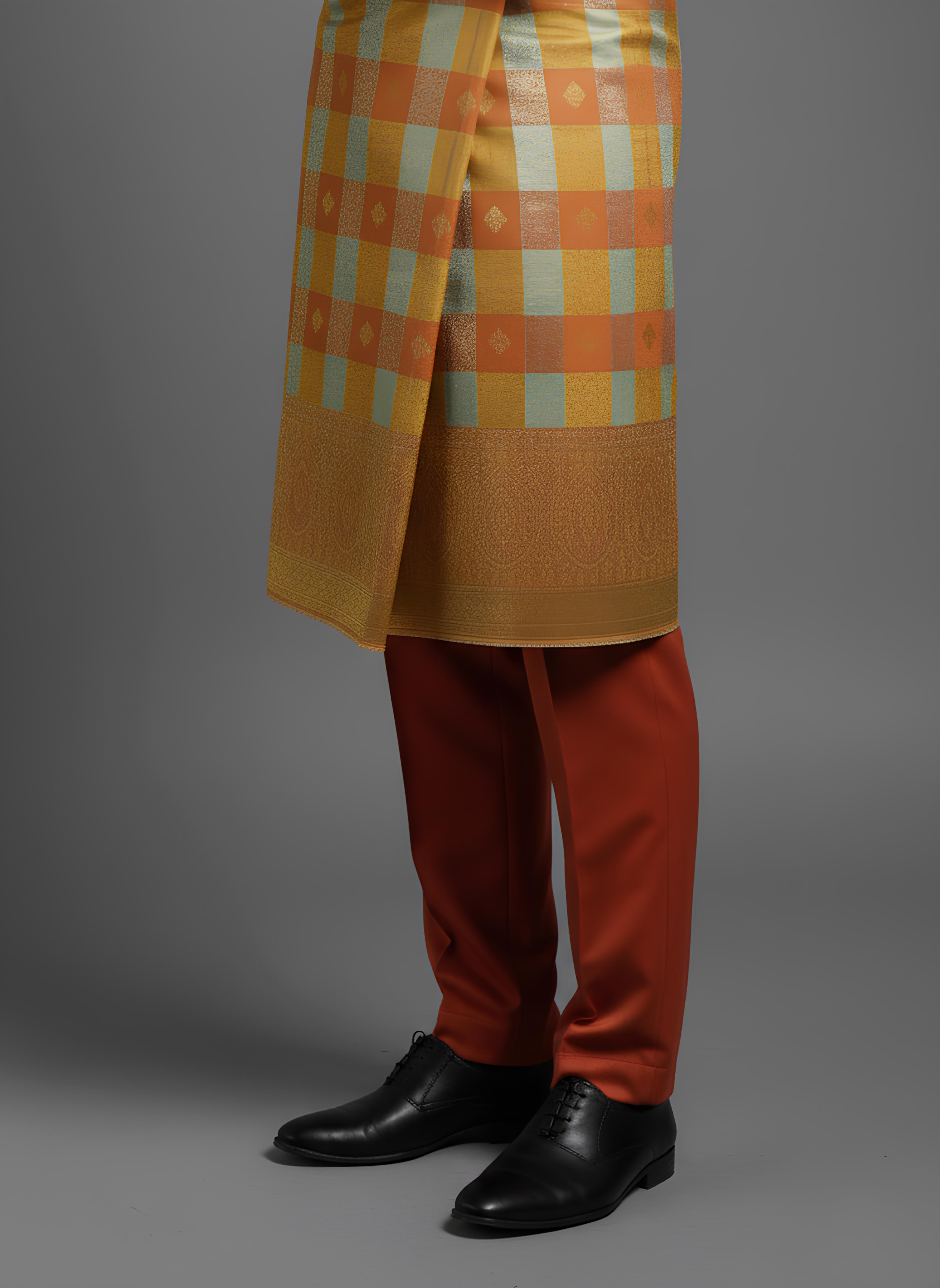
The samping is the most essential accessory that completes the elegance of Baju Melayu Cekak Musang. It is a sarong-like cloth worn over the trousers, typically extending from the waist to the knees or slightly below.
Its primary function is to cover the midsection while adding refinement and formality to the overall attire.
The choice of fabric varies according to occasion: lightweight cotton is commonly used for daily wear, while luxurious handwoven songket is reserved for weddings, ceremonies, and official events.
Songket is especially prized for its intricate motifs and profound symbolic value.
Traditionally, when paired with Baju Melayu Cekak Musang, the samping is worn in the berdagang luar style, draped outside the shirt. Historically, this style indicated that the wearer was married; however, in contemporary practice it is used more flexibly, regardless of marital status, serving primarily as a mark of elegance and cultural tradition.
Songkok
The songkok is an oval-shaped headgear, usually black in color and made of velvet.
It is considered a mandatory complement, especially for formal and religious occasions.
Wearing the songkok gives the appearance of being respectful, well-mannered, and dignified, while also showing reverence to the occasion attended.
The songkok also carries symbolic value as a marker of Malay male identity, making it one of the most iconic accessories of Baju Melayu Cekak Musang.
Baju Melayu Buttons
Baju Melayu Cekak Musang features five buttonholes; choosing buttons itself an important accessory.
Beyond the basic function of fastening the collar and chest placket, the buttons also serve as decorative embellishments.
Button sets usually come in five pieces: three larger ones for the chest and two smaller ones for the collar.
The designs vary widely, ranging from simple styles for daily use to luxurious sets crafted from silver, gold, or gemstones, often reserved for ceremonial events.
Shoes or Capal
Shoes or capal play an important role in completing the look of Baju Melayu Cekak Musang.
The capal is the traditional choice, made of leather with a unique design resembling Jawi script. It adds a classic touch to the appearance, is very comfortable, and is often chosen by those who wish to preserve the authenticity of traditional Malay style.
However, in modern contexts, polished leather shoes, whether lace-up or slip-on, are also widely accepted, especially for formal and corporate occasions.
The choice between shoes or capal reflects the wearer’s taste and lifestyle, whether favoring traditional authenticity or a more sophisticated modern finish.
Additional Accessories (Ceremonial and Wedding Occasions)
Apart from the essential accessories, there are also additional items commonly worn for ceremonial, cultural, or wedding events.
Among them is the keris selit, a traditional Malay dagger tucked into the samping, symbolizing masculinity, bravery, and status.
The tengkolok, tanjak, or destar functions as a crown-like headpiece, made from folded songket and worn by royalty or grooms, with specific folds representing regional identity and meaning.
In modern times, wristwatches have also become popular accessories—whether leather-strapped
The choice of materials, particularly fabric, in producing Baju Melayu Cekak Musang is crucial as it not only determines the comfort level of the wearer but also influences the appearance, suitability for various occasions, and durability of the attire. In general, the fabrics can be divided into two main categories:
Traditional and Classic Fabrics
These types of fabrics have been used for generations and are often associated with authenticity, quality, and traditional style. Among them are:
Silk
Considered a luxurious and premium fabric. Silk is highly valued for its softness, smooth texture, lightness, and graceful drape. It has a natural sheen that looks elegant and sophisticated. Silk is also comfortable to wear because it is breathable and cooling to the body. For this reason, it is the preferred choice for weddings and festive occasions such as Eid.
Cotton
The most practical and popular fabric for daily wear and festive use. Its advantages lie in its comfort, breathability, and sweat-absorbing qualities, making it well-suited to Malaysia’s hot climate. Cotton comes in various grades, ranging from regular cotton to high-quality Swiss Cotton, which is finer, smoother, and has a subtle sheen.
Songket
A luxurious brocade fabric traditionally handwoven with gold or silver threads. Because it is thick, heavy, and highly valuable, songket is rarely used for a complete shirt and trousers set. Instead, it is most commonly reserved for the samping or royal wedding attire.
Modern and Contemporary Fabrics
These fabrics are widely popular today as they offer diverse textures, are easier to maintain, and are generally more affordable.
Satin
Known for its very smooth and glossy outer surface, while the inner side is more matte. Satin gives a luxurious effect similar to silk but at a lower price. Popular types include Valentino Satin and Duchess Satin, which are thicker and less shiny. However, certain kinds of satin can feel quite warm when worn for long periods.
Crepe (Italian Crepe / Como Crepe)
Currently, the most popular fabric for modern Baju Melayu. Crepe has a slightly grainy texture (less slippery than satin), is wrinkle-resistant, drapes beautifully, and is comfortable to wear. It is not shiny, but it provides a neat and modern appearance
Polyester or Polyester Blends (Poly-Cotton)
Many ready-to-wear Baju Melayu sets are made from polyester blends with cotton. Their advantages include durability, wrinkle resistance, and long-lasting color. However, they are less breathable compared to pure cotton, making them somewhat less comfortable in hot weather.
Linen
A fabric made from flax plant fibers. Linen is highly valued for its cooling and sweat-absorbent qualities, making it extremely comfortable to wear in tropical climates. Its main drawback, however, is that it wrinkles easily. Still, it gives a more relaxed and casual appearance.
Special Material for the “Cekak Musang” Collar
One of the defining features of Baju Melayu Cekak Musang is its stiff and upright collar. To achieve this shape, the inside of the collar is reinforced with interfacing (locally called kain gam). This material is fused onto the main fabric using heat (from an iron), giv
The way of wearing Baju Melayu Cekak Musang is more structured compared to Baju Melayu Teluk Belanga, especially when it comes to the samping. Wearing it correctly highlights the neatness, elegance, and masculinity of the wearer. The following are the complete steps and etiquette of dressing:
Step 1: Wearing the Trousers and Shirt
Trousers – Begin by putting on the trousers. Ensure the length is appropriate, not too long that it drags, nor too short above the ankles. Traditional Baju Melayu trousers are cut loose for comfort.
Shirt – Put on the shirt. The Baju Melayu Cekak Musang has a front opening at the chest (collar). Leave the buttons open for now to make it easier to wear the samping later. The shirt should not be too tight or excessively loose on the body.
Step 2: Fastening the Buttons
Number of Buttons – Baju Melayu Cekak Musang has five buttonholes.
Attach the two smaller buttons at the upright collar.
Then, fasten the three larger buttons along the chest opening.
Ensure all buttons are neatly aligned and secured.
Step 3: Wearing the Samping
The samping is the element that most distinguishes the wearer’s appearance. For Baju Melayu Cekak Musang, the most common and formal style is berdagang luar (worn over the shirt).
“Berdagang Luar” Style – Traditionally, this style indicated that the wearer was married, but today it is simply regarded as the formal style.
Folding the Samping – Fold the cloth into two or three layers, depending on the desired width. The fold will determine the length. Ensure the patterned end (kepala kain) is positioned correctly.
Wrapping – Wrap the samping around the waist, outside the shirt, with the patterned end centered at the back.
Adjusting the Wrap – Pull both ends to the front, making sure it is neither too tight nor too loose. The top edge should sit above the navel.
Creating the Fold – Take the left end, fold it inward to the right, then overlap it with the right end.
Neaten the front fold so it appears sharp and straight. Any excess on the right side will create a decorative “wave” effect.
Securing with a Belt – To prevent the samping from loosening, use a belt around the waist and fold the top of the samping slightly over it to conceal the belt.
Length Adjustment – The ideal length of the samping is just above the knees. Avoid wearing it too long (below the knees) or too short (like a mini skirt).
Step 4: Completing the Look
Songkok – Place the songkok on the head. Ensure the size fits well, wearing it either slightly tilted to the right or straight in the center, depending on preference. The songkok completes the attire with respectability and dignity.
Capal or Shoes – For a traditional finish, wear leather capal sandals. For more modern or formal events, polished black or dark leather shoes are highly appropriate.
Additional Accessories
Wristwatch: Worn on the left wrist for a smart finish.
Keris: For ceremonial occasions or weddings, the keris is tucked at the front fold of the samping as a symbol of masculinity and tradition.
Etiquette Summary
Neatness – Ensure all parts of the attire are well-ironed, especially the collar and samping folds.
Sock Color – If wearing shoes, choose dark socks (commonly black) that match the trousers or shoes.
Simplicity – Avoid excessive accessories. The true elegance of Baju Melayu Cekak Musang lies in its neatness and simplicity.
By following these steps, one can wear Baju Melayu Cekak Musang correctly, neatly, elegantly, and with full respect to tradition.
Reference Source
Bahan Bacaan
Abdul Karim, K. A., & Almurid, D. I. F. (2022). Authenticity traditional costume of Zapin symbolize wealth in the art of a culture in Johor. ARTe: Art & Expression, November 2022, 7–12.
Aris, A., Md Nawawi, N., & Yusof, S. (2015). Refleksi Islam dalam pakaian tradisional Melayu: Baju. [Journal name/details not provided].
Hamidi, M., & Asra, Y. (2019, December). Busana baju kurung Melayu kekinian mendukung ekonomi dan industri kreatif. In Seminar Nasional Industri dan Teknologi (pp. 309–315).
Ibrahim, N. I., & Aziz, A. (2019). The comparison of children customary clothes between the royal and communal society in Malay circumcise ceremony. International Journal of INTI, 23(2), 107–115.
Janudin, S. (2023). Etimologi Cekak dalam rumpunan bahasa dan budaya persilatan Melayu. Jurnal Dunia Pengurusan, 5(3), 1–14.
Meerangani, K. A., Kaulan, S. M., Hamid, M. F. A., & Hashim, S. N. I. (2025). Estetika Islam dan kearifan tempatan dalam busana tradisional Melayu: Kajian terhadap Baju Melayu. E-Journal of Islamic Thought & Understanding, 8(1), 19–30.
Sakira, S., Kustiawan, K., & Wiwik Swastiwi, A. (2023). Penguatan diplomasi budaya melalui baju kurung Melayu di Kepulauan Riau (Doctoral dissertation, Universitas Maritim Raja Ali Haji).
Zakaria, M. H., Wan Kamarulbaharin, W. N. I., Aris, A., & Zainuddin, N. (2024). The influences of contemporary fashion to the development of men’s Baju Melayu in Malaysia. International Journal of Art and Design (IJAD), 8(1, SI 2), 1–14.
Tokoh (jika ada temu bual tokoh)
Location
State JKKN Contact Information
Cultural Officer
Jabatan Kebudayaan dan Kesenian Negara


