

ARTS AND CULTURE INFORMATION GATEWAY
Immerse yourself in the colorful world of art and culture! From traditional heritage to contemporary works, discover uniqueness that reflects the nation's identity and identity
 No 26, Jalan Ros, Felda Bukit Batu, 81020, Kulai, Johor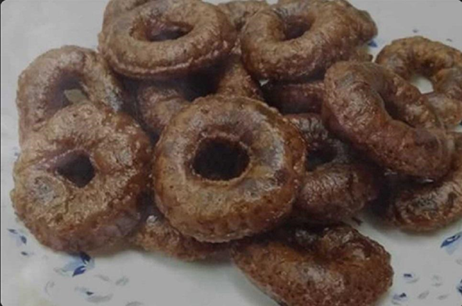
Picture
1
Video
Available
Today's Visitor
9059
Number of Visitors
15646
Introduction and history
Kuih Peneram has its origins in Tamil Nadu, India, where it is known as adhirasam. In Indian culture, adhirasam holds great significance, particularly during the Deepavali festival, where it is celebrated as the "king of sweets." Villagers traditionally prepare adhirasam as a gift for their married daughters, fostering a meaningful family tradition. It is also widely used as an offering to the gods in homes and temples, underscoring its cultural and spiritual importance.
Although adhirasam and Kuih Peneram share similar roots, their recipes differ slightly. The Indian version incorporates ingredients such as dried ginger powder and cardamom, along with rice flour and brown sugar, while Kuih Peneram adopts a simpler approach using rice flour and palm sugar.
Kuih Peneram, inspired by adhirasam, became popular among the Malays in northern Malaysia and has since become a part of their culinary traditions. Known by names such as denderam and peniaram, it is also called kuih cuping telinga in the eastern coastal regions of Malaysia due to its distinct shape and flavor.
During the Melaka Sultanate, this snack was referred to as kuih telinga keling. The term "keling" is derived from Kalinga, a region on the East Coast of India, now known as Odisha. It is also associated with the sound of temple bells during prayers, a connection seen in historical landmarks like Tanjung Keling in Melaka and the Kapitan Keling Mosque in Penang.
The simple yet delectable taste of Kuih Peneram has ensured its enduring popularity across generations, cementing its status as a treasured traditional delicacy in Malaysian culture.
It is often served at celebratory events, such as Hari Raya, weddings, and religious ceremonies in Kedah. This kuih also serves as a symbol of family and togetherness, as it is often prepared collectively within the community and shared as a gesture of love and care.
-
Made from rice flour, wheat flour, granulated sugar, palm sugar (gula Melaka), cooking oil, salt, and an adequate amount of water.
Sift both types of flour together, then add granulated sugar and mix well. Dissolve the palm sugar and salt in water, then add it to the flour mixture until it forms a dough. Let the dough rest for 30 minutes. Roll out the dough and shape it using the specific mold for this kuih. Fry until the pieces float to the surface of the oil, which indicates that the kuih is fully cooked.
-
Reference Source
i. Bahan Bacaan
Abdullah, H. (2014). Linopot. Malaysia: Pelangi ePublishing Sdn Bhd.
Ainur Hisyam, A. W., Aafrin Fatehah, M. F., Faradewi Bee, A. R., Nurul Falah, H., & Putera Mohd Naim, N. (2024). The revelations of kuih peneram among young generations. Issues and Perspectives in Business and Social Sciences, 4(1).
Location
State JKKN Contact Information
Encik Mohammad Salleh bin Mahmud
Cultural Officer
Jabatan Kebudayaan dan Kesenian Negara, Kedah
Kompleks JKKN Kedah
Lot PTD 400, Pumpong
05250 Alor Setar
KEDAH DARUL AMAN
011-10899646
Use the form below to contact the Informant/Figure/Editor/Researcher directly. We will respond to your inquiry as soon as possible!


