

ARTS AND CULTURE INFORMATION GATEWAY
Immerse yourself in the colorful world of art and culture! From traditional heritage to contemporary works, discover uniqueness that reflects the nation's identity and identity
INANG-INANG
 -
-
Picture
1
Video
No record
Today's Visitor
47
Number of Visitors
530
Introduction and history
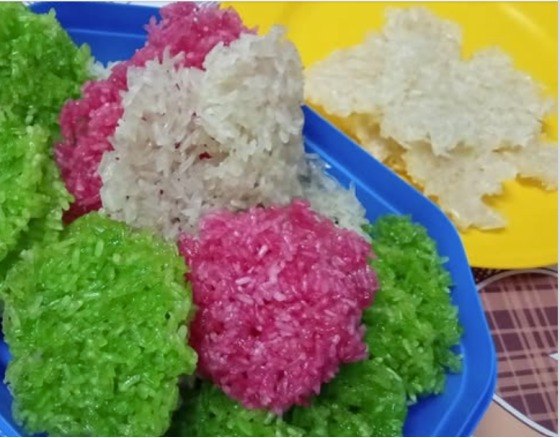
- Inang-inang is a type of traditional rice cracker originating from Melaka, Malaysia, with a history closely linked to the Malaccan Sultanate. The name Inang-inang is derived from the term 'Mak Inang,' which refers to the palace nannies or handmaidens responsible for caring for the Malay royal children in the palace. These caregivers were highly respected figures in Malay court culture, and this snack is believed to have been created as a special treat for the royal household.
- The preparation of Inang-inang reflects the ingenuity of traditional Malay society. Its main ingredients, which are rice, salt, and natural coloring which are simple yet carefully chosen to produce a delicious and long-lasting snack. The process of soaking the rice for two days, steaming it, shaping it using molds, and drying it under the sun ensures that Inang-inang can be stored for long periods, making it an ideal travel provision or festive snack.
- Inang-inang has now evolved from an exclusive dish for royalty into a popular snack enjoyed by the common people. Its preparation method has been passed down through generations, with families in Melaka continuing to preserve this culinary heritage. Today, Inang-inang is not only a symbol of Melaka's cultural identity but also a reflection of the state's historical importance as a center of trade and cultural exchange.
- Inang-inang plays various important roles in Melaka's culture and society. As a traditional snack, it serves as a medium for cultural preservation, representing the state's traditional food, and its continuous production helps maintain the knowledge and skills of conventional Malay food preparation.
- At the same time, it plays a significant role in tourism and the local economy. Inang-inang has become a popular souvenir for tourists, and local entrepreneurs have successfully diversified its variations to attract a wider audience, thereby supporting the economy.
- Furthermore, it has important social and ceremonial functions, as it is often served during festive occasions, religious celebrations, and family gatherings, acting as a unifying element that brings people together to share historical heritage. Inang-inang carries educational value, offering insight into the lifestyle and customs of the Malaccan Sultanate and serving as a living artifact that educates the younger generation about their heritage and the importance of preserving traditional crafts.
-
Rice
Salt
A little coloring (traditionally for added appeal)
Water (for soaking and steaming)
Cooking oil (for frying)
The process of making Inang-inang is divided into two main stages: preparing the dried crackers, and then frying them to serve.
Stage 1: Preparing the Dried Crackers
Soak: Rice is soaked in water for two days to soften it.
Steam: After soaking, drain the glutinous rice and steam it for about 30 minutes or until cooked.
Season: During the steaming process, salt and a little coloring are mixed and stirred evenly with the steaming glutinous rice.
Shape: Immediately after the rice is cooked (while still hot and soft), it is taken and pressed into molds to form flat, round pieces.
Dry: The shaped Inang-inang pieces are then dried under the hot sun for several days until they are completely dry and hard.
Stage 2: Frying (To Serve)
When the Inang-inang is completely dry and ready to be eaten, heat a generous amount of cooking oil in a wok.
Fry the dried Inang-inang pieces in the very hot oil.
They will instantly expand into crispy crackers.
Remove, drain the oil, and let them cool before storing in an airtight container.
-
Reference Source
Bahan Bacaan
BERNAMA. (2025, Mac 24). Inang-inang tradisi Melaka perlu diketengahkan. https://www.bernama.com/bm/news.php?id=2440325
BERNAMA. (2025, July 13). Preserving the legacy of Melaka’s colourful crispy crackers. https://www.freemalaysiatoday.com/category/leisure/2025/07/13/preserving-the-legacy-of-melakas-colourful-crispy-crackers
Informan
Hamidah Food Industry (Mamamidah). KM 15, Bukit Dodol, 77300, Umbai, Melaka. (+60 12-9169505)
Location
State JKKN Contact Information
Nur Al-Farani binti Rosli
Cultural Officer
Jabatan Kebudayaan dan Kesenian Negara, Melaka
Kompleks JKKN Melaka
Hang Tuah Jaya, Lebuh Ayer Keroh,
75450 MELAKA
06 - 763 6308
Use the form below to contact the Informant/Figure/Editor/Researcher directly. We will respond to your inquiry as soon as possible!


