

ARTS AND CULTURE INFORMATION GATEWAY
Immerse yourself in the colorful world of art and culture! From traditional heritage to contemporary works, discover uniqueness that reflects the nation's identity and identity
 Fakulti Muzik dan Seni Persembahan, Universiti Pendidikan Sultan Idris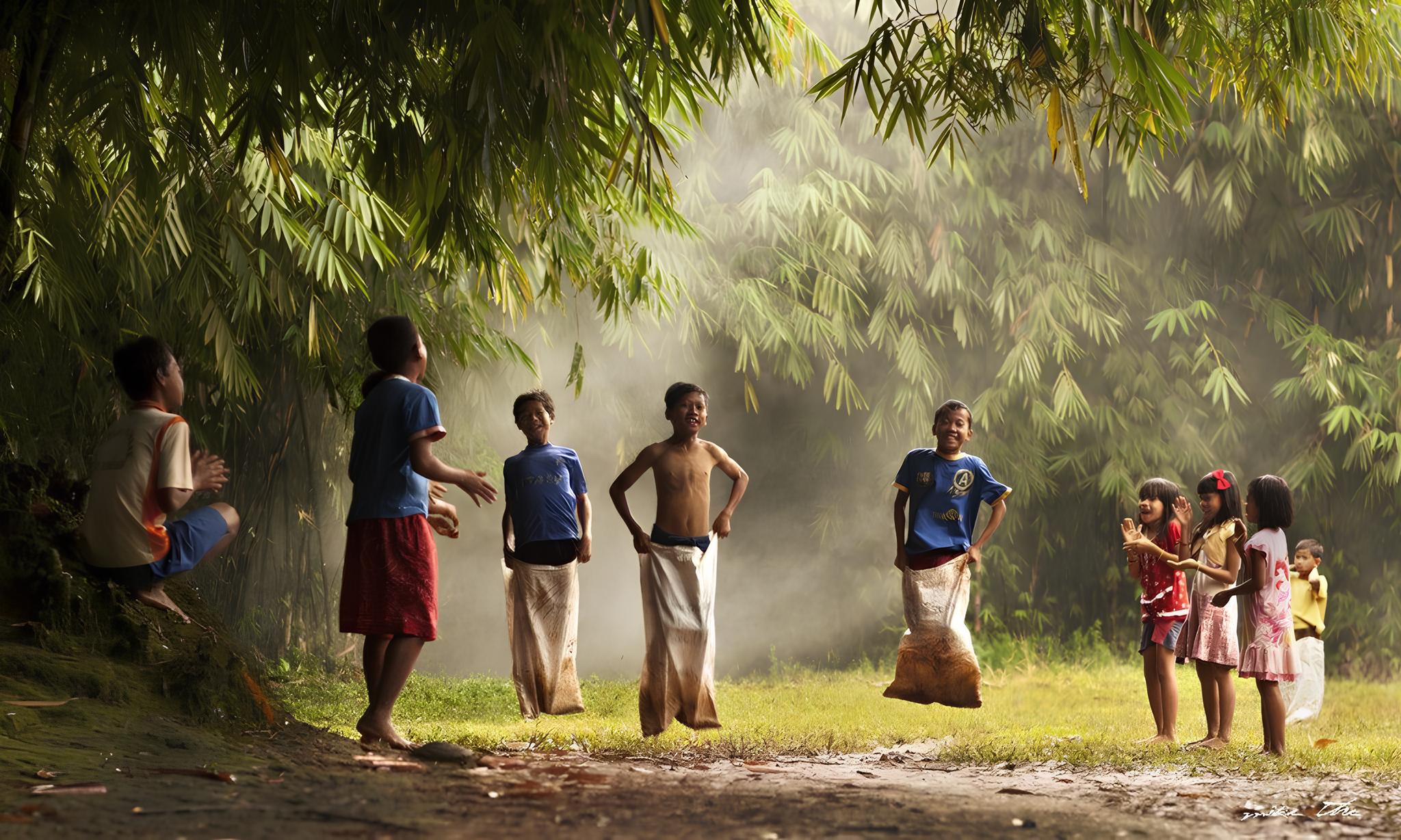
Picture
7
Video
No record
Today's Visitor
387
Number of Visitors
1569
Introduction and history
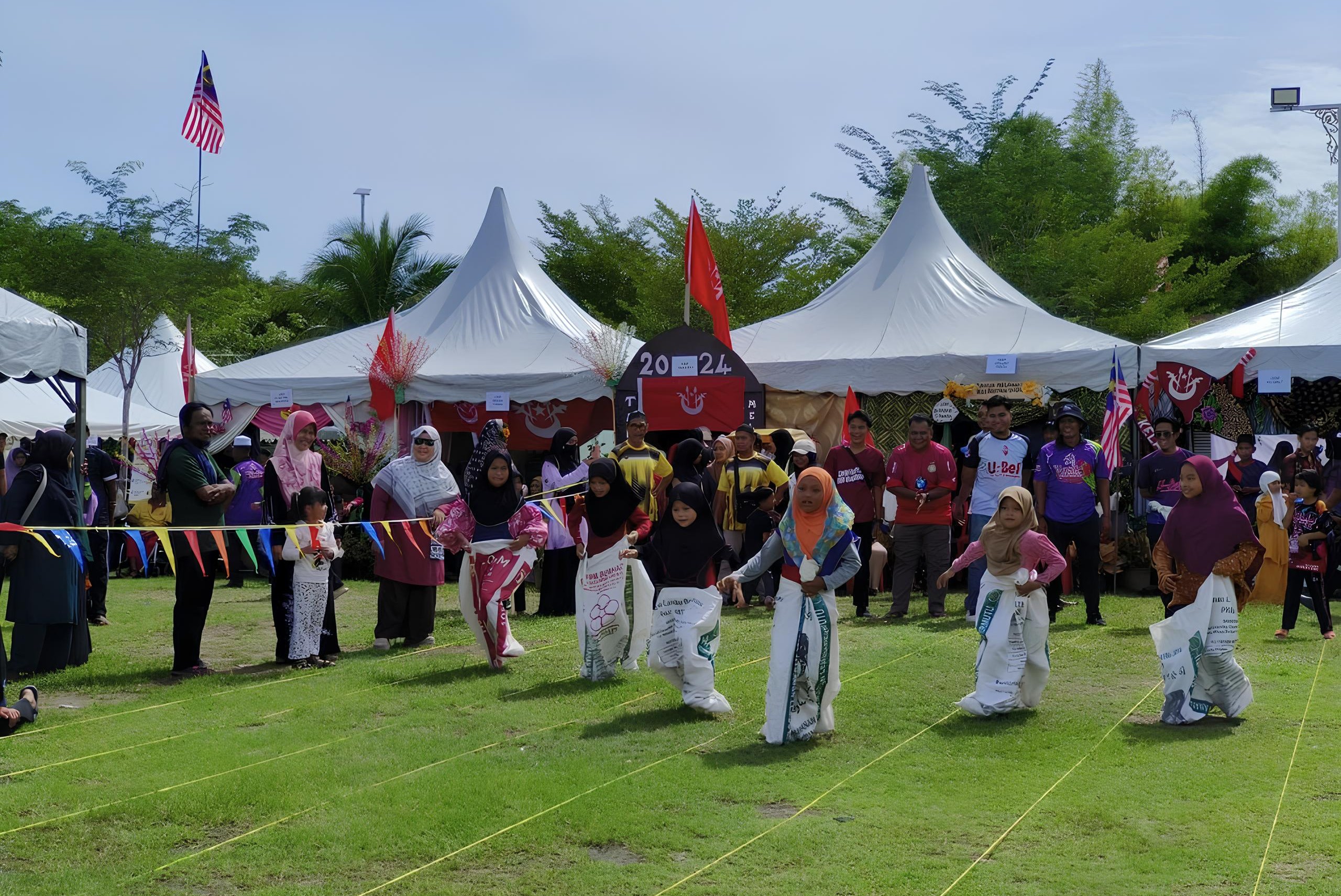
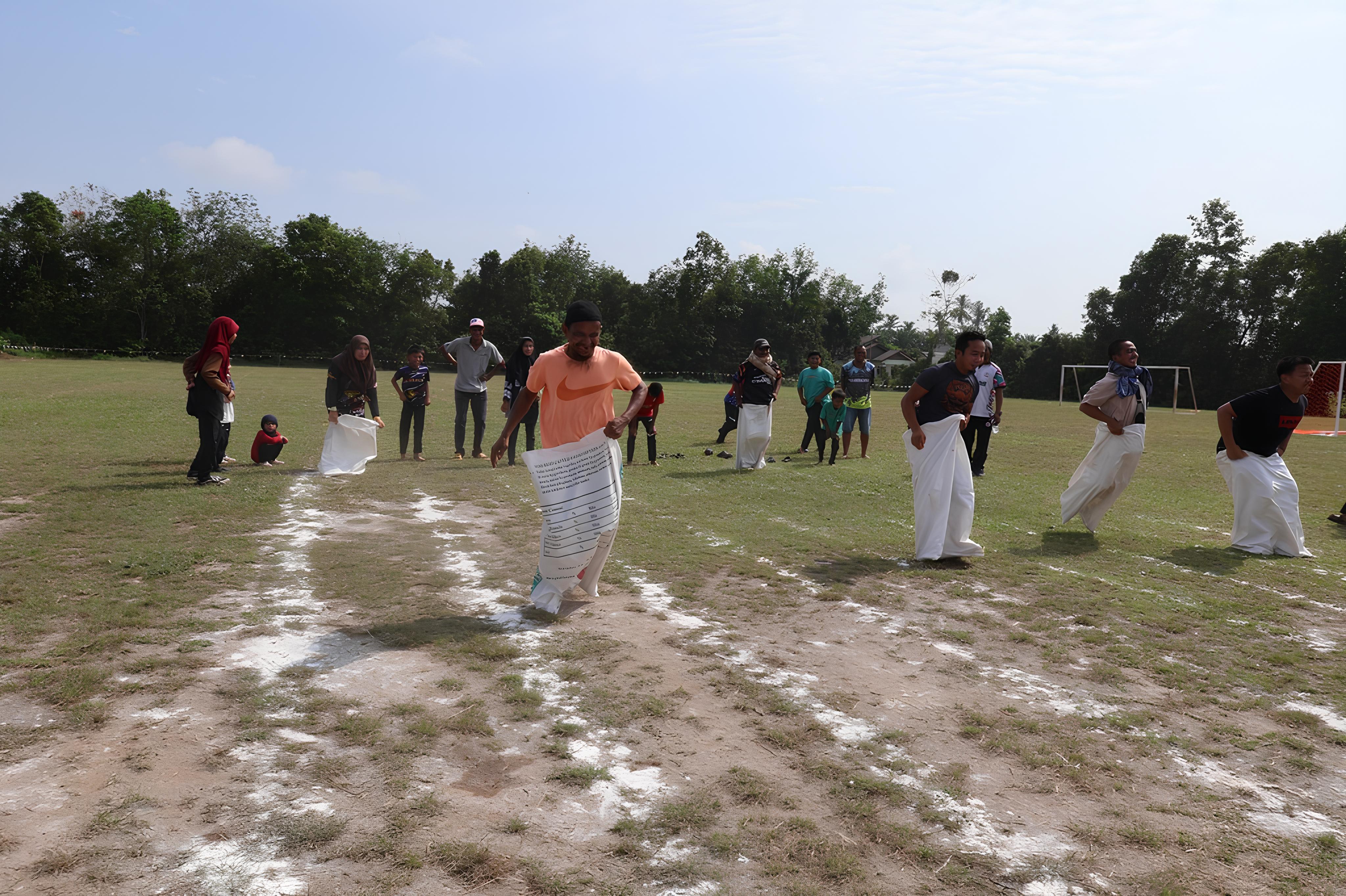
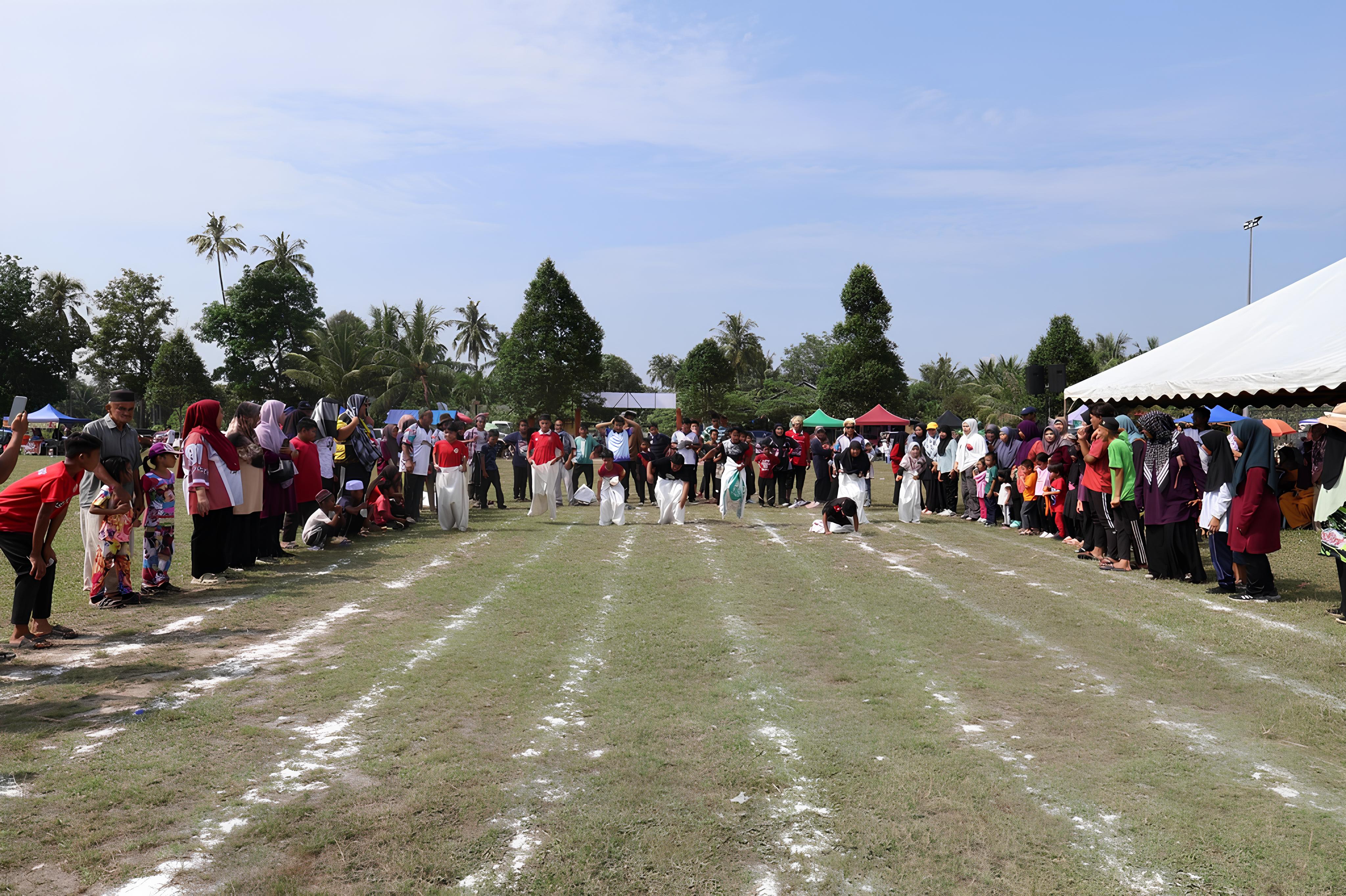
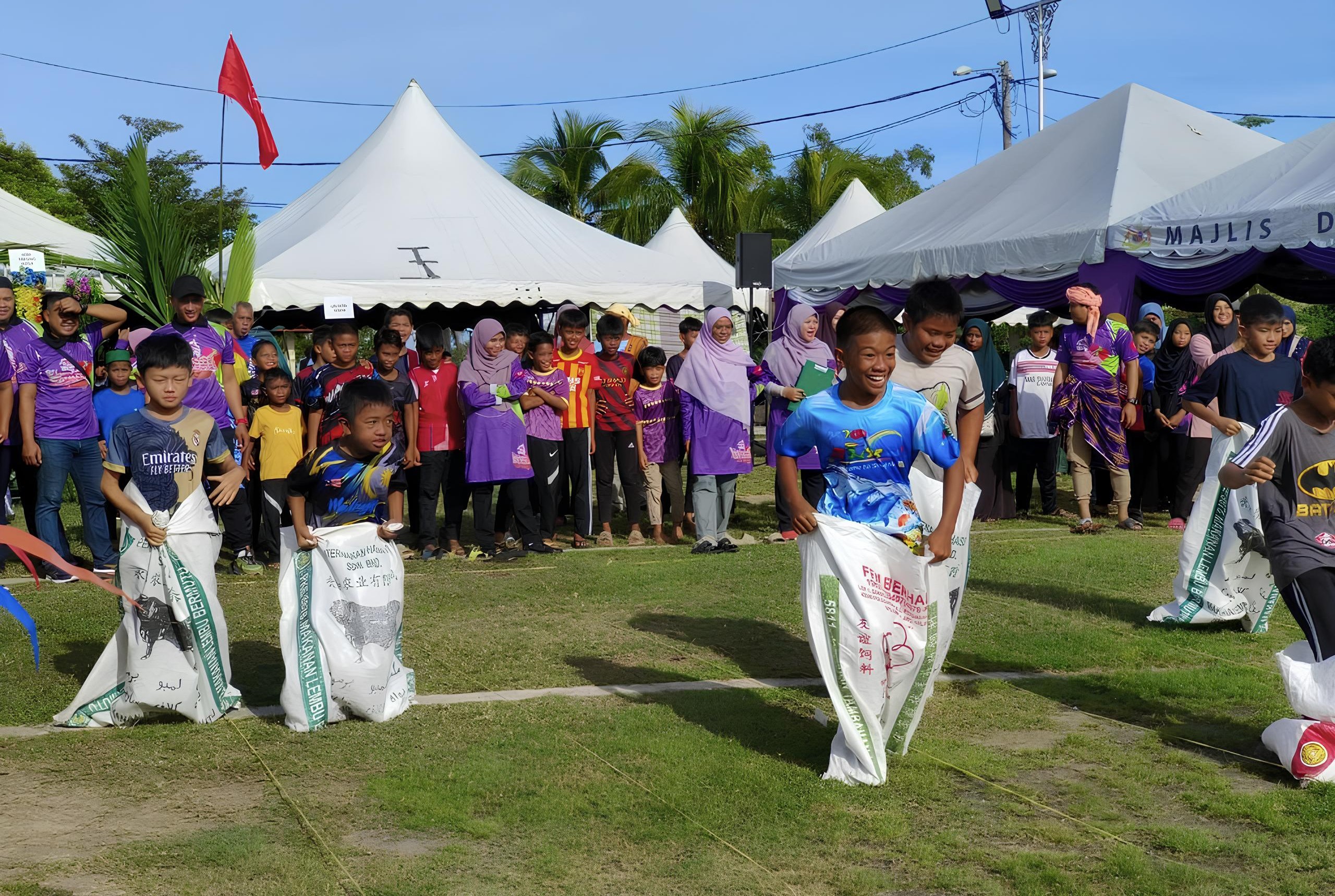
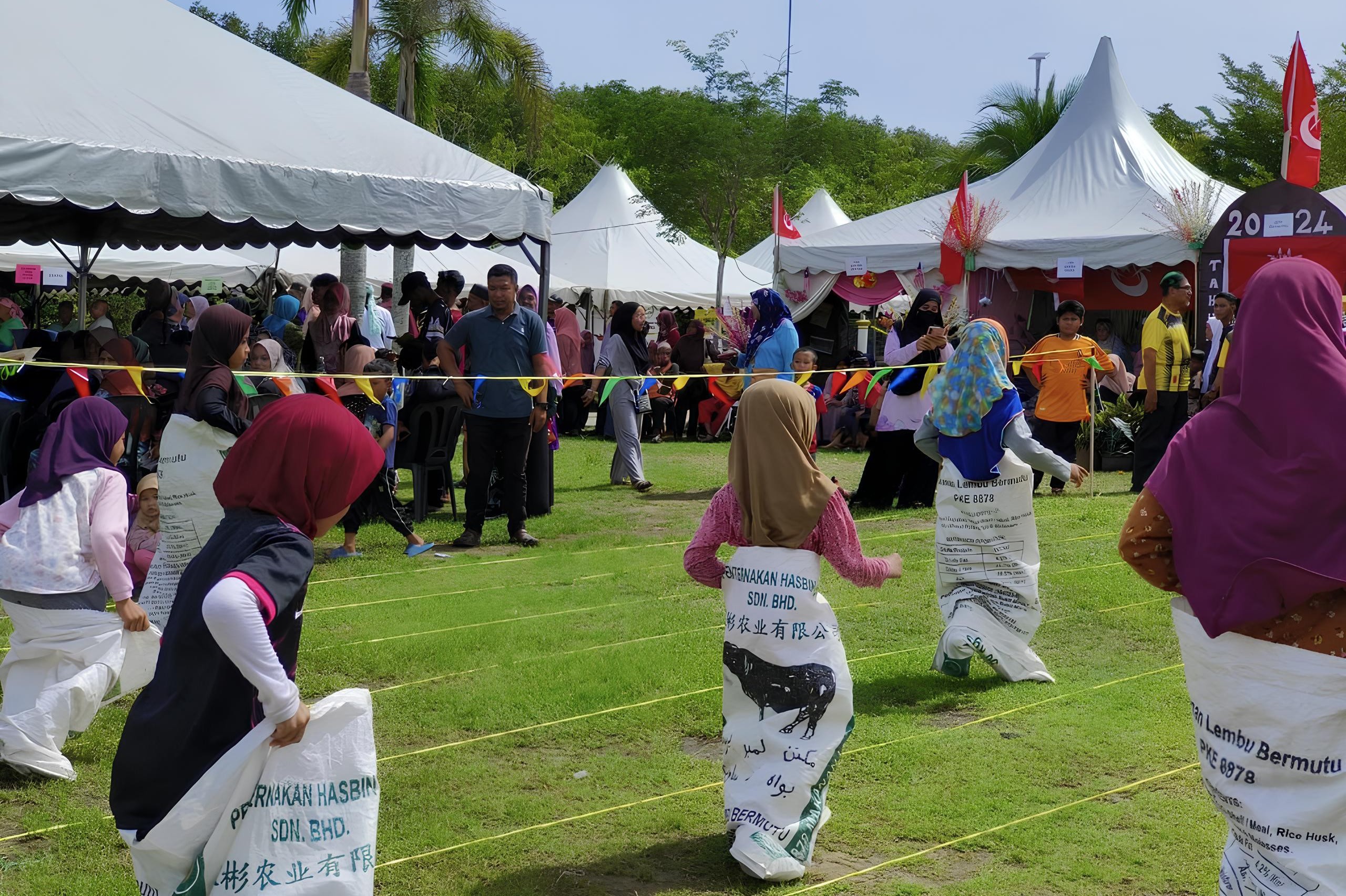
The sack race is one of Malaysia’s traditional games, popular among both rural and urban communities. It is commonly played during festive gatherings, community fairs, National Day celebrations, and Children’s Day events. Usually held in spacious open areas, the game creates an atmosphere of joy, excitement, and togetherness, drawing laughter from participants and spectators alike.
According to Western writers and researchers, the sack race has existed since at least the early 18th century. In his book Sports and Pastimes of the People of England (1801), Joseph Strutt recorded that “sack running” was a rustic pastime in which men enclosed their bodies in sacks, leaving only their heads exposed, before racing forward. This description demonstrates that sack-based games have long been part of folk culture in Europe. Beyond England, the sack race also became a popular attraction in other European countries, often featured in folk festivals, carnivals, and school sports days. Simple, safe, and highly entertaining, it has endured across generations as a game that unites families and communities.
In Malaysia, the exact origins of the sack race remain uncertain, as there are no written records documenting its introduction. However, oral traditions suggest that the game has existed for generations. Elders recall that it was often played after the rice harvest season, when cleared paddy fields provided wide, open spaces suitable for games. Children would use sacks originally intended for storing rice, paddy, or grains, climbing into them and hopping toward the finish line. The cheers and encouragement of villagers transformed this simple activity into a lively community event that strengthened social bonds.
As the game’s popularity grew, villagers began organizing it as a more structured competition, complete with designated start and finish lines and small prizes for the winners. What began as a casual pastime soon became an integral part of village festivities, cherished for the joy and unity it created.
Today, the sack race is no longer limited to rural villages or post-harvest seasons. It has become a widely recognized traditional game across Malaysia, frequently organized in schools as a co-curricular activity, in neighborhoods to foster community spirit, and in national programs such as Independence Day and Children’s Day celebrations. This broad participation demonstrates that the sack race is more than just entertainment; it is also a medium for building social identity and inclusivity.
Interestingly, this game also exists in neighboring countries such as Indonesia, Brunei, and Thailand, each with its own variations. This demonstrates its position as a regional game shared among the peoples of the Nusantara. In some places, it has been elevated to a central part of cultural festivals. At the same time, at the international level, it is often regarded as a symbol of folk games that reflect community closeness and collective joy.
The enduring presence of the sack race across different societies shows its cultural heritage value. Beyond its role as a simple children’s game, it reflects the creativity of past communities in adapting everyday materials and symbolizes the spirit of unity that remains alive today. As such, the sack race continues to be a relevant and cherished tradition, embodying joy, social identity, and cultural heritage that deserve to be preserved for future generations.
- The functions and roles of traditional games can be interpreted from multiple perspectives. While the sack race is often described simply as entertainment, its cultural and social significance goes much deeper. Its values extend beyond play, carrying lessons and meanings that remain relevant today. For example:
Traditional games and Folk entertainment
At its core, the sack race serves as a form of folk entertainment. Historically, it filled leisure time for communities, particularly during the post-harvest season or village gatherings. The laughter and excitement created by participants hopping in sacks enlivened festive events such as family celebrations, village feasts, and community festivals, making it a highlight of traditional recreation.
Fostering a spirit of togetherness
The sack race also plays an important role in nurturing social bonds. Because it involves many participants and spectators, it naturally encourages interaction between children, youth, and adults. Cheers of encouragement from the crowd create a lively, supportive atmosphere, strengthening friendships and solidarity. In this way, the sack race becomes a medium of social integration and collective joy.
Educational and personal development medium
From an educational perspective, the game instills important values such as fair competition, discipline, and sportsmanship. It teaches children to follow rules, respect others, and compete with integrity. At the same time, it enhances physical development by training balance, body coordination, and endurance, making it a valuable tool for both fine and gross motor skill growth.
Cultural heritage of society
Equally significant is the sack race’s role as a cultural heritage. It reflects the creativity of earlier communities who turned everyday items such as grain sacks into a source of entertainment. Over time, through continuous practice and organization, the sack race became a symbol of cultural identity passed down across generations. Today, it represents not only recreation but also a living heritage that deserves to be preserved as part of the nation’s cultural legacy.
-
The equipment required for the sack race is very simple and inexpensive, often sourced from everyday items that are readily available. This simplicity has made the game accessible to communities everywhere. The main equipment includes:
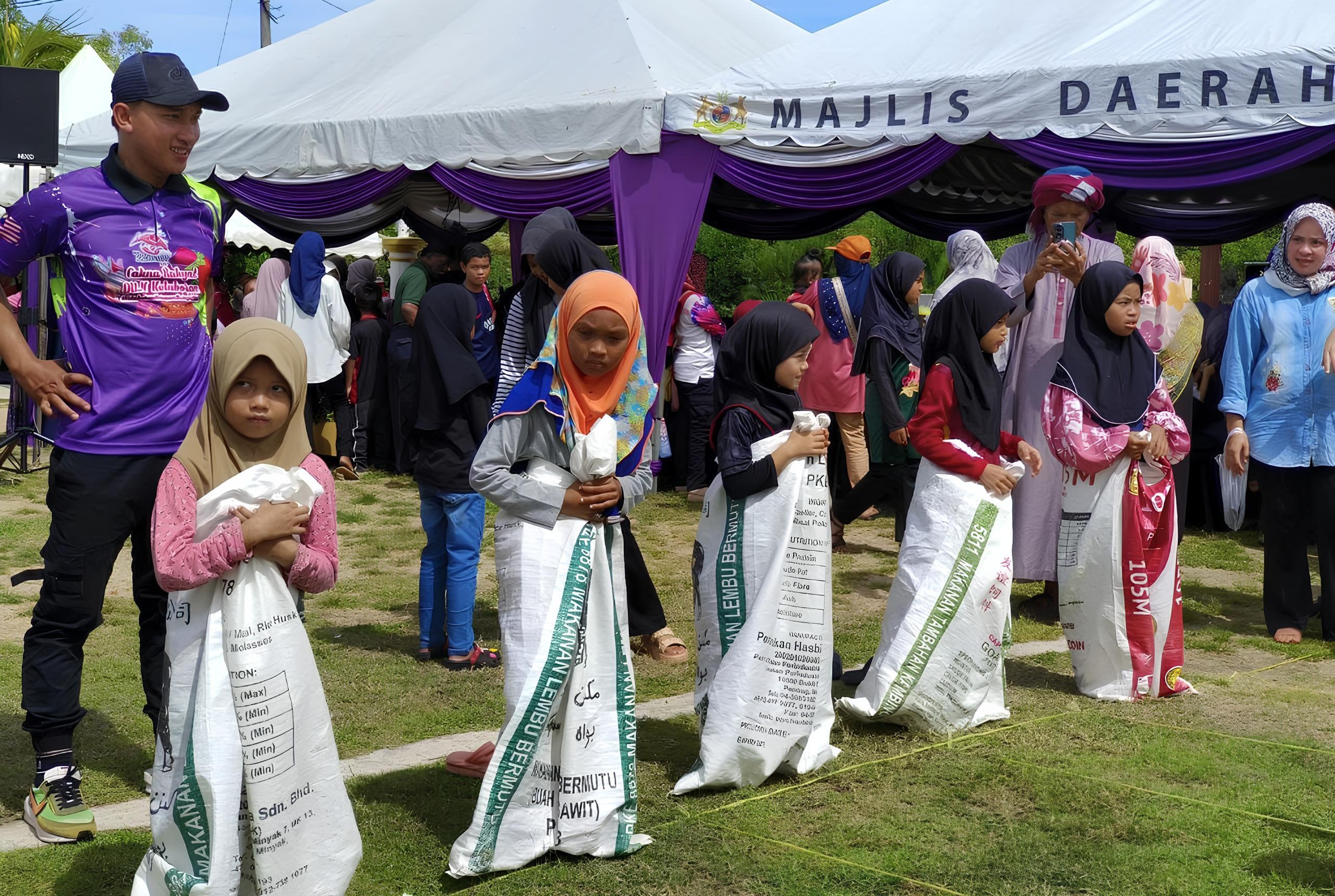
Sack or bag
The central equipment for the game is the sack itself. Traditionally, these were rice, paddy, or grain sacks made from jute fibers.
Today, lighter and more widely available plastic sacks are often used.
The sack must be large enough to cover the participant’s body from the waist to the feet to allow safe hopping movements.
Field or open space
The game requires a flat and safe open space, such as a school field, house yard, or village open ground.
In the past, harvested rice fields served as natural arenas for this game.
A wide area allows participants to race more freely without the risk of injury.
Starting and finishing lines
To ensure the race is carried out in an orderly manner, the starting and finishing lines must be clearly marked.
The markings can be made using chalk, rope, sticks, or small tree branches placed in the ground.
These lines function to determine the starting point of the race and to mark who crosses the finish line first.
Whistle or starting signal
In more organized competitions, a whistle or specific signal such as a flute blow or a knock on wood is used to begin the race.
In the past, a simple shout of “start!” (mula!) by the village referee was sufficient.
Although simple, the starting signal plays an important role in ensuring that all participants begin at the same time.
The sack race is usually played according to specific rules and methods to ensure that it runs in an orderly and fair manner. The basic rules are as follows:
Participant preparation
Each participant stands at the starting line with both legs inside the sack.
The top of the sack must be held firmly at waist level to prevent it from slipping during the race.
Starting signal
The race begins with the sound of a whistle, a countdown, or the referee’s shout of “start!”
All participants must begin jumping simultaneously to ensure fairness.
Jumping movement
Participants move forward by hopping while keeping both feet inside the sack.
They are not allowed to take their feet out of the sack or pull the sack with their hands to move faster.
Race objective
Each participant must strive to reach the finish line as quickly as possible.
The winner is determined by who crosses the finish line first while still inside the sack.
Additional rules
If a participant falls, they may get up and continue the race.
If the sack tears badly enough to hinder movement, the referee has the right to disqualify the participant.
In some variations, the game is played in teams as a relay, with participants taking turns until their team completes the course.
-
Reference Source
Bahan Bacaan
Das, A. C., & Singh, S. (2013). Discrimination and difference, racial and colonial: An overview of MG Vassanji’s The Gunny Sack and No New Land. The Criterion: An International Journal in English, 4(1), 1–8.
Ibrahim, M. F. (2022). Keberkesanan teaching games for understanding (TGfU) melalui permainan tradisional terhadap kecergasan fizikal, emosi dan keseronokan dalam kalangan murid ponteng di sekolah rendah (Doctoral dissertation).
Mohammad, W. M. R. W., & Subramaniam, V. (2014). Daya kreativiti kanak-kanak: Satu kajian kes. Procedia - Social and Behavioral Sciences, 134, 436–445. https://doi.org/10.1016/j.sbspro.2014.04.269
Oxford Reference. (2011). Sack race. In Oxford Reference. Oxford University Press. https://www.oxfordreference.com/display/10.1093/oi/authority.20110803100435892
Sukan rakyat: Lari dalam karung. (n.d.). Hilary D - Sukan Rakyat. Retrieved September 4, 2025, from https://sukanrakyat-hilaryd.blogspot.com/p/lari-dalam-karung.html
Wak120-nurinafiqah. (2015, March 9). Syarat-syarat lari dalam guni. Blogspot. Retrieved September 4, 2025, from https://wak120-nurinafiqah.blogspot.com/2015/03/syarat-syarat-lari-dalam-guni.html
Location
State JKKN Contact Information
Cultural Officer
Jabatan Kebudayaan dan Kesenian Negara
Use the form below to contact the Informant/Figure/Editor/Researcher directly. We will respond to your inquiry as soon as possible!


