

ARTS AND CULTURE INFORMATION GATEWAY
Immerse yourself in the colorful world of art and culture! From traditional heritage to contemporary works, discover uniqueness that reflects the nation's identity and identity
 Aras 6 Kiri, Wisma PERKESO, No 26, Jln Susur 5, Off Jalan Tun Abdul Razak, Larkin, 80200 Johor Bahru, Johor Darul Takzim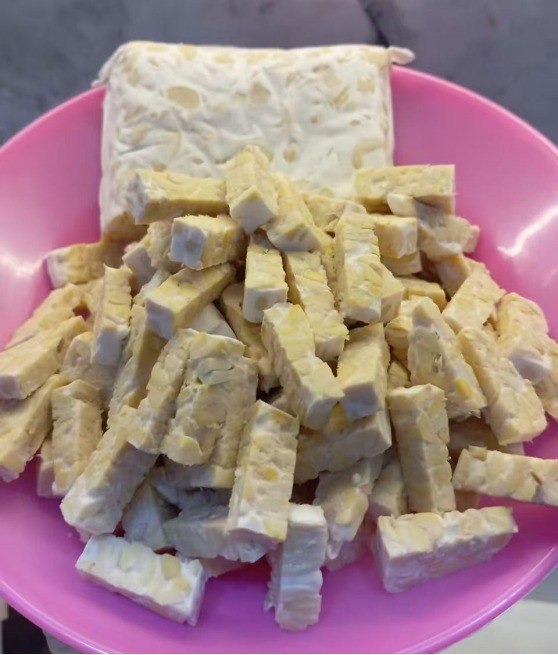
Picture
1
Video
No record
Today's Visitor
76
Number of Visitors
936
Introduction and history
- Tempe is a fermented soybean product known for its firm texture, slightly nutty flavour, and high nutritional value, particularly its rich protein content. The fermentation process enhances its nutrient profile and creates distinctive flavour components and textures that differentiate it from tofu. Compared to tofu, tempe has a stronger taste and a more solid, compact structure. The history of tempe can be traced to Indonesia, especially the island of Java, with records dating back several centuries. One of the earliest references appears in the Javanese manuscript Serat Centhini, written around the 16th century, indicating that tempe has long been part of the Javanese diet.
- Tempe is believed to have originated as a local innovation through the use of the fungus Rhizopus oligosporus, which produces thread-like growth that binds the soybeans together into a cohesive cake in the humid tropical climate. Initially, tempe was an inexpensive and nutritious food consumed by the common people before its popularity spread across the Indonesian archipelago. The introduction of tempe to Johor is linked to the migration of Javanese communities from Indonesia to Malaya during the 19th and 20th centuries, which brought this culinary tradition into the local food culture.
- Today, tempe remains popular among the Javanese community in Johor, commonly served fried and paired with dishes such as pecal ayam or sambal tempe. It has also been commercialised in various forms, including tempe chips, reflecting its continuing cultural and economic significance.
- Tempe plays a very important and multifunctional role in society. Its primary function is as a high-quality plant-based protein source that is very affordable, making it an essential protein supply in the daily diet, especially for the Johor community. Its low price makes it a primary protein source for all levels of society, especially those who cannot afford meat, thereby helping to address malnutrition. Tempe is also highly valued for its exceptional nutritional value; besides being rich in protein, it contains all essential amino acids, fiber, vitamins, minerals, and has probiotic properties due to the fermentation process. This makes it a top choice for healthy diets, athletes, and vegetarians or vegans worldwide.
- In terms of nutrition, tempe is a very versatile ingredient. In Johor, it is used as a daily side dish and a main ingredient in traditional foods like sambal goreng and sayur lodeh, proving its neutral taste can absorb spices and seasonings well. This widespread use is also a clear sign of Javanese cultural influence in Johor cuisine, aligning with its status as an intangible cultural heritage of Indonesia recognized by UNESCO.
-
Soaking container
Boiling pot
Flat surface for cooling
Wrappers like banana leaves or perforated plastic.
Soybeans
Vinegar
Yeast/Starter (Rhizopus oligosporus)
Water
The tempe making process involves several key steps:
Selection and cleaning: Soybeans are soaked and cleaned to remove dirt.
Boiling and de-husking: Beans are boiled, and the skins that float during boiling are separated to facilitate fermentation. Once soft, the soybeans are removed and drained.
Adding yeast: The soybeans are mixed with tempe starter (Rhizopus oligosporus), which acts as the fermentation agent.
Fermentation: The mixture is wrapped in banana leaves or perforated plastic and incubated for 24-48 hours at room temperature until a dense texture and distinct aroma are formed.
There are variations in preparation methods in Johore, such as using banana leaves as wrappers to add a natural aroma
-
Reference Source
Bahan Bacaan
Google Arts & Culture. (n.d.). 400 years of tempeh. Indonesia Gastronomy Network. Retrieved November 14, 2025, from https://artsandculture.google.com/story/400-years-of-tempeh-indonesia-gastronomy-network/ewVxU_e7OUS4_Q?hl=en
Location
State JKKN Contact Information
Puan Norazlina binti Othman
Cultural Officer
Jabatan Kebudayaan dan Kesenian Negara, Johor
Aras 6 Kiri, Wisma PERKESO
No 26, Jalan Susur 5
Off Jalan Tun Abdul Razak, Larkin
80200 Johor Bahru
JOHOR DARUL TAKZIM
07-224 8270 / 223 1249
Use the form below to contact the Informant/Figure/Editor/Researcher directly. We will respond to your inquiry as soon as possible!


