

ARTS AND CULTURE INFORMATION GATEWAY
Immerse yourself in the colorful world of art and culture! From traditional heritage to contemporary works, discover uniqueness that reflects the nation's identity and identity
 Fakulti Muzik dan Seni Persembahan, Universiti Pendidikan Sultan Idris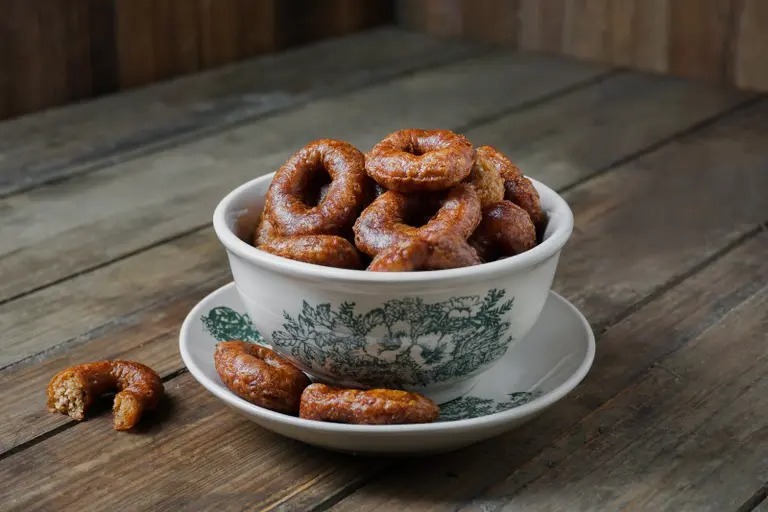

Picture
6
Video
No record
Today's Visitor
247
Number of Visitors
1694
Introduction and history
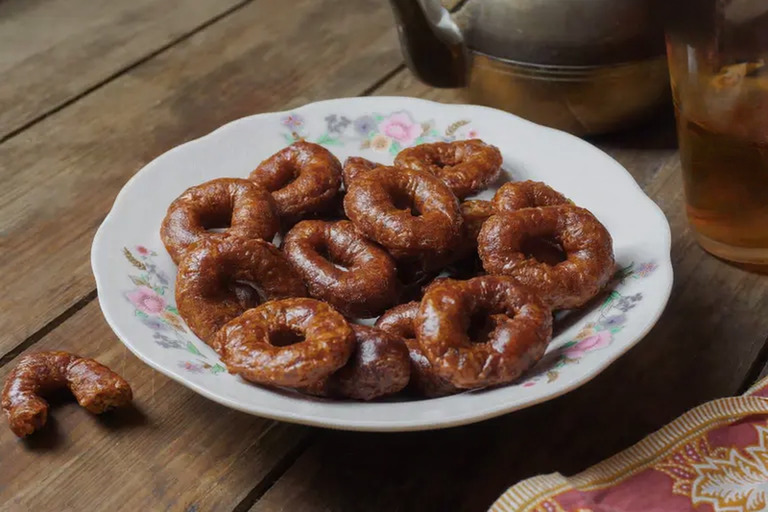
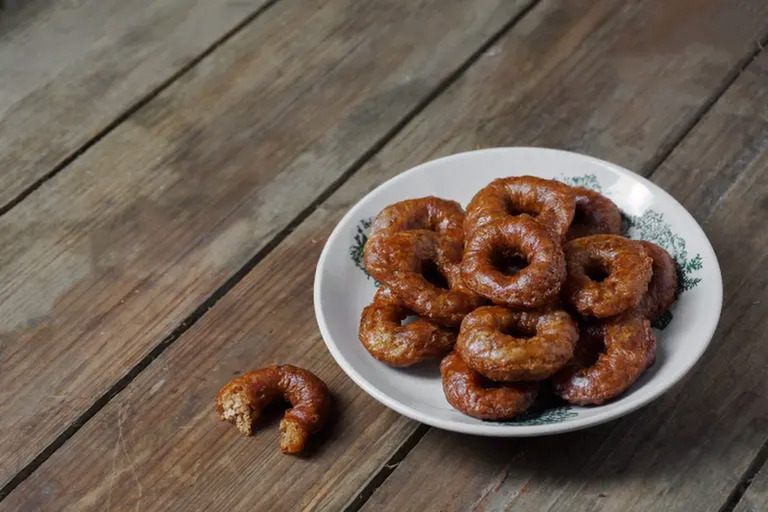
Kuih Peneram, also known as Kuih Denderam in several states, is one of the traditional Malay delicacies that has retained its popularity to this day. This delicacy is strongly associated with the state of Kedah and is even regarded as a heritage food that symbolises the state’s culinary identity. Its popularity in Kedah has made kuih peneram the main choice among the local community, not only as a daily treat but also as an essential dish during festive seasons, wedding feasts, and communal gatherings.
Interestingly, kuih peneram is known by various other names depending on the region and local dialect, including Peniaram, Genderam, Derang, Benderang, and Genderang, and is even referred to as “Telinga Keling” in the east coast states of Peninsular Malaysia. Despite the different names, the basic recipe and method of preparation remain the same, primarily using rice flour and palm sugar as the key ingredients.
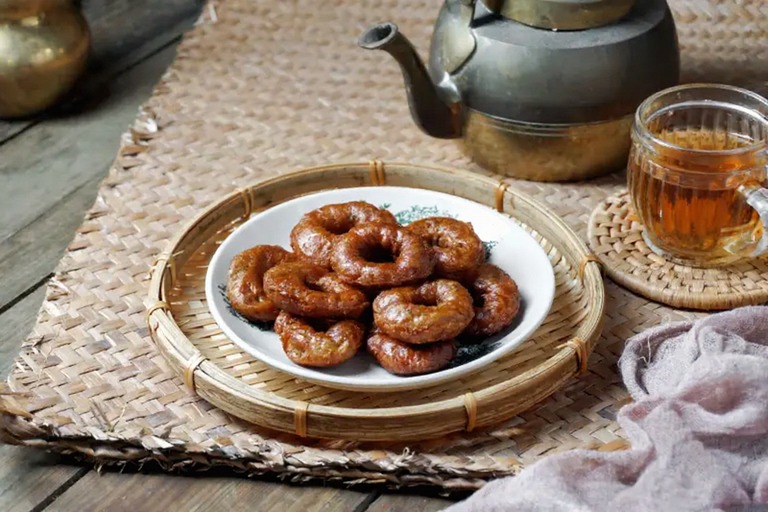
In terms of appearance, kuih peneram is round with a hole in the centre, resembling a doughnut, but its taste and texture are quite different. It is made from a mixture of rice flour, a small amount of wheat flour, and palm sugar that is cooked until well blended, then deep-fried in hot oil. This process creates a unique texture, crispy on the outside yet soft, chewy, and richly sweet with the aroma of palm sugar on the inside.
Historically, kuih peneram is believed to have originated from the culinary influence of South Indian communities, who have a very similar sweet known as Adhirasam. When introduced to the Malay Peninsula, the recipe was adapted using local ingredients such as palm sugar and simpler frying techniques. This adaptation gave birth to kuih peneram with its own distinct identity within the Malay community, particularly in Kedah.
Although it is most famous in Kedah, kuih peneram is also widely enjoyed in other states such as Perlis, Perak, and Kelantan, and has spread to Sabah and Sarawak with some variations in taste and preparation methods. This historical journey and cultural adaptation demonstrate that kuih peneram has undergone a long process of cultural assimilation before becoming an integral part of Malay culinary heritage, passed down from one generation to the next.
In terms of function, this delicacy is often enjoyed in the morning or afternoon. Its sweet taste, infused with the aroma of palm sugar, pairs perfectly with hot beverages such as tea, coffee, or other warm drinks. Its simplicity yet filling nature makes it an ideal choice to complement breakfast or afternoon tea, whether in a family setting at home or during gatherings with neighbours and friends.
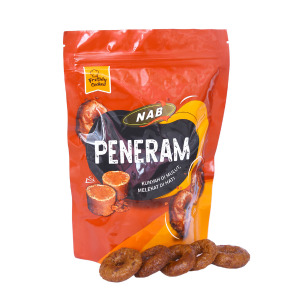
Beyond being a daily snack, kuih peneram also carries significant commercial value. It is widely sold at morning markets, night markets, roadside stalls, and traditional confectionery shops. Today, many small and medium-sized enterprises (SMEs) have begun to package kuih peneram in modern forms for souvenirs or wholesale distribution. Its long shelf life without spoiling easily makes it suitable for broader marketing, thus contributing to the local community’s economy.
Culturally, kuih peneram is often served as an important dish during various communal feasts. Whether at weddings, memorial prayers (majlis tahlil), or festive celebrations, it is frequently presented as a complementary treat for guests. Its presence at the dining table not only symbolises togetherness and hospitality within the community but also reflects the simplicity of Malay culinary heritage. Furthermore, its straightforward preparation and ease of storage make kuih peneram practical to produce in large quantities, which is ideal for serving at major gatherings.
In addition, kuih peneram is often given as a token gift (buah tangan) during weddings or communal feasts. With neat and attractive packaging, it is suitable as a present for guests or as a gesture of appreciation for distinguished individuals in formal events. In this way, kuih peneram goes beyond being just food; it embodies friendship, respect, and is a symbol of cultural heritage that continues to be cherished and preserved.
-
To produce kuih peneram that is delicious, crispy on the outside and soft on the inside, a few basic ingredients are required. Although the recipe appears simple, the balance of measurements is crucial to ensure the perfect texture and flavour of this traditional delicacy. Below are the complete ingredients with their measurements commonly used in the preparation of traditional kuih peneram:
- 2 cups rice flour – the main ingredient that forms the texture.
2 tablespoons wheat flour – acts as a binder so that the dough does not break apart during frying.
1 cup palm sugar/coconut sugar/cane sugar – provides a rich sweetness and fragrant aroma.
3/4 cup filtered water – used to dissolve the palm sugar before mixing with the flour.
1 pandan leaf – washed and tied into a knot to enhance aroma while boiling the sugar syrup.
1/2 teaspoon edible lime water (optional) – adds slight elasticity and chewiness to the kuih.
Cooking oil (sufficient amount) – for deep-frying the kuih peneram until golden brown.
Preparing kuih peneram requires careful attention, as the balance of the dough determines whether the final texture will be crispy or soft. Although the process may appear simple, several important steps must be followed to ensure that kuih peneram turns out perfectly. The preparation steps are as follows:
Step 1: Preparing the sugar syrup
Place the palm sugar and water into a pot.
Add the knotted pandan leaf to enhance the aroma.
Cook over low heat until the sugar dissolves completely.
Step 2: Boil the sugar syrup
Once the mixture begins to boil, increase the heat slightly and stir continuously for about 15–20 seconds.
Turn off the heat and allow the syrup to cool until lukewarm.
Step 3: Mixing the flour batter
Sift the rice flour into a large mixing bowl.
Gradually pour in the lukewarm palm sugar syrup through a strainer while mixing.
Stir the mixture well until it is evenly combined.
Step 4: Forming a thick paste
Continue stirring until the mixture forms a thick, ribbon-like batter.
If the batter is too stiff, add a little hot water to soften it.
Step 5: Resting and fermenting the dough
Allow the mixture to cool slightly, then knead it briefly by hand.
Cover the bowl and let the dough ferment for at least 6 hours at room temperature.
This fermentation process is essential for producing a soft interior and creating airy pockets within the kuih peneram.
Step 6: Re-kneading the dough
After fermentation, knead the dough again until soft.
If cracks appear, add a small amount of hot water to restore elasticity.
Step 7: Shaping the kuih
Roll out the dough and cut it with a round cutter, about 3 inches in diameter.
Make a hole in the centre using a skewer, chopstick, or a small doughnut cutter.
Alternatively, roll the dough into small balls, flatten them slightly, and poke a hole in the middle by hand.
Step 8: Frying the kuih peneram
Heat sufficient cooking oil in a wok over medium heat.
Drop the shaped dough into the hot oil and fry until golden brown.
Flip the kuih occasionally to ensure even cooking on both sides.
Step 9: Serving
Remove the fried kuih peneram and drain excess oil.
Let them cool slightly before serving.
Kuih peneram is best enjoyed fresh, crispy on the outside yet soft on the inside, especially when paired with a cup of hot tea or coffee.
-
Reference Source
Bahan Bacaan
Azman, H., & Ruwaida, A. W. (2016). Availability of Malaysia traditional food process mechanization produced by MARDI. 3rd International Conference on Agricultural and Food Engineering, Seri Pacific Hotel, Kuala Lumpur, Malaysia.
Hasan, H., Abd Aziz, M. K. N., Ahmad, J., & Noor, M. N. M. (2024). Mencari jati diri makanan Melayu Perlis: Suatu catatan awal [Searching for the identity of Perlis Malay food: An initial note]. Asian Journal of Environment, History and Heritage, 8(Special Issues).
“Kuih denderam.” (2011, Februari 14). Pusat Rujukan Persuratan Melayu: Kamus Bahasa Melayu, Dewan Bahasa dan Pustaka. https://prpm.dbp.gov.my
Resepi Che Nom. (n.d.). Kuih Peneram Rangup Luar Lembut Dalam. https://resepichenom.com/resepi/kuih-peneram-rangup-luar-lembut-dalam
Cookpad. (n.d.). Kuih Peneram. https://cookpad.com/my/recipes/23889482
Location
State JKKN Contact Information
Encik Mohammad Salleh bin Mahmud
Cultural Officer
Jabatan Kebudayaan dan Kesenian Negara, Kedah
Kompleks JKKN Kedah
Lot PTD 400, Pumpong
05250 Alor Setar
KEDAH DARUL AMAN
011-10899646
Use the form below to contact the Informant/Figure/Editor/Researcher directly. We will respond to your inquiry as soon as possible!


