

ARTS AND CULTURE INFORMATION GATEWAY
Immerse yourself in the colorful world of art and culture! From traditional heritage to contemporary works, discover uniqueness that reflects the nation's identity and identity
 Fakulti Muzik dan Seni Persembahan, Universiti Pendidikan Sultan Idris


Picture
4
Video
No record
Today's Visitor
689
Number of Visitors
2267
Introduction and history
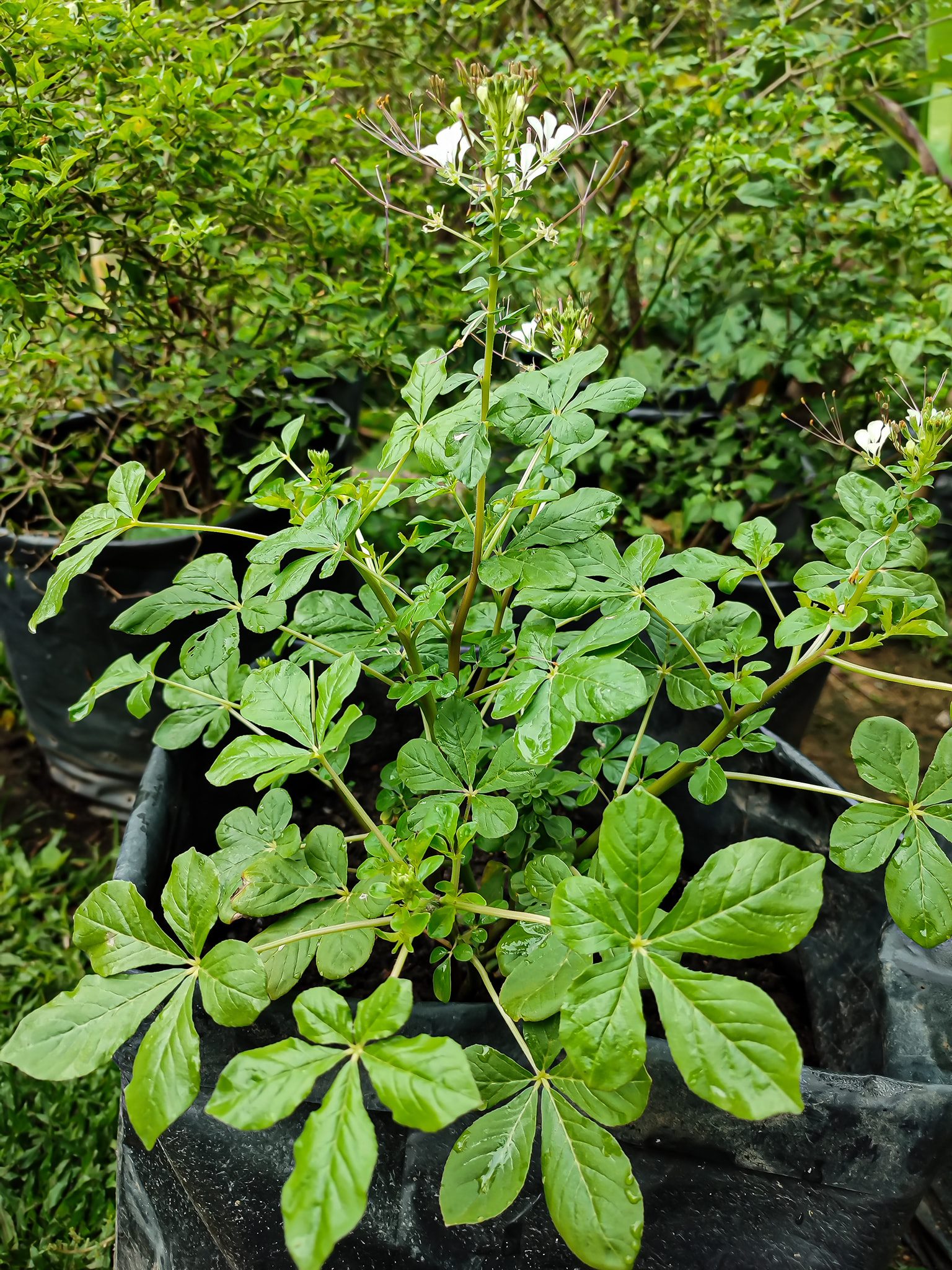
Jeruk Maman is a traditional dish strongly associated with the local community in the state of Perlis. This delicacy is made from the young shoots or leaves of the Maman plant, scientifically known as Cleome gynandra, a type of shrub that grows wild in sandy and open areas. The soft-textured and slightly bitter leaves are traditionally pickled and served as a refreshing appetizer.
Since ancient times, the pickling process has been used by rural communities as a natural method of food preservation. This technique allows maman leaves to be stored for longer periods, especially during the dry season or after the paddy harvesting season.
The uniqueness of Jeruk Maman lies not only in its distinct taste but also in its pickling liquid, which is often used as a dip for grilled fish and various traditional village dishes. Its tangy aroma and naturally salty flavor make it a delicious complement to everyday meals among the people of Perlis.
Jeruk Maman serves multiple important functions in the lives of traditional communities, particularly among the people of Perlis. In the past, during the communal rice harvesting season, Jeruk Maman was often prepared and brought along as a main food supply by farmers. Its ability to last for long periods without refrigeration made it convenient to carry and suitable for consumption in various situations. With just plain white rice, Jeruk Maman could provide a satisfying and refreshing meal.
-
The following are the ingredients used to prepare Jeruk Maman:
Maman leaves – The number of leaves used depends on the quantity of jeruk you wish to make.
Salt – Used for seasoning and to aid the pickling process.
Cooked rice (cooled) – Coarsely mashed or blended to assist fermentation.
Boiled water – Used to dissolve the salt and soak the maman leaves.
Bird’s eye chilies (cili padi) – Add spiciness to the Jeruk Maman.
Covered container (glass jar or plastic container) – Used to hold the ingredients during the fermentation process.
Preparation Method for Jeruk Maman:
Prepare the maman leaves according to the desired amount. Choose young and fresh leaves for the best quality jeruk.
Wash the maman leaves by soaking and rinsing them 3–4 times to remove sand and dirt. Gently squeeze the leaves while washing to help soften them.
Drain the leaves until almost dry, then set them aside.
Prepare a saltwater solution by dissolving coarse salt into enough boiled water.
Coarsely blend about ½ cup of cooled cooked rice (or adjust as needed), and mix it into the saltwater solution.
Place the cleaned maman leaves into a clean, covered container such as a glass jar or plastic tub.
Add bird’s eye chilies (cili padi) to the container according to your preferred level of spiciness. You may leave them whole or crush them.
Pour the saltwater-rice mixture into the container until the maman leaves are fully submerged. Ensure the water level is not excessive—just enough to cover the leaves.
Allow the mixture to cool completely before sealing the container tightly with a lid.
Let the Jeruk Maman ferment for 3 to 7 days in a cool, shaded area at room temperature. Do not open the container during this period.
After the fermentation is complete, the Jeruk Maman is ready to be served. You may store it in the refrigerator to extend its shelf life.
Serving suggestion: Jeruk Maman can be eaten on its own or mixed with sliced red onions, mashed belacan (shrimp paste), lime juice, and a few chilies to make a dipping sauce for grilled fish or as a side dish with plain rice.
-
Reference Source
Bahan Bacaan
Munch Malaysia. (2023, Mei 15). Jeruk Maman: Heritage Traditions from Malay Land.Retrieved July 4, 2025, from Munch Malaysia website: Munch Malaysia menyatakan jeruk maman dikenali sebagai pembuka selera istimewa dan air jeruknya digunakan sebagai pencicah untuk ikan bakar dan hidangan lain.
Moyo, M., Masika, P. J., Hugo, A., & Muchenje, V. (2013). Nutritional characterization of Cleome gynandra, a leafy vegetable traditionally consumed in southern Africa. Asian Journal of Clinical Nutrition, 5(1), 1–11. https://doi.org/10.3923/ajcn.2013.1.11
Ndlovu, J., & Afolayan, A. J. (2008). Nutritional analysis of the South African leafy vegetable Cleome gynandra. African Journal of Biotechnology, 7(23), 4067–4072. https://doi.org/10.5897/AJB08.249
Lim, T. K. (2014). Edible medicinal and non-medicinal plants (Vol. 7): Modified stems, roots, bulbs. Springer Science & Business Media.
Faridah-Hanum, I., Latiff, A., Hakeem, K. R., & Ozturk, M. (Eds.). (2014). Traditional Herbal Medicine for Modern Times: Biodiversity and Conservation of Medicinal and Culinary Plants. Springer. https://doi.org/10.1007/978-1-4614-8570-4
Wikipedia. (2025, June 30). Cleome gynandra. Retrieved July 4, 2025, from Wikipedia: Laman ini menekankan bahawa daun tanaman tersebut tinggi dengan beta-karoten, vitamin C, zat besi dan kalsium serta digunakan sebagai jeruk tradisi di Malaysia.
Location
State JKKN Contact Information
Siti Rohayu binti Muhamad
Cultural Officer
Jabatan Kebudayaan dan Kesenian Negara, Perlis
Kompleks JKKN Perlis
Persiaran Wawasan Kangar
01000 Kangar
PERLIS
019-504 0015
Use the form below to contact the Informant/Figure/Editor/Researcher directly. We will respond to your inquiry as soon as possible!


