

ARTS AND CULTURE INFORMATION GATEWAY
Immerse yourself in the colorful world of art and culture! From traditional heritage to contemporary works, discover uniqueness that reflects the nation's identity and identity
KUIH BADAK KUBANG
 Fakulti Muzik dan Seni Persembahan, Universiti Pendidikan Sultan Idris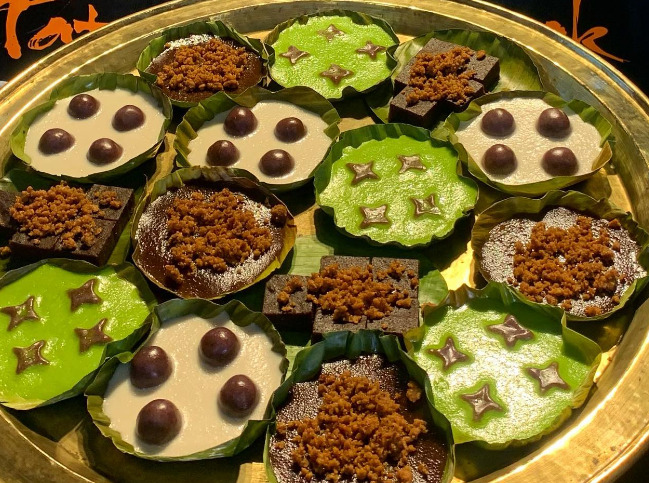

Picture
12
Video
No record
Today's Visitor
2
Number of Visitors
1043
Introduction and history
Kuih Badak Kubang plays an important role as one of the traditional delicacies that fill both the daily dining table and special occasions in Pahang. It is ideal to be enjoyed as a filling breakfast or a sweet and creamy afternoon snack. In addition, this cake is a popular choice for formal events, wedding receptions, festive banquets, and other gatherings, symbolising the hospitality of the host in welcoming guests.
-
The ingredients for making Kuih Badak Kubang are divided into two main parts: the filling and the dough. The following is the list of ingredients that need to be prepared.
Filling Ingredients
3 small pieces of palm sugar (gula melaka), pounded or finely chopped
½ cup granulated sugar
3 pandan leaves, tied into knots
A pinch of salt
1 cup water
1 grated coconut (white flesh only)
2 tablespoons wheat flour
Dough Ingredients
2 cups glutinous rice flour
½ cup black glutinous rice flour
Water, as needed
1 kg fresh coconut milk
1 tablespoon sugar
2 tablespoons wheat flour
Banana leaves, as needed (for lining the steamer)
A little oil (for greasing)
Step 1: Preparing the Filling
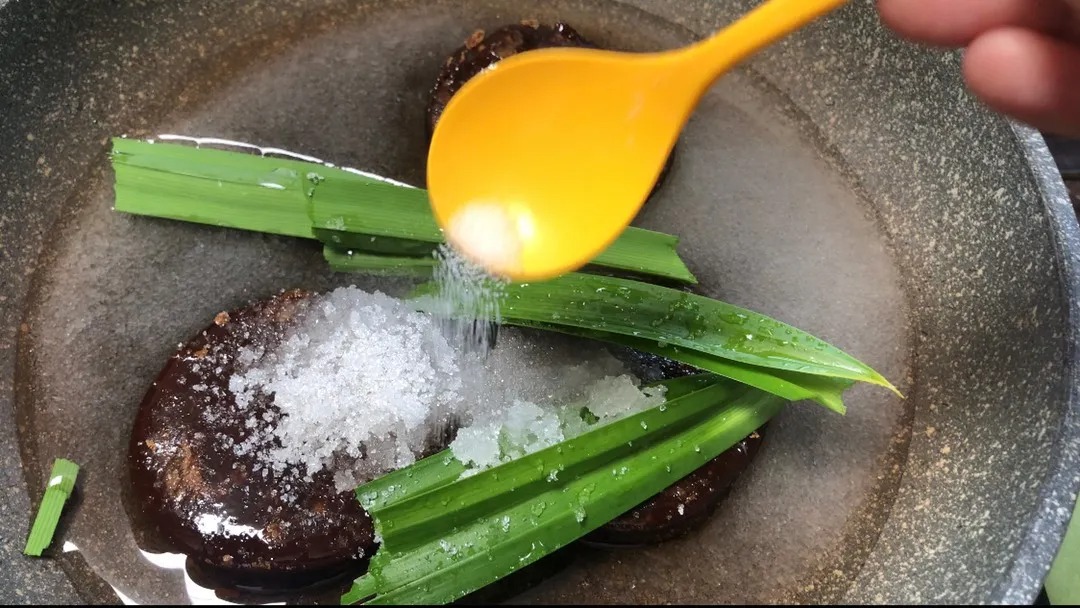
Place all the filling ingredients — palm sugar, granulated sugar, pandan leaves, salt, and water — into a pan.
Cook over medium heat, stirring until the sugar fully dissolves and the mixture comes to a boil.
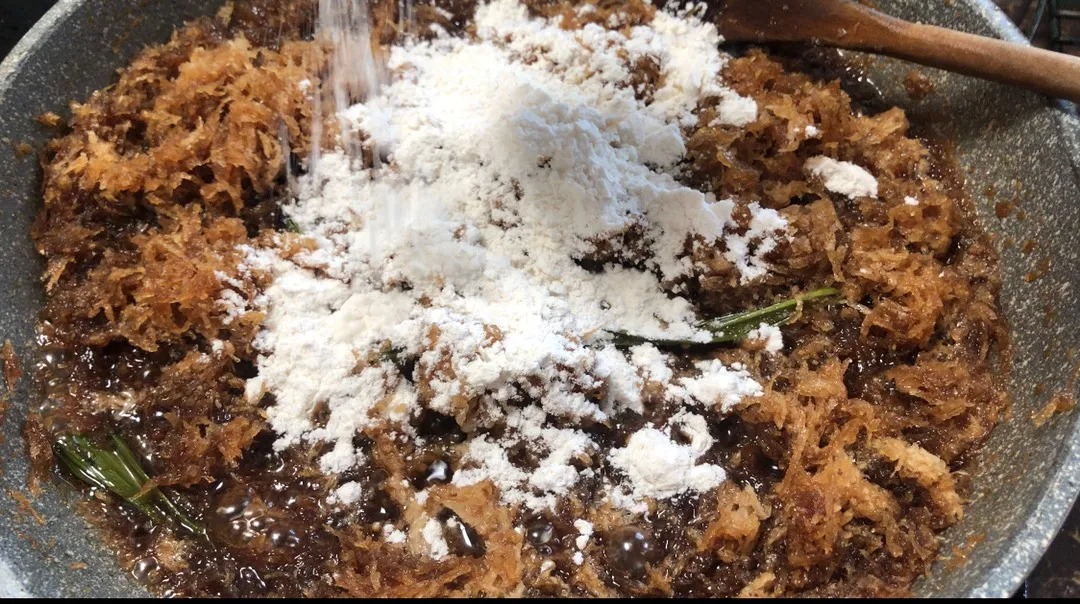
Add the grated coconut, stir well, and continue cooking until the filling is almost dry.
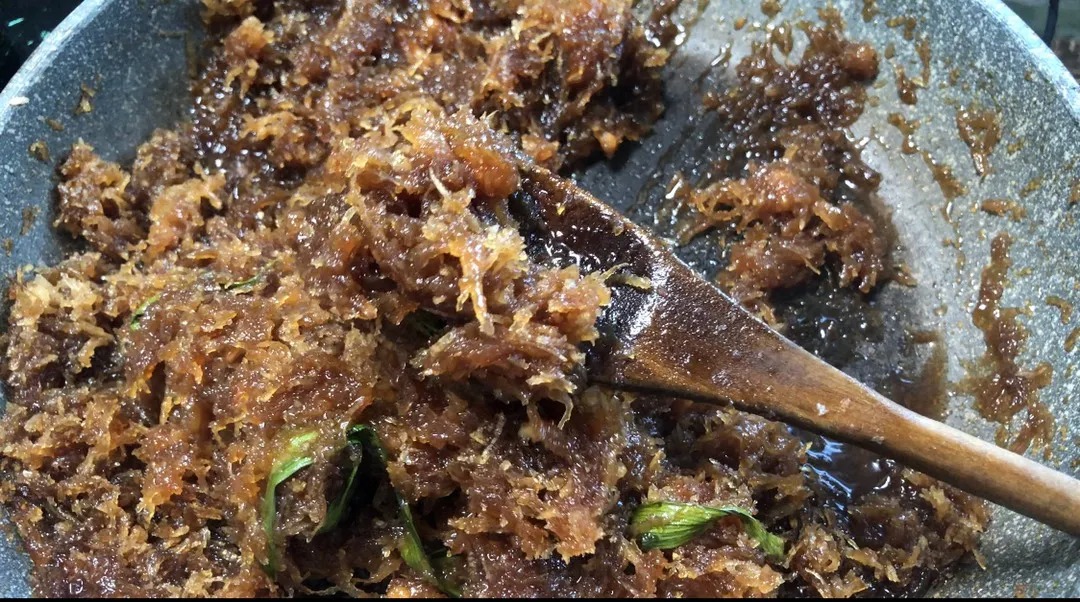
Sprinkle in the wheat flour, then stir until the filling becomes dry and fully cooked.
Turn off the heat and leave the filling to cool.
Step 2: Preparing the Dough
Preheat the steamer.
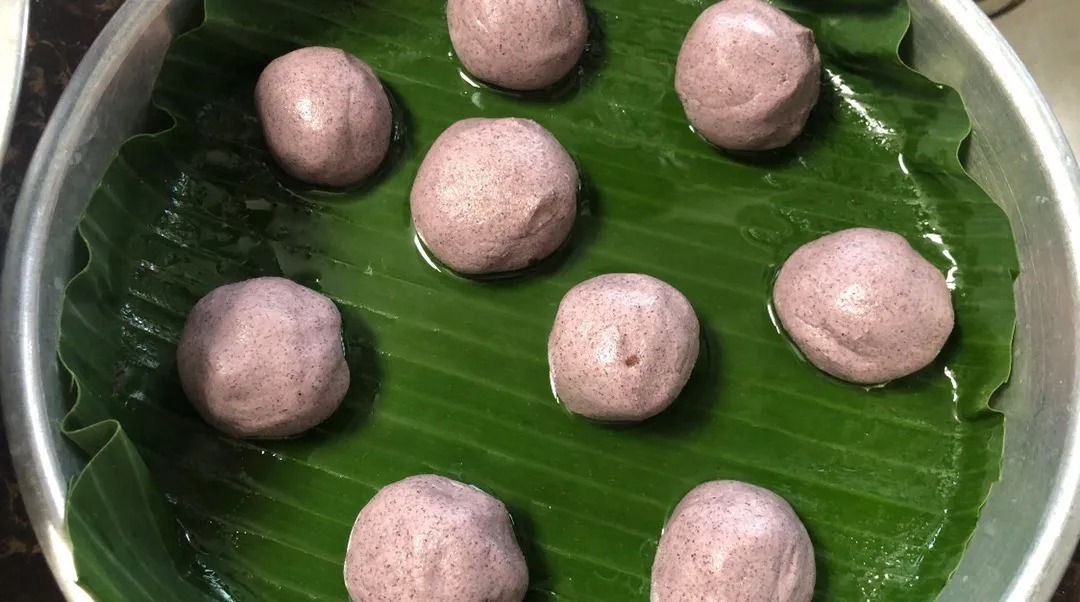
Line the steaming tray with round-cut banana leaves, then lightly grease with oil to prevent sticking.
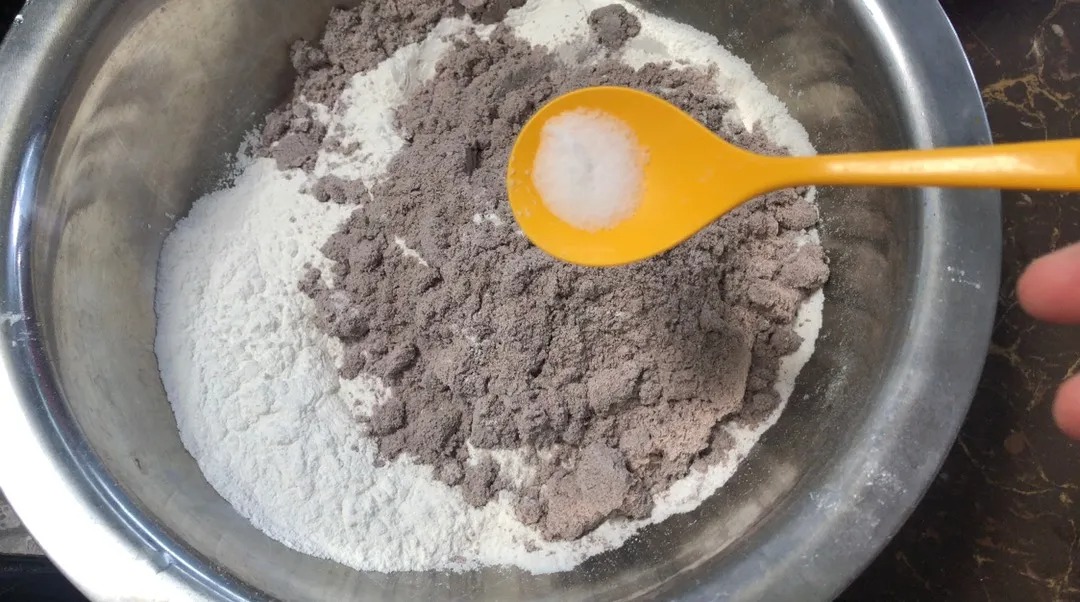
In a large mixing bowl, combine the glutinous rice flour, black glutinous rice flour, and a pinch of salt. Mix well.
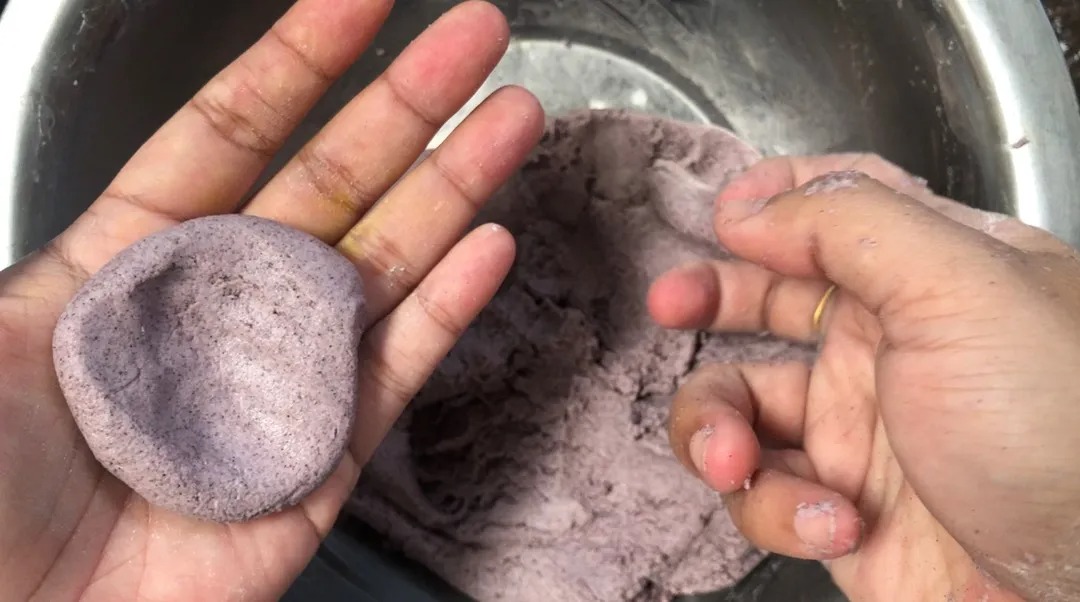
Gradually add water while kneading until a soft dough is formed, similar to the texture of Kuih Buah Melaka dough.
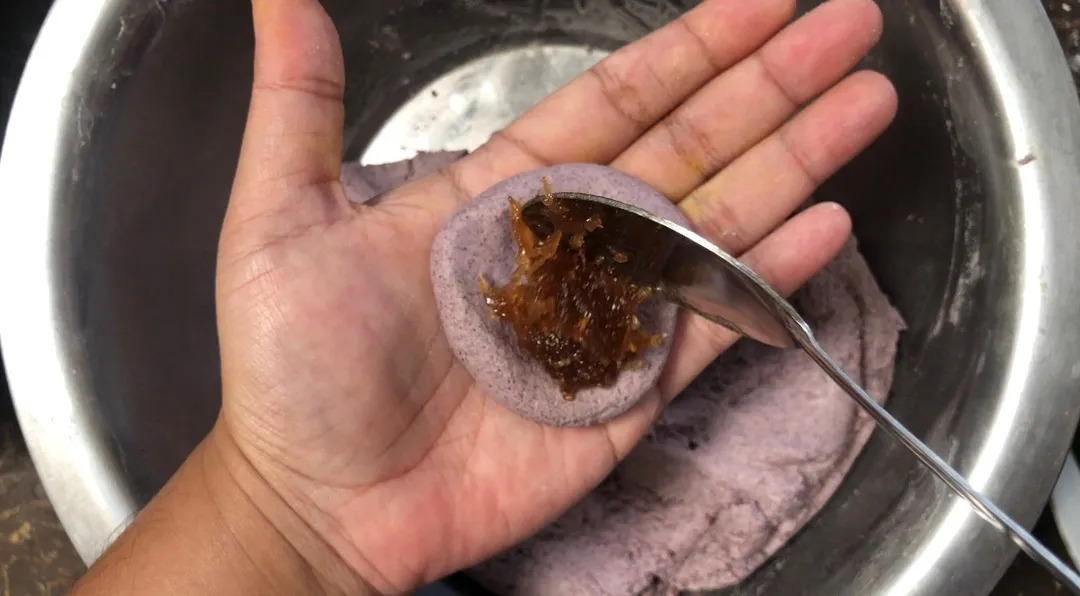
Pinch a small portion of dough, flatten it in your palm, and place a portion of coconut filling in the centre.
Wrap the filling with the dough and shape it into a round ball. Arrange the filled dough balls on the prepared banana leaves.
Step 3: Preparing the Coconut Milk Sauce and Steaming
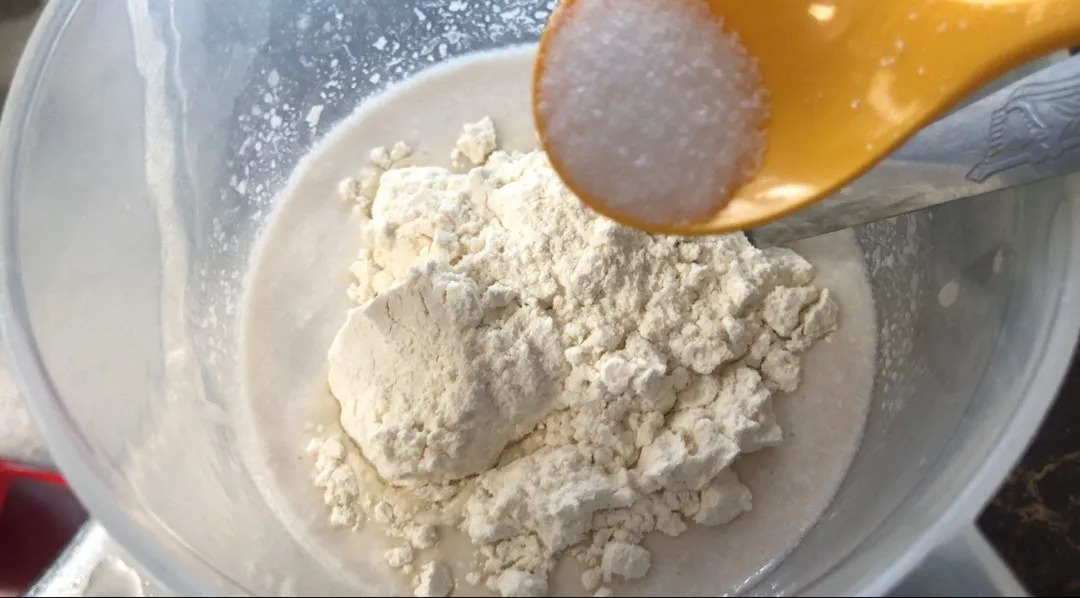
In a bowl, combine the coconut milk, wheat flour, salt, and sugar. Mix until well blended.
For a smoother texture, blend or strain the coconut milk mixture before use.
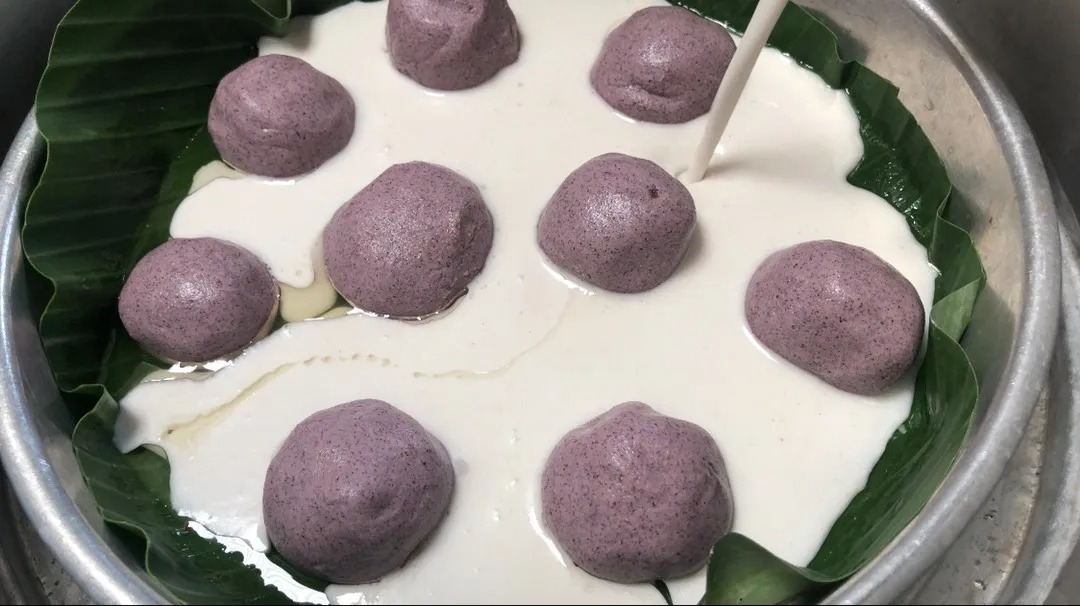
Pour the coconut milk mixture into the tray, leaving some space at the top to prevent overflow during steaming.
Arrange the filled dough balls in the tray containing the coconut milk mixture.
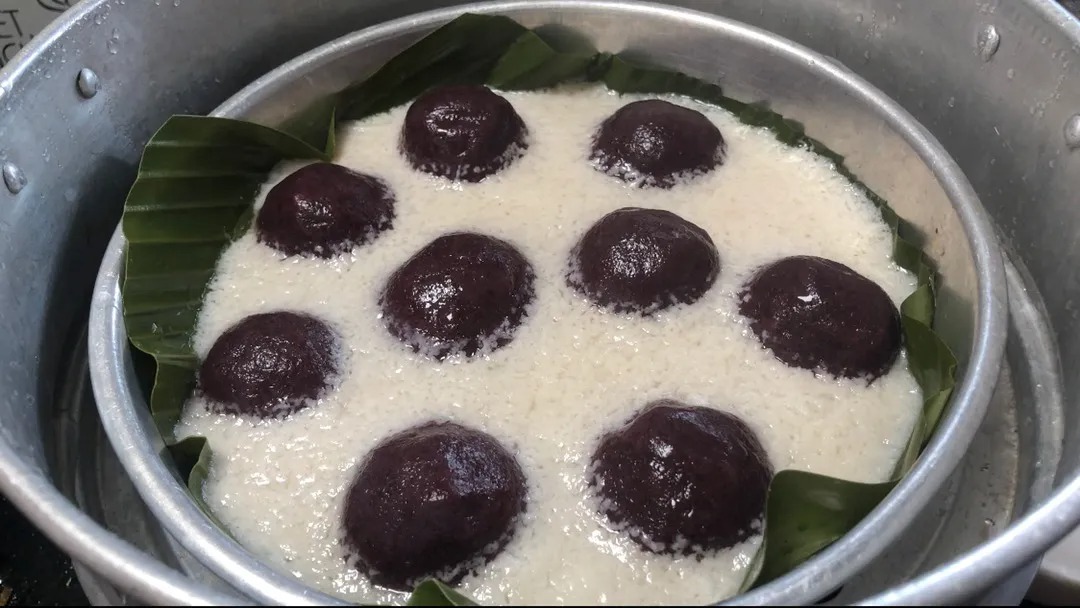
Steam over medium heat for 10–15 minutes or until the kuih is fully cooked.
Remove from the steamer and serve warm.
-
Reference Source
Bahan Bacaan
Cookpad. (n.d.). Kuih Badak Kubang. Cookpad Malaysia. https://cookpad.com/my/recipes/15418174
Fauzi, F. A., Jamil, J., & Majid, H. N. A. (2022). Dari Perlis ke Sabah: Warna-warni kuih-muih warisan Malaysia. Pelestarian makanan warisan Melayu diwarisi sejak zaman ke zaman, peliharalah hidangan setiap satu, jadikan panduan juga rujukan (hlm. 133).
Mohamad Abdullah, K., Ismail, F. H., Zamzuri, N. H., Abdul Aziz, S. A., & Muhamad, R. (2020). Pahang food terminologies: Young generations’ understanding and usage. Journal of Tourism, Hospitality & Culinary Arts, 12(1), 1–9.
RASA. (n.d.). Kuih Badak Kubang Bunga Telipok sedap sungguh rasanya. RASA. https://www.rasa.my/kuih-badak-kubang-bungatelipok-sedap-sungguh-rasanya/
Location
State JKKN Contact Information
Puan Norlelah Abd Karim
Cultural Officer
Jabatan Kebudayaan dan Kesenian Negara, Pahang
Kompleks JKKN Pahang
Lot 57100, Jalan Teluk Sisek,
25000, Kuantan,
Pahang Darul Makmur
09-517 8466
Use the form below to contact the Informant/Figure/Editor/Researcher directly. We will respond to your inquiry as soon as possible!


