

ARTS AND CULTURE INFORMATION GATEWAY
Immerse yourself in the colorful world of art and culture! From traditional heritage to contemporary works, discover uniqueness that reflects the nation's identity and identity
 Kampung Panji, 91308 Semporna, Sabah
Picture
3
Video
No record
Today's Visitor
67
Number of Visitors
1290
Introduction and history
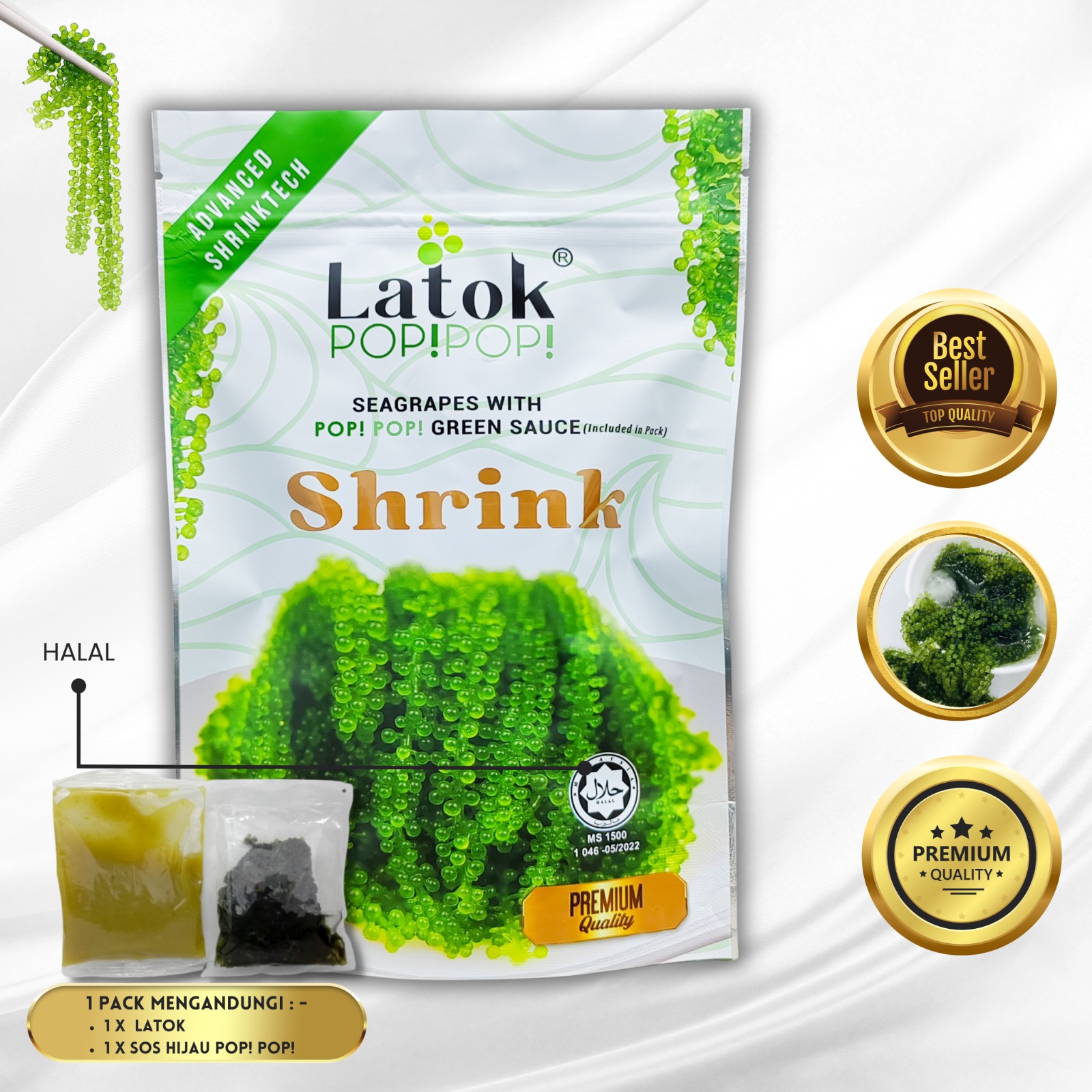
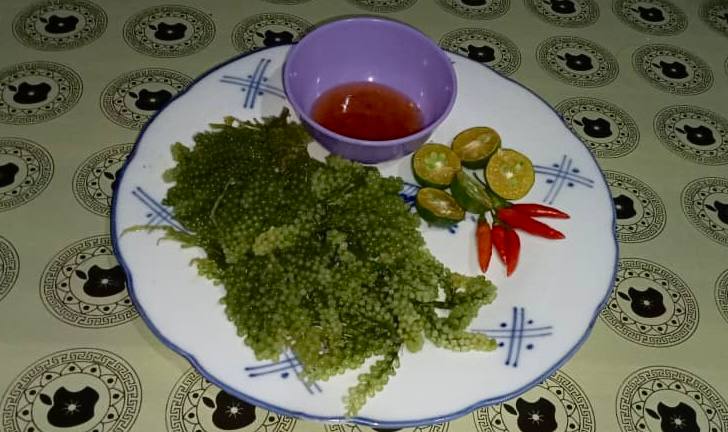
Latok is a type of seaweed from the species Caulerpa lentillifera, commonly known as "sea grapes" due to its appearance that resembles small green grape-like beads. Latok is widely recognized as a traditional delicacy among the Bajau Laut ethnic community in the eastern coastal regions of Sabah, particularly in the districts of Semporna, Tawau, Kunak, Lahad Datu, Sandakan, as well as in the northern region of Kudat. It is typically served as a side dish (ulam) alongside rice and grilled fish, or consumed raw with a mix of calamansi lime juice, bird’s eye chili, shredded unripe mango, or fermented shrimp paste (sambal belacan), depending on individual preferences (Hussain Sutani, 2024).
Latok serves multiple functions in both the dietary and cultural contexts of maritime communities in Sabah. Traditionally, it is consumed as a side dish or accompaniment to main seafood-based meals, especially grilled fish, prawns, or squid. Its fresh taste and crunchy texture add flavour diversity to the main dish, making it a naturally refreshing appetizer. However, Latok is less suitable to be paired with meat-based dishes such as chicken or beef due to its dominant oceanic flavour and raw nature.
-
350 grams of fresh Latok (sea grapes)
2 liters of clean water
1 jug of iced water
6 calamansi limes
6 bird’s eye chilies
2 unripe mangoes
½ teaspoon of salt
¼ teaspoon of seasoning powder
Shrim paste (Sambal belacan) - optional
Wash the Latok thoroughly with clean water and soak it in iced water for 10–15 minutes. This step is essential to maintain its crisp texture and fresh taste. After soaking, drain the Latok and place it in a clean bowl. Prepare the flavor mixture by squeezing the juice of calamansi limes, slicing the bird’s eye chilies, finely chopping the unripe mangoes, and adding salt and seasoning powder. Mix all ingredients well until evenly combined. If you prefer to enjoy Latok with sambal belacan, pound the chilies and fermented shrimp paste with a pinch of salt and seasoning powder, then mix in freshly squeezed calamansi juice. This sambal can be placed on top of the Latok or served on the side. Arrange the Latok on a serving plate. It is now ready to be enjoyed with steamed rice, grilled fish, or as a fresh side dish (ulam) with various meals.
-
Reference Source
Bahan Bacaan
Du Preez, R. (2020). Caulerpa lentillifera (sea grapes) improves bowel movement frequency and alleviates skin dryness: A pilot study in healthy Vietnamese adults.Journal of Applied Phycology, 35(6), 2957–2983. https://doi.org/10.1007/s10811-023-03031-x
Fakhrulddin, I. M., Muta Harah, Z., Shiamala, R. D., & Azrie, A. M. (2021). Effect of salinity, light and fertilizer on Caulerpa lentillifera under culture conditions. AIP Conference Proceedings, 2347(1), 020074. https://doi.org/10.1063/5.0051569Ismail, M. F., Abdullah, F. I., Ismail, I., Marlina, M., Ramaiya, S. D., Zulhilmi, M. A., Awang, M. A., & Zakaria, M. H. (2024). Cultivation of edible Caulerpa species in Malaysia: Current status and future prospects for sustainable aquaculture. Journal of Applied Phycology, 36, 2439–2458. https://doi.org/10.1007/s10811-024-03271-5
Malaysiakini. (2021, April 21). Regional seaweed delicacy 'latok' to be commercialised.https://www.malaysiakini.com/announcement/571536Stuthmann, L. E., da Costa, B. B., & Kunzmann, A. (2023). Sea grapes (Caulerpa lentillifera J. Agardh, Chlorophyta) for human use: Structured review on recent research in cultivation, nutritional value, and post-harvest management.Journal of Applied Phycology, 35(6), 2957–2983. https://doi.org/10.1007/s10811-023-03031-x
Syakilla, N. (2022). A review on nutrients, phytochemicals, and health benefits of Caulerpa lentillifera (sea grapes).Marine Drugs, 20(10), 608. https://doi.org/10.3390/md20100608Wikipedia contributors. (2025, April 3). Caulerpa lentillifera. In Wikipedia, The Free Encyclopedia. Retrieved August 6, 2025, from https://en.wikipedia.org/wiki/Caulerpa_lentillifera
Informan
Hussain Sutani, Kampung Panji, Semporna, Sabah. 3 Oktober 2024.
Location
State JKKN Contact Information
Puan Nurshahrinna Syahrial
Cultural Officer
Jabatan Kebudayaan dan Kesenian Negara, Sabah
Kompleks JKKN Sabah,
Jalan Tasik off KM4 Jalan Penampang,
88200 Kota Kinabalu
SABAH
088-205070
Use the form below to contact the Informant/Figure/Editor/Researcher directly. We will respond to your inquiry as soon as possible!


