

ARTS AND CULTURE INFORMATION GATEWAY
Immerse yourself in the colorful world of art and culture! From traditional heritage to contemporary works, discover uniqueness that reflects the nation's identity and identity
BUSANA DATO’ ADAT ISTANA & PEGAWAI 99
 Fakulti Muzik dan Seni Persembahan, Universiti Pendidikan Sultan Idris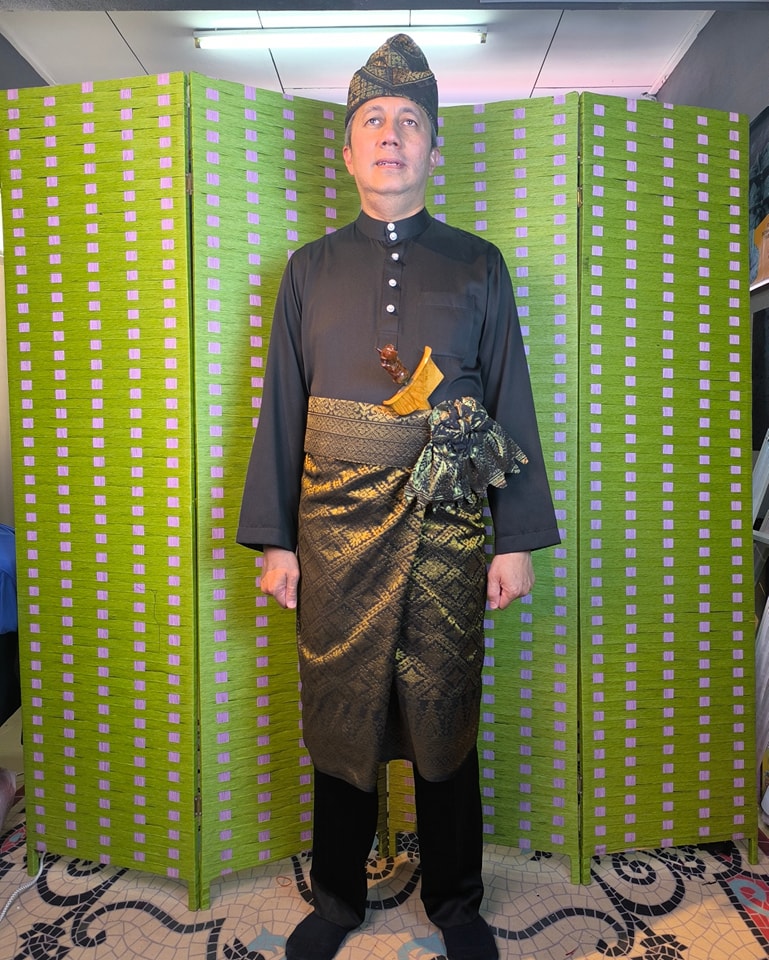
Picture
1
Video
No record
Today's Visitor
3
Number of Visitors
265
Introduction and history
The attire of Dato’ Adat Istana and Pegawai 99 in Negeri Sembilan is one of the traditional garments imbued with profound symbolic meaning within the framework of Adat Perpatih. It is not merely formal clothing but a visible emblem of authority, rank, and dignity for those who hold positions in a governance system founded upon custom. The beauty of Malay textile heritage, the refinement of songket weaving, and the nobility of custom reflected in the etiquette of its wearers make this attire a true manifestation of the identity of the people of Negeri Sembilan, who uphold adat as the foundation of their social, political, and cultural life.
Historically, the title Pegawai 99 originated from individuals entrusted with the responsibility of serving meals to the Yang Dipertuan Besar whenever he travelled to a particular place. This role affirmed their position as loyal attendants, safeguarding the ruler’s safety, comfort, and dignity. In recognition of their service, they were granted a special distinction in the form of the official title Pegawai 99, which remains a permanent part of the royal court’s customary structure. This conferment illustrates the esteem of the palace towards loyal subjects, while also underscoring their position within the traditional system of governance.
Initially numbering around 99 members, the group has grown over time to more than 300 individuals. Membership is not limited to the Air Kaki Lingkungan community but also includes various clans from the Luak Tanah Mengandung. For instance, there are 12 members from Luak Ulu Muar, 12 from Jempol, 6 from Terachi, 6 from Gunung Pasir, and several from Inas, Gemencheh, and Ayer Kuning. This expansion demonstrates that the institution of Pegawai 99 is not merely symbolic, but also serves as a medium of unification for diverse clans under the banner of royal custom, thereby strengthening solidarity within Negeri Sembilan society.
The uniqueness of this role is also reflected in their distinctive attire. The ensemble typically consists of a black Baju Melayu Cekak Musang, a songket sarong woven in Negeri Sembilan, and a destar or tengkolok tied in specific styles such as “Dendam Tak Sudah” or “Solok Timbo.” Black symbolizes loyalty, resilience, and dignity, while the gold-threaded songket illustrates the refinement of traditional textile artistry inherited across generations. The destar serves as a marker of rank and territorial affiliation, while the fold of the songket, the binding of the destar, and the placement of the keris each carry their own symbolic meaning, reflecting the wearer’s status and role within the hierarchy of royal custom.
To this day, the attire of Dato’ Adat Istana and Pegawai 99 continues to be preserved and worn during official state ceremonies such as the installation of the Yang Dipertuan Besar Negeri Sembilan, customary rituals in the luak, and major assemblies of Adat Perpatih. Although the number of Pegawai 99 has grown, the symbolic significance of this attire has not diminished. It remains a powerful emblem of Negeri Sembilan’s identity, deeply rooted in the heritage of Adat Perpatih. Thus, this attire is not only a traditional garment but also a cultural medium that sustains the continuity of history, custom, and tradition within the community up to the present day.
This attire carries its own distinct roles and functions for the wearer. It not only reflects the beauty of Negeri Sembilan’s traditional garments but also symbolizes the trust and responsibilities borne by the Dato’ Adat Istana and Pegawai 99. Among its primary functions are as follows:
Symbol of Social Status and Customary Authority
The attire of Dato’ Adat Istana and Pegawai 99 serves as a marker of social standing within the customary hierarchy of Negeri Sembilan. Wearing the black ceremonial attire paired with a gold-threaded songket sarong signifies that the wearer holds a position of authority and is not an ordinary member of society. Black represents resilience and dignity, while the golden threads of the songket illustrate grandeur and loyalty to the royal institution. Thus, the attire functions not merely as clothing but as a visual emblem of one’s prestige within the customary structure.
Guardians of Custom and Heritage
Beyond signifying status, the attire also reflects the wearer’s duty as a guardian of custom. The Dato’ Adat and Pegawai 99 are regarded as custodians who ensure that every ceremony, ritual, and administrative process of Adat Perpatih is conducted with discipline and in accordance with established traditions. By donning this attire, they demonstrate their commitment to upholding and safeguarding the heritage of Adat Perpatih passed down through generations. Thus, the attire becomes a manifestation of responsibility towards the preservation of custom.
Executors of Royal Decrees
Historically, the Pegawai 99 also played an important role in carrying out the decrees of the Yang Dipertuan Besar. They acted as executors of royal directives, whether in managing customary ceremonies, conveying orders, or maintaining order among the people. Wearing the ceremonial attire while performing these duties symbolized the legitimacy and authority conferred upon them by the palace. In this way, the attire allowed society to recognize and respect their official role.
Enforcers of Royal Prohibitions
Another crucial function of the attire is its association with the enforcement of royal prohibitions. Should any subject disobey royal decrees or violate custom, the Pegawai 99 were responsible for reporting the matter to the Orang Empat Istana, the Pegawai Yang Enam, or the Api Lempang Orang Empat Istana, before it was presented to the Yang Dipertuan Besar. This demonstrates that their attire was not only ceremonial but also an official symbol of authority in executing the enforcement of customary law.
Collective Identity and Unity
Finally, the attire serves as a symbol of collective identity among the Pegawai 99, who hail from various luak (districts) in Negeri Sembilan. Although they come from diverse clan backgrounds, the uniformity of their attire embodies unity and solidarity in serving the royal institution. In this way, the ceremonial attire becomes a cultural medium that unites ethnic and clan diversity under the banner of Adat Perpatih, thereby reinforcing cohesion within Negeri Sembilan society.
The attire of the Dato’ Adat Istana and Pegawai 99 is not only complete with the tunic and samping but is also adorned with various accessories that carry profound symbolic meaning. These accessories serve as emblems of rank, authority, and the dignity of the wearer. The principal accessories include:
Destar / Tengkolok
The destar or tengkolok is the primary headpiece that signifies one’s rank and luak (district). Specific folds, such as “Dendam Tak Sudah” or “Solok Timbo” form a distinctive identity for the wearer, while the folds themselves reflect discipline and adherence to custom. It is typically crafted from Negeri Sembilan songket in black and gold, with patterns often matched to the samping worn.
Keris
The keris, tucked at the waist, symbolizes bravery, honor, and customary authority. Beyond its role as a traditional weapon, the keris reflects the wearer’s readiness to defend custom and safeguard the dignity of the palace. The finely carved hilt enhances its artistic value, while the manner of placement is governed by strict etiquette in accordance with customary rules.
Samping
The samping is made of Negeri Sembilan songket in black and gold, richly woven with motifs such as bunga tabur (scattered flowers), tampuk manggis (mangosteen calyx), or pucuk rebung (bamboo shoots). The Ikatan Kembung (Kembung Knot) style of wearing the samping is commonly reserved for nobles and titleholders. Its distinction from the knot used by wedding grooms or temporary rulers lies in the outward fold or knot positioned along the waistline, marking the wearer’s rank and status.
Buttons of the Tunic
The ceremonial Baju Melayu is adorned with five buttons along the front. These buttons are not mere embellishments but carry symbolic meaning, representing the Five Pillars of Islam. They serve as a reminder that every action and position must be rooted in religious principles, underscoring the close relationship between adat (custom) and syariat (Islamic law) in Negeri Sembilan culture.
Rings or Bracelets
Rings or bracelets are often worn as additional accessories, but always in moderation. These adornments serve as symbols of nobility and dignity, reflecting the wearer’s esteemed position. Their simplicity aligns with Malay cultural values that emphasize modesty and propriety in appearance.
Shoulder Sash
For certain ceremonies, the attire is further complemented by a yellow shoulder sash. The yellow cloth symbolizes royal grandeur and respect for the institution of the monarchy. It is typically worn during major occasions such as the installation of the Yang Dipertuan Besar, the Istiadat Ulangan Penghulu Luak Tanah Mengandung Menghadap Menjunjung Duli, and other Adat Perpatih ceremonies.
Black Leather Shoes
As the finishing touch, black leather shoes are worn to ensure the overall appearance is neat, dignified, and consistent with the attire’s formal color code. They contribute to uniformity and emphasize the formal, traditional image of the wearer.
In general, the Baju Melayu Cekak Musang can be tailored from a wide range of fabrics depending on the purpose of wear and the comfort of the wearer. However, for the ceremonial attire of the Dato’ Adat Istana and Pegawai 99, the choice of materials is far more limited and exclusive. Only luxurious fabrics with deep symbolic value are used, namely:
Silk Fabric
Silk is the primary material for tailoring the Baju Melayu Cekak Musang. Its soft texture, natural sheen, and luxurious quality enhance the wearer’s dignified appearance. Silk is also regarded as a fabric of high value, appropriate for representing the status of the royal court and the nobility of customary officials.
Satin Fabric
In addition to silk, satin is also selected for this attire. With its smooth, glossy surface and elegant drape, satin adds refinement and an exclusive appearance. This makes it highly suitable for ceremonial attire worn in official adat and state functions.
Negeri Sembilan Songket
Traditional songket weaving from Negeri Sembilan is widely used for the samping, tengkolok/destar, and occasionally for decorative elements on the tunic itself. This songket is woven with gold or silver threads, featuring traditional motifs such as pucuk rebung (bamboo shoots), bunga tabur (scattered flowers), and tampuk manggis (mangosteen calyx). Beyond its aesthetic value, songket serves as a cultural symbol of the artistic wealth of Negeri Sembilan’s textile heritage, passed down through generations.
The attire of the Dato’ Adat Istana and Pegawai 99 must be worn according to specific rules to project neatness, dignity, and symbolic meaning. The steps of wearing the attire are as follows:
Step 1: Wearing the Tunic and Trousers
Dressing begins with putting on the Baju Melayu Cekak Musang, paired with long trousers.
The tunic is fitted with five buttons along the front, symbolizing the Five Pillars of Islam.
The buttons must be fastened neatly to ensure that the attire appears well-arranged and dignified.
Step 2: Wearing the Samping
After the tunic and trousers are worn, a black-and-gold songket samping is tied around the waist.
The Ikatan Kembung (Kembung Knot) style is used, where the samping is tied from the left side and angled diagonally towards the right.
The samping must be fitted securely and neatly so that it remains comfortable throughout the ceremony.
In some variations, a criss-cross fold is made from both the right and left sides of the waist, forming a raised central point where the folds meet, creating a distinctive symmetrical arrangement.
Step 3: Wearing the Keris
The next step is to tuck the keris at the side of the waist.
Its position is determined by customary rules and symbolizes the wearer’s readiness to uphold honor and defend royal custom.
The keris must be positioned with propriety, visible yet not overly prominent, signifying authority and dignity.
Step 4: Wearing the Destar / Tengkolok
Once the main garments are complete, the attire is complemented with a destar or tengkolok.
Special folds such as “Dendam Tak Sudah” or “Solok Timbo” are used, serving as markers of the wearer’s rank and territorial affiliation (luak).
The folds and style of the destar must strictly follow customary rules, as they carry profound symbolic significance in the royal hierarchy.
Step 5: Wearing Additional Accessories
To complete the attire, accessories such as rings or bracelets may be worn modestly.
In certain ceremonies, a yellow shoulder sash is draped across the right shoulder as a mark of honor towards the royal institution.
The sash is typically worn during major ceremonies such as the installation of the Yang Dipertuan Besar and other principal Adat Perpatih assemblies.
Step 6: Wearing Black Leather Shoes
Finally, the ensemble is completed with black leather shoes.
Wearing these shoes not only enhances the neatness of the attire but also ensures uniformity in the color code and maintains the formality of appearance in royal and customary events.
Reference Source
Bahan Bacaan
eCentral. (2023, Mei 29). Cara pakai samping & jenis ikatan. Jabatan Muzium Malaysia. https://ecentral.my/cara-pakai-samping/
Kerajaan Negeri Sembilan. (t.t.). Istiadat penghulu menghadap menjunjung duli: Alat kebesaran dipasang di halaman istana. Portal Rasmi Negeri Sembilan. https://www.ns.gov.my/lain-lain/maklumat-teras/berita/istiadat-penghulu-menghadap-menjunjung-duli-alat-kebesaran-dipasang-di-halaman-istana
Nordin Selat, A. H. (2015). Sistem sosial adat Perpatih. Akademia.
Salleh, R. M. (2017). Sejarah pengamalan adat Perpatih di Negeri Sembilan. Kuala Lumpur: Jabatan Muzium Malaysia.
Saludin, M. R., Saludin, M. N., & Mustaffa, F. (2023). Amalan-amalan adat di Port Dickson. Jurnal Tuah, 3(1), 1–12.
Sheehan, J. J., & bin Khamis, A. A. (1936). Adat Kuala Pilah. Journal of the Malayan Branch of the Royal Asiatic Society, 14(3[126]), 190–225. https://doi.org/10.2307/41560125
Zakaria, A., & Berawi, M. M. (2017). Busana tradisional Negeri Sembilan. Sintok: UUM Press.
Location
State JKKN Contact Information
Rosdianah binti Roman
Cultural Officer
Jabatan Kebudayaan dan Kesenian Negara, Negeri Sembilan
Kompleks JKKN Negeri Sembilan
Jalan Sungai Ujong
70200 Seremban
NEGERI SEMBILAN DARUL KHUSUS
06-767 6793/763 6308 / 761 0593
Use the form below to contact the Informant/Figure/Editor/Researcher directly. We will respond to your inquiry as soon as possible!


