

ARTS AND CULTURE INFORMATION GATEWAY
Immerse yourself in the colorful world of art and culture! From traditional heritage to contemporary works, discover uniqueness that reflects the nation's identity and identity
TARIAN RAMBAI
 Kampung Ulu Tomani, 89907 Tenom, Sabah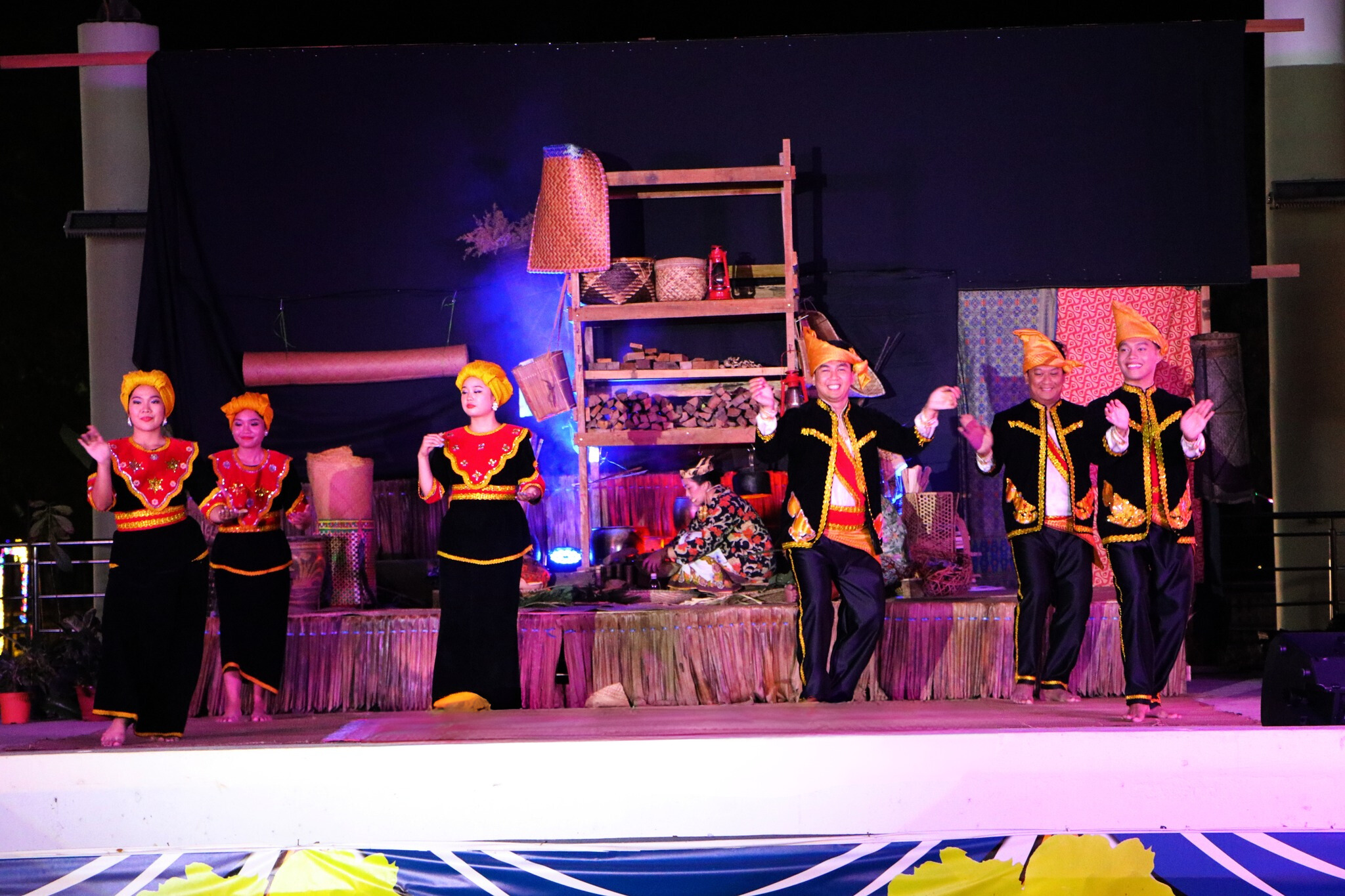
Picture
3
Video
No record
Today's Visitor
177
Number of Visitors
4946
Introduction and history
Rambai Dance is a traditional dance of the Tidung ethnic community, which mostly inhabits the southeastern part of Sabah and covers the districts of Tawau, Beluran, Sandakan, and Kinabatangan. Rambai refers to the term 'tampi' or 'menampi' with nyiru, which is synonymous with the daily work of farmers, as referred to in the Tidung language, namely Intogos (working in the rice fields), Bekabun (gardening), and Tongoyon (communal work).
The origin of this dance is rooted in the Tidung community's communal work activities during the rice harvest season. While the community was busy harvesting rice in the rice fields, children imitated various adult movements that featured motifs of agricultural activities in the rice fields, such as pulling gunny sacks, chasing birds, pounding rice, hoeing the rice field boundary, and pulling the bird repellent rope. In general, this dance has eight basic hand steps and two basic footsteps that form a cultural expression in depicting the traditional life and uniqueness of the Tidung community's way of life.
Rambai dance not only refers to a performance but also functions as a tool to strengthen the spirit of family and cooperation among the Tidung community, especially depicting the agrarian life of their previous society. In the current context, Rambai dance has served as entertainment for the community. It is often performed in various public events such as cultural festivals, weddings, and celebrations. The musical accompaniment and unique dance movements make it an interesting and entertaining performance for the audience.
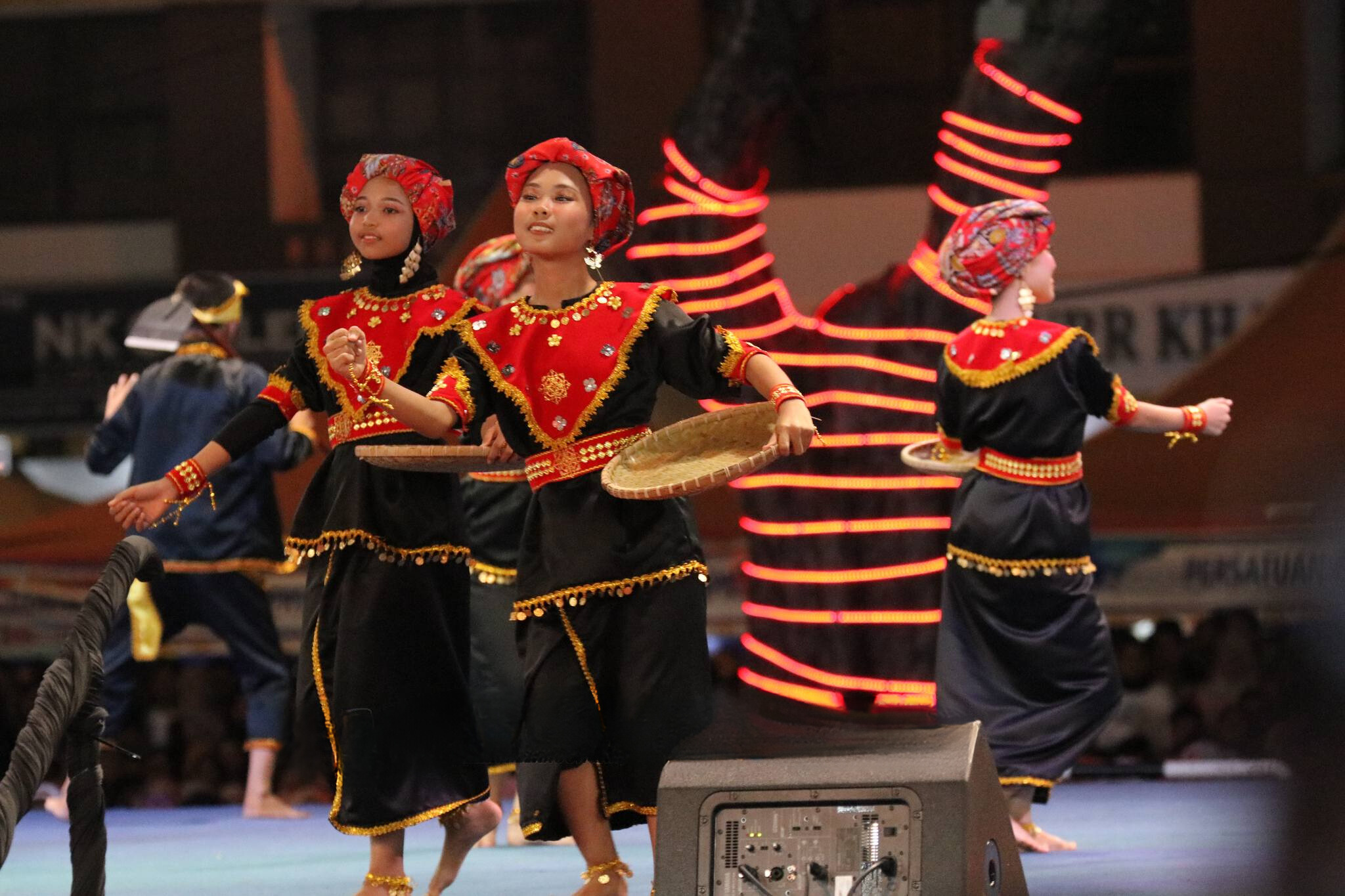
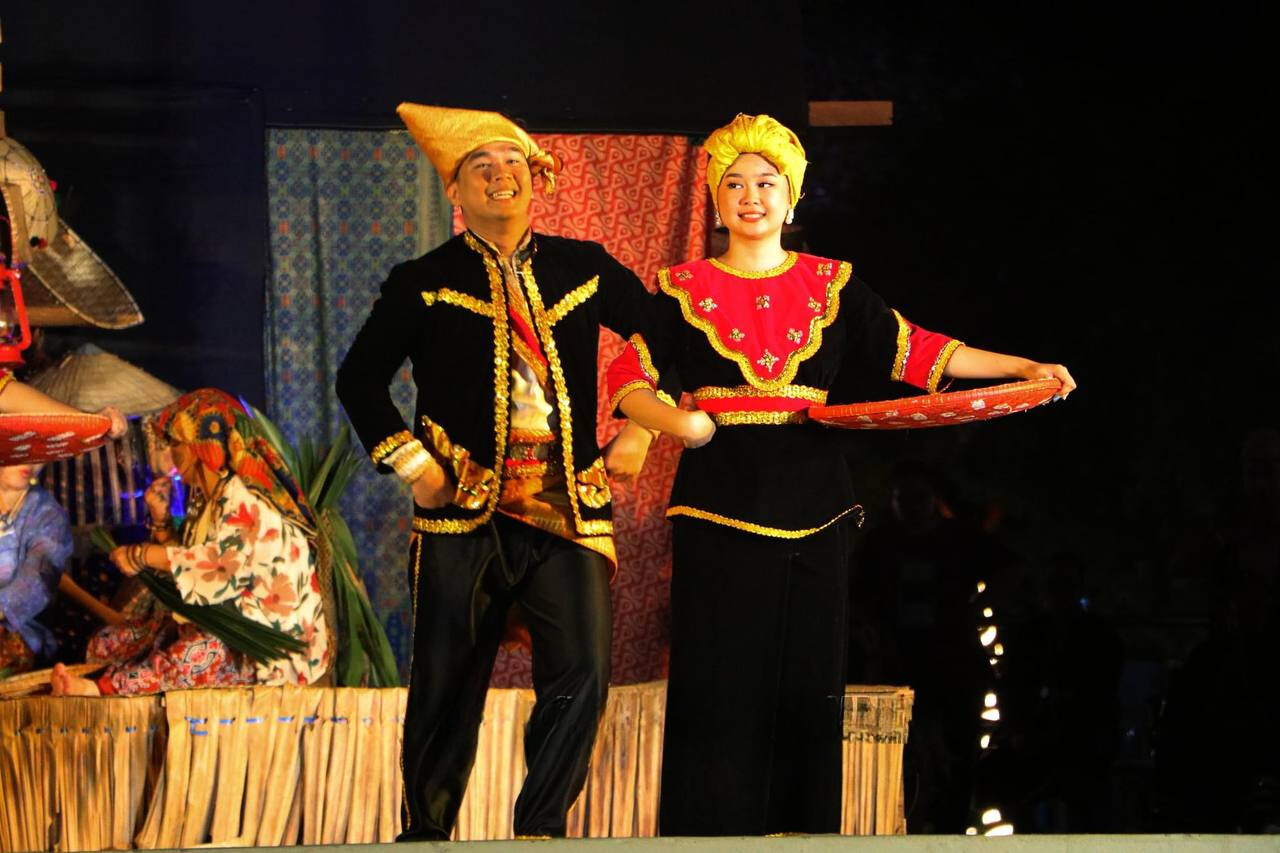
The Rambai dancer's attire is usually black and decorated with gold lace. Female dancers will wear a dress in the form of a kebaya cut decorated with a chest decoration known as 'Kubab Pempulu', meaning a bird's chest that decorates it. This Kubab Pempulu is made of velvet fabric attached to gold thread and decorated with beads and sequins. Meanwhile, the waist will be decorated with a 'Panding' (belt).
The female dancers will be dressed in batik cloth, symbolizing female farmers, while in the rice fields, carrying hand props in the form of nyiru or tampi.
The musical instruments used in this dance are Kulintangan, Ketipung (drum) and two types of gongs, namely the gong ibu and gong anak.
The Rambai dance is divided into 8 basic hand steps and 2 basic footsteps, namely;
1. Swinging - Both hands will be swung in opposite directions, forward and backward, while shaking the head in the opposite direction of the hand being swung.
2. Mengambai - Both hands will meet each other and be closed and opened (right and left sides).
3. Weeding - Movement like weeding or trimming rice.
4. Winnowing - A movement similar to winnowing rice made at waist and shoulder level. This movement is only performed by female dancers.
5. Hoeing - Movements such as hoeing the boundaries of the rice fields, which are only performed by male dancers.
6. Pulling a Sack - This movement shows the movement of pulling a sack filled with rice. The left hand is raised to chest level, while the right hand is swung from back to front until it is level with the left hand.
7. Chasing Away Birds - This movement shows the motif of movement as if chasing away birds. This movement is like winnowing rice, but only the palms and wrists are moved at the top. This movement will only be performed by female dancers.
8. Lifting Paddy Rice - This movement is an imitation of lifting rice by carrying it and is only danced by male dancers. Typically, this movement is done when the dancer enters or exits.
9. Foot movements - The dancer's feet will be stomped like stepping on dried rice alternately from the beginning of the performance until it ends. Another step is to perform a stepping motion on one foot only, and the other foot will be rested and not stomped.
Suhaimi Magi. (61 tahun). Kampung Ulu Tomani, 89907 Tenom, Sabah. 8 Oktober 2024.
Nor Syafiqah Yahya. (29 tahun). Persatuan Seni tari Keningau, 89900 Keningau, Sabah. 8 Oktober 2024.
Reference Source
Abdul Munir Hafizy Ladoni. (2012). Tidung. Dalam Kntayya Mariappan & Paul Porodong. Siri etnik Sabah ITBM-UMS: Murut & Pelbagai Etnik Kecil Lain di Sabah. Institut Terjemahan Buku Malaysia.
Location
State JKKN Contact Information
Puan Nurshahrinna Syahrial
Cultural Officer
Jabatan Kebudayaan dan Kesenian Negara, Sabah
Kompleks JKKN Sabah,
Jalan Tasik off KM4 Jalan Penampang,
88200 Kota Kinabalu
SABAH
088-205070
Use the form below to contact the Informant/Figure/Editor/Researcher directly. We will respond to your inquiry as soon as possible!


