

ARTS AND CULTURE INFORMATION GATEWAY
Immerse yourself in the colorful world of art and culture! From traditional heritage to contemporary works, discover uniqueness that reflects the nation's identity and identity
ADAT RESAM DAN BUDAYA MASYARAKAT RAWA KAMPAR, PERAK: ADAT BERJOJAK
 Kampung Sungai Itek, 31600 Gopeng, Perak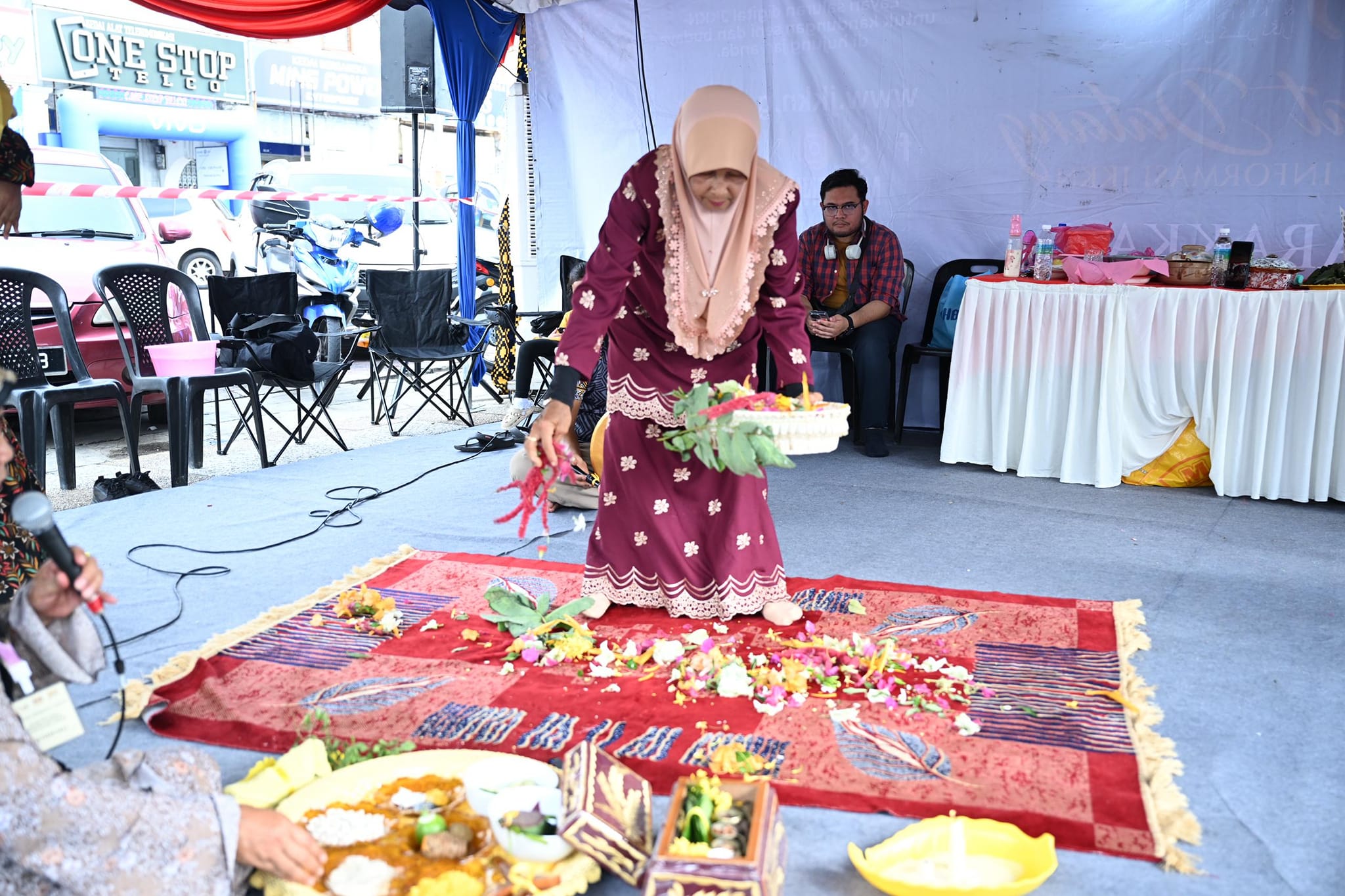



Picture
26
Video
Available
Today's Visitor
475
Number of Visitors
5976
Introduction and history
The Rawa community, also known as "Rao," is one of the most significant traditional communities in Perak, Malaysia. This community is believed to have originated in West Sumatra, Indonesia, with a history of migration to Perak that began around 1850 and continued until 1876. The migration process occurred via the Perak River in Bagan Datoh before the settlers dispersed to other areas, including those along the Kampar River. Key figures who played important roles in this migration include Pawang Ana, a renowned storyteller; Tok Tua Sakti, the founder of the Tapah settlement; and Abdul Karim bin Raja Aman Shah, the founder of the Selama settlement.
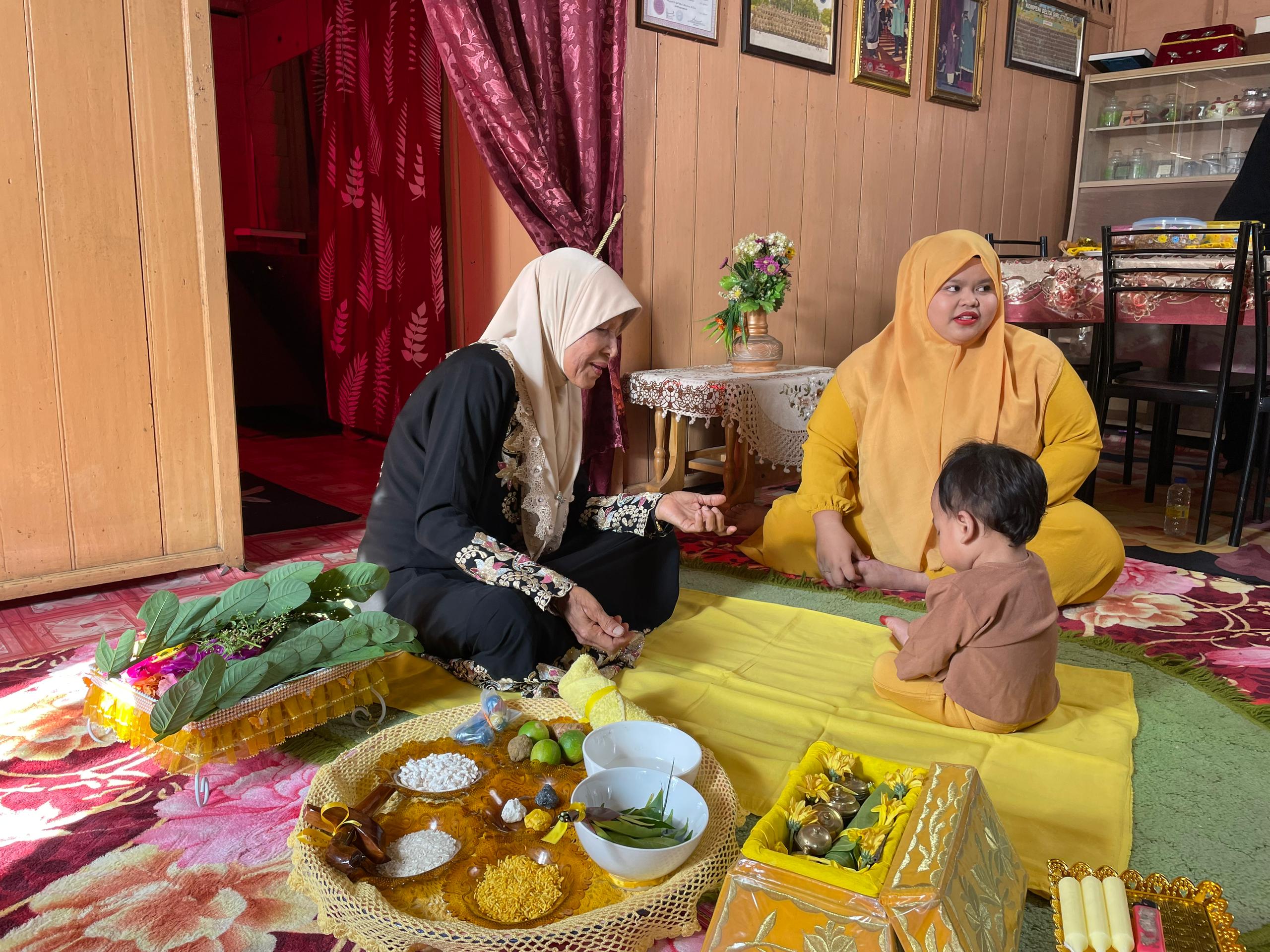
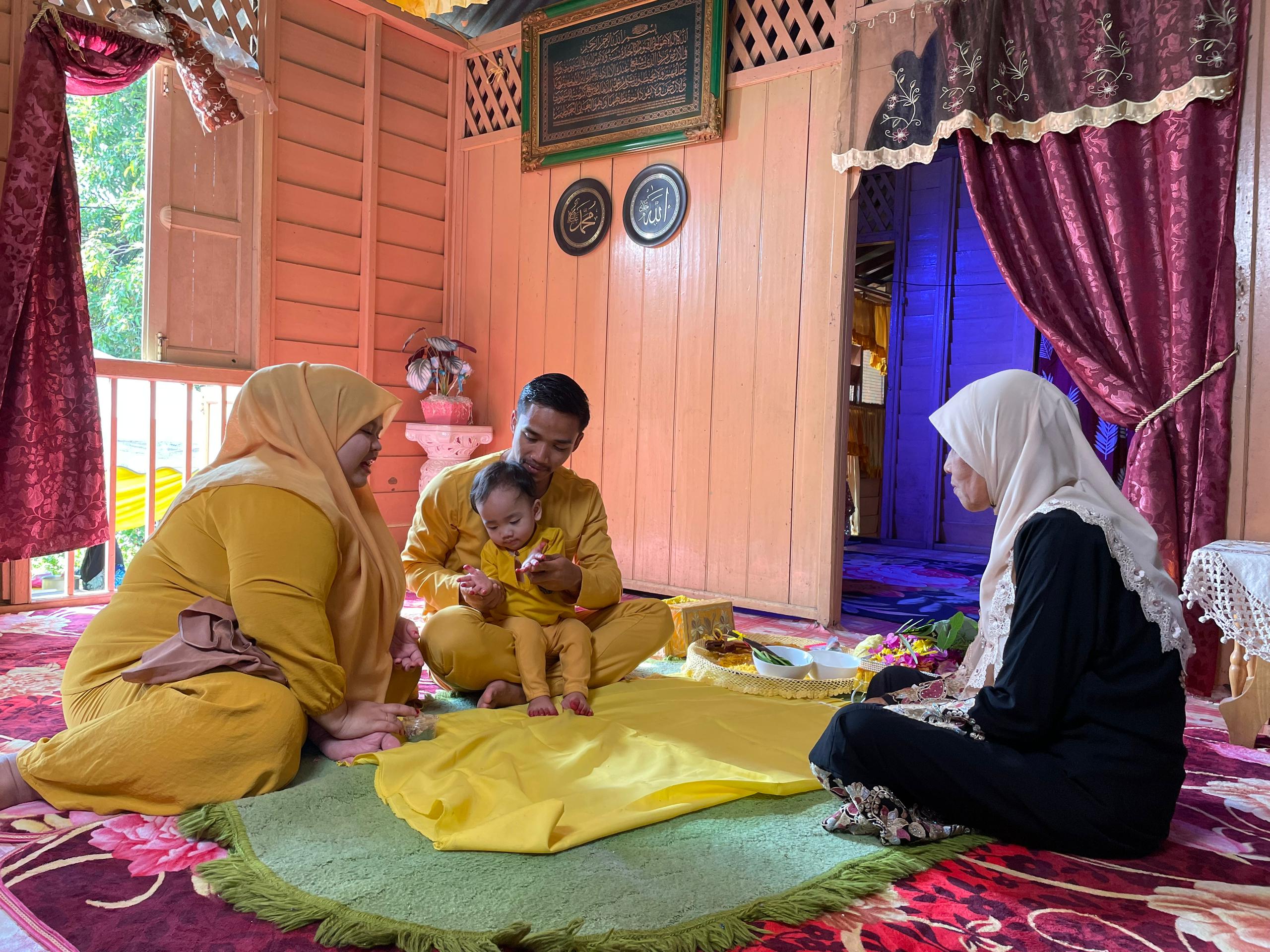
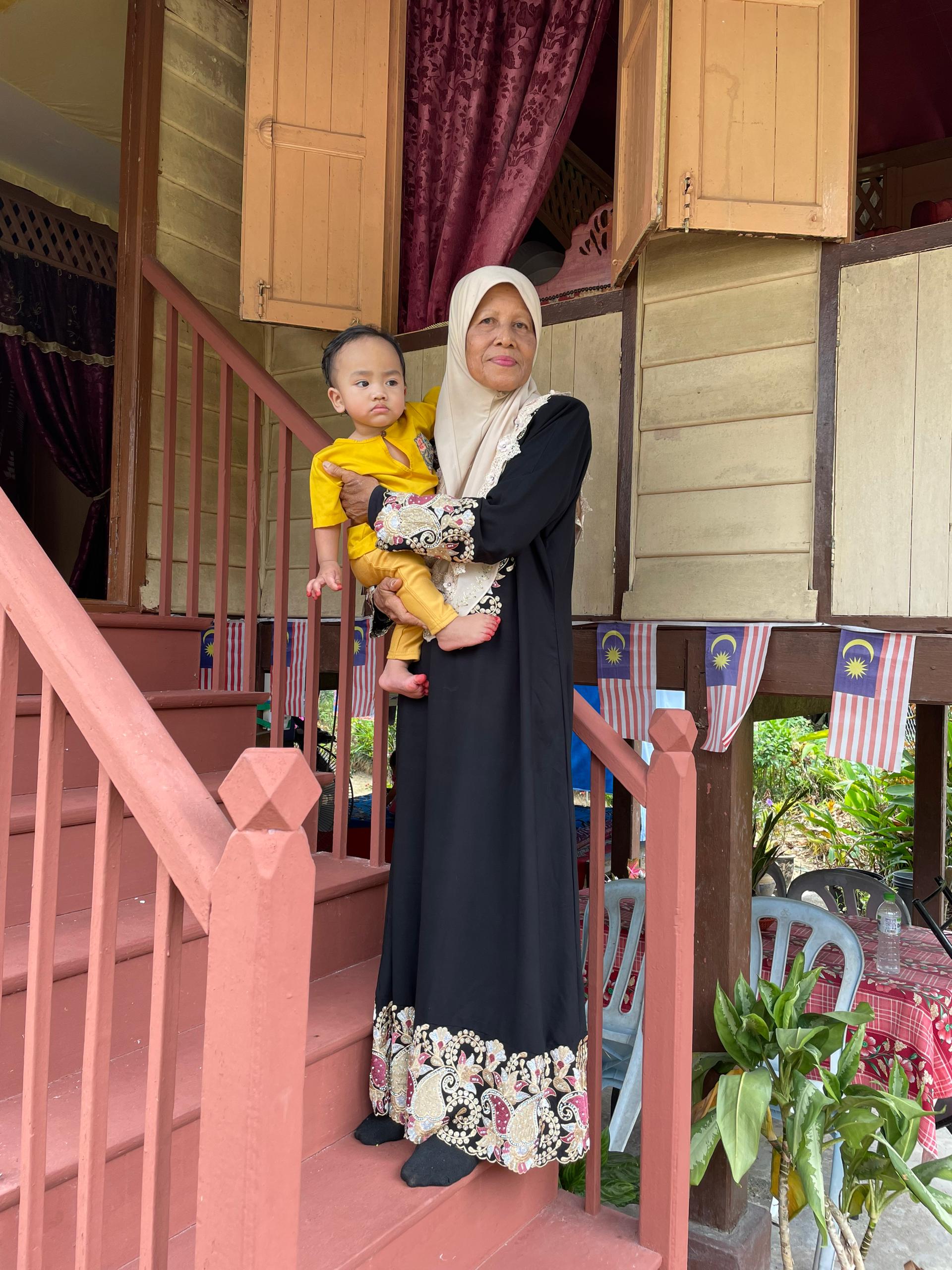
The Rawa community in Kampar is well known for its rich and unique cultural traditions, which are still practiced today. One such tradition is the Berjojak custom, a ritual designed to help infants learn to walk on the ground. The term "Berjojak" originates from the word "Berjejak," in which the Rawa dialect replaces the vowel "e" with "o," reflecting the linguistic uniqueness of this community. This tradition not only represents the cultural identity of the Rawa people but also serves as a symbol of heritage preserved by the current generation, making it a meaningful tradition within their philosophy of life and social system.
The Berjojak custom plays a significant role as a ritual marking the conclusion of the ”Pantang Tanah” practice for newborns. This custom prohibits infants from touching or stepping on the ground from birth until they reach the age of 13 months, as it is believed that breaking this taboo could bring harm to the child.
The philosophy behind the Pantang Tanah practice is closely tied to considerations of hygiene and health. From a general perspective, allowing infants to come into contact with the ground exposes them to bacteria and germs that could potentially cause various illnesses. Consequently, the restriction is maintained for 13 months until the Adat Berjojak ceremony is performed. Following this ritual, the child is permitted to step on the ground freely for the rest of their life without concerns about health risks.
-
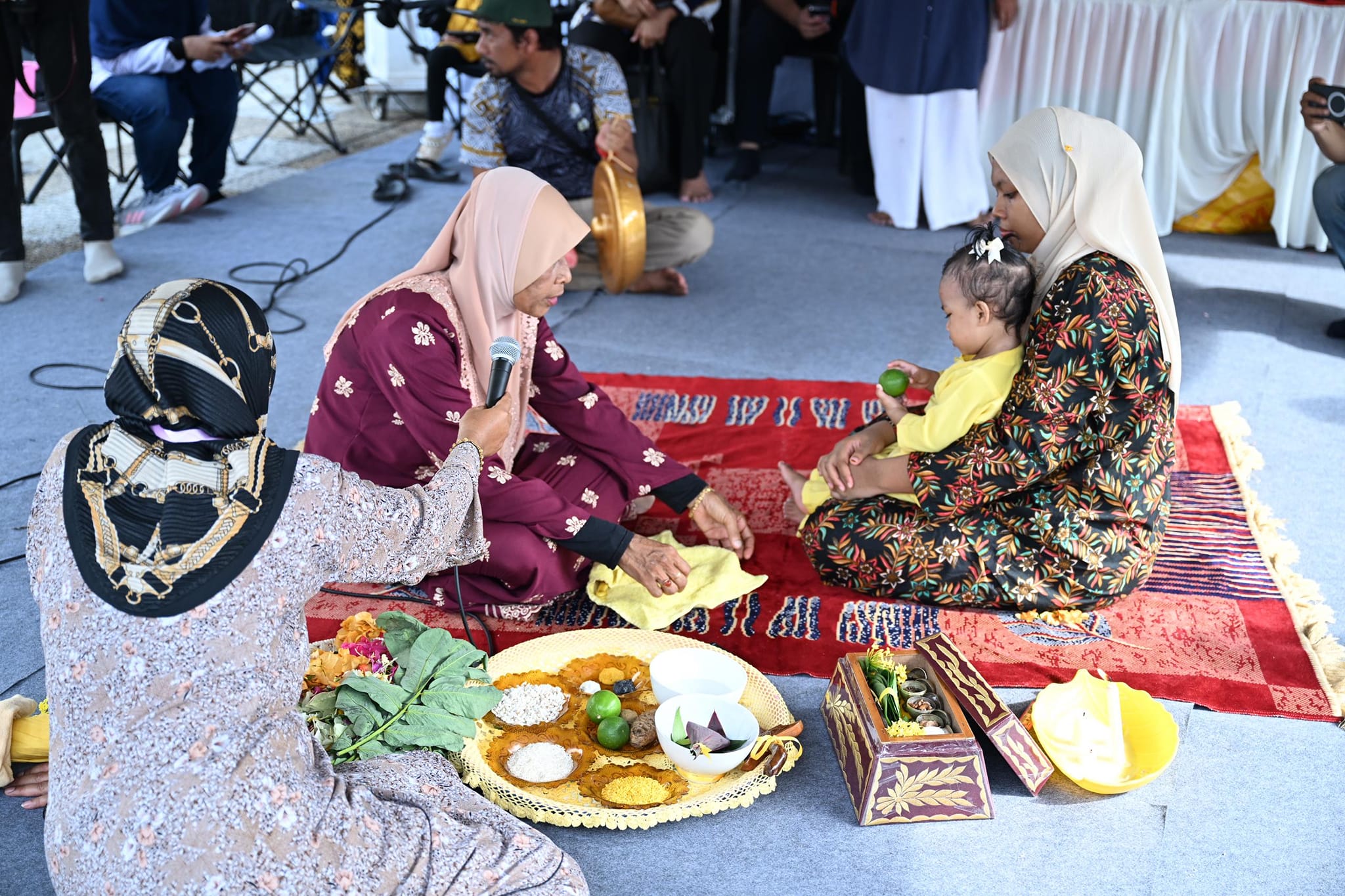
The implementation of the Berjojak custom requires the preparation of specific tools and materials. These are mandatory to ensure the ritual's validity and completeness. The infant's family must ensure that all necessary items are provided without any omission, as a lack of materials or tools would render the ritual invalid or incomplete. Below are the required tools and materials for the Berjojak ceremony:
Tools for Berjojak:
A small gong
A canopy (Lelangit)
A mat or carpet
A small tray with a yellow cloth covering
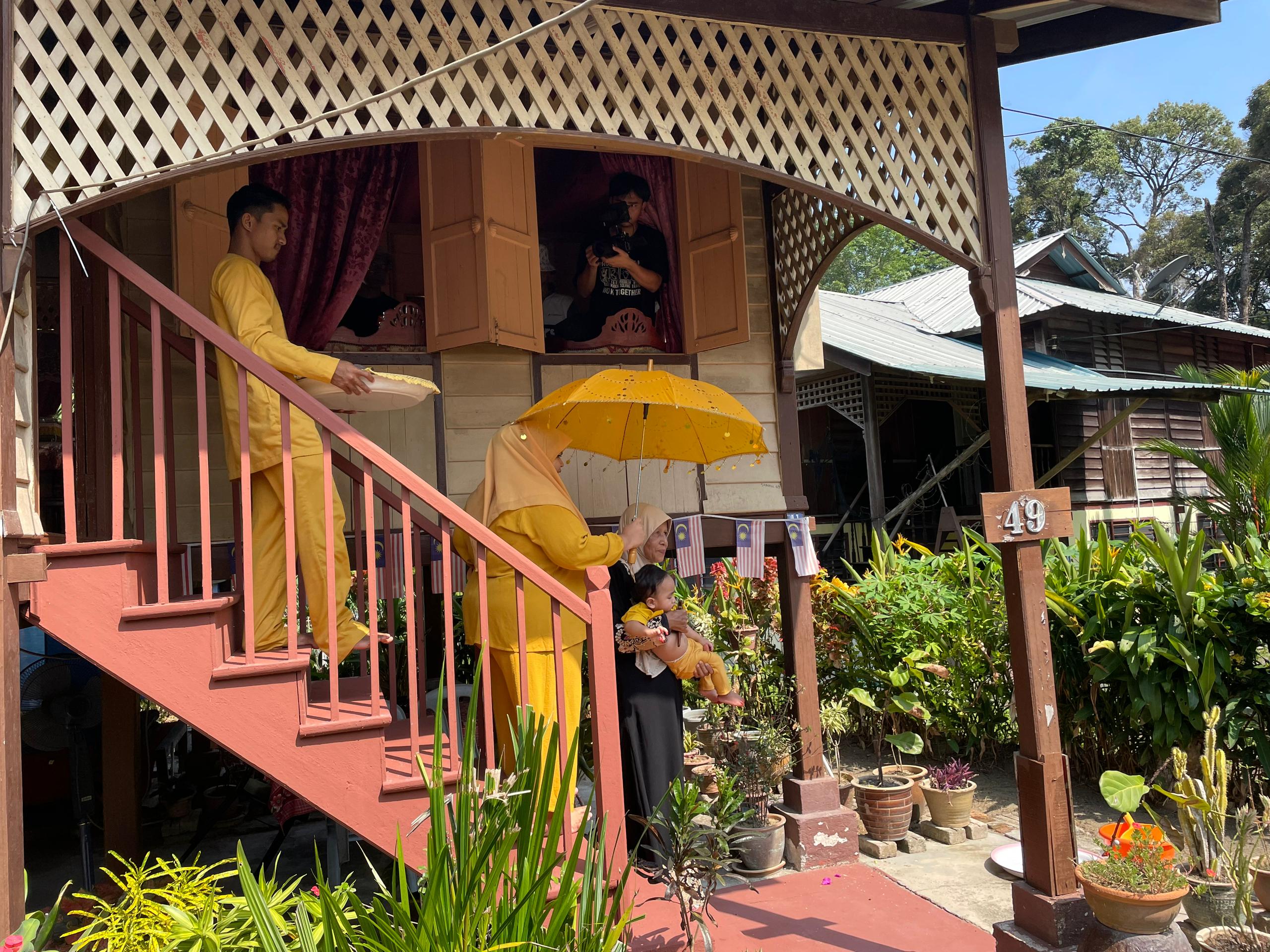
A black umbrella with yellow lace or fringes
Yellow attire for the child
A small bowl of water
Materials for Berjojak:
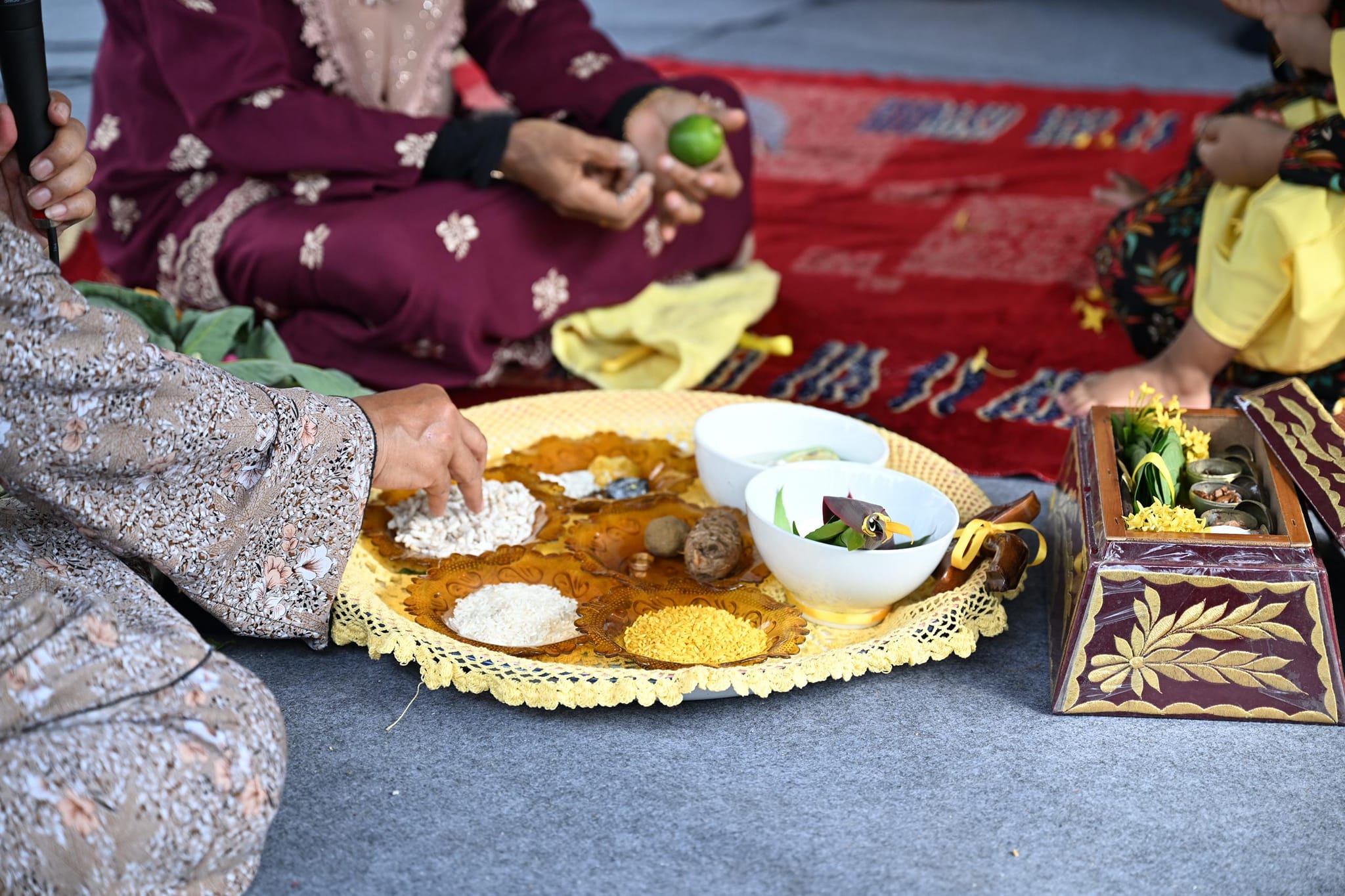
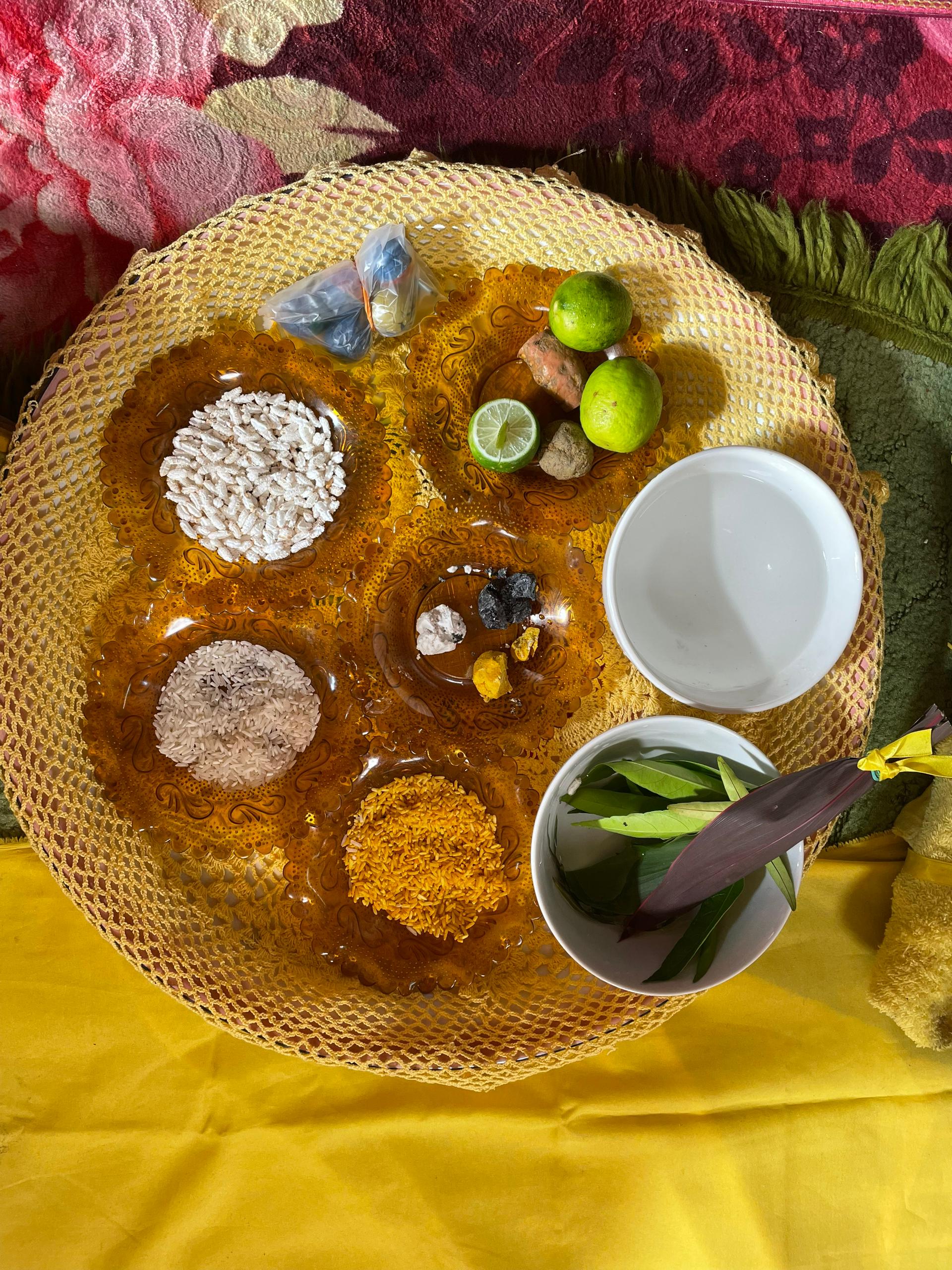
Seven types of flowers and leaves (e.g., Gelenggang, Senduduk, Semalu, Cempaka, Tanjung, and two other types of choice)
Rice
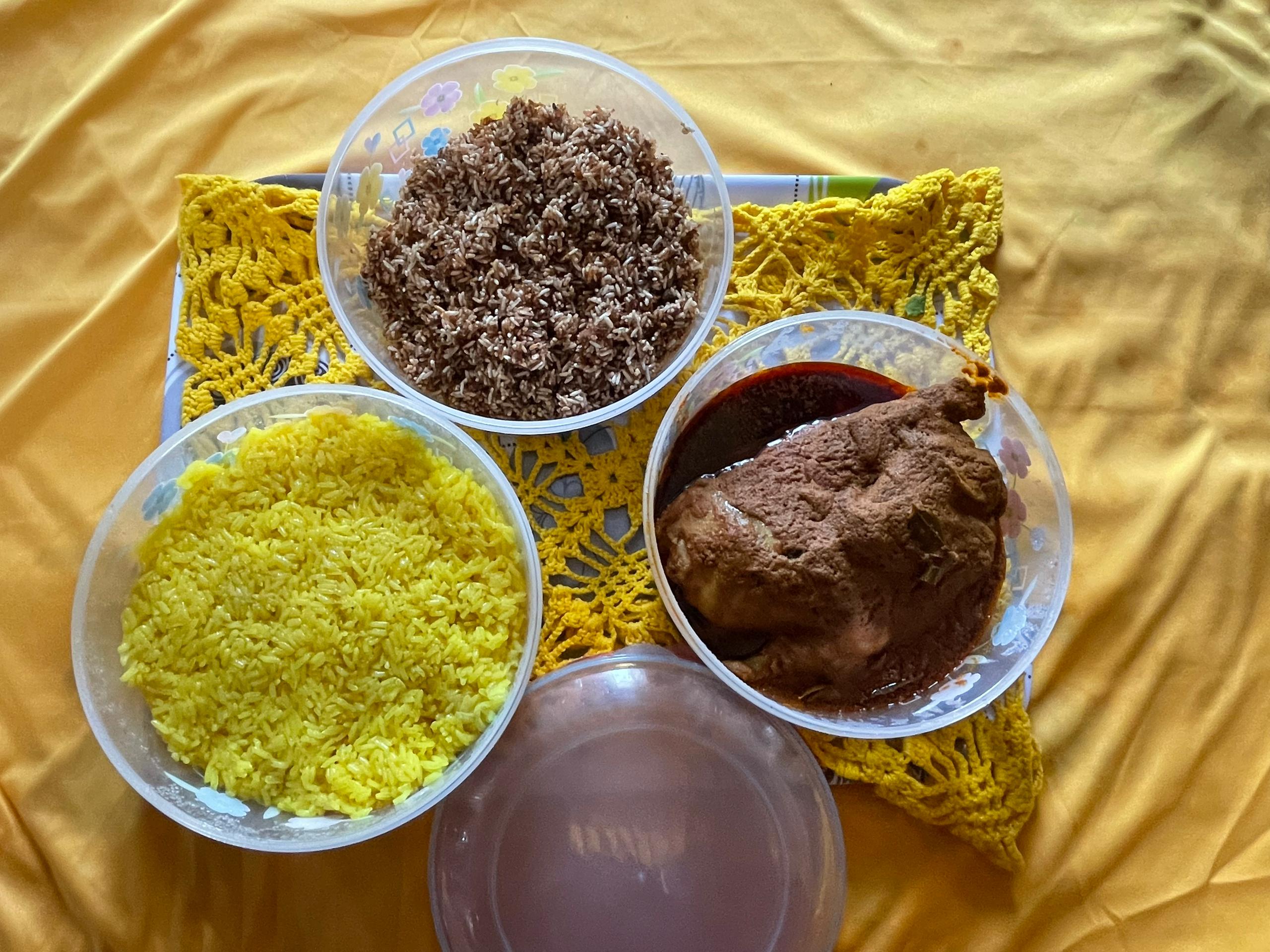
A small glass of turmeric rice (rice coated with turmeric powder)
A small glass of roasted rice (Beras Rendang)
A small glass of popped rice (Bertih)
Kasai (a type of traditional powder mixed to form three lumps in black, yellow, and white)
Black, yellow (clay), and white soil
Lime
Fresh turmeric root
A solid gold nugget (or, if unavailable, a Belah Rotan ring can be used)
A sheathed dagger, specifically for male infants
Sedingin leave and Sambau grass (are to be used as sprinklers)
The implementation of the Berjojak custom must be carried out meticulously, adhering to the conditions, rules, and steps that have been passed down through generations. This ceremony is typically conducted in the morning, beginning at dawn and continuing until sunrise, usually concluding between 9:00 and 10:00 AM. It is recommended that the ritual be performed on a Thursday or Friday, with the selected date falling between the 1st and 15th days of the Islamic calendar, to ensure blessings and align with the beliefs of the Rawa community. The ceremony is divided into three stages:
Stage One:
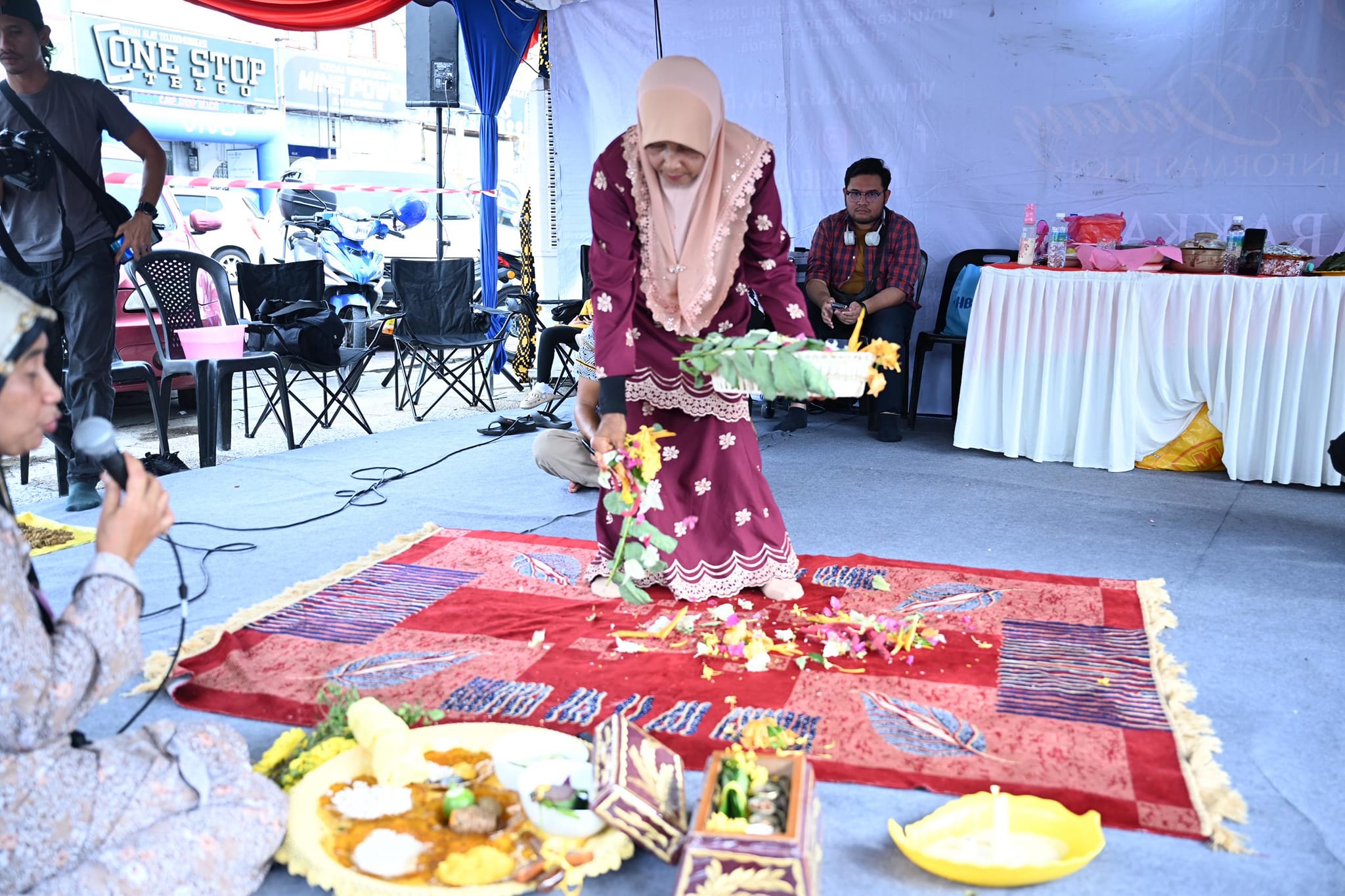
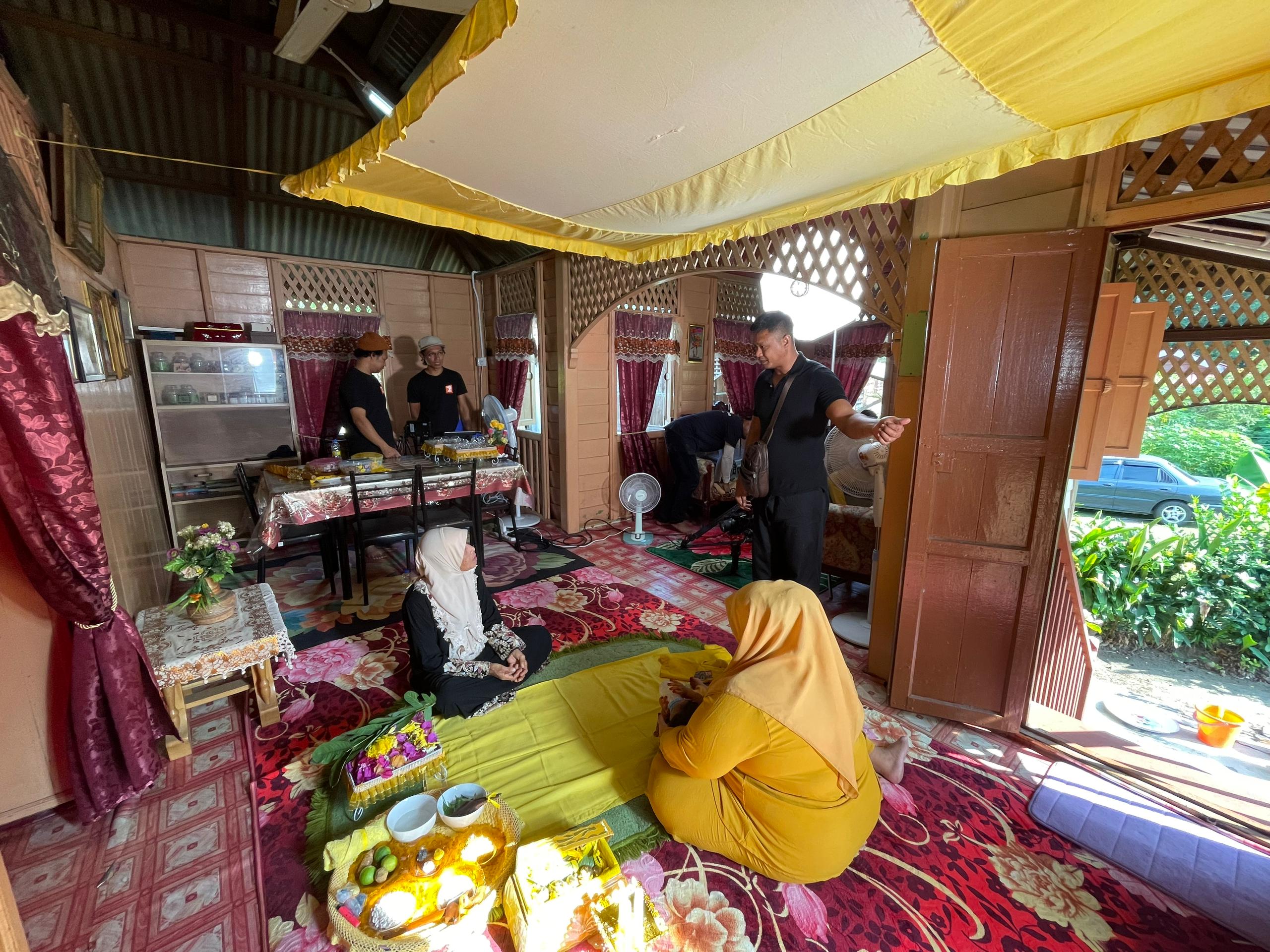
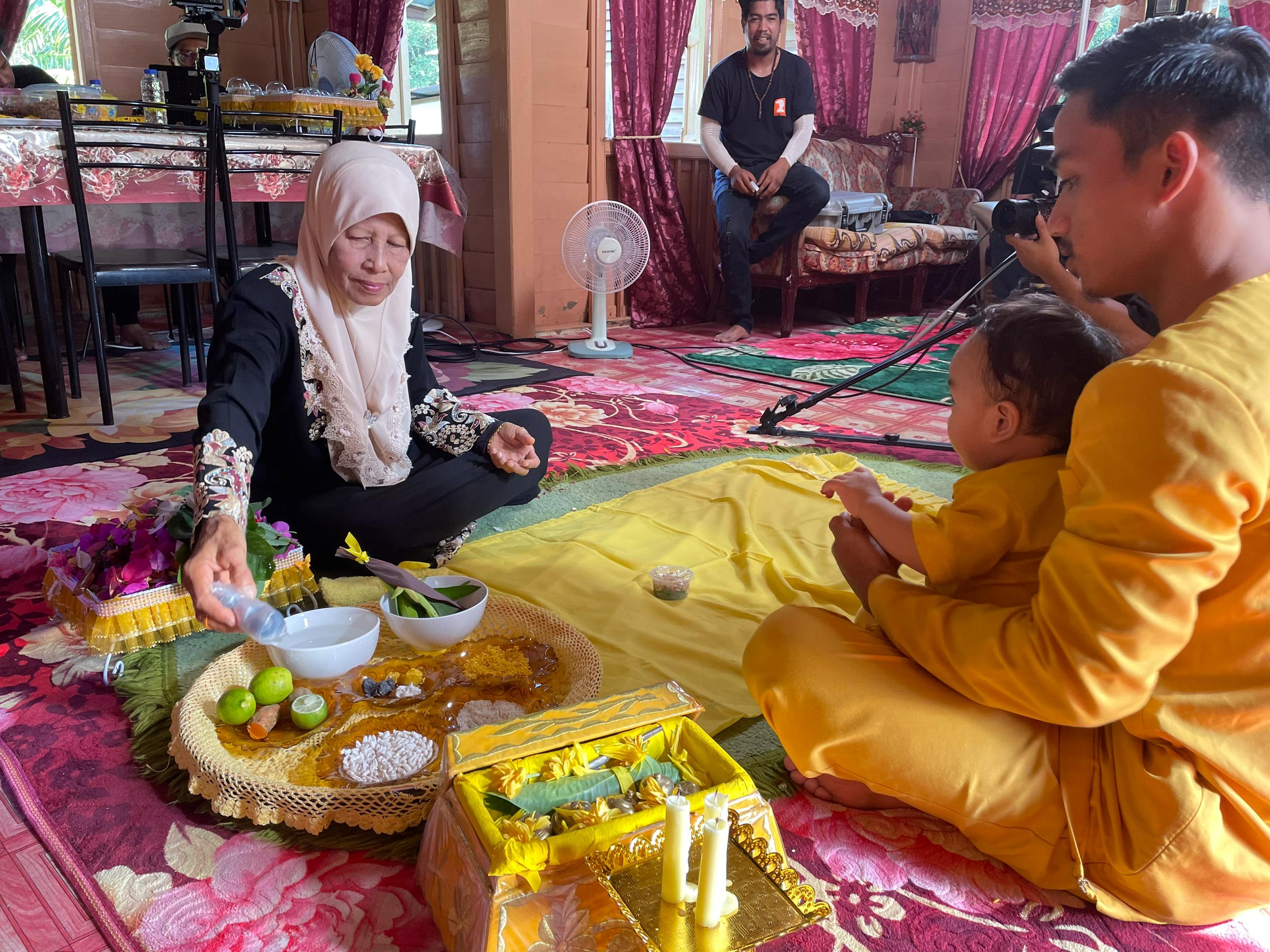
The ceremony begins with the child being dressed in yellow attire, symbolizing purity and blessings. The Tukang Jojak, the individual responsible for leading the ritual, is encouraged to perform ablution (wuduk) before starting. The ritual is conducted under a yellow canopy or cloth (lelangit), which is often replaced in modern times by a decorated canopy with yellow lace. Beneath the canopy, a mat or carpet is laid out and sprinkled with a mixture of seven types of flowers and leaves, along with ordinary rice, unsweetened roasted rice (beras rendang), turmeric rice, and popped rice.
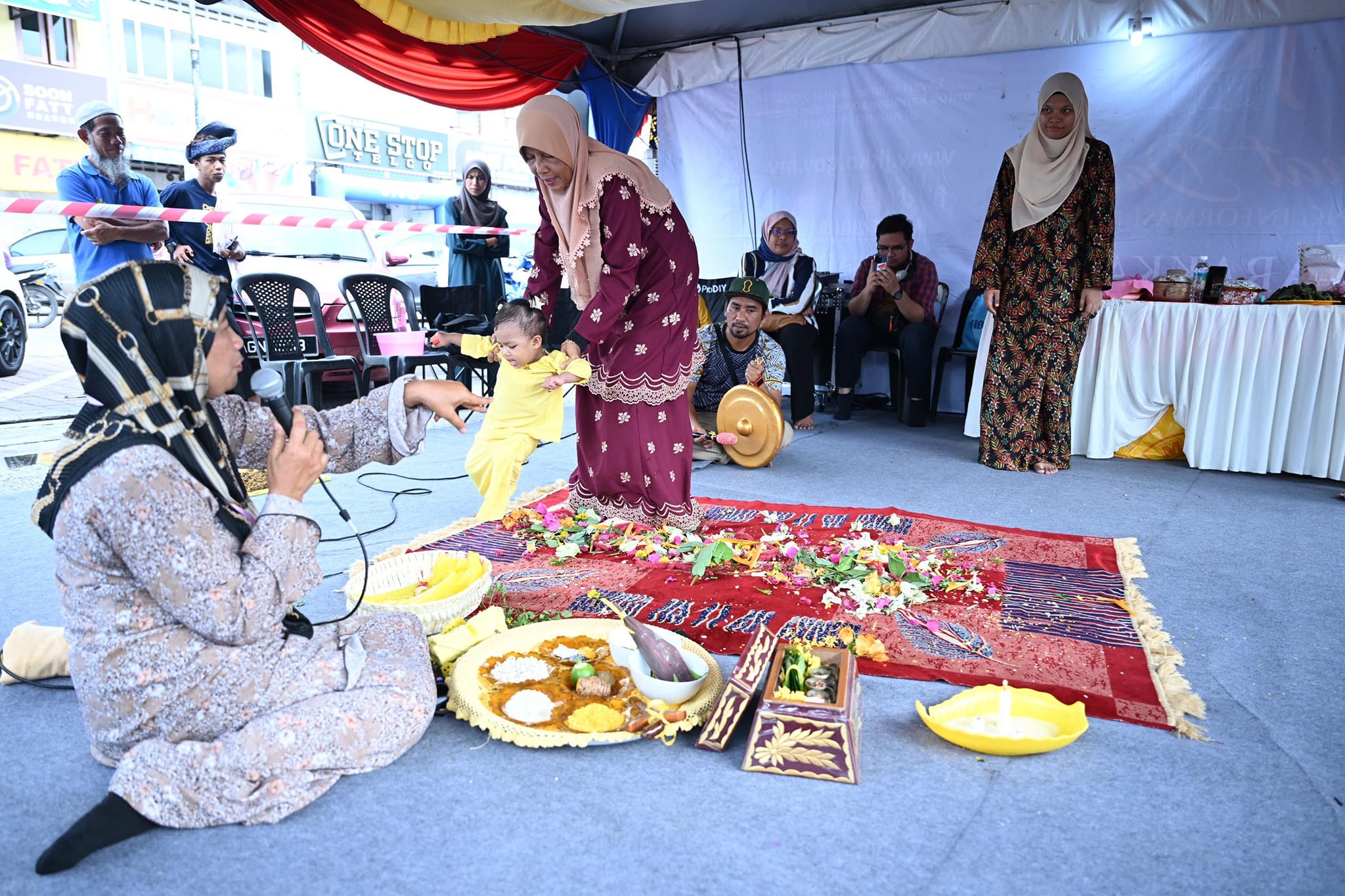
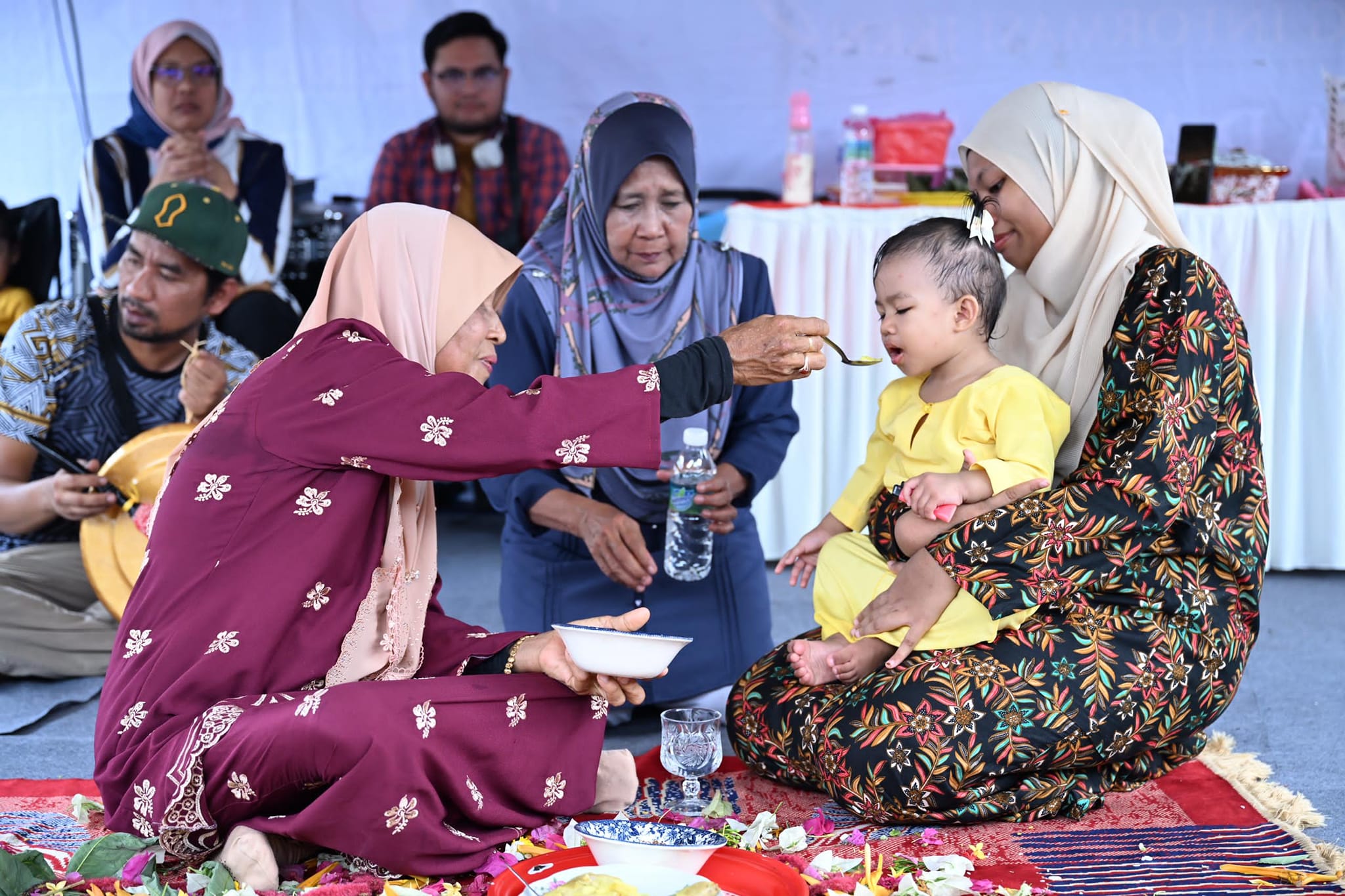
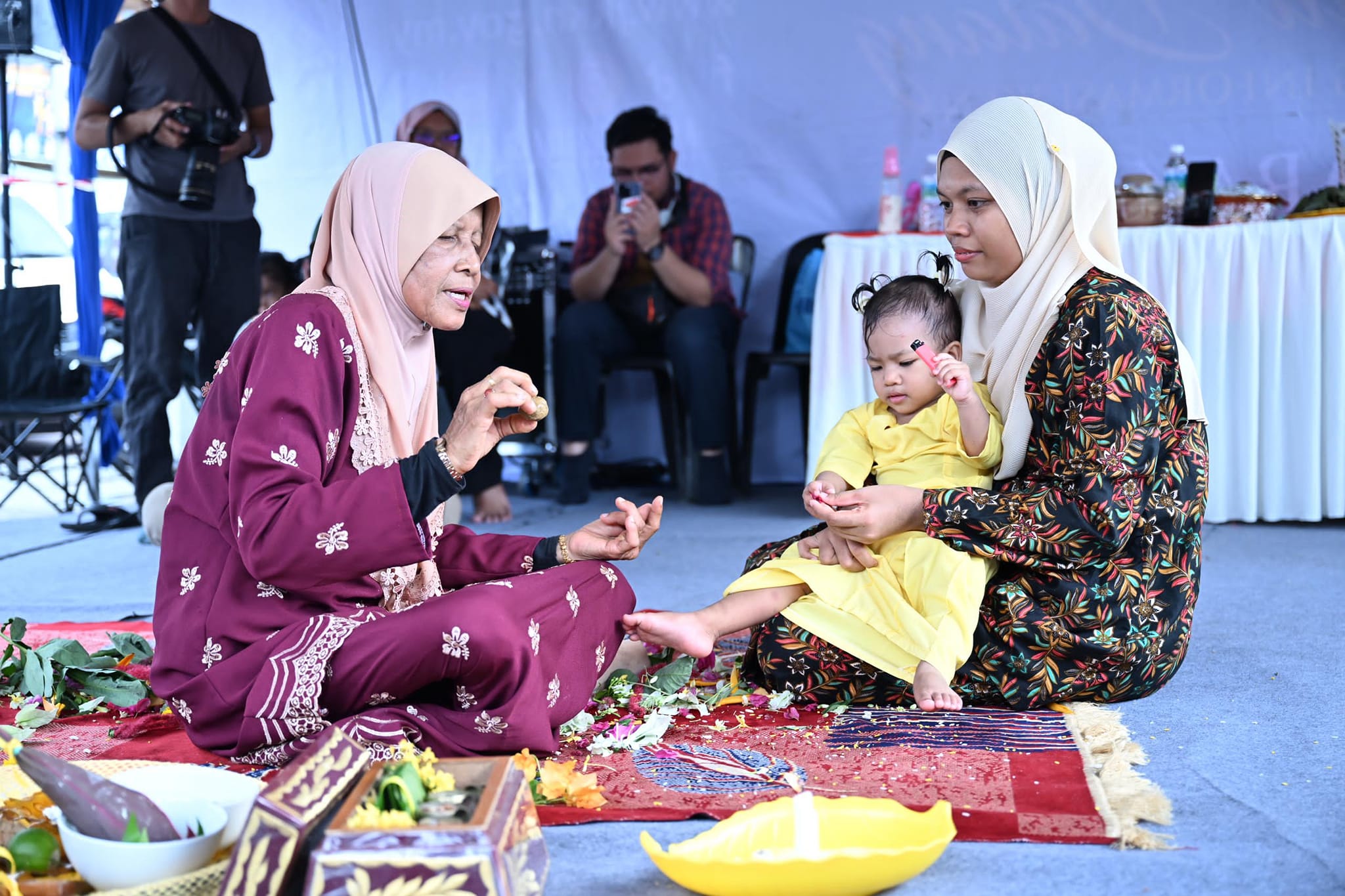
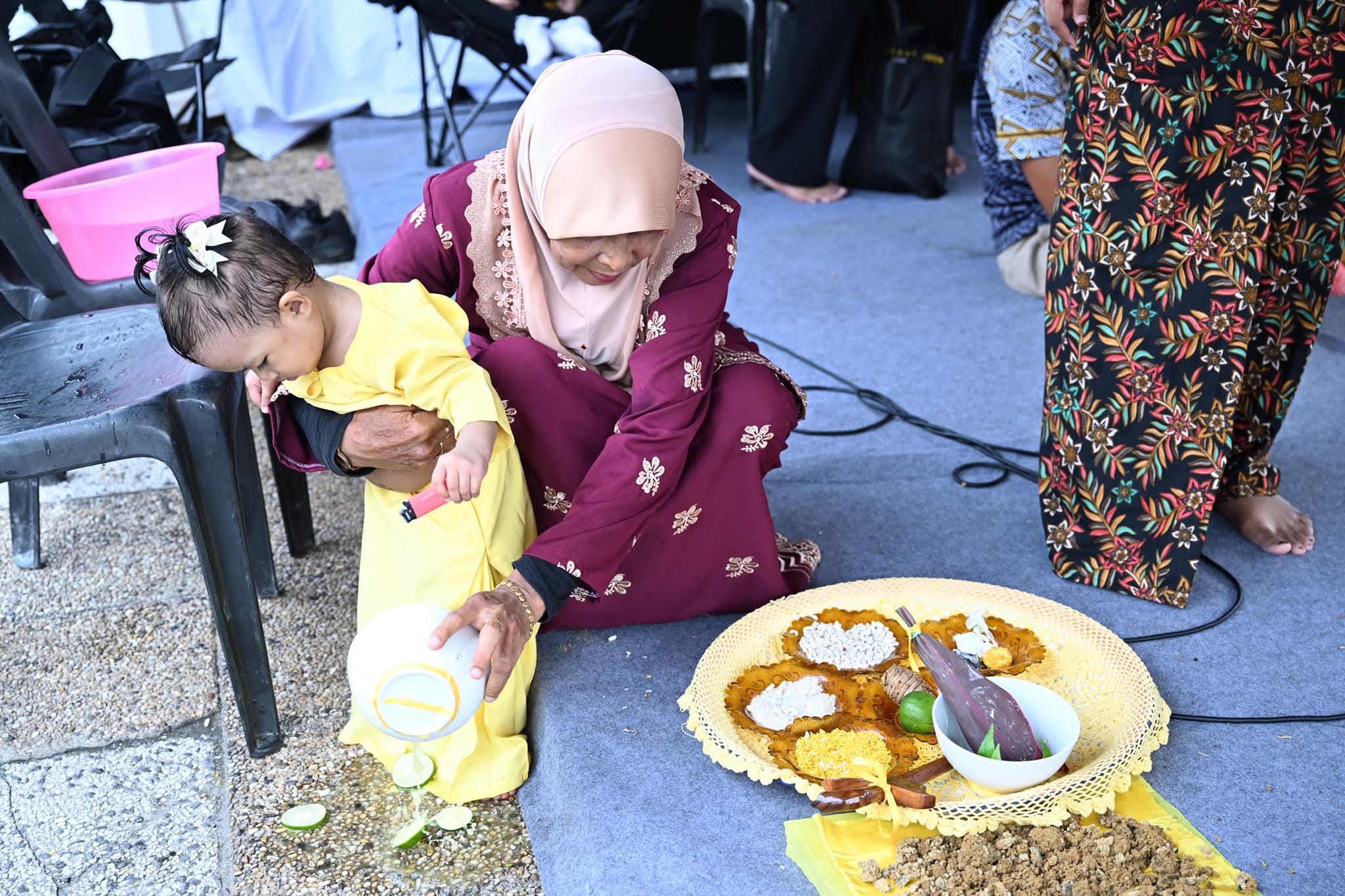
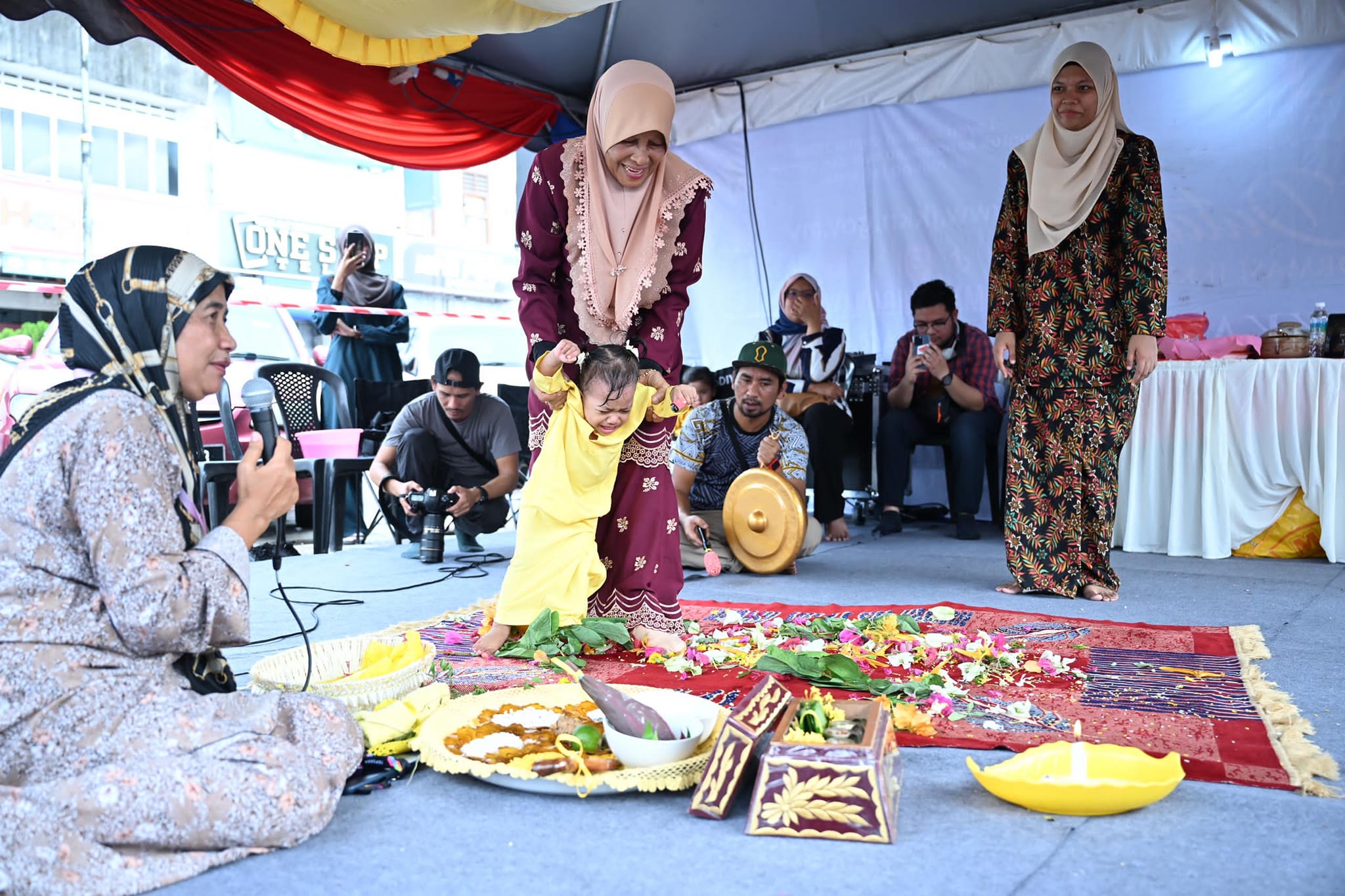
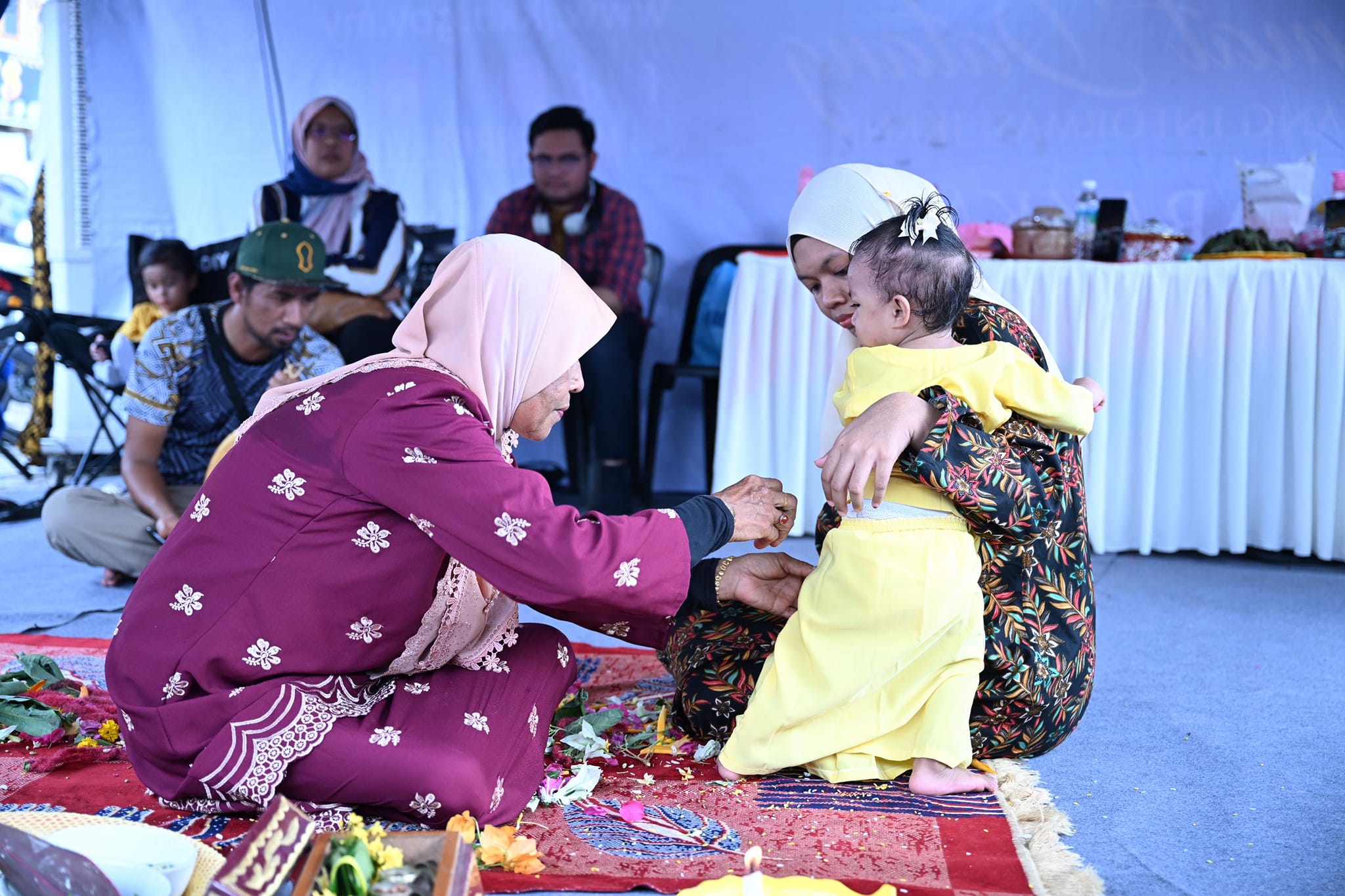
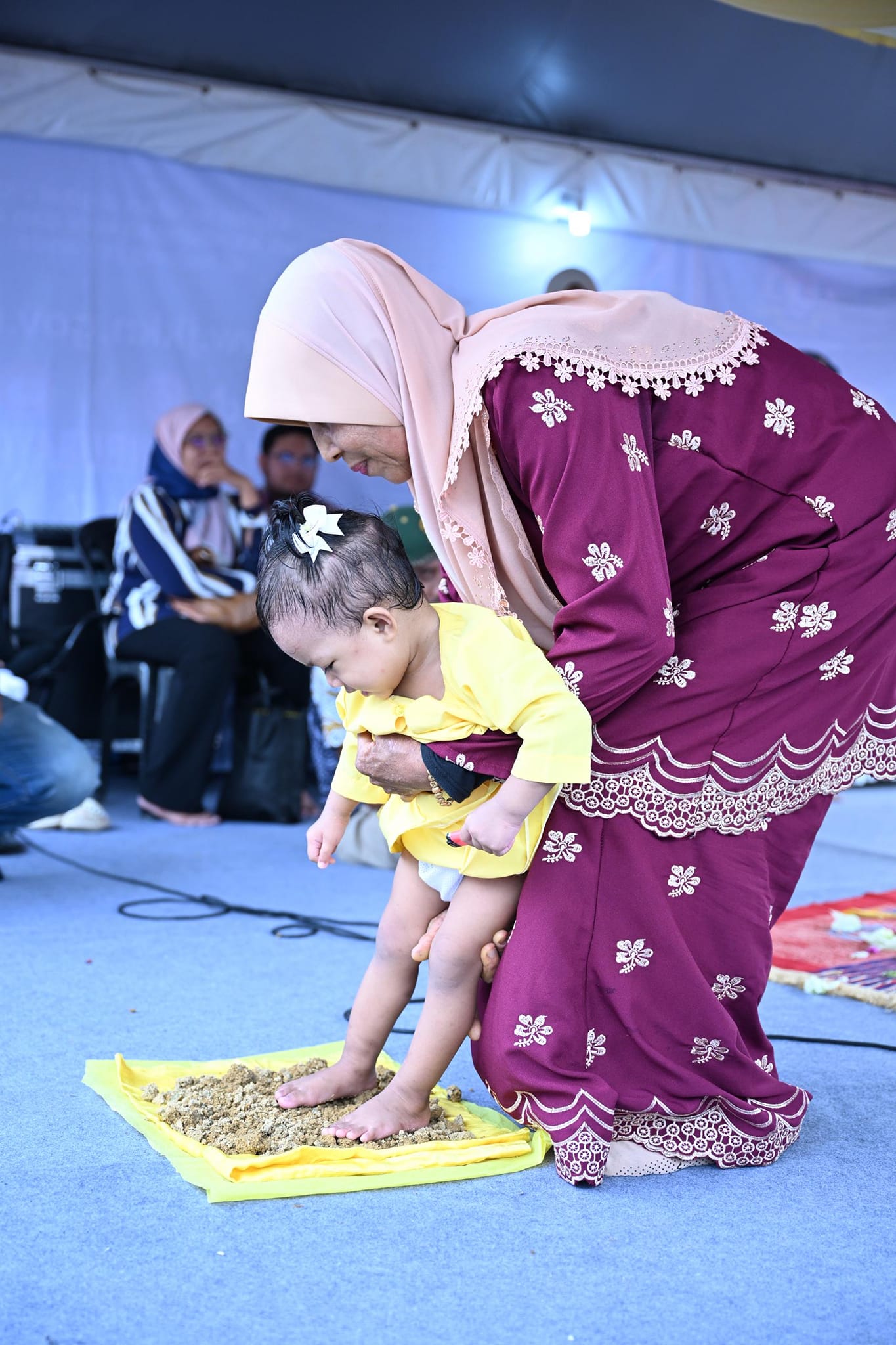
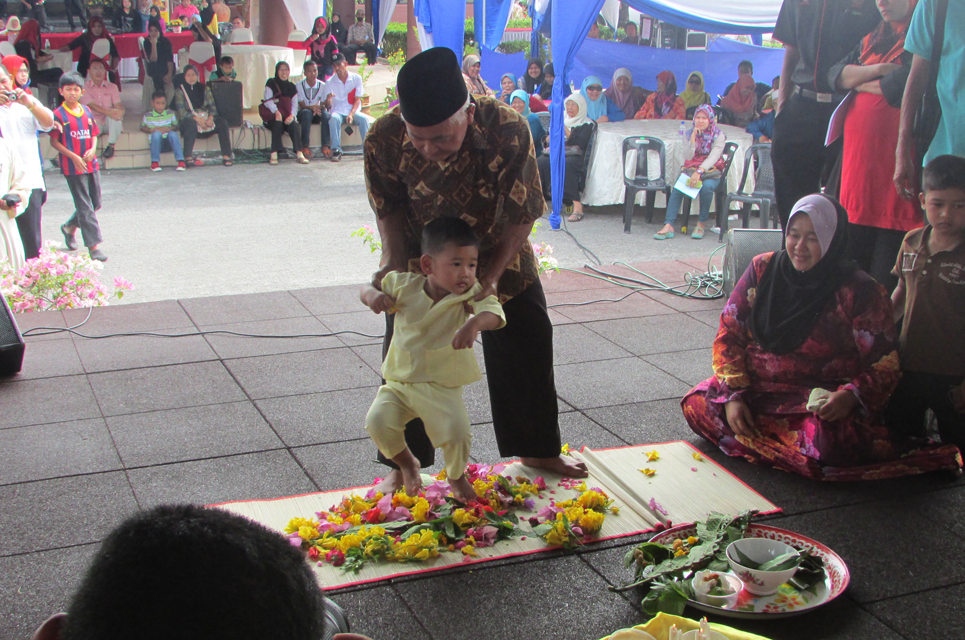
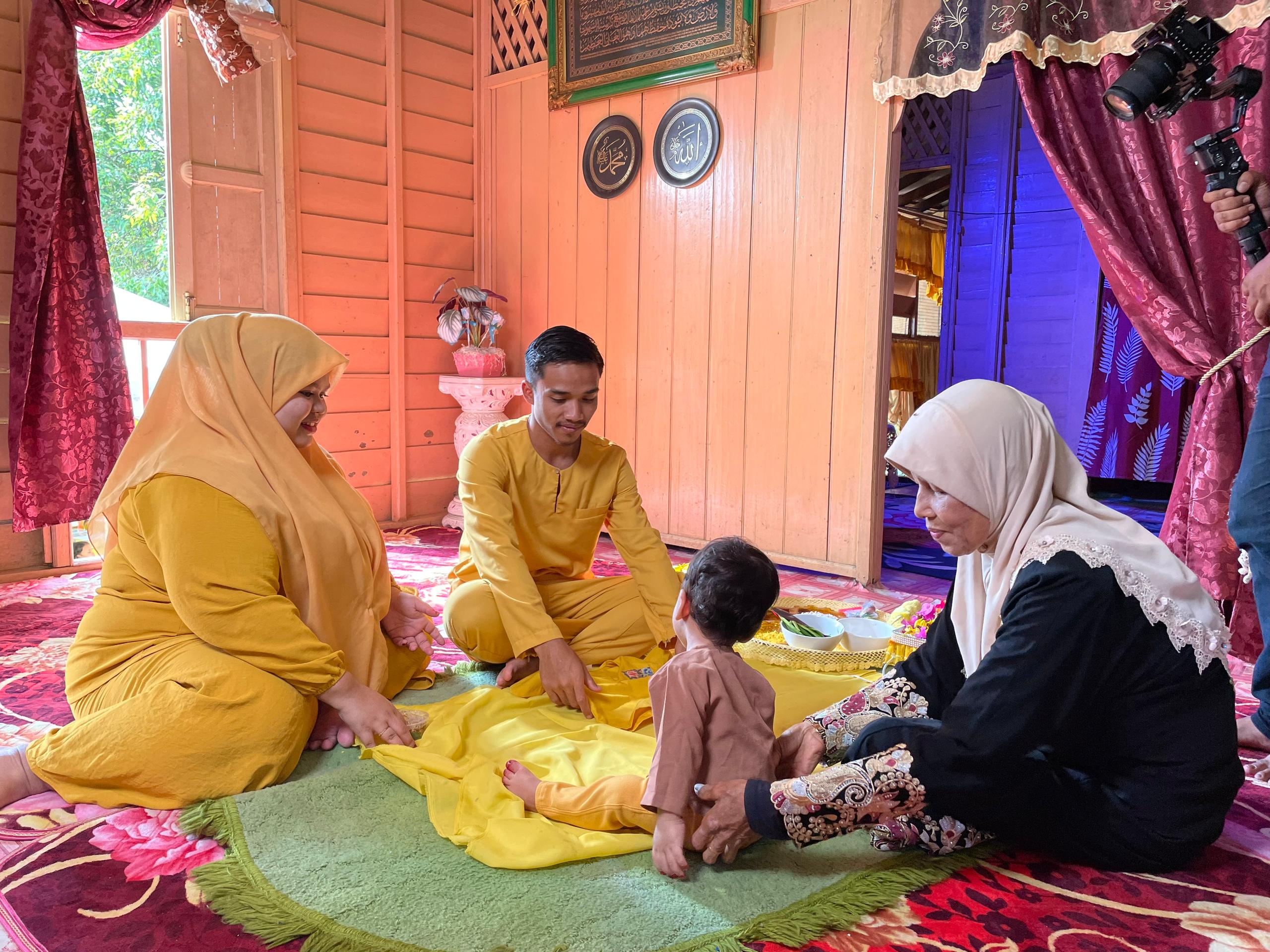
Next, both parents of the child sit at the edge of the mat to receive their child, who is guided by the Tukang Jojak to walk over the scattered Berjojak materials. Before this, the Tukang Jojak recites a prayer and applies black, yellow, and white soil onto the child’s forehead, chest, palms, and soles. Following this, water from a bowl mixed with Sedingin leaves and Sambau Grass is sprinkled over the flower-laden mat as a purification element.
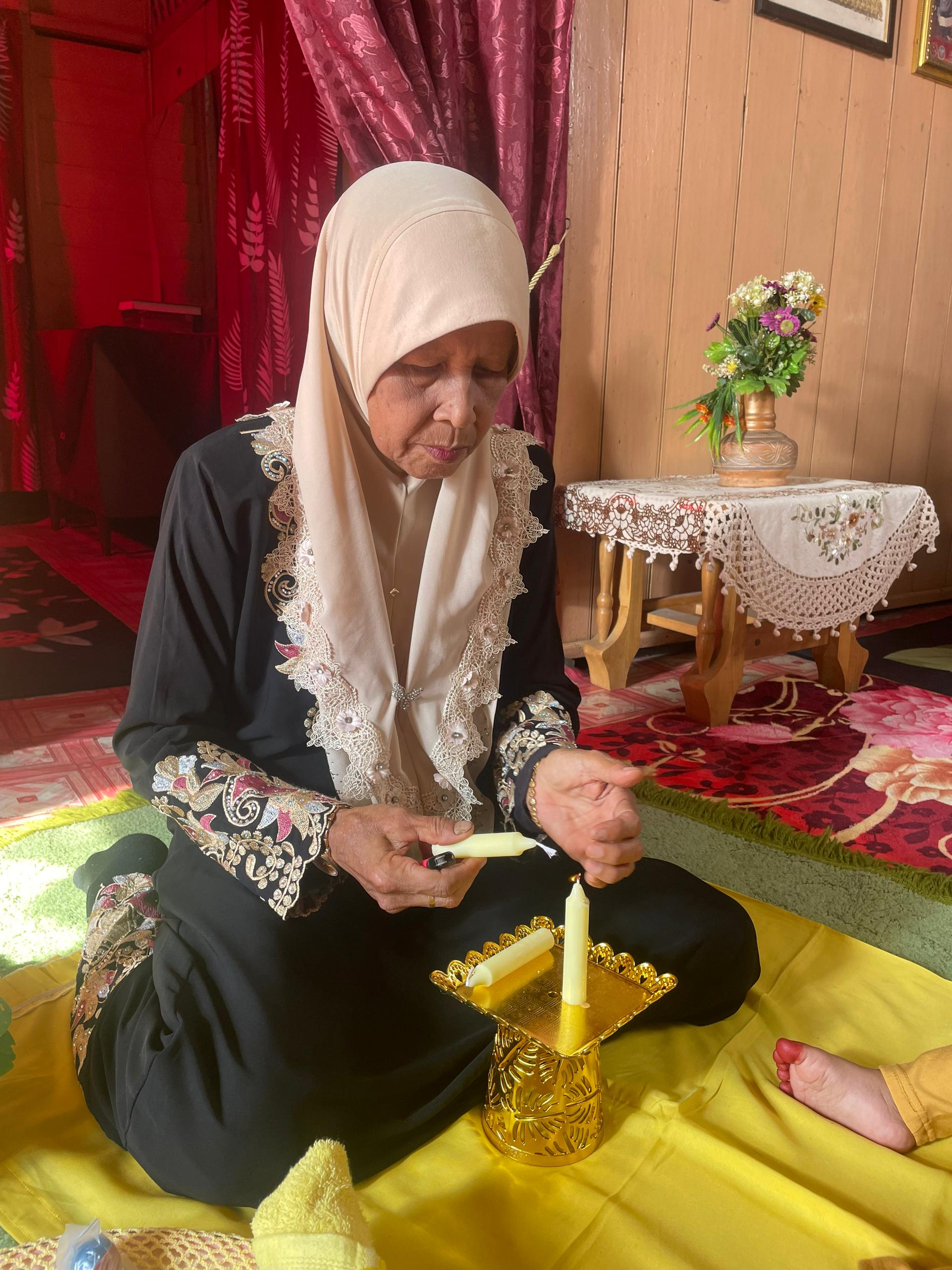
The child is guided to walk over the scattered flowers seven times while being introduced to three symbolic items: soil, gold, and a dagger (keris). These items are believed to represent the child’s potential future character traits. Simultaneously, a gong is struck softly, and Lepat Beras Rendang (steamed rice cakes) are distributed to guests as a gesture of gratitude.
Mr. Hj. Junid bin Hj. Baki
Mr. Hj. Dahalan bin Ismail
Reference Source
Bahan Bacaan
Ismail, Z. (2015). Adat berjojak dan pantang tanah masyarakat Rao di Malaysia.
Shurbaini, A. I. B. (2016). Conflict Resolution Between Heterogeneous Local Communities Involved In Rural Tourism In Gopeng, Perak (Doctoral Dissertation, Universiti Teknologi Malaysia).
Zabidin Hj. Ismail. (2015). Pantang Tanah & Adat Berjojak: Masyarakat Rao di Malaysia. Perpustakaan Negara Malaysia.
Tokoh (jika ada temu bual tokoh)
Tuan Hj. Junid bin Hj. Baki, Kampung Sungai Itek, 31600 Gopeng, Perak.
Tuan Hj. Dahalan bin Ismail, Kampung Batu Tiga, 35300 Temoh, Perak.
Location
State JKKN Contact Information
Encik Yufazli Yusof
Cultural Officer
Jabatan Kebudayaan dan Kesenian Negara Perak
Kompleks JKKN Perak,
Lot 20561@20565 Jalan Caldwell,
Off Jalan Raja Di Hilir,
30350 Ipoh,
PERAK DARUL RIDZUAN
05-253 7001 / 05-254 1027
Use the form below to contact the Informant/Figure/Editor/Researcher directly. We will respond to your inquiry as soon as possible!


