

ARTS AND CULTURE INFORMATION GATEWAY
Immerse yourself in the colorful world of art and culture! From traditional heritage to contemporary works, discover uniqueness that reflects the nation's identity and identity
LAKSA KUALA KANGSAR
 Kampung Setia, 33000 Kuala Kangsar, Perak Darul Ridzuan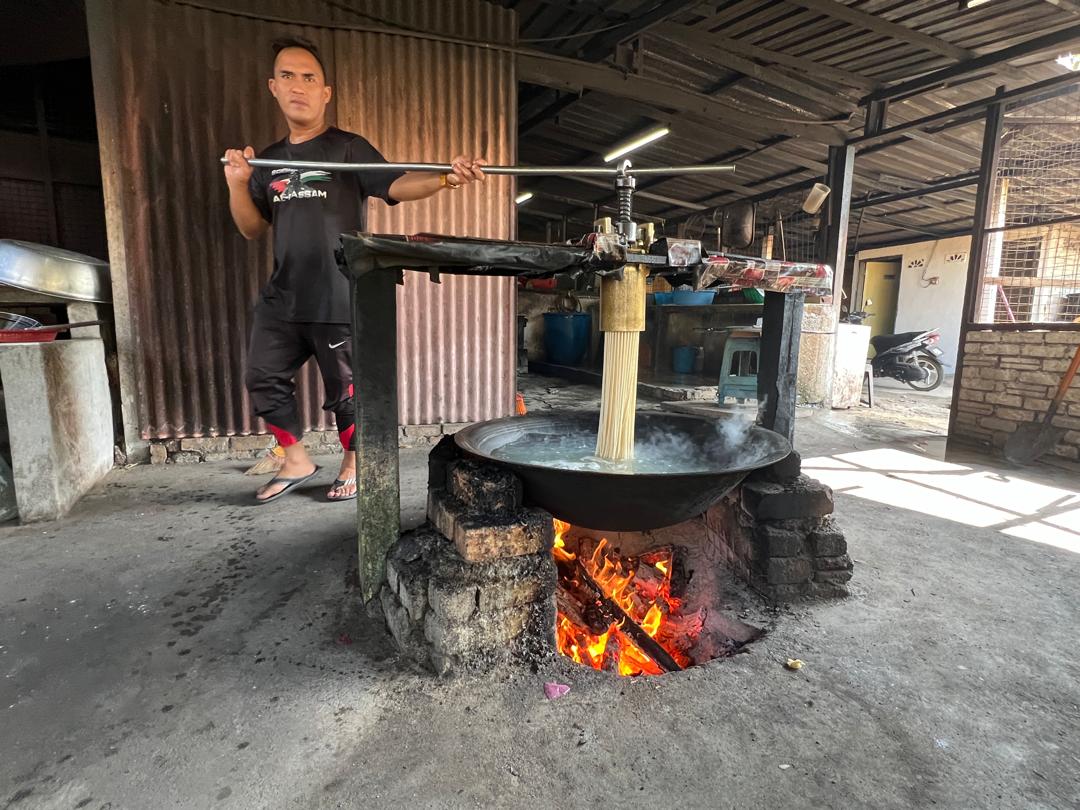
Picture
2
Video
Available
Today's Visitor
4
Number of Visitors
3139
Introduction and history
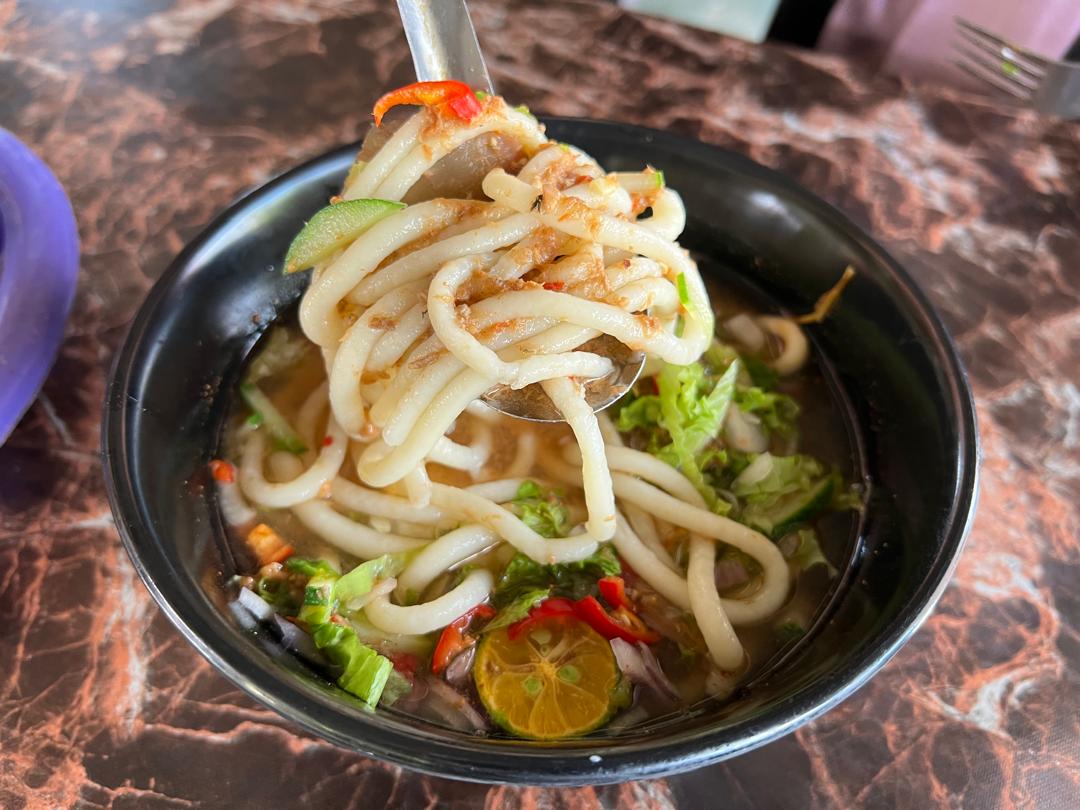
Laksa Kuala Kangsar is a traditional dish synonymous with the royal town of Kuala Kangsar in Perak. This dish is renowned for its light yet aromatic gravy, prepared using traditional ingredients passed down through generations. It is a favourite among locals and a major attraction for tourists visiting the town.
The uniqueness of Laksa Kuala Kangsar lies in its noodles, which are made from wheat flour and crafted using traditional methods with a distinctive laksa mold. They are then cooked over a wood-fired stove. Paired with gravy made from fresh fish, such as mackerel or sardines, they offer an authentic taste that continues to captivate its enthusiasts.
The history of Laksa Kuala Kangsar is believed to trace its origins to the Malay community in the area, where it was traditionally prepared as a local dish. Renowned as a royal town, Kuala Kangsar has long served as a hub for trade and a convenient stopover point, making laksa an ideal meal for locals and visitors. Over time, this dish evolved into a culinary icon that embodies the cultural identity of Kuala Kangsar and the state of Perak.
Today, Laksa Kuala Kangsar is widely available at food stalls throughout the town, particularly along the Perak River and in the old town area. This dish symbolises the culinary heritage of the Perak community and acts as a bridge connecting tradition and taste across generations. Consequently, Laksa Kuala Kangsar is recognised as one of the most distinctive symbols of Perak's cuisine, cherished by locals and tourists.
Laksa Kuala Kangsar is one of the most iconic dishes of Perak, celebrated not only for its unique taste but also for its close connection to the daily lives of the local community. In general, this dish functions as a beloved everyday meal enjoyed by people from all walks of life. It is often eaten at lunch or in the late afternoon, as its thick, spiced, and slightly tangy broth makes it both satisfying and suitable for any time of the day.
Beyond being a daily meal, Laksa Kuala Kangsar also plays a role as a special dish for guests during communal events. Whether it is a wedding, a Thanksgiving feast, or festive celebrations, this dish is often included as one of the main menu items. Its popularity stems from the fact that it is not difficult to prepare, the ingredients are easily accessible, and its taste appeals to many. Moreover, it can be prepared in large quantities, making it ideal for gatherings and shared dining experiences.
Laksa Kuala Kangsar also functions as a culinary identity of Perak, particularly in the royal town of Kuala Kangsar, where it originated. It reflects the unique palate of the local community and serves as a culinary attraction for visitors. More than just food, it acts as a cultural ambassador, introducing the traditions and lifestyle of the Perak people to outsiders through taste and shared dining.
In addition to its cultural and social significance, Laksa Kuala Kangsar plays an important economic role. Many small vendors and hawkers have made it their signature product, especially in tourist areas and night markets. Its ability to attract both locals and visitors has turned it into a valuable source of income for the community. Thus, Laksa Kuala Kangsar is not only a culinary heritage but also an economic asset that contributes to the sustainability of Perak’s local economy.
-
Main Ingredients:
1kg wheat flour laksa noodles
6 mackerel fish (blended)
5 dried chilies (blended)
3 garlic cloves (blended)
20gm Vietnamese coriander
20gm mint leaves (optional)
1 torch ginger flower
5 pieces of dried tamarind slices
Salt
Seasoning powder
1 litre of water
Garnish Ingredients:
Sliced onions, as needed
Bird’s eye chillies, as needed
Cucumber, as needed
In a pot, boil the mackerel with dried tamarind slices and enough water to cover the fish. Cook for approximately 10 minutes or until the fish is fully cooked. Allow it to cool.
Separate the fish meat from the bones, reserving the boiling water and tamarind slices.
Blend the fish meat finely with the reserved boiling water until smooth. In a separate step, blend the fish bones until finely ground, then strain the mixture to remove solids.
Add all the blended ingredients, including the Vietnamese coriander, torch ginger flower, and tamarind slices, to a pot.
Once the laksa gravy begins to boil, add salt and seasoning powder to taste, then let it simmer for a few minutes.
Optionally, add mint leaves to the dish while cooking or use them as a garnish.
Place the laksa noodles and garnishes on a plate. Pour the gravy over the noodles, and the dish is ready to serve.
-
Reference Source
Bahan Bacaan
Nugroho, A. H. (2023). Acculturation of Peranakan Culture in The Diversity of Laksa Menu in Southeast Asia. International Review of Humanities Studies, 7(2), 18.
Porusia, M., Sapavi, N. A. M., & Shaifuddin, S. N. M. (2023). Knowledge and Attitudes of Food Safety and Its Associated Factors Among Street Food Consumers in Kuala Kangsar, Perak, Malaysia. Journal of Health and Translational Medicine (JUMMEC), 333-341.
Informan
Puan Khatijah binti Yaakup, Kampung Setia, 33000 Kuala Kangsar, Perak Darul Ridzuan.

Location
State JKKN Contact Information
Encik Yufazli Yusof
Cultural Officer
Jabatan Kebudayaan dan Kesenian Negara Perak
Kompleks JKKN Perak,
Lot 20561@20565 Jalan Caldwell,
Off Jalan Raja Di Hilir,
30350 Ipoh,
PERAK DARUL RIDZUAN
05-253 7001 / 05-254 1027
Use the form below to contact the Informant/Figure/Editor/Researcher directly. We will respond to your inquiry as soon as possible!


