

ARTS AND CULTURE INFORMATION GATEWAY
Immerse yourself in the colorful world of art and culture! From traditional heritage to contemporary works, discover uniqueness that reflects the nation's identity and identity
KUIH CHANG NYONYA
 -
-
Picture
1
Video
No record
Today's Visitor
19
Number of Visitors
1013
Introduction and history
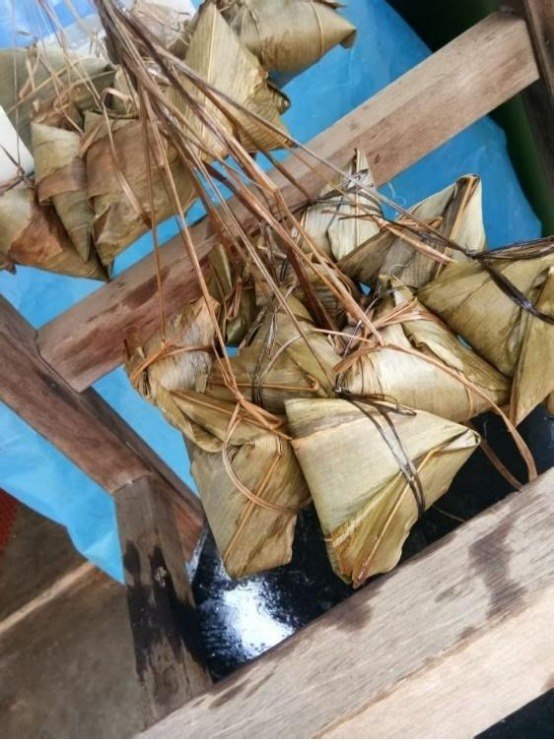
- Nyonya Kuih Chang, also known as Bak Chang (with the term bak meaning “meat”), is an iconic traditional food of the Peranakan Baba Nyonya community. This dish represents a unique adaptation by the Baba Nyonya of the Chinese bak chang, which is traditionally consumed during the Duanwu Festival or Dragon Boat Festival, a celebration that has existed for over 2,000 years in China to commemorate the poet Qu Yuan.
- The arrival of Chinese immigrants in the Malay Peninsula between the 15th and 19th centuries introduced various cultural practices, including the making of chang. Through a gradual process of cultural adaptation in regions such as Melaka and Penang, the Baba Nyonya community began modifying the traditional chang to suit local tastes, particularly by incorporating Malay culinary elements and spices from the Nusantara region. This evolution eventually gave rise to the Nyonya Chang, a variation that not only differs significantly from the Chinese version but also embodies the distinctive identity of the Peranakan community.
- Although based on the concept of Chinese chang, the Nyonya version distinguishes itself through its unique flavours and ingredients. Unlike the Chinese chang, which is typically savoury, the Nyonya Chang offers a more complex combination of sweet, spicy, and umami notes; reflecting the characteristic fusion of Southern and Southeast Asian influences found in Peranakan cuisine.
- Its filling is made from meat, mushrooms, and winter melon, cooked with spices such as coriander and key flavouring agents like taucu (fermented soybean paste). One of the most striking features of the Nyonya Chang is the vibrant blue colour of part of the glutinous rice, derived from the natural extract of butterfly pea flowers—an ingredient commonly used in traditional Peranakan cooking.
- Nyonya Kuih Chang is a perfect example of cultural acculturation. It uses the shape, concept (glutinous rice with filling), and wrapper (bamboo leaves) from Chinese tradition, but fills it with flavors heavily influenced by local and Malay ingredients (like the butterfly pea flower, coriander, and a sweet-spicy taste).
- Its main function is as a symbol of celebration. It is served by the Peranakan community during the Dragon Boat Festival, allowing them to maintain the tradition of eating chang, but with their own distinct flavor identity. Although its preparation process is rather complicated, it is in very high demand due to its unique texture and taste. Nowadays, it is not only enjoyed by the Baba Nyonya community as a breakfast item but also by various races in Malaysia.
-
Glutinous rice
Chicken meat (minced)
Shiitake mushrooms
Candied winter melon
Dried bamboo leaves (for wrapping)
String (for tying)
Butterfly pea flower water (for coloring the rice)
Pandan leaves
Flavoring Ingredients (for filling):
Shallots
Garlic
Tauchu (Fermented soybean paste)
Coriander powder
Dark soy sauce
White pepper
Salt
Preparation
Dried bamboo leaves must be soaked overnight. They are then boiled to soften them and make them easy to shape during wrapping.
Glutinous rice is soaked (often, a portion is mixed with butterfly pea flower water to get the blue color).
This glutinous rice is then pre-steamed partially.
The flavoring ingredients are sautéed until fragrant.
Add the chicken, mushrooms, and candied winter melon, and cook until combined and the filling is thick.
The bamboo leaf is formed into a cone, filled with glutinous rice, followed by the filling, and covered again with glutinous rice before being wrapped tightly with string.
The tied kuih chang is then boiled in a large amount of water for three to four hours until the glutinous rice and filling are fully cooked.
Variation (Kee Chang): There is also a plain (no filling) version called Kee Chang or 'Kuih Chang Abu' because it is cooked using lye water, which gives it a chewy texture and yellowish color. Kee Chang is delicious when eaten dipped in granulated sugar or drizzled with gula melaka syrup.
-
Reference Source
Bahan Bacaan
MyKitchen101en.com. (n.d.). Nyonya Chang (Nyonya Glutinous Rice Dumplings). Diakses pada 1 November 2025, daripada https://mykitchen101en.com/nyonya-chang-nyonya-glutinous-rice-dumplings/
Zhang, C. (2023, 22 Jun). “粽”香飘海外:“中国节”里的文化新意 [Wangian "Zong" tersebar ke luar negara: Makna budaya baharu dalam "Perayaan Cina"]. Xinhuanet. http://www.news.cn/world/2023-06/22/c_1129712249.htm
Informan
Hairul Asraf bin Abu Hussain (Usahawan Perusahaan Kuih Chang Halal). No. 18, Jalan Duku 5, Taman Rumpun Bahagia, 75300 Bachang, Melaka. (+60 16-711 9894)
Nyonya Chang (East & West Rendezvous). 52, Lorong Hang Jebat, 75200 Melaka. (+60 16-624 9667)
Location
State JKKN Contact Information
Nur Al-Farani binti Rosli
Cultural Officer
Jabatan Kebudayaan dan Kesenian Negara, Melaka
Kompleks JKKN Melaka
Hang Tuah Jaya, Lebuh Ayer Keroh,
75450 MELAKA
06 - 763 6308
Use the form below to contact the Informant/Figure/Editor/Researcher directly. We will respond to your inquiry as soon as possible!


