

ARTS AND CULTURE INFORMATION GATEWAY
Immerse yourself in the colorful world of art and culture! From traditional heritage to contemporary works, discover uniqueness that reflects the nation's identity and identity
PAKAIAN TRADISIONAL ETNIK LUNDAYEH SABAH LELAKI & PEREMPUAN
 Fakulti Muzik dan Seni Persembahan, Universiti Pendidikan Sultan Idris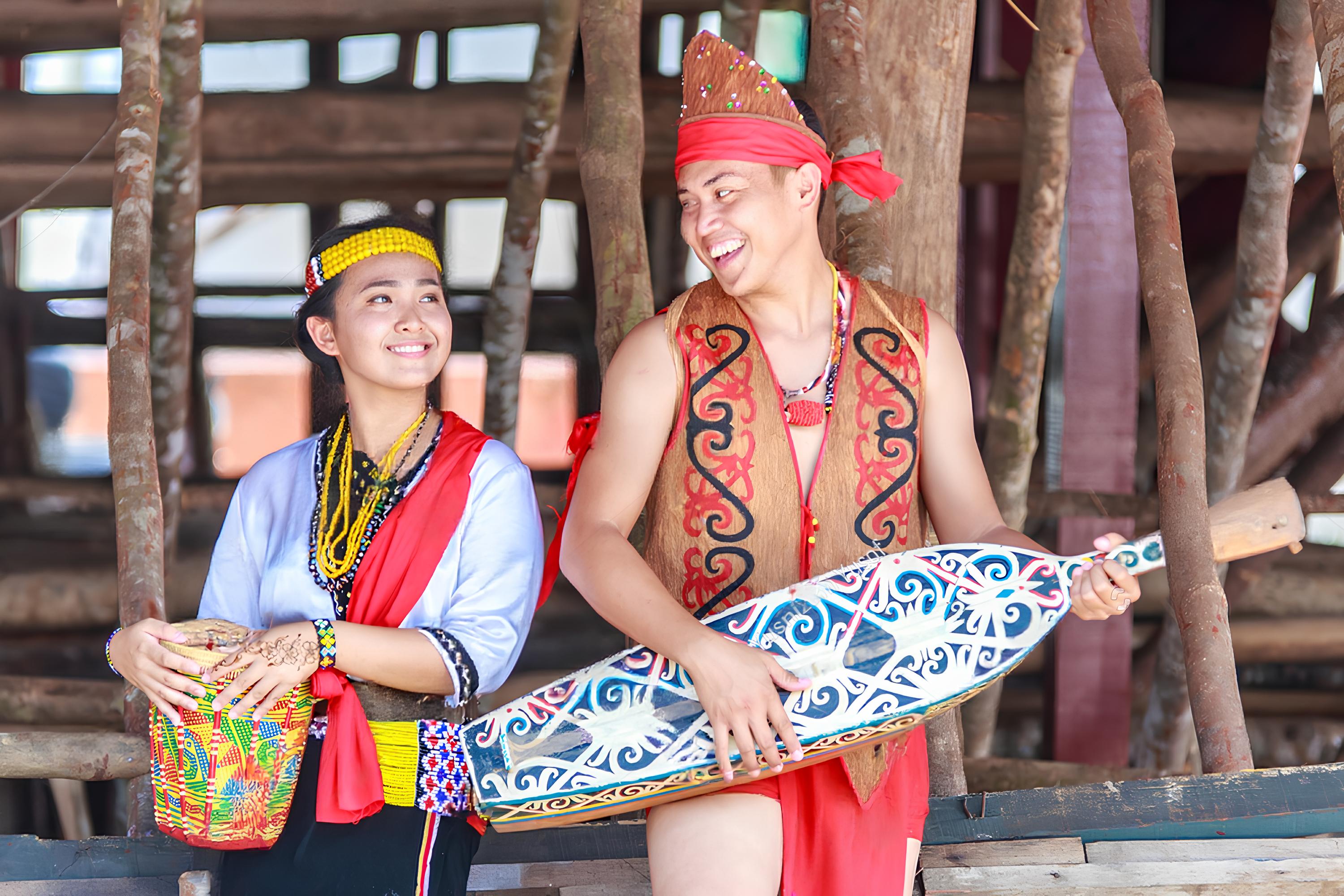
Picture
5
Video
No record
Today's Visitor
487
Number of Visitors
4641
Introduction and history
- The Lundayeh ethnic is one of the indigenous communities of Sabah, primarily residing in the district of Sipitang and in several other regions such as Tenom, Keningau, and Beaufort. Their settlements are typically located in interior valleys and river basins such as the Long Pasia River, Padas River, and Mengalong River in Sipitang. These areas are fertile and strategically suited for agriculture, livestock farming, and a community lifestyle centered on cooperation and traditional hill paddy cultivation.
- Geographically and culturally, the Lundayeh people are not only found in Sabah but also across other parts of Borneo under different names — Lun Bawang in Sarawak, Dayak Lundayeh in East Kalimantan, Indonesia, and Murut Lunbawang in Brunei Darussalam. Although the names differ, all belong to the same ancestral lineage. In their language, Lun means “people,” while Dayeh or Bawang means “interior” or “highlands.” Thus, Lundayeh literally means “people of the highlands,” reflecting their origins as upland dwellers of the mountainous interior of Borneo.
- Beyond these names, the group is also known by several dialectal variations such as Lun Dayeh, Lun Dayah, Lun Dayoh, Lun Daya, Lun Lod, Lun Na Ba’, Kelabit, and Lengilu, depending on region and dialect. Nonetheless, all these terms refer to the same Lundayeh people who share common ancestry, culture, and beliefs. Despite these linguistic variations, the Lundayeh community possesses a distinct cultural identity encompassing various aspects such as traditional dance, music, and ceremonial attire that embody their artistic expression and aesthetic values.
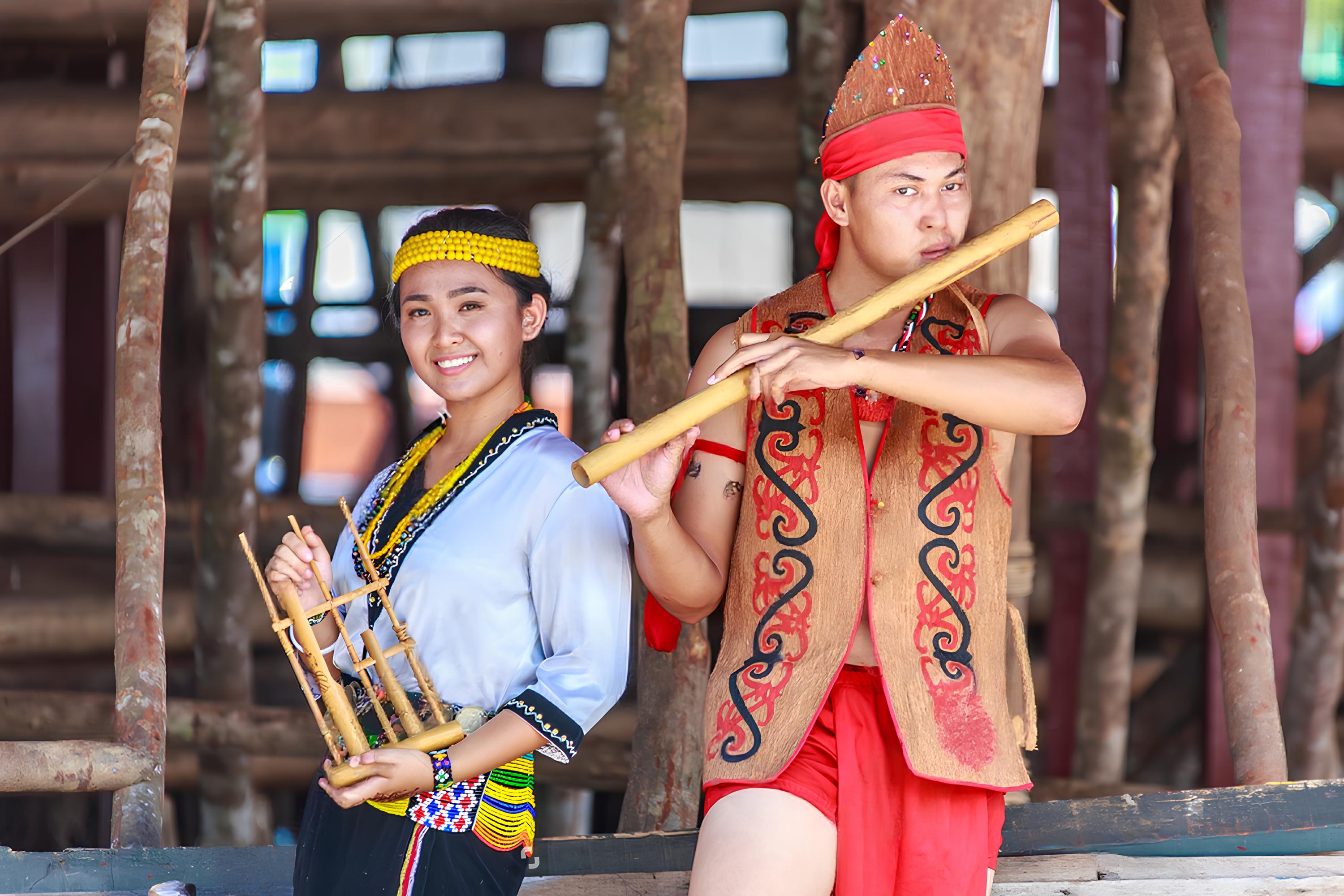
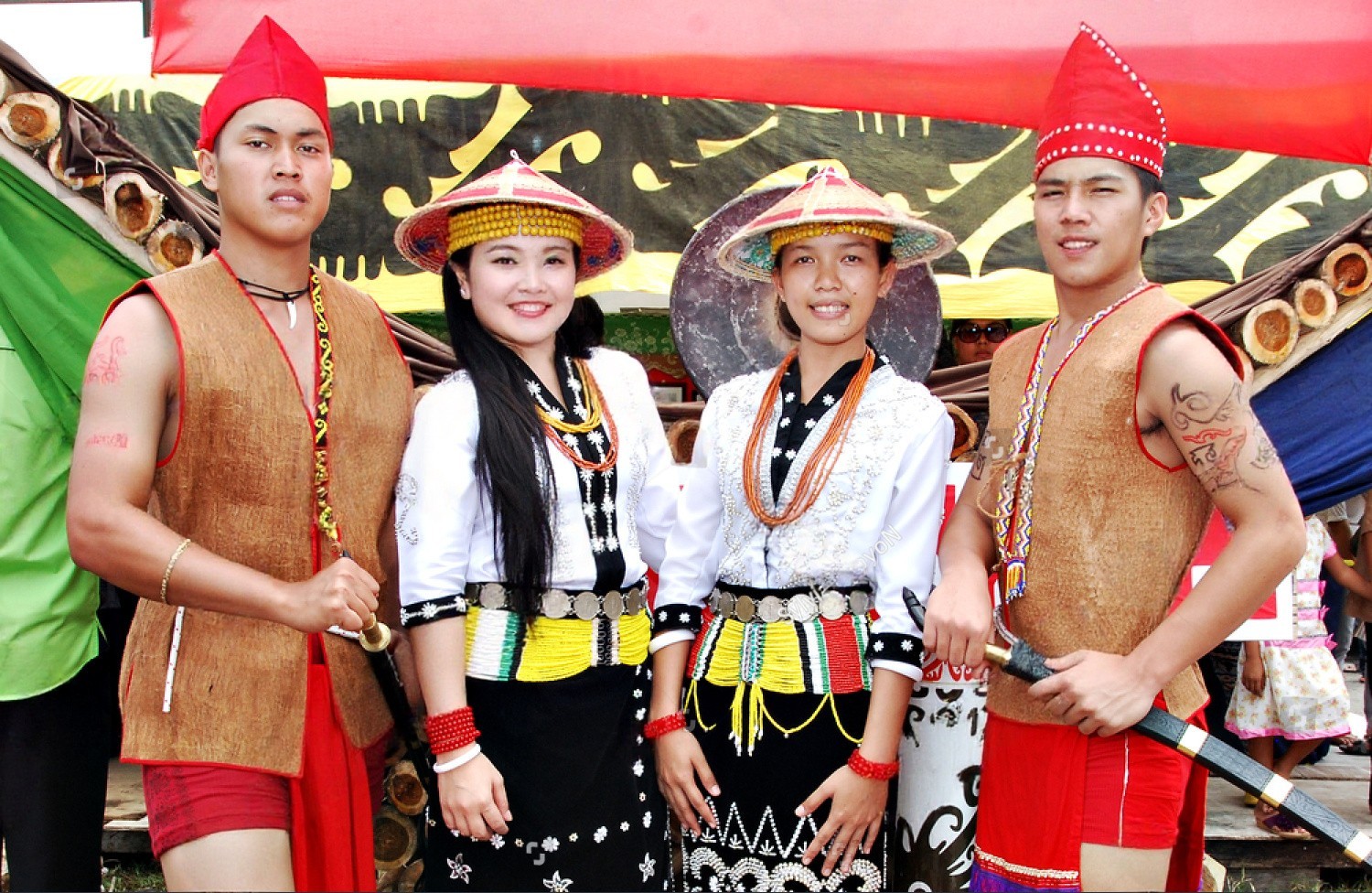
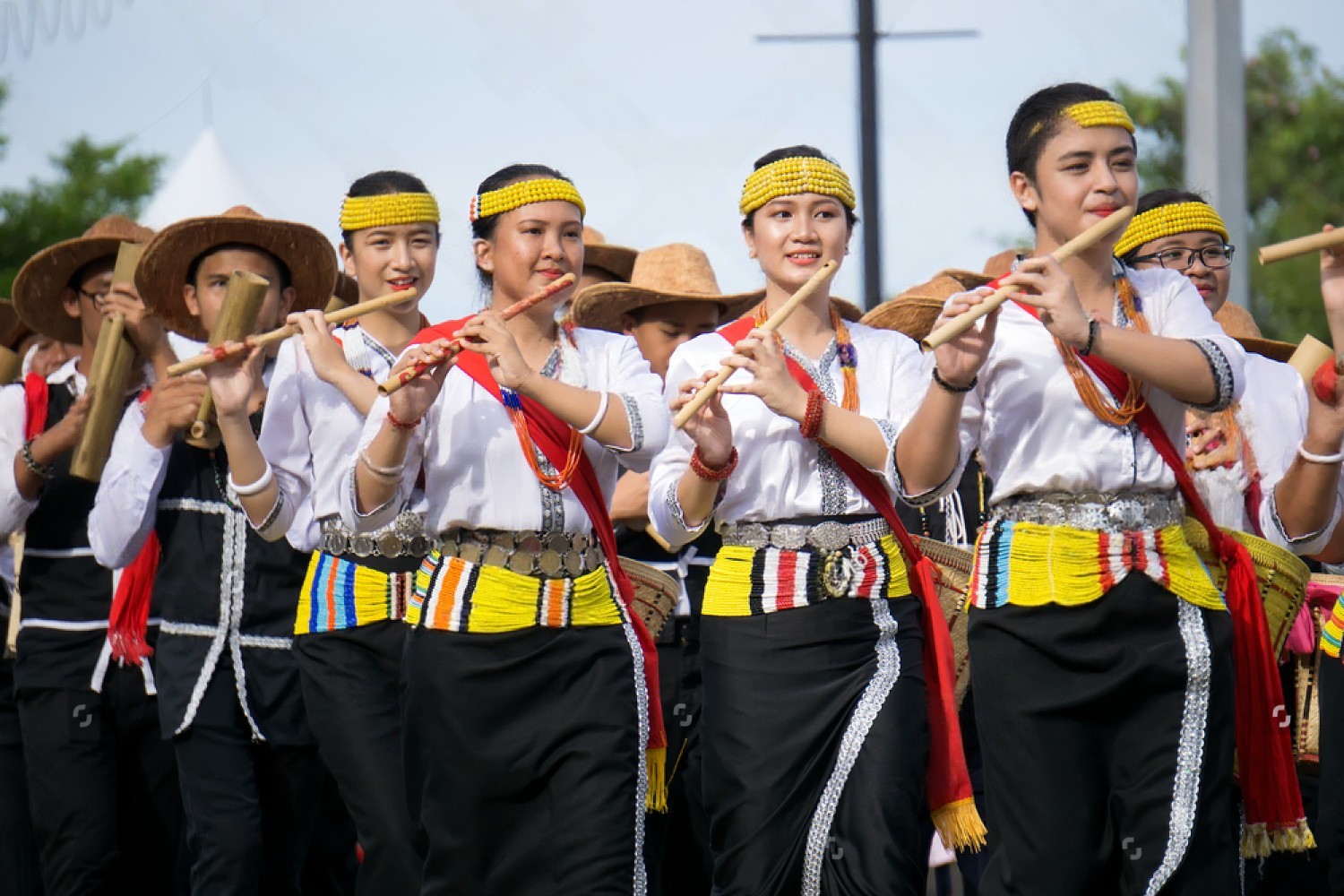
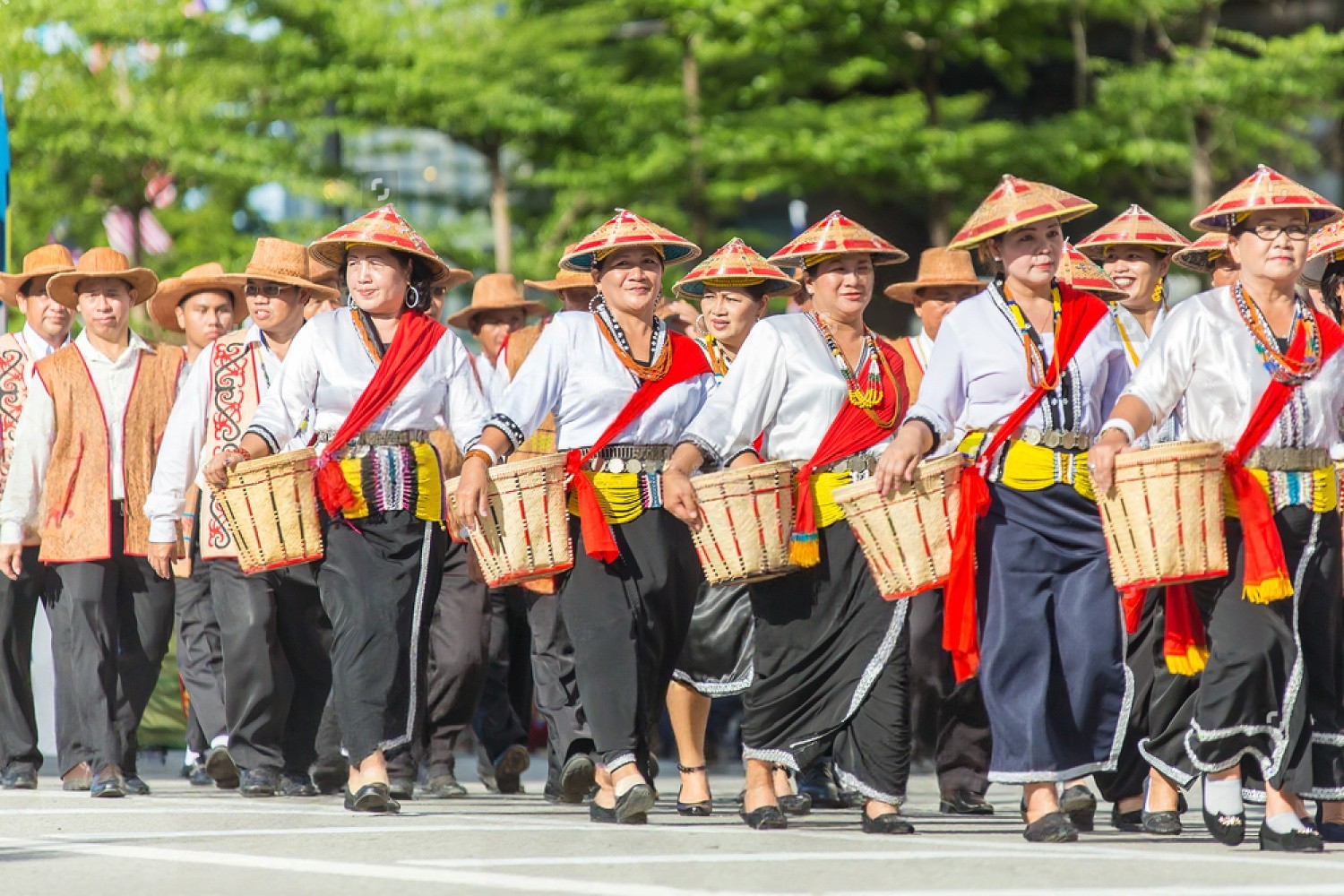
- Among the most distinctive features of Lundayeh culture is their traditional attire. The uniqueness of the Lundayeh costume in Sabah lies in the use of white as the dominant base color for women’s garments, a feature not found among other Lundayeh subgroups in Borneo. For the Lundayeh in Sabah, white symbolizes purity, sincerity, and inner grace, reflecting the refinement and gentleness of Lundayeh women. This contrasts with the Lun Bawang traditional attire of Sarawak and Kalimantan, which is predominantly black. The difference demonstrates that the Sabah Lundayeh possess a distinctive and recognizable visual identity, making them the only highland community in Borneo to use white as the symbolic color of their traditional dress.
- For the women, traditional attire is known as Kuyu Berecha or Kuyu Decur, meaning “women’s dress.” It is made from white calico fabric or, in modern contexts, from cotton or satin. The lower part of the costume is paired with a knee-length black skirt called Tekip Saiting, decorated with silver beads and sequins arranged vertically and horizontally along the front section.
- Meanwhile, Lundayeh men wear an outfit known as Bakad Talun or Baju Talun, traditionally made from the inner bark of the terap tree, processed until it becomes soft and cloth-like. The garment is often hand-stitched and decorated with a traditional pattern known as Arit, a motif symbolizing courage, agility, and the warrior spirit. The male attire is complemented by a loincloth called Abpar, also made from tree bark, serving as the basic lower garment.
- Overall, these traditional costumes continue to be worn today as powerful symbols of Lundayeh identity and pride. Although modern adaptations have emerged for weddings, cultural performances, and formal events, the original design and structure have been faithfully preserved. Contemporary innovations mainly involve the addition of accessories, new stitching styles, or alternative materials without altering the costume’s symbolic meaning. This demonstrates the Lundayeh people’s deep appreciation for their ancestral legacy, preserving their traditional attire as a manifestation of identity, aesthetic heritage, and cultural continuity.
- The traditional attire of the Lundayeh ethnic group plays a vital role in the various ceremonies and festivities of their community. For instance, during the traditional wedding ceremony known as Irau Aweh, this attire continues to be worn regardless of religious background, as long as one or both members of the couple are of Lundayeh descent. The traditional costume is especially worn during the wedding reception as a gesture of respect and appreciation for their heritage and ethnic identity.
- In modern contexts, some couples choose to wear the Lundayeh traditional attire during the marriage solemnization, though in a more contemporary form that aligns with their respective religious practices. Thus, on their wedding day, the bride and groom don a special version of the Lundayeh costume, complete with traditional headdresses, bead necklaces, and customary accessories, showcasing the beauty of their culture and symbolizing the union of two souls in sacred matrimony.
- Additionally, this traditional attire is worn during the Lundayeh or Lun Bawang Festival, known as the Irau Rayeh Festival, an annual celebration held to mark the rice harvest and to strengthen community ties. During this festival, traditional attire serves not only as a symbol of gratitude to God and nature but also as an expression of art and identity, as Lundayeh people from across the nation gather to celebrate their shared heritage.
- In cultural competitions such as the Ruran Ulung (beauty queen contest) and Padan Liu Burung (male contest), participants proudly wear their traditional costumes to highlight the beauty and dignity of their heritage. The attire serves as a medium of cultural expression, where every pattern, color, and accessory reflects social status and the refinement of the community’s artistic traditions. More prominently, this costume is also worn during Pesta Kaamatan (the harvest festival celebrated across Sabah) where representatives from the Sipitang region proudly showcase the Lundayeh attire as part of their cultural presentation.
- In traditional and spiritual ceremonies, the attire is worn as a sign of reverence to ancestral spirits and the forces of nature. It is regarded as sacred clothing that cannot be worn casually but only during rituals imbued with deep cultural and spiritual significance.
- Lastly, the Lundayeh traditional costume is also featured prominently in cultural and tourism festivals, both at the state and international levels. Through such events, the attire serves as a form of cultural diplomacy, introducing Lundayeh heritage to the wider world while strengthening appreciation for the ethnic and cultural diversity of Sabah and Borneo as a whole.
Accessories play an essential role in completing the traditional attire of the Lundayeh ethnic group, for both men and women. Each ornament not only serves as a complement to the costume but also carries symbolic meanings that reflect social status, beauty, and the traditional beliefs of the Lundayeh people.
Women’s Accessories
Pata Uluh / Tenggulung
A head ornament or headband made of yellow or mustard-colored beads, worn across the forehead or on top of the hair.
Baw Bane
A layered beaded necklace worn around the chest area. There are several types of Baw Bane, including Bane Baw Tulang, Baw Alai, Bane Kring, Alet Item, and Bane Alai Emas, each varying in material and design.
Beret Ringit
A metallic belt made from old British coins, resembling the Himpogot belt worn by the Dusun community.
Beret Baw
A long beaded waist accessory wrapped around the waist down to the hips, typically made of small white or yellow beads, fastened with a clasp at the front.
Leku Baw
Traditional bracelets made from silver, metal, fine rattan, or white-colored plastic symbolize purity and grace.
Fakel Kukud
Traditional anklets crafted from silver, metal, or fine rattan, often worn during dances and ceremonial events.
Men’s Accessories
Sigar / Sigar Suba
A red headgear or turban-like headdress, wrapped in a style similar to a tengkolok (traditional Malay headcloth).
Baw Tulang
A necklace made from animal bones symbolizing strength, endurance, and the bravery of Lundayeh hunters and warriors.
Fakel Lengen
Arm bracelets made from animal bones or metal, worn as a sign of masculinity and protection.
Fakel Riman
A type of bracelet made from forest plant fibers called Riman Labo. The black strands are woven into cords and wrapped around the arms or knees as an additional ornament.
Fakel Kukud
Anklets made from animal bones or metal, worn as part of ceremonial dress or dance performances.
Felefet
A traditional sword symbolizing valor, heroism, and a means of self-defense for Lundayeh men.
Utab
The traditional shield of the Lundayeh people, elongated in shape and resembles those used by the Murut and Orang Ulu tribes. It served as a defensive weapon in warfare and is now often used in cultural performances to symbolize courage and the warrior spirit of the Lundayeh.
Efut
A traditional blowpipe used for hunting in the forest, typically measuring between two to three feet in length.
Telungan
A small container used to store blowpipe darts, usually decorated with bird feathers (tuwu) as a symbol of hunting success.
Bakang
A rattan backpack used to carry small items and forest produce, demonstrating the practicality and craftsmanship of the Lundayeh people.
Arit (Tattoo)
Arit refers to the traditional tattoos of the Lundayeh men, carved onto the body as marks of life experience, courage, and maturity. In the context of adornment, these tattoos are considered part of one’s personal accessories and a visible expression of identity and valor.
The materials used in crafting the traditional attire of the Lundayeh ethnic group have evolved, reflecting advances in textile technology and the influence of trade interactions with external communities. Originally, Lundayeh traditional clothing was made from the bark of the Taya or Terap Tree, which was processed using traditional methods. The process involved soaking the bark for several days before it was pounded, dried, and softened to produce thin sheets resembling cloth. This material was then used to make the Bakad Talun shirt and the Abpar loincloth for men, making these garments among the earliest forms of attire created entirely from natural resources.
For Lundayeh women, the materials used in their traditional dress have also undergone significant evolution. In the past, women wore handwoven cotton fabric produced manually using traditional looms. These weavings featured simple patterns and basic colors such as white, black, and red, depending on the wearer’s social status and the garment’s ceremonial function. However, with time and greater access to modern materials, traditional handwoven cotton has become increasingly rare. Today, women’s Lundayeh attire is typically made from white satin or modern cotton fabric, which continues to serve as the primary base color for women’s traditional costumes in Sabah. The white color not only offers ease of maintenance and a soft visual appeal but also symbolizes purity, sincerity, and the graceful elegance of Lundayeh womanhood.
In addition to cotton and satin, fabrics such as velvet and calico are also used for decorative purposes or as reinforcement for specific parts of the costume, including the waist, sleeves, and shoulders. The woven and embroidered sections of the attire are adorned with glass beads, silver sequins, and fine rattan strips, making the costume not only visually captivating but also a testament to the meticulous craftsmanship and creativity of Lundayeh women in the art of traditional ornamentation.
Overall, although modern materials such as satin, cotton, and velvet have largely replaced the original bark-based fabrics, the structure, motifs, and symbolic colors of the attire have been faithfully preserved. This continuity reflects the Lundayeh community’s enduring commitment to authenticity and traditional values, even as they adapt their attire to suit contemporary lifestyles and modern contexts.
The traditional attire of the Lundayeh ethnic group has its own distinctive manner of dressing. Every layer of clothing, arrangement of accessories, and choice of color serves not only an aesthetic purpose but also conveys cultural meaning, social identity, and adherence to customary values. Although these garments are now frequently worn during official events, festivals, and cultural ceremonies, their method of wearing continues to follow the traditional etiquette of the Lundayeh people.
How to Wear the Lundayeh Women’s Attire
Wearing the Blouse (Kuyu Berecha / Kuyu Decur)
The dressing process begins with putting on a short-sleeved white blouse made of cotton or satin. The white color serves as the central base of the women’s traditional costume in Sabah, symbolizing purity and grace.
Wearing the Skirt (Tekip Saiting)
The lower part is paired with a knee-length black skirt known as Tekip Saiting. Made of velvet or thick cotton, the skirt is wrapped neatly around the waist and decorated with silver beads and sequins arranged both horizontally and vertically.
Adding Accessories
Once the base garments are worn, Lundayeh women adorn themselves with traditional jewelry such as beaded necklaces (Baw Bane), bracelets (Leku Baw), and anklets (Fakel Kukud). Two types of belts — Beret Baw (beaded belt) and Beret Ringit (metal or silver coin belt) — are worn around the waist to complete the ensemble.
Head Ornament
On the head, they wear Pata Uluh or Tenggulung, a traditional headdress symbolizing status and elegance. This adornment usually covers the hairline, giving a neat and dignified appearance.
How to Wear the Lundayeh Men’s Attire
Wearing the Abpar (Loincloth)
The dressing begins with the Abpar, a piece of red fabric or bark sheet wrapped around the waist and crossed at the front. The color red represents bravery, vitality, and the fighting spirit of Lundayeh men.
Putting on the Bakad Talun (Bark Shirt)
Next, the man wears the Bakad Talun, a shirt made from the bark of the terap tree. It is worn like a vest and paired neatly with the red Abpar. The outer layer of the shirt is often decorated with Arit motifs, traditional Lundayeh designs symbolizing courage and warrior status.
Accessories and Traditional Weapons
After donning the basic garments, men complete their appearance with various accessories such as arm bracelets (Fakel Lengen), anklets (Fakel Kukud), and bone necklaces (Baw Tulang). On the head, they wear a red headscarf known as Sigar, wrapped into a turban-like form that represents bravery and the spirit of heroism. Additionally, Lundayeh men often carry the Utab (shield), Felefet (traditional sword), and Efut (blowpipe) along with Telungan (dart container) as symbols of strength and their role as protectors of the community.
Additional Adornments and Symbolism
Some Lundayeh men also adorn their bodies with traditional tattoos known as Arit, symbolizing maturity, life experience, and courage. They may also carry a Bakang (a rattan backpack) slung over the shoulder to hold small personal items.
In both male and female attire, the Lundayeh community continues to preserve the traditional dressing methods inherited from their ancestors. While modern and contemporary variations are now used for formal occasions and cultural performances, the arrangement, colors, and symbolism of each garment remain intact. This enduring practice reflects the authenticity and cultural pride of the Lundayeh people in Sabah, ensuring that their traditional dress remains a living emblem of identity and heritage.
-
Reference Source
Bahan Bacaan
Abd Talip, M., Maraining, A., Bee, B. B. B., & Baco, Z. (2022). Geospatial archaeology of Ulung Buayeh (crocodile mound): The integration of location, landscape and mound effigies in Lundayeh culture in Long Pasia and Long Mio [Geospatial Ulung Buayeh (crocodile mound): Pengintegrasian lokasi, landskap dan arkeologikal guar effigi warisan budaya etnik Lundayeh di Long Pasia dan Long Mio]. SPAFA Journal, 6, h0u1v1588w-h0u1v1588w.
Ayung Delei Lundayeh (Lundayeh). (n.d.). Infopakaian. Retrieved November 8, 2025, from https://mrk.stefanusable.com/infopakaian/
Iwan, J. (2024). Struktur dan nilai moral cerita rakyat Batu Singai masyarakat suku Dayak Lundayeh di Desa Long Bisai Kecamatan Mentarang Kabupaten Malinau (Kajian struktural). [Unpublished undergraduate thesis or research report].
Min, T. M., & On, L. K. (2019). Signifikan budaya mengayau dan ritual dalam persembahan Lansaran Mengayau [Significant head-hunting culture and ritual in Lansaran performance]. [Research paper or conference proceeding].
Rujina, R., Arifin, M. B., & Rijal, S. (2020). Pemali dalam budaya etnik Dayak Lundayeh di Kota Samarinda: Suatu tinjauan semiotika. Ilmu Budaya, 4(4), 614–626.
Simeon, J. J. C., On, L. K., Baxter, I. S., Saudik, M., Ahmad, S., & Suan, C. L. (2017). Traditional musical instruments and dance music of the Lundayeh of Sabah. Wacana Seni Journal of Arts Discourse, 16.
TikTok. (2021, February 23). Pakaian tradisional Lundayeh Sabah [Video]. JKKN Sabah Official. https://www.tiktok.com/@jkknsabahofficial/video/6924814154658352385
Location
State JKKN Contact Information
Puan Nurshahrinna Syahrial
Cultural Officer
Jabatan Kebudayaan dan Kesenian Negara, Sabah
Kompleks JKKN Sabah,
Jalan Tasik off KM4 Jalan Penampang,
88200 Kota Kinabalu
SABAH
088-205070
Use the form below to contact the Informant/Figure/Editor/Researcher directly. We will respond to your inquiry as soon as possible!

