

ARTS AND CULTURE INFORMATION GATEWAY
Immerse yourself in the colorful world of art and culture! From traditional heritage to contemporary works, discover uniqueness that reflects the nation's identity and identity
ADAT MENYAMBUT MENANTU PEREMPUAN
 Fakulti Muzik dan Seni Persembahan, Universiti Pendidikan Sultan Idris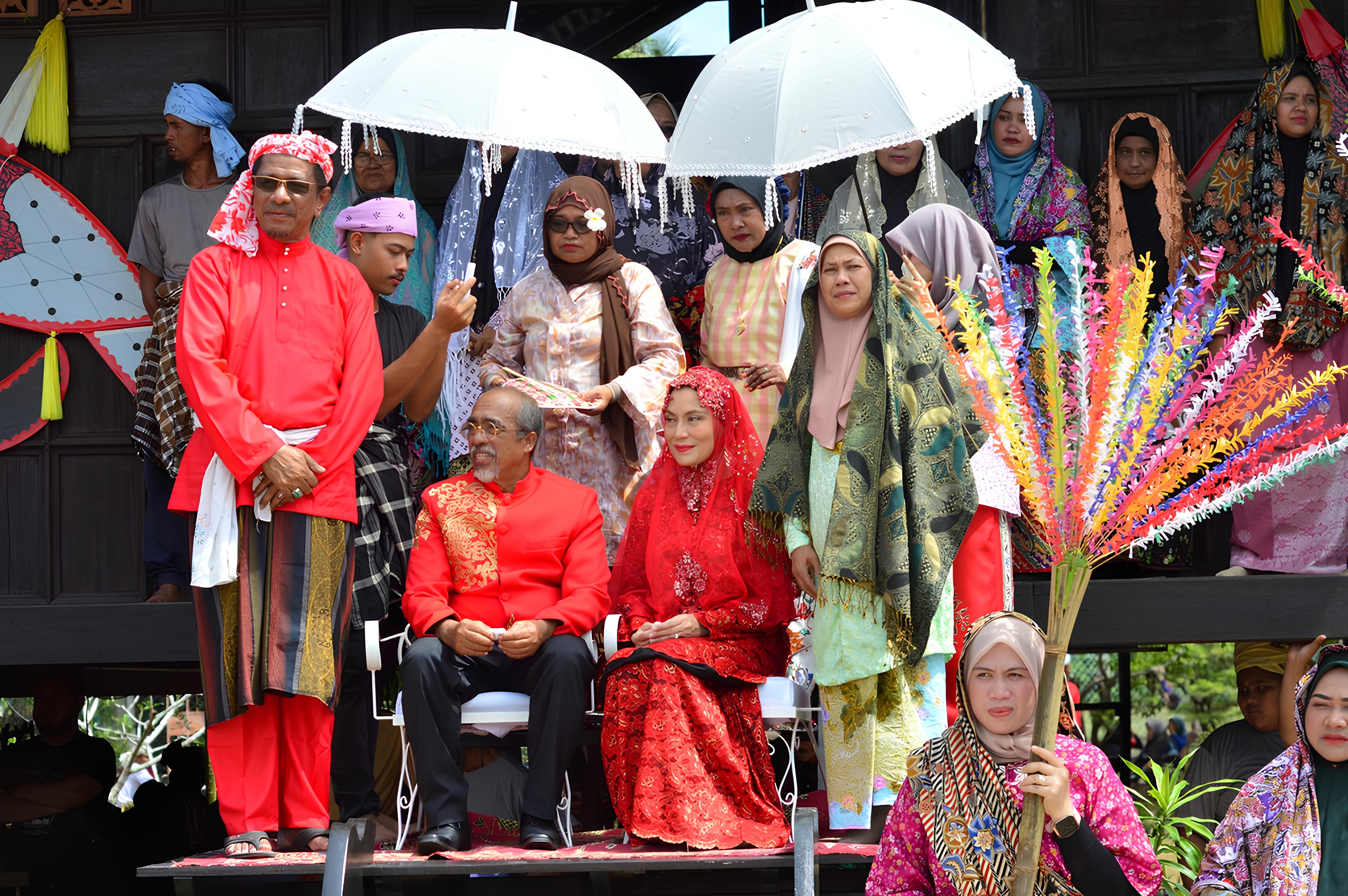
Picture
8
Video
No record
Today's Visitor
705
Number of Visitors
2786
Introduction and history
- The custom of welcoming a daughter-in-law is one of the important traditions still practiced in Kelantanese Malay society today. This custom is also known as the Majlis Bertandang, or the official visit of the bride to the groom’s family home, usually held three to a week after the wedding ceremony or the bride’s side reception. The majlis bertandang signifies the groom’s family’s full acceptance of the new daughter-in-law, while at the same time strengthening the kinship ties already established through marriage.
- This tradition has been passed down through generations and is deeply rooted in Malay culture as well as Islamic teachings, which emphasize respect, kinship, and the bonds of brotherhood. Thus, welcoming a daughter-in-law is not only regarded as a cultural ritual but also as a symbol of acceptance, affection, and honor toward a woman who has now become part of a new family. The daughter-in-law is not merely received as the wife of a son but as an individual who will play a vital role in the continuity of the family, whether in managing the household, preserving its dignity, or helping to strengthen bonds of kinship.
- In general, this custom is carried out in a private setting, involving only close family members. The atmosphere is familial, modest, and dignified, without the need for excessive grandeur. The event typically begins with the bride being escorted in a lively procession by her relatives to the groom’s home. Upon arrival, she walks toward her husband before being formally welcomed by the groom’s family. The couple is then ushered into the house, symbolizing the bride’s official acceptance into her new family. The ceremony begins with a prayer of thanksgiving, led by the village imam or a respected elder, to invoke blessings and harmony upon the new household. Afterward, a communal meal is served for the bride and her entourage, featuring traditional Kelantanese dishes such as nasi dagang, nasi tumpang, akok, bahulu, and other delicacies that embody the host family’s hospitality and respect for their guests.
- To this day, the custom of welcoming a daughter-in-law remains a practice among the Kelantanese Malay community. While it is most commonly observed simply and privately, some families choose to celebrate it on a grander scale, almost akin to a wedding reception on the bride’s side. In such cases, the celebration may include a decorative wedding dais, lavish feasting, and even a second reception. This variation demonstrates the adaptability of the custom, which evolves according to the means and preferences of the younger generation, without diminishing its core values as a symbol of acceptance, honor, and the strengthening of family bonds.
Symbolically, this custom carries several important functions and roles within Kelantanese Malay society, among them are:
Formal Recognition
The custom of welcoming a daughter-in-law functions as a formal acknowledgment of her new status as the lawful wife of the family’s son. The ceremony signifies that the daughter-in-law has been openly accepted, not only by her husband but also by the groom’s entire extended family. This recognition is vital as it marks the transfer of responsibility for the woman from her parents to her new family. Within the context of Kelantanese Malay culture, this practice also emphasizes that marriage is not merely a union between two individuals but a binding relationship that involves and unites two extended families.
Strengthening Kinship Bonds
The custom also serves as a medium for strengthening familial ties between both sides. Through the ceremony of welcoming a daughter-in-law, the groom’s family gains the opportunity to become more closely acquainted with the bride’s relatives, and vice versa. The presence of extended kin and neighbors enlivens the atmosphere and fosters warm social interaction. This reinforces the value of kinship and brotherhood, which is highly emphasized in Malay culture, where marriage is regarded as a bridge that links two families into a closer, more harmonious relationship.
A Symbol of Respect
The daughter-in-law is honored with full traditional decorum as a sign of respect and affection. In Kelantanese Malay culture, a daughter-in-law is considered “a daughter of one’s own” once she enters her new family. Thus, a ceremony held in her honor symbolizes open-hearted acceptance and high regard for the dignity of a woman. Welcoming her with proper etiquette not only uplifts her status but also reflects the groom’s family’s respect for the bride’s parents, who raised her. This tradition highlights values of virtue, courtesy, and deep appreciation within Malay society.
Preventing Misunderstandings
In addition, the ceremony plays a crucial role in preventing misunderstandings within the community. By having an official event, the marital status and acceptance of the new daughter-in-law are clearly declared to the public. This eliminates any potential speculation or gossip, such as questions about the wife’s place in the family or doubts about the legitimacy of the relationship. In this way, the custom functions as a social mechanism that provides clarity for all parties while safeguarding the honor of both families.
A Social Medium
Finally, the custom serves as a social platform that connects the new family to the wider community. The event is often attended by neighbors, friends, and acquaintances who join in celebrating the couple. Indirectly, it becomes a form of social endorsement that the new family bond has been officially established. The participation of the community in this ceremony reflects a spirit of togetherness, cooperation, and collective support for the newlyweds. This demonstrates that the custom of welcoming a daughter-in-law is not merely a family ritual but also a manifestation of community solidarity in Kelantanese Malay culture.
In the custom of welcoming a daughter-in-law in Kelantan, the choice of attire and accessories worn by the couple depends largely on the form of celebration organized by the groom’s family. Some families prefer to hold the event privately in a simple and modest setting, while others choose to celebrate it more elaborately by hosting a second wedding reception. This difference directly influences the attire and overall appearance of the couple as well as their families.
Simple Attire (Private Family Gathering)
When the welcoming ceremony is conducted privately, the attire chosen is usually simple and practical.
Groom
The groom typically wears a baju Melayu cekak musang or teluk belanga paired with long trousers.
This is complemented with a plain or modestly patterned samping and a songkok to complete the look.
Additional accessories, such as a Keris, are usually not worn, as the ceremony is intended to be familial and relaxed in nature.
Bride
The bride commonly wears a modern baju kurung or a simple jubah in soft, pastel colors.
A plain headscarf or a light scarf is worn to highlight modesty and elegance.
Accessories are kept minimal, often limited to a small brooch or a simple bracelet.
Family members from both sides also dress in coordinated yet modest attire to reflect a sense of togetherness in the ceremony
Formal Attire (Second Wedding Reception)
If the welcoming ceremony is held on a larger scale with a second reception, the attire chosen more closely resembles the couple’s official wedding attire.
Groom
The groom usually wears a complete baju Melayu with a Kelantanese songket samping, a songkok, and a small keris tucked at the waist.
The colors of the outfit are often more regal, such as royal blue, purple, or gold, symbolizing the groom’s dignity as “king for a day,” though this is a second reception.
Bride
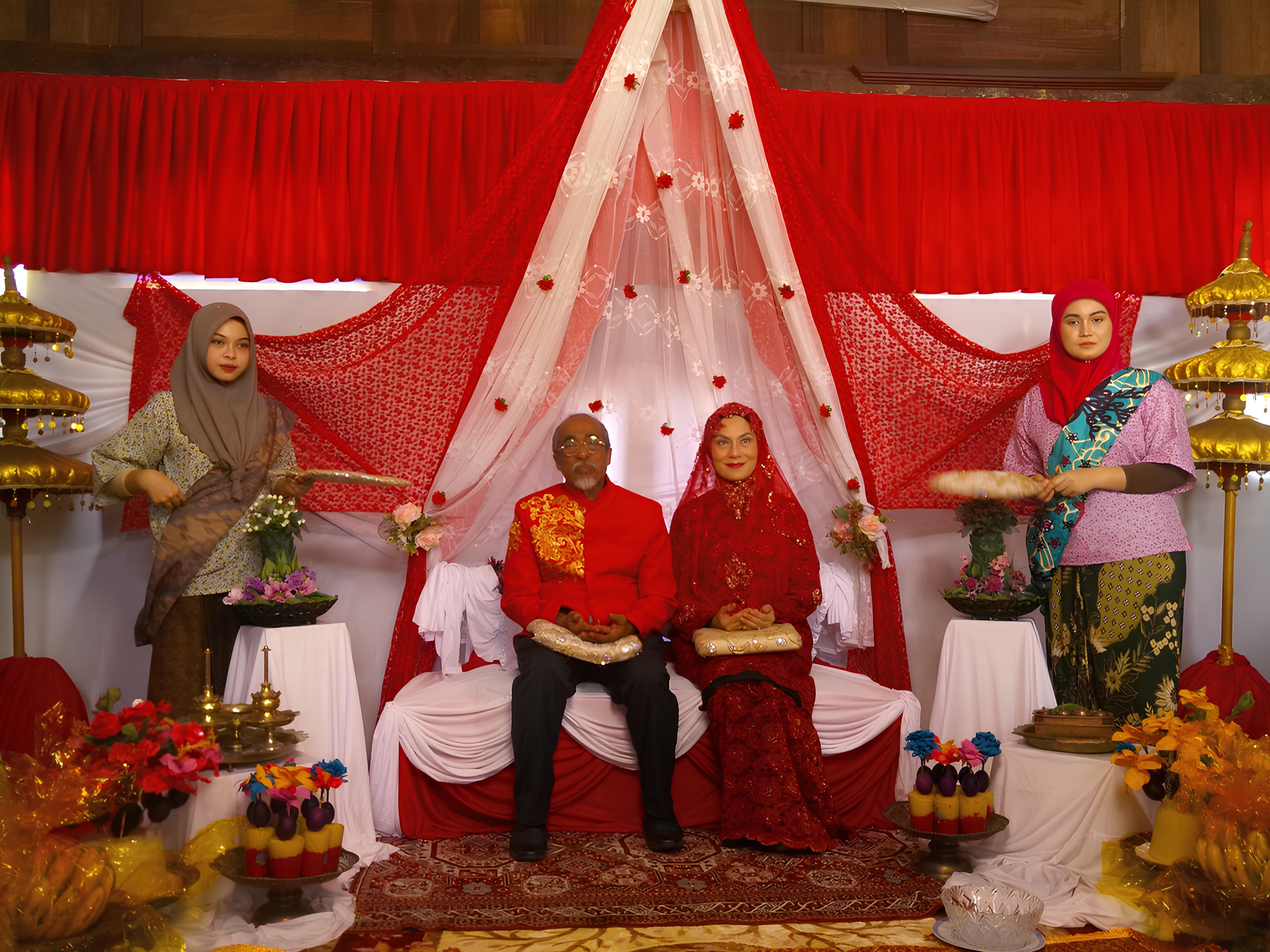
The bride typically dons a more luxurious outfit, such as a Kelantanese songket embroidered with gold thread, an exclusive modern baju kurung, or a long kebaya.
Her look is enhanced with complete accessories, including a set of three brooches (kerongsang tiga serangkai), earrings, bangles, a decorative traditional hairpin (cucuk sanggul) adorned with fresh flowers, and a matching headscarf.
For both families, coordinated attire is also an important element. The chosen theme colors are usually divided into two groups, one for the groom’s side and one for the bride’s side and making it easier for guests to distinguish between members of each family while also highlighting unity and harmony.
Unlike the wedding ceremony or the bride’s side reception, which are usually more elaborate with various offerings and ceremonial items, the custom of welcoming a daughter-in-law in Kelantan does not emphasize the preparation of numerous gifts.
Instead, preparations focus mainly on the groom’s family, who are responsible for providing a feast to celebrate the arrival of the new daughter-in-law. The scale of the meal depends on the family’s capacity and the type of ceremony chosen, whether modest or grand. In addition, several other items are often included to enhance the ceremony, either provided by the groom’s family or as symbolic contributions from the bride’s family. The common materials and equipment include:
Communal Feast
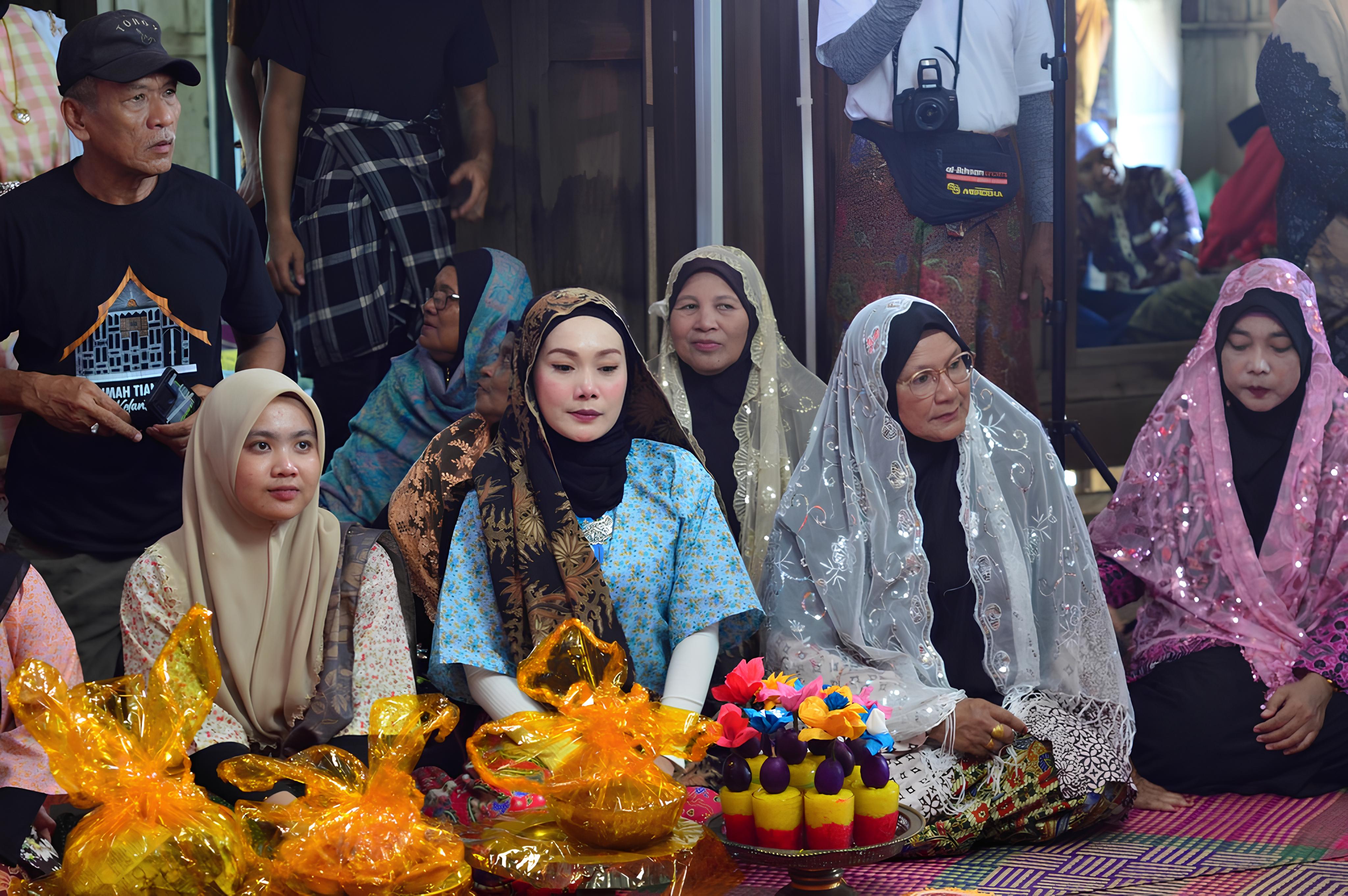
The central element of the welcoming ceremony is the preparation of food by the groom’s family.
For grand celebrations, the feast is lavish, and some families may even slaughter a cow or buffalo to serve as the main dish for guests.
For smaller, more private gatherings, food is prepared in modest amounts, sufficient only for close family and guests.
Decorative Palm Blossoms (Bunga Manggar)
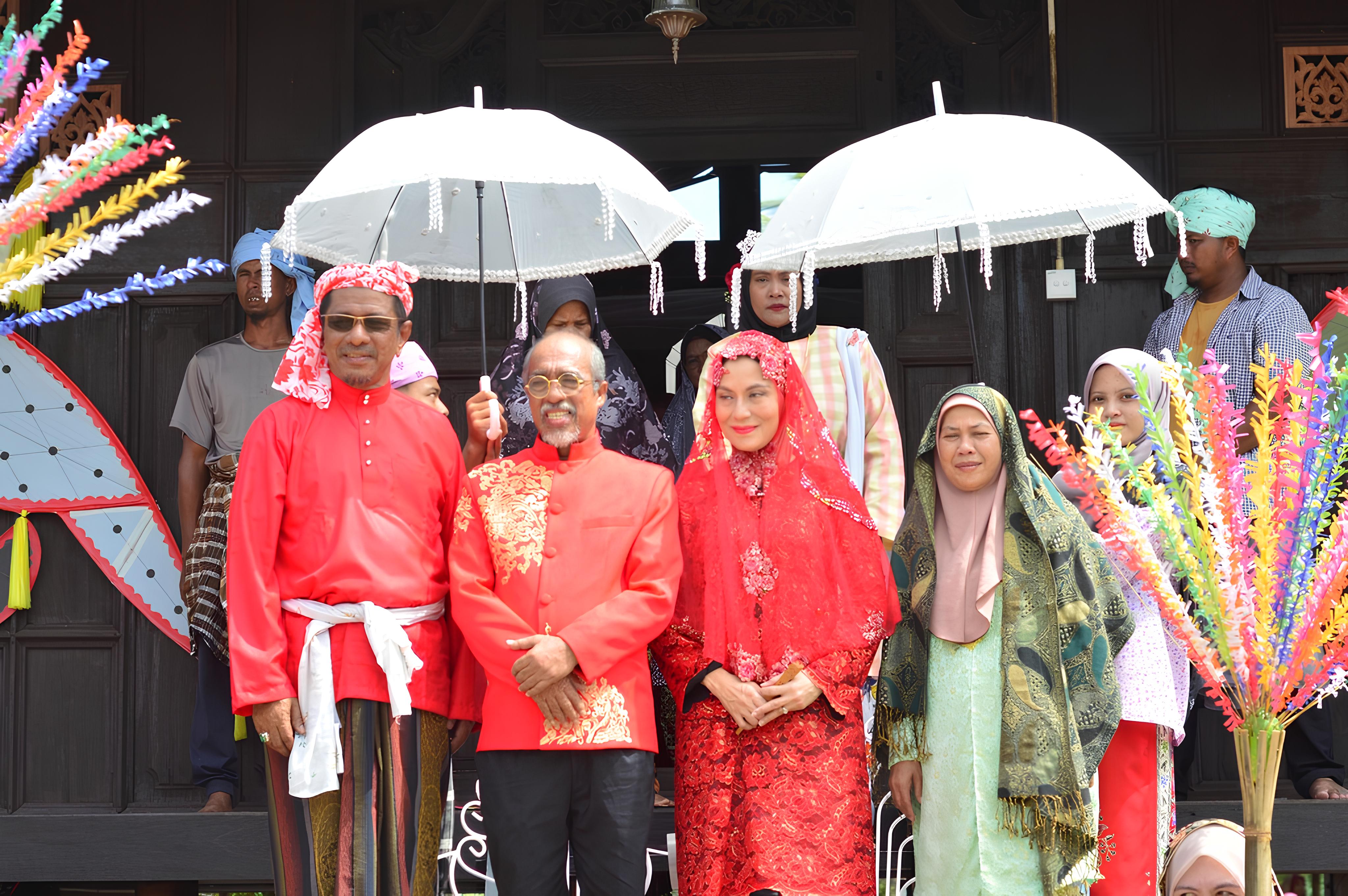
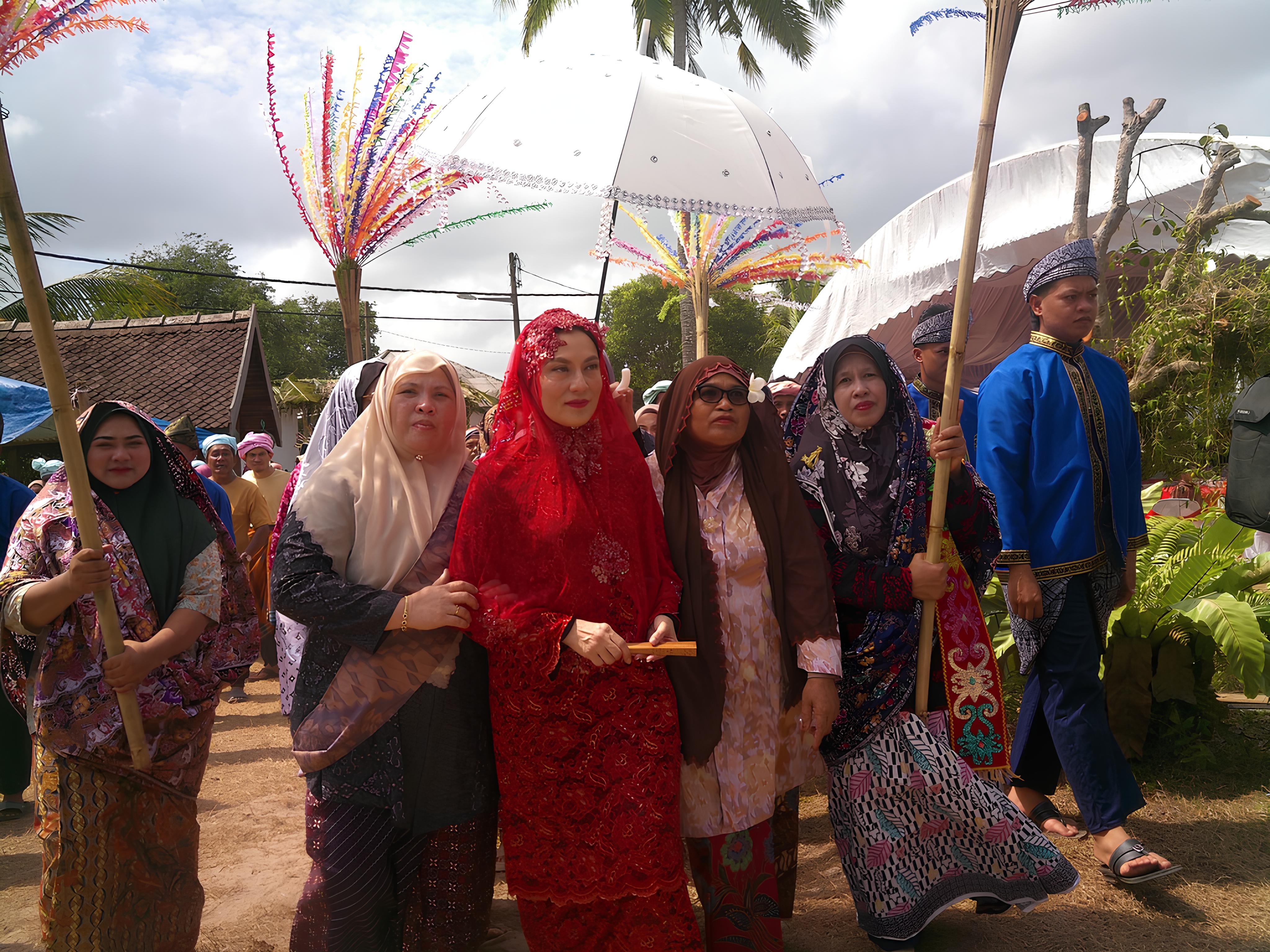
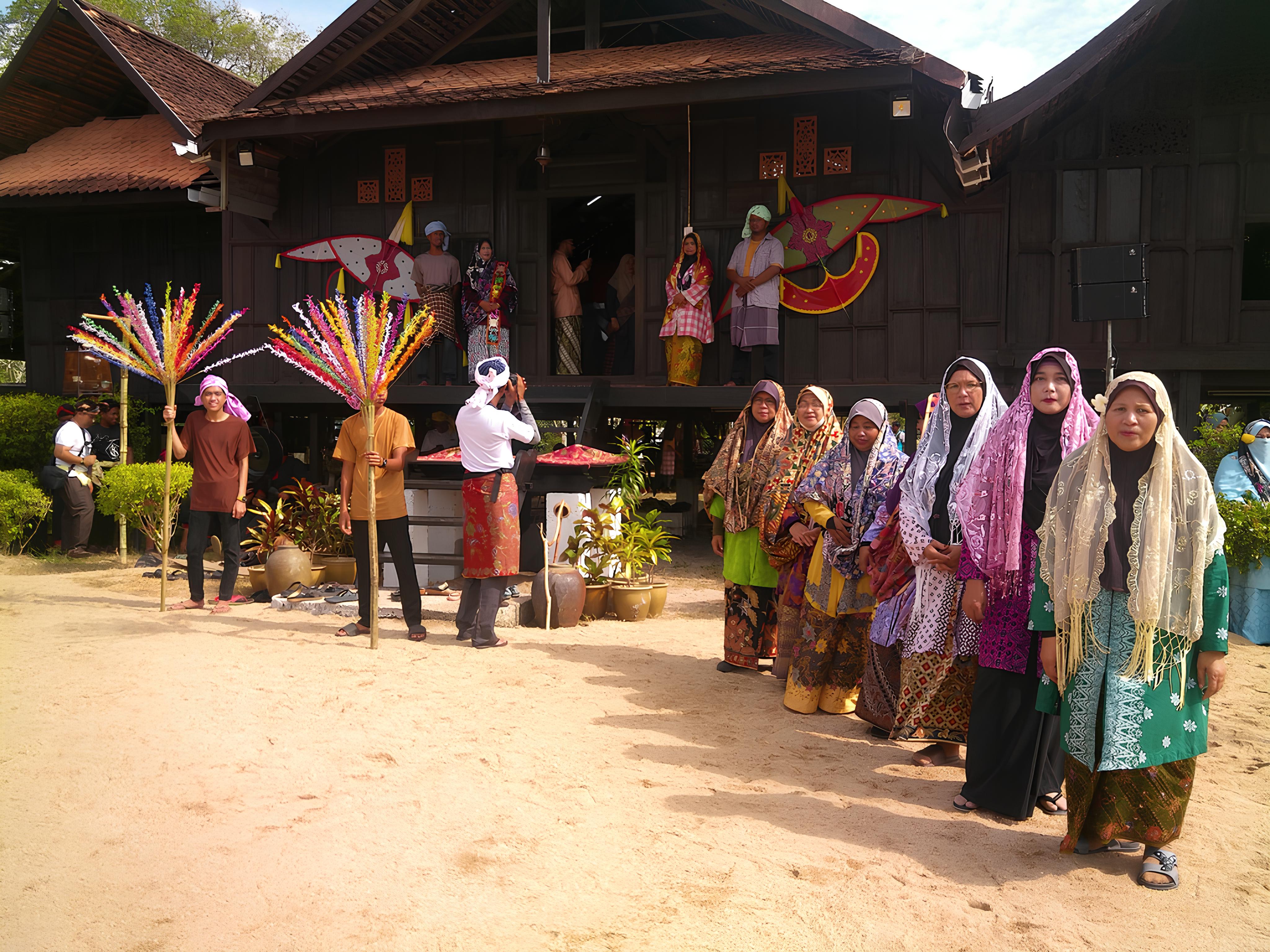
Colorful bunga mangga r are used as primary decorations, often carried by children or relatives as they accompany the bride.
These decorations symbolize festivity, joy, and the celebration of the daughter-in-law’s arrival into her new family.
Bridal Parasol
The bride is commonly shaded by a decorative parasol held by a family member or bridesmaid.
Beyond protecting her from sun or rain, the parasol functions as a symbol of honor and respect as she is formally received into her new household.
Kompang
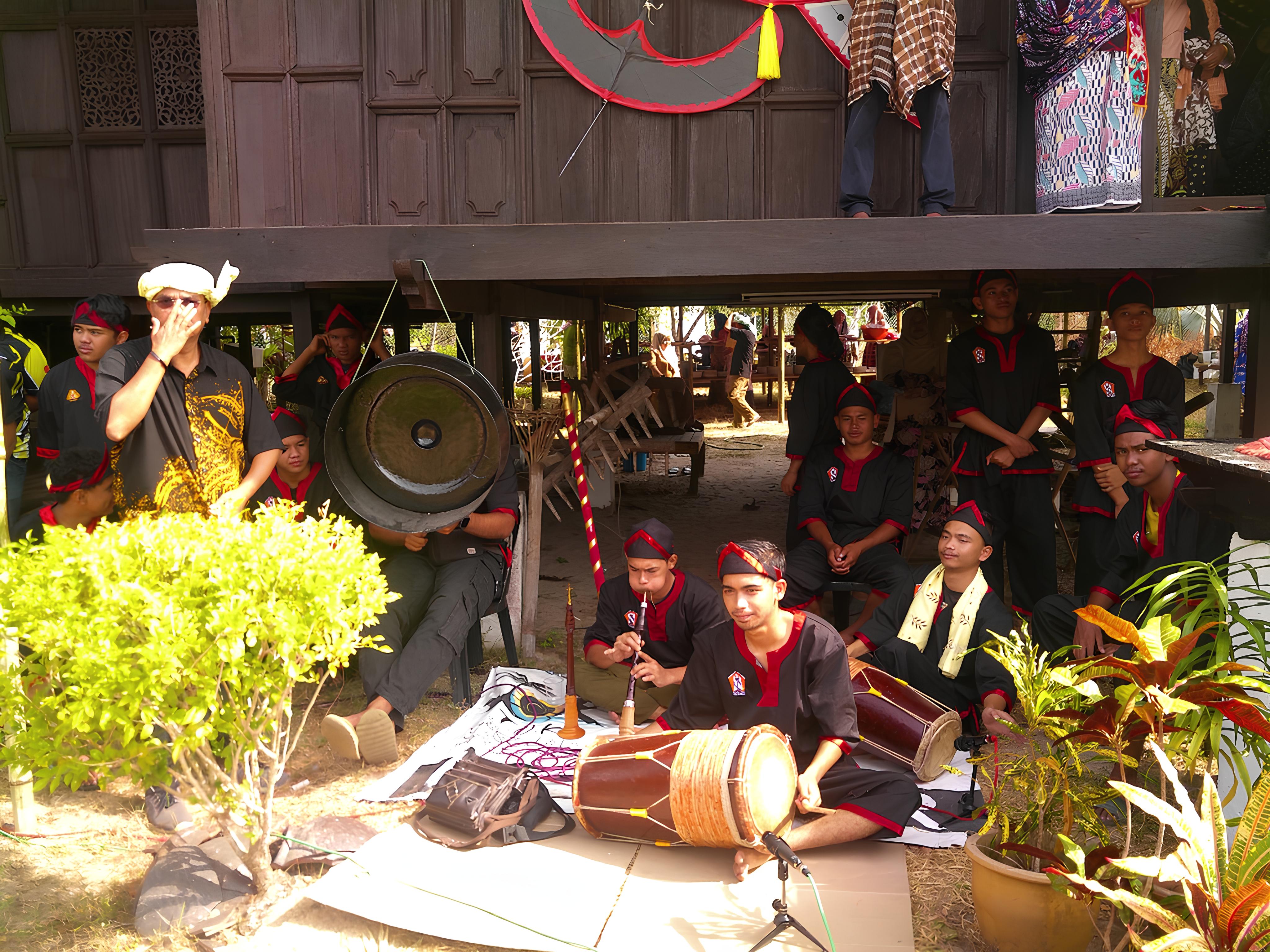
The arrival of the bride is often accompanied by the rhythmic beating of kompang drums and recitations of selawat (praises for the Prophet).
This adds vibrancy to the atmosphere while serving as an audible announcement of the bride’s arrival.
Symbolic Items from the Bride’s Family
In earlier times, the bride’s family would bring symbolic items such as a woven mat (tikar mengkuang), bedding, pillows, and a suitcase of the bride’s belongings.
These items symbolized the bride’s move to live with her husband, marking the transfer of responsibility from her parents to her husband.
This symbolism aligns with Islamic teachings that a wife is now under the care and responsibility of her husband.
However, this practice is rarely observed today, as the welcoming ceremony has become more focused on celebration and communal festivity rather than symbolic offerings.
The custom of welcoming a daughter-in-law in Kelantan is carried out with proper etiquette and follows a structured sequence. The process can be described as follows:
Initial Preparations
The ceremony usually begins in the morning, around 10 a.m., and may continue into the afternoon.
The bride is prepared in her chosen attire, often arranged by her family, before the procession begins.
Procession of the Bride
The bride is escorted in a procession from the entrance of the compound towards the groom’s house.
The procession is accompanied by the beating of kompang and traditional songs to celebrate her arrival.
Female relatives from the bride’s side typically surround her, some shading her with a parasol, others fanning her, while the rest join in to create a lively, communal atmosphere.
Reception by the Groom’s Family
The groom’s family waits at the front of the house to welcome the bride and her entourage.
Symbolically, the bride’s parents hand their daughter over to the groom.
At the same time, the groom’s parents greet and receive the bride’s parents as a gesture of respect and acknowledgment.
Entering the House and Seating Ceremony
The couple is then escorted into the house by attendants from both families.
If the groom’s family has prepared a ceremonial dais, the couple is seated together as a formal symbol of the bride’s acceptance into her new family.
Prayer and Address
The ceremony begins with a prayer of gratitude, led by the Imam or a respected elder, asking for blessings and harmony in the couple’s new household.
In some families, the groom may also be invited to give a short speech introducing his wife to his extended family.
Communal Feast and Cultural Performances
Following the prayer, the feast begins. Guests are served with a variety of dishes, ranging from modest home-cooked meals to grand banquets, depending on the host’s capacity.
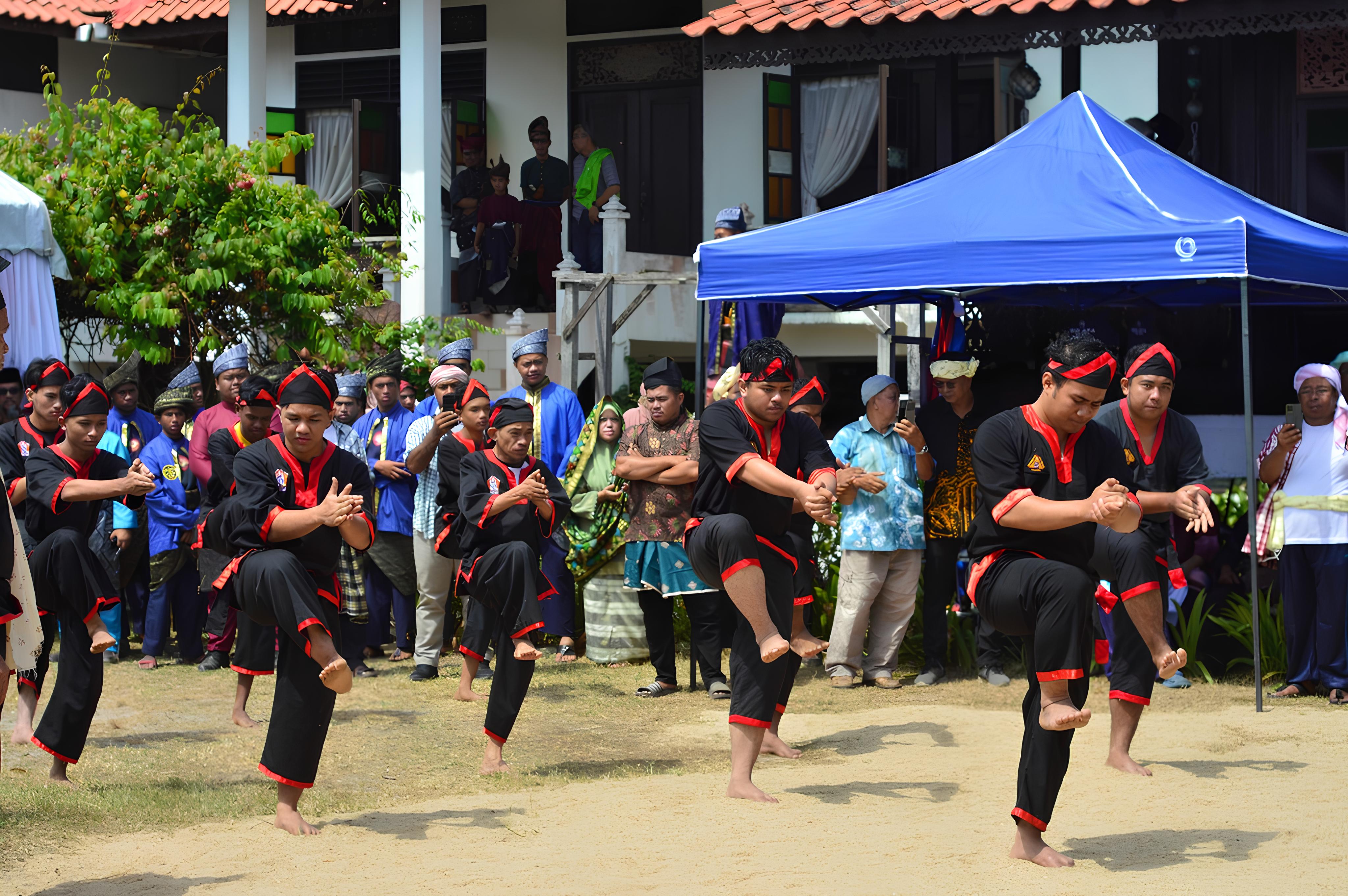
The celebration is often enlivened with traditional performances such as dikir barat, singing, or silat demonstrations, adding festivity to the occasion.
Closing of the Ceremony
Once the feast concludes, the bride’s family takes their leave and returns home.
As a gesture of appreciation, the groom’s family usually presents small tokens or gifts for the bride’s family to take back.
The bride then remains with her husband, marking the beginning of her new life as part of her husband’s household.
-
Reference Source
Bahan Bacaan
Department of National Heritage Malaysia. (n.d.). Majlis menyambut menantu [Cultural mapping entry]. Retrieved September 21, 2025, from https://pemetaanbudaya.jkkn.gov.my/senibudaya/detail/900
Fan, Y., & Silahudin, S. A. (2024). Sorotan kajian antropologi budaya masyarakat Melayu di Kelantan: A review of cultural anthropology studies on the Malay community in Kelantan. Jurnal Melayu Sedunia, 7(1), 37–50.
Hannissania. (2015, January 22). Majlis kesyukuran sambut menantu di Kelantan. Retrieved September 21, 2025, from https://hannissania.blogspot.com/2015/01/majlis-kesyukuran-sambut-menantu-di_22.html
Hassim, S. Z. (2017). Bahasa cerminan nilai budi dalam adat perkahwinan masyarakat Melayu di Kelantan, Malaysia (Doctoral dissertation, Universiti Putra Malaysia).
Interpretasi, D. (n.d.). Makanan hantaran dalam perkahwinan Melayu Kelantan: Adat [Unpublished manuscript].
Mba2u. (2018, September). Adat pertunangan perkahwinan orang Kelantan. Retrieved September 21, 2025, from https://mba2u.blogspot.com/2018/09/adat-pertunangan-perkahwinan-orang.html
Nazi, M. F. B. M. (n.d.). Amalan khurafat dalam kerukunan rumahtangga di kalangan masyarakat Melayu: Kajian di daerah Peringat, Kelantan [Unpublished manuscript].
NikUze Bride2b. (2010, April). Adat orang Kelantan. Retrieved September 21, 2025, from https://nikuze-bride2b.blogspot.com/2010/04/adat-orang-kelantan.html
Location
State JKKN Contact Information
Encik Wan Mohd Rosli bin Wan Sidik
Cultural Officer
Jabatan Kebudayaan dan Kesenian Negara, Kelantan
Kompleks JKKN Kelantan
Lot 1993, Seksyen 49,Tanjong Chat,
15200, Kota Bharu,
KELANTAN DARUL NAIM
09-741 7000
Use the form below to contact the Informant/Figure/Editor/Researcher directly. We will respond to your inquiry as soon as possible!


