

ARTS AND CULTURE INFORMATION GATEWAY
Immerse yourself in the colorful world of art and culture! From traditional heritage to contemporary works, discover uniqueness that reflects the nation's identity and identity
BAJU PANGLIMA / HULU BALANG
 Fakulti Muzik dan Seni Persembahan, Universiti Pendidikan Sultan Idris



Picture
9
Video
No record
Today's Visitor
4
Number of Visitors
456
Introduction and history

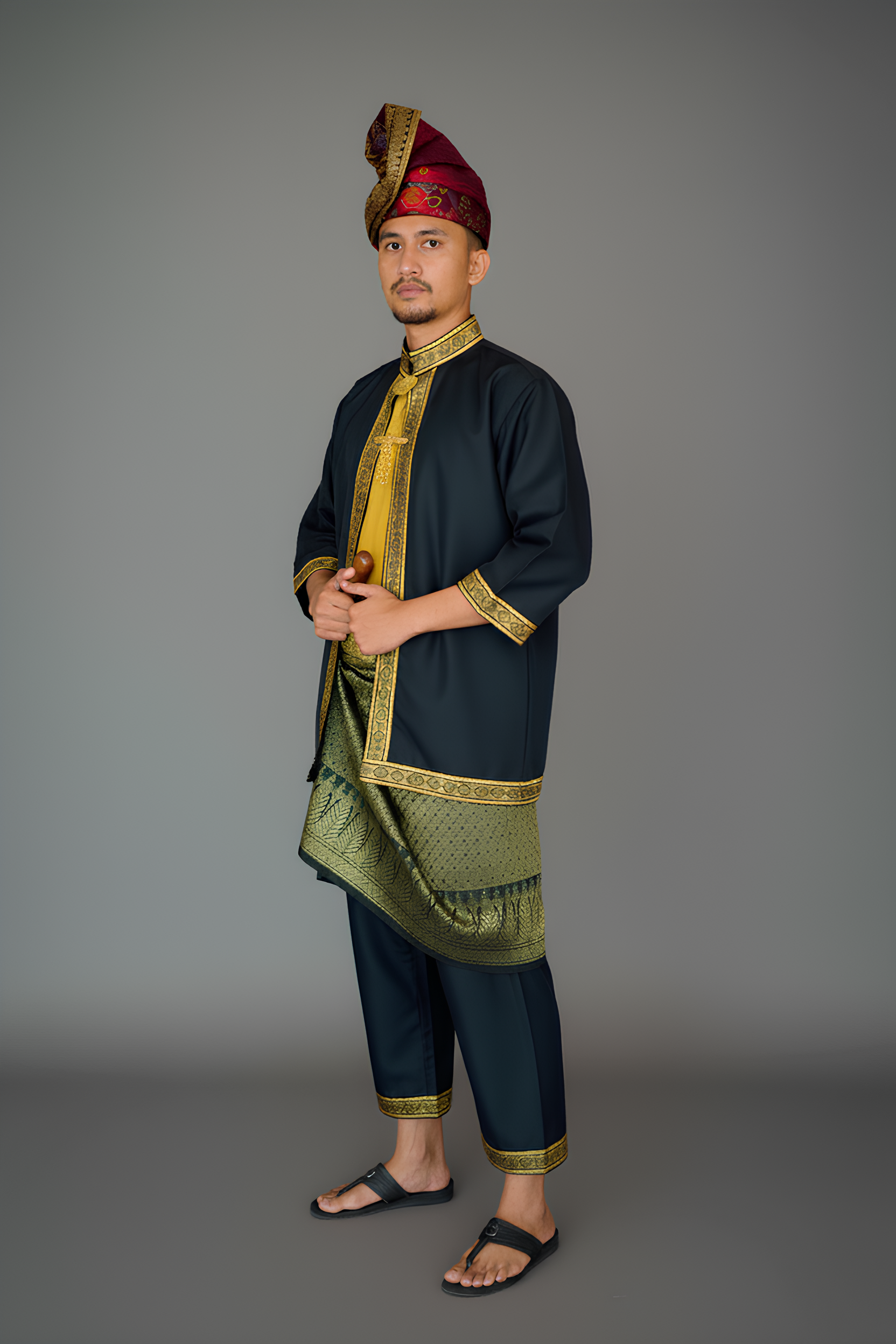
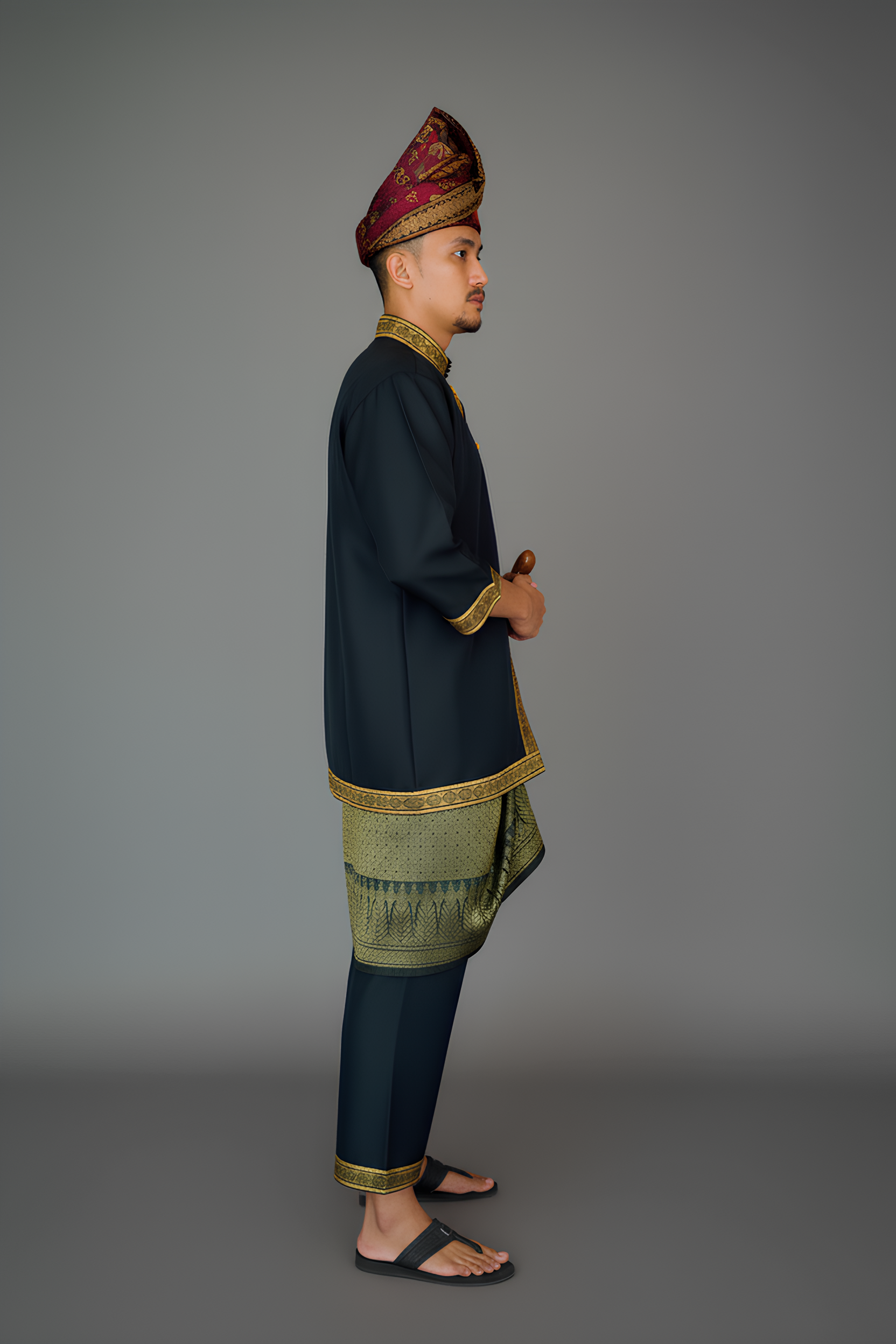
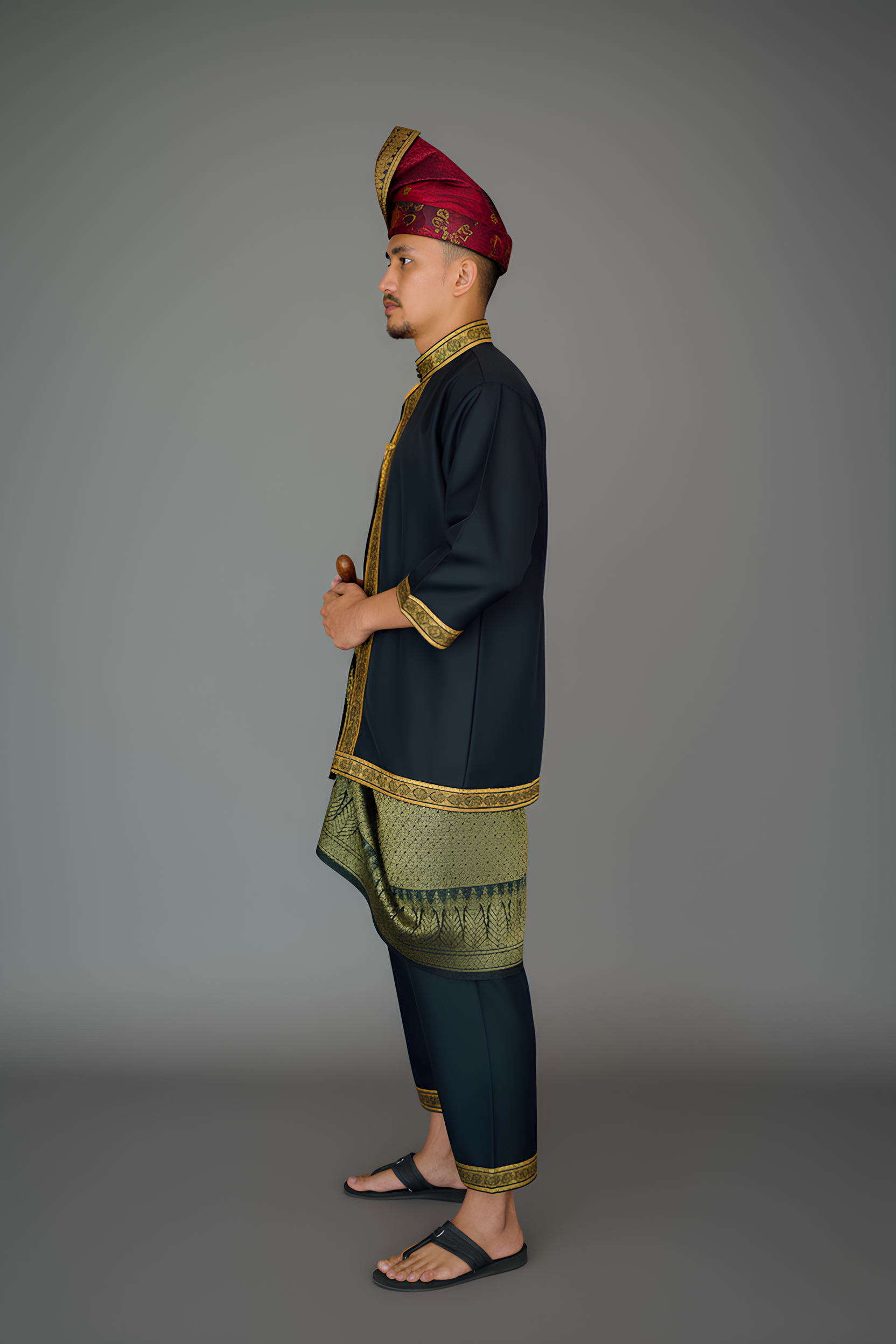
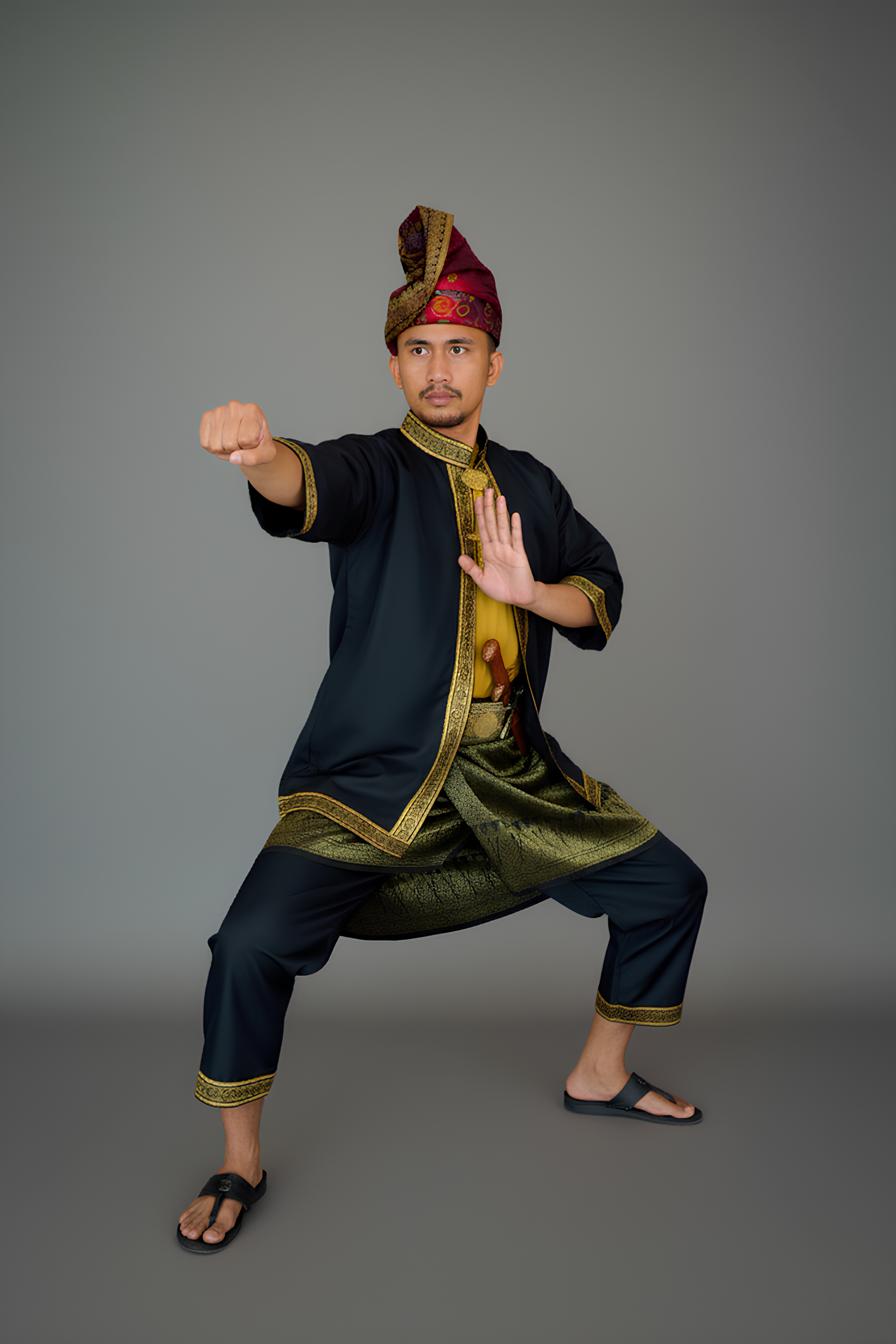
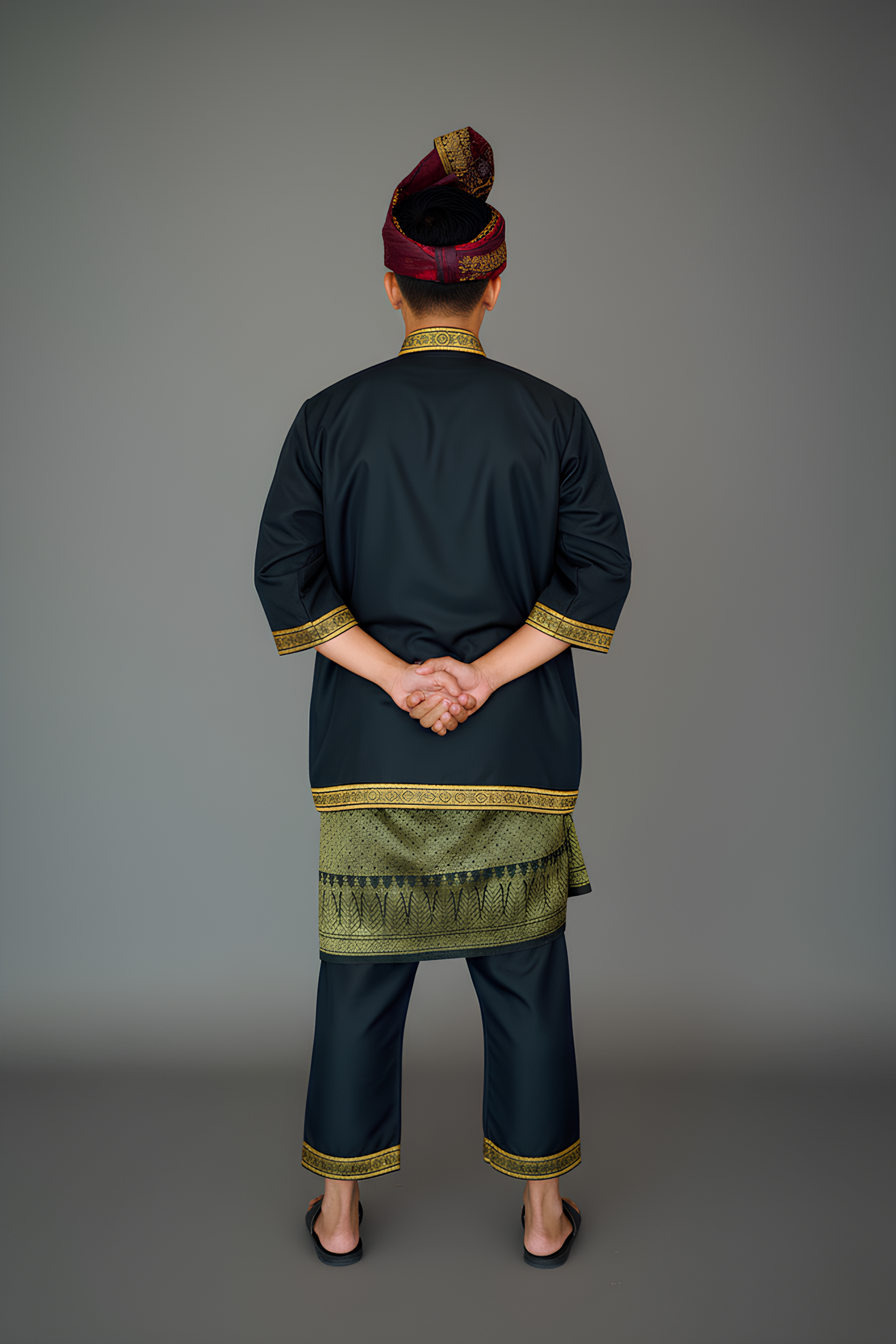
Photo 1: Warrior / Hulubalang Attire
Source: Amsalib bin Pisali
Warriors panglima) and hulubalang were individuals who held crucial roles within the military, defence, and security structures of traditional Malay kingdoms, including the traditional sultanate of Perak. They not only served as the primary defenders of the realm but also functioned as royal escorts, palace guards, and protectors of the dignity and sovereignty of the sultanate. The wearing of special garments such as the Baju Panglima or Baju Hulubalang was more than just a uniform; it symbolised status, authority, and prestige within the social and political system of that era.
The term panglima refers to a commander or leader of an army responsible for matters of war and defence. However, in the context of the traditional Malay kingdom of Perak, panglima denoted high-ranking nobles within the four-tiered hierarchy: Orang Besar Empat (Four Nobles), Orang Besar Lapan (Eight Nobles), Orang Besar Enam Belas (Sixteen Nobles), and Orang Besar Tiga Puluh Dua (Thirty-Two Nobles). Among these, the Orang Besar Empat held the greatest authority, comprising the Orang Kaya Bendahara Seri Maharaja, Orang Kaya Besar Maharaja Diraja, Orang Kaya Temenggung Paduka Raja, and Orang Kaya Menteri Paduka Tuan.
Meanwhile, the Orang Besar Lapan also played an important role in state administration and military affairs. Notable figures included the Orang Kaya Balai Maharaja Lela (chief of Pasir Salak), the Laksamana Orang Kaya (Durian Sebatang), the Orang Kaya Syahbandar (estuary of the Perak River), Panglima Kinta Seri Amarbangsa (Kinta district), Seri Akar Di Raja or Dato’ Sagor (Kampung Gajah), Panglima Bukit Gantang Seri Amar Diraja, Seri Adika Raja, and Imam Paduka Tuan. The nobles of the Four and the Eight were most closely associated with the wearing of the Baju Panglima, which reflected their authority and position as the foremost defenders of the state.
The attire of the hulubalang, on the other hand, was more closely linked to nobles of the Sixteen and Thirty-Two tiers. The term hulubalang referred to warriors, guards, or strongmen tasked with safeguarding the palace, the sultan, or specific regions. They were renowned for their bravery, expertise in the martial arts (silat), and loyalty to the sultan and state nobility. Thus, the hulubalang attire served as an official uniform that not only denoted military function but also symbolised loyalty and honour.
In terms of components, the attire of the panglima and hulubalang combined practicality with symbolism. Their basic garments included the Baju Sikap or Baju Silang, a thick, long-sleeved outer garment worn over another layer, such as a sleeveless teluk belanga. Loose trousers such as Seluar Cekak Musang or Seluar Sampiran allowed for agile movements in combat or martial arts. A decorative samping (waist cloth) made of songket was worn by the panglima, tied at the waist not only for ornamentation but also to carry short weapons, whereas the hulubalang often used a kain pelikat. The most significant accessory was the tanjak or destar (headgear), which symbolised rank, as each fold carried its own meaning. Additionally, the keris was an obligatory weapon tucked at the waist, accompanied by other arms such as spears, swords, or daggers, while the bengkung or pending (ornamental belt) was worn to secure the body.
The history of warrior attire also reveals its evolution. In the pre-Islamic period, their clothing was simple and functional, crafted from sarongs or processed tree bark, with the primary purpose of protecting the body and enabling movement. During the Malacca Sultanate, attire became more refined, influenced by Islamic values that emphasised modesty and decorum in dress. The Baju Sikap emerged during this period as the official attire of warriors and guards. By the 18th and 19th centuries, the costume was further elevated under the influence of other Malay sultanates such as Perak, Johor-Riau, and Pahang, incorporating luxurious fabrics like velvet or silk, gold embroidery, and occasionally paired with light protective gear such as chainmail.
Today, the warrior and hulubalang attire is no longer worn as official palace regalia, as ceremonial dress has been replaced by the Baju Melayu Cekak Musang for state dignitaries. Nevertheless, the attire remains culturally significant as a heritage symbol. It continues to be featured in cultural performances such as dance and theatre, as well as in silat demonstrations. Moreover, it has been revived as a classic Malay fashion icon in contemporary contexts, particularly in traditional weddings where grooms often choose it as their main attire to exude valour, strength, and Malay identity.
In essence, the warrior and hulubalang attire of Perak is not merely a fashion statement or decorative garment. It embodies courage, social status, loyalty, and the manifestation of courtly traditions, combining three central aspects: the practicality of military function, the symbolism of custom through the tanjak and keris, and Islamic values of modesty. This heritage attire remains a source of pride for the state of Perak, frequently showcased in royal ceremon
In general, the attire of the panglima and hulubalang possesses its own distinctive functions and roles, both in its original use during the era of the Perak sultanate and in contemporary society today. The following are the main functions and roles of this attire:
Symbol of Authority and Social Status
The attire of the panglima and hulubalang functioned as a symbol of authority that distinguished them from ordinary subjects. It was not merely clothing, but a marker of one’s position within the social and political hierarchy. The colour, material, and style of the tanjak (headgear) reflected the wearer’s rank and prestige. For example, the attire of a panglima was often made of thicker, sturdier fabric, embellished with songket and complemented with a pending (ornamental buckle), signifying their influence among the state nobility. Thus, whenever a panglima or hulubalang appeared at official ceremonies, their attire served as a visual representation of the power and status they embodied.
Official Court Attire in Ceremonies and Royal Functions
Within the royal court, this attire played an important role as official dress for the panglima and hulubalang during grand royal ceremonies, whether for appointments, banquets, or other palace rituals. Wearing this attire demonstrated their loyalty to the Sultan and highlighted the discipline and unity of the nobles and warriors who safeguarded the state’s sovereignty. Through this attire, the grandeur of the palace was preserved, as its neat and formal presentation reflected the refinement and elegance of Perak Malay culture.
Attire for Warfare and Self-Defence
Beyond ceremonial purposes, this attire also had a functional role in warfare. Its design, simple yet sturdy, allowed for swift movement on the battlefield. Loose trousers and a tightly secured samping enabled warriors to move agilely while practising silat, parrying attacks, or strategising defences. In addition, the tanjak and bengkung were not only decorative but also served practical purposes in providing body support during combat. Thus, the attire successfully combined practicality with aesthetics, making it highly suitable for defence and warfare.
Manifestation of Malay Cultural Identity and Tradition
The attire also functioned as a manifestation of Malay cultural identity, especially in Perak. Each component, such as the baju sikap, tanjak, and keris, symbolised the continuity of tradition inherited since the Malacca Sultanate. It became a representation of Malay identity, embodying values of bravery, loyalty, and cultural distinction. In this context, clothing was not merely an accessory but a visual medium connecting the present generation with its historical roots, thereby strengthening pride in cultural heritage.
Medium of Performance and the Arts
Today, the function of this attire has expanded to become an essential element in the performing arts and cultural expressions. It is frequently featured in silat demonstrations, bangsawan theatre, and traditional dances portraying Malay warriors. Through these performances, audiences not only appreciate the beauty of the attire but also revisit legendary tales of heroism symbolised through the costume. Indirectly, it serves as a means of preserving cultural arts and keeping them alive in the collective memory of society.
Iconic Attire in Contemporary Contexts
In modern times, this attire has gained prominence, particularly in fashion and weddings. Many grooms choose the panglima or hulubalang attire on their special day, as it conveys an image of valour and authority. Contemporary fashion designers have also drawn inspiration from this traditional costume to create modern designs infused with traditional elements. As such, this attire is not only a relic of history but also continues to thrive as a classic icon of Malay fashion with high aesthetic value.
Accessories are an essential complement to the attire of the panglima and hulubalang of Perak. Their use was not merely for aesthetic appeal but carried unique symbolic meanings, each with its own cultural significance:
Tanjak / Tengkolok / Destar
The tanjak, tengkolok, or destar was an important head accessory in the attire of the panglima and hulubalang. It was crafted from songket or handwoven fabric, folded in specific styles that conveyed symbolic meanings. In Perak, notable variations included the Destar Getam Pekasam, worn by nobles of the Four and Eight, while the Destar Ayam Patah Kepak, made of red full-floral songket, was the official headgear of the Commander of War. For the hulubalang, the most common style was the Pucuk Pisang Patah fold.
Samping
The samping was a vital element of the warrior’s attire, worn around the waist down to the knees, functioning both as ornamentation and as a place to carry small weapons such as a short keris or badik. During royal ceremonies or audiences with the Sultan, panglima typically wore finely woven songket samping embroidered with gold or silver thread. For battle, however, they used a sarong or kain pelikat like the hulubalang, as these were lighter and more practical. In terms of tying styles, the panglima used the Ikatan Kembung or Ikatan Laksamana Melamar during official ceremonies, while the simpler and sturdier Ikatan Silang Pendekar was worn in combat. These differences in material and tying styles reflected the samping’s dual role as both a status symbol and a functional garment adapted to context.
Keris
The keris was an obligatory traditional weapon, tucked at the waist of every panglima or hulubalang. More than a defensive tool, it symbolised bravery, honour, and authority. Each keris was usually custom-made, with uniquely carved hilts and sheaths reflecting the owner’s rank. In the cultural context, the keris also carried symbolic and spiritual significance as a protective charm.
Pending
The pending was a type of ornamental belt buckle made of metal, often intricately engraved with floral or geometric motifs. Its function was to secure the samping or bengkung, while also enhancing the grandeur of the attire. The pending served as a symbol of authority and was typically worn by high-ranking nobles or leading panglima as a marker of elevated status. However, there were also occasions when attire was worn without the pending, depending on custom or the nature of the event. In modern contexts, the pending is commonly worn by grooms during traditional Malay weddings.
Armlets and Bengkung
These accessories served as additional elements in the panglima’s attire. Armlets, usually made of metal, enhance grip strength while adding an aesthetic touch. The bengkung, a long cloth or wide belt wrapped around the waist, helped secure the garments and provided support to the body. It was especially important for the panglima during movement or combat, ensuring both functionality and discipline in appearance.
Capal (Traditional Sandals)
Traditional footwear, such as the capal completed the attire of the panglima and hulubalang. Made from leather or other durable materials, the capal was simple in design yet practical and comfortable for long journeys or official ceremonies. Despite its modest appearance, the capal upheld the values of modesty and embodied the Malay cultural emphasis on practicality and simplicity
TThe materials used in the attire of the panglima and hulubalang of Perak were carefully selected, as they not only ensured the wearer’s comfort but also symbolised the status and function of the attire. The following are the key materials utilised in this traditional costume:
Garment
The attire of Perak’s panglima and hulubalang was commonly made of cotton, handwoven silk, or velvet.
Cotton was chosen for its lightness and comfort, making it suitable for swift movements, particularly during warfare.
Handwoven silk was preferred for ceremonial occasions due to its fine, luxurious, and lustrous texture, often embellished with gold or silver thread embroidery on the cuffs, neckline, and chest to highlight the wearer’s rank.
Velvet was also used by high-ranking panglima, giving the attire a thicker, sturdier, and more authoritative appearance.
Occasionally, variations were made from satin for official events, as its sheen reflected beautifully under the palace lights.
SSamping (Waist Cloth)
The samping worn by panglima and hulubalang displayed a variety of materials depending on their function.
In formal ceremonies, panglima donned Perak songket, a traditional handwoven fabric featuring motifs such as scattered flowers (bunga tabur), bamboo shoots (pucuk rebung), or scrolling clouds (awan larat), crafted with gold or silver threads to denote high status.
Some hulubalang wore simpler handwoven samping without elaborate decoration, emphasising modesty while maintaining neatness.
On the battlefield, however, both panglima and hulubalang preferred samping made from sarong or kain pelikat, usually cotton or cotton-polyester blends, as these were lighter, easier to tie, and allowed greater freedom of movement.
These differences in material signified the balance between ceremonial demands and the practical necessities of combat.
TTanjak / Tengkolok / Destar (Headgear)
The tanjak or tengkolok was an essential element, typically made from finely woven songket with gold or silver threads, decorated with traditional motifs such as bamboo shoots (pucuk rebung), full floral (bunga penuh), or scattered flowers (bunga tabur).
Songket fabric indicated rank and social standing, particularly for high-ranking nobles and commanders of war.
In addition, black woven fabric striped with gold was sometimes used, symbolising bravery and loyalty to the Sultan.
On certain occasions, the tanjak could also be made from an ordinary sarong or kain pelikat, especially when worn by hulubalang who prioritised practicality.
This diversity of materials allowed the tanjak to be adapted for both ceremonial purposes and preparations for battle.
The wearing of the panglima and hulubalang attire in Perak followed specific rules and traditions. The steps for donning the attire were as follows:
Step 1: Inner Garment and Outer Layer
Dressing began with the baju Melayu in the teluk belanga style, usually in dark shades such as black or navy blue, worn as the inner layer.
As the outer layer, the panglima or hulubalang would wear the baju silang, baju layang, or baju sikap, which were long-sleeved outer garments.
The outer garment was typically fastened with brooches (kerongsang) or buttons.
Step 2: Trousers
This was followed by pairing the attire with seluar panjang cekak musang, made from matching or complementary fabric and colours.
The trousers were cut loosely to allow comfort and freedom of movement, particularly important in combat or when accompanying the Sultan at official ceremonies.
For ceremonial functions, the trousers extended to the ankles, while for battle, they were cut shorter, reaching just below mid-calf, to facilitate agility.
Step 3: Samping and Tying Styles
Next, the samping was tied around the waist. For royal ceremonies, the panglima wore a songket samping using the Ikatan Kembung or Ikatan Laksamana Melamar.
However, for battle preparations, the samping was replaced with a kain pelikat, tied using the sturdier and more practical Ikatan Silang Pendekar, a style also commonly used by the hulubalang.
Step 4: Bengkung and Pending
The bengkung (waist sash) was wrapped tightly around the abdomen to strengthen the body and secure the attire.
For the panglima or nobles, the bengkung was often paired with a pending, an intricately engraved metal belt buckle, which served as both a fastener for the samping and a decorative emblem of rank.
In battle, the bengkung was secured firmly to ensure the samping did not loosen easily.
Step 5: Tanjak / Tengkolok / Destar (Headgear)
The head was adorned with a tanjak or destar, folded according to traditional Perak styles. Among these were the Destar Getam Pekasam for the Orang Besar Empat, the red Destar Ayam Patah Kepak for the Commander of War, and the Pucuk Pisang Patah style commonly worn by the hulubalang.
Wearing the tanjak was not merely decorative; it was a mark of bravery, rank, and cultural identity.
Step 6: Keris and Weapons
The keris was then tucked at the waist, either at the left side or the centre, depending on protocol and style.
The keris served not only as a weapon of self-defence but also as a symbol of courage and honour for the panglima and hulubalang.
In certain situations, they also carried additional weapons such as swords or spears.
Step 7: Footwear (Capal)
The dressing process concluded with the donning of traditional capal or leather sandals, simple yet neat.
This footwear maintained decorum while providing comfort, whether walking within the palace or traversing open grounds.
Reference Source
Bahan Bacaan
Ab Majid, A. H. (Ed.). (2023). Kesejagatan warisan silat Melayu: Rungkaian kearifan. Penerbit USM.
Ahmad Yaakob. (2014, Jun 14). Sistem pembesar di Perak. Blogspot. https://ahmadyaakobsmkjengka2.blogspot.com/2014/06/sistem-pembesar-di-perak.html
Adi Channel. (2022, April 8). Ikatan tanjak, destar, tengkolok. https://www.adichannel.com/2022/04/ikatan-tanjak-destar-tengkolok.html
Free Malaysia Today. (2019, Jun 16). Ikatan kain samping berbeza mengikut situasi adat. https://www.freemalaysiatoday.com/category/bahasa/2019/06/16/ikatan-kain-samping-berbeza-mengikut-situasi-adat
Ismail, S. Z. (2009). Konsep adat pakaian cara Melayu: Sentuhan tenunan dalam busana Melayu. [Manuskrip tidak diterbitkan].
Ramli, H., Said, T. S., Aik, H. C. H., Chee, M. T., & Tuah, M. S. B. (2021). Adaptasi keindahan rekabentuk motif tradisional menerusi seni tekat benang emas. Jurnal Peradaban Melayu, 16(1), 31–40.
Zainal Abidin, H. (n.d.). Pakaian tradisional Melayu: Satu analisis. Akademika, 75(1). https://journalarticle.ukm.my/535/1/1.pdf
Location
State JKKN Contact Information
Encik Yufazli Yusof
Cultural Officer
Jabatan Kebudayaan dan Kesenian Negara Perak
Kompleks JKKN Perak,
Lot 20561@20565 Jalan Caldwell,
Off Jalan Raja Di Hilir,
30350 Ipoh,
PERAK DARUL RIDZUAN
05-253 7001 / 05-254 1027
Use the form below to contact the Informant/Figure/Editor/Researcher directly. We will respond to your inquiry as soon as possible!


