

ARTS AND CULTURE INFORMATION GATEWAY
Immerse yourself in the colorful world of art and culture! From traditional heritage to contemporary works, discover uniqueness that reflects the nation's identity and identity
ADAT RESAM DAN BUDAYA KAUM BAJAU: ADAT DAN PANTANG LARANG KEMATIAN
 PPR Seri Tagasan, Kampung Tagasan, Jalan Semporna-Tawau, 91308 Semporna, Sabah

Picture
5
Video
No record
Today's Visitor
49
Number of Visitors
3214
Introduction and history
The district of Semporna, located in eastern Sabah, is one of the areas rich in diverse and unique cultures and traditions that have been preserved to this day. The majority of the ethnic group residing in this district is the Bajau people, who possess a distinct identity compared to the Bajau community on Sabah's west coast, particularly regarding dialect, language nuances, and traditional customs. This diversity reflects Sabah's rich cultural heritage, making each district unique.
One of the customs and cultural practices of the Semporna community that draws attention is their funeral rituals. While essential Islamic obligations such as bathing the deceased, shrouding, and burial are performed by Islamic teachings, traditional cultural elements are still evident through the customs and taboos observed. For example, there are specific beliefs concerning the soul of the deceased and particular practices performed by the family as a final tribute.
These customs showcase the community's deep connection with its beliefs and illustrate how elements of religion and tradition can blend harmoniously, fostering a sense of unity. In an increasingly modern society, preserving such customs is crucial to maintaining the cultural heritage that enriches the ethnic identity.
-
-
-
FUNERAL RITUALS AND TABOOS
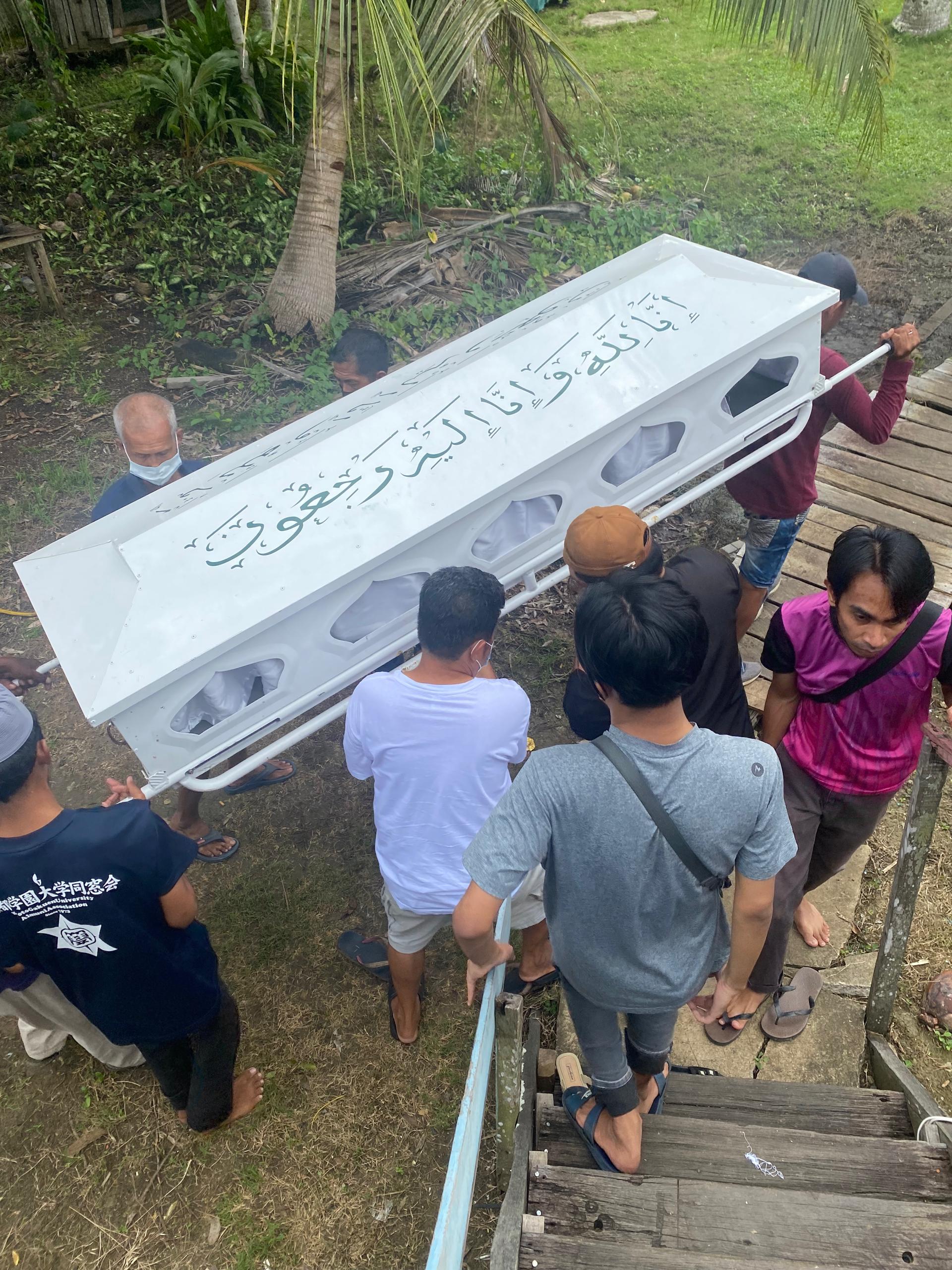
When a death occurs, the family of the deceased performs customary rituals, starting with bathing the body and ending with burial. After the burial, the family also carries out several specific rituals for the deceased in the post-burial period. Below are the funeral rituals and taboos of the Bajau ethnic community in the district of Semporna.
Funeral Management Process
On the day of death, the deceased's family raises a white flag or cloth to signify a death within a house or village. This flag is typically displayed in a prominent location, such as in front of the house or a public area within the village. This act signals the surrounding community, informing them of the loss and indirectly inviting neighbours and relatives to offer condolences, assist with funeral arrangements, and support the family in customary preparations.
Subsequently, the family prepares a special tray known as the Lampai Kapataiyan, which symbolises the final respect for the deceased. This tray contains personal items such as clothing, bathing essentials, and flowers. The number of Lampai trays is based on the deceased's gender and follows an odd-numbered tradition, with five trays prepared for women and seven for men. These trays are distributed to specific individuals chosen by the family, often those of the same age or closely connected to the deceased. The items within the trays are considered charitable offerings, and their recipients assume ownership of them. This tradition honours the deceased and embodies the Islamic principle of charity, reinforcing bonds between the bereaved family and the community.
Additionally, during the obligatory rites for the deceased, the family prepares several customary items, including Sunduk (gravestones), Payungan, Luhul, Dinding Hali, and Panji-Panji. All of these must be arranged before placing the body in the coffin and transporting it to the burial site.
|
No |
Item |
Customs and Taboos |
|
1.
|
Sunduk (gravestones) |
The Sunduk is regarded
as a vital element in the funeral customs of the Bajau community, as its
design plays a key role in signifying the gender and age of the deceased. For
men, the Sunduk is crafted with a
rounded shape, while it is designed to be flat for women. The Sunduk's height
further reflects gender and age hierarchy; the Sunduk for men is taller than that for women, and for young
children, it is crafted smaller than that for adult women. These design
distinctions and associated customs symbolise the belief that the physical
attributes of the Sunduk convey the respect and status accorded to the
deceased. |
|
2.
|
Payungan |
The Payungan is a
special umbrella that accompanyes the deceased from the house to the burial
site. Traditionally, it is made from wooden frames arranged in a cross shape
to form a rectangular structure, with white fabric placed on top as a
covering. This umbrella is usually positioned at the head of the deceased and
carried by the closest relative, symbolising the family’s respect and
responsibility towards the departed. However, with time, some families now
opt to use regular umbrellas as a substitute for the traditional Payungan. |
|
3.
|
Luhul |
It is a white cloth stretched over the deceased's grave and is
part of the wrapping for the
Panji-Panji (Flags). |
|
4.
|
Panji-Panji |
The Panji-Panji are
small flags that accompany the deceased to the burial ground, serving as an
integral part of the funeral customs. Among the Palauh subgroup, these flags are crafted in tiers using red, yellow,
and green fabrics, with the number of tiers always being odd, such as five,
seven, nine, or eleven. In contrast, for the Sikubung and Ubian subgroups, the
Panji are not designed as traditional flags but are instead fashioned
from wooden sticks wrapped in Luhul cloth. |
|
5.
|
Dinding Hali |
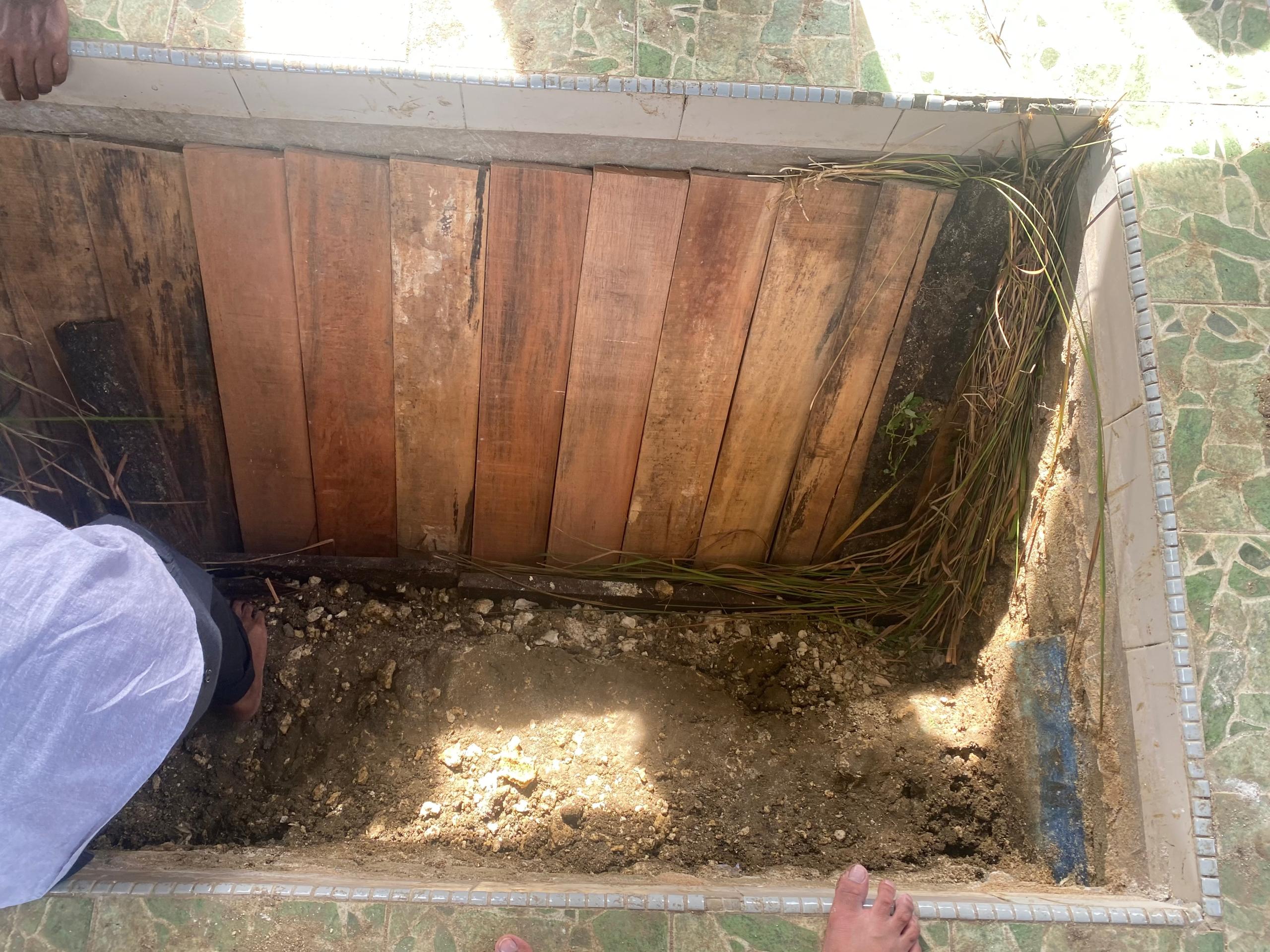
Dinding Hali refers to Belian wood arranged within the grave to cover the
deceased's body. Depending on the size of the grave, 15 to 20 pieces of wood
are typically used. |


|
No |
Magbahangi |
Description |
|
1.
|
Bahangi Heya (Grand Feast) |
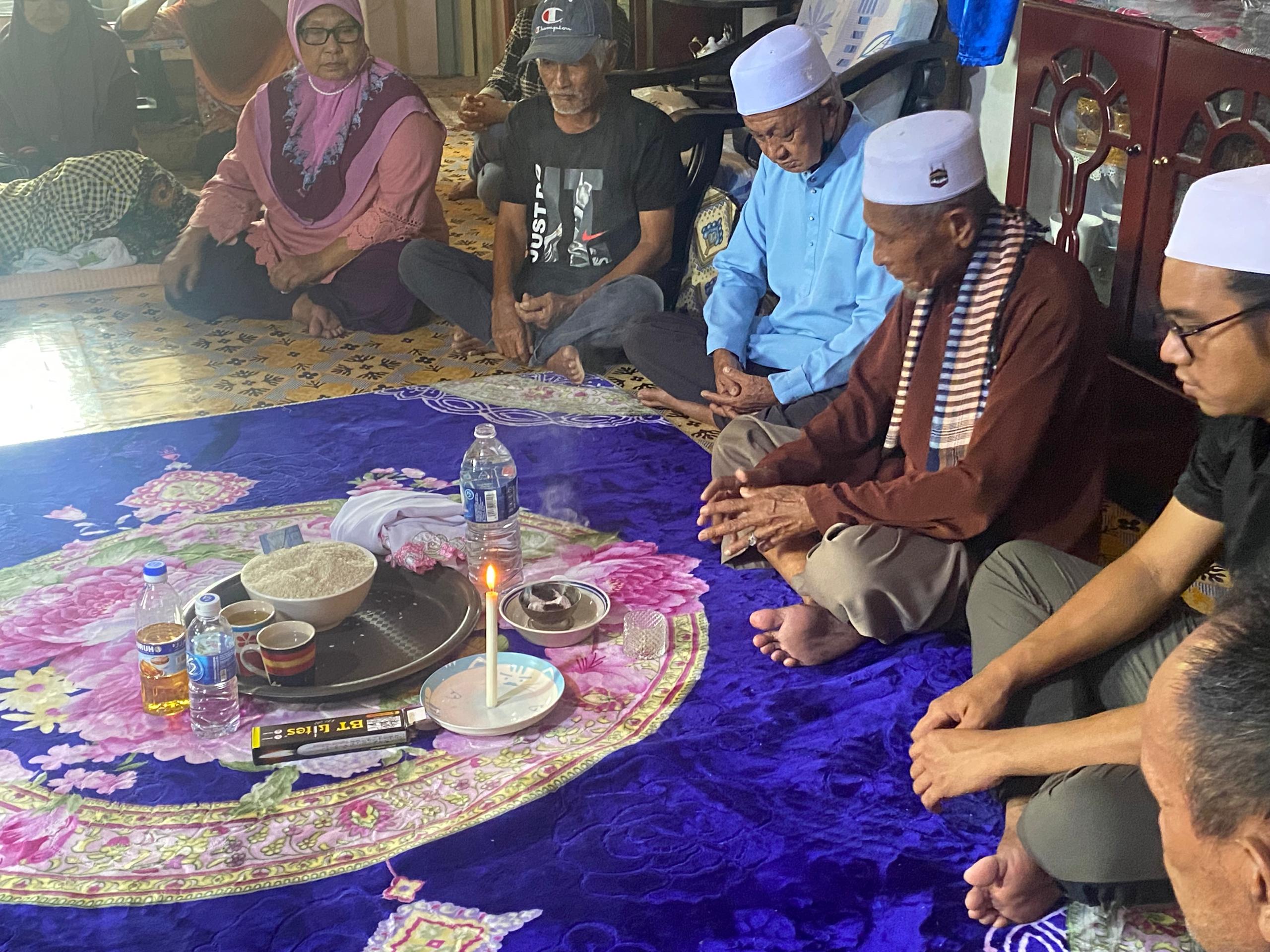
● Bahangi Tallu ( Three-Day Feast) This feast is typically held on the third day after the deceased
has been buried. ● Bahangi Pi tu’ ( S even-Day Feast) The seven-day feast is the biggest memorial ceremony held by the
deceased's family. All family members gather for this event because, on the
seventh day after death, the ritual known as Magparuaih Umagad (lowering the spirit) is usually performed. It
is believed to be the last day the spirit of the deceased remains in the
house. ● Bahangi Duwam Pu’ (Twenty-Day
Feast) The twenty-day feast serves as a form of validation and respect
for the deceased. ● Bahangi Empat P u’ (Forty-Day
Feast) The forty-day feast is a significant commemoration for the
deceased, symbolising the family's acceptance and is believed to mark the
final day of the spirit's transition to the afterlife. ● Bahangi Dahatus (Hundred-Day
Feast) The hundred-day feast marks the end of memorial feasts for
the deceased. This event not only honours and remembers those who have passed
but also strengthens family bonds while offering prayers for the well-being
of their souls. |
|
2.
|
Bahangi Silung (Small Feast) |
Bahanggi Silung is a small-scale memorial feast organised by the immediate
family of the deceased in collaboration with the imam. This event does not
involve extended relatives or the larger family network. The feast is
typically held on the 10th, 17th, 27th, and 37th days following the burial.
The meal prepared for this occasion is called Kok Dulang, which consists of food served on one or two large
trays specifically for the imam. This gesture is meant to show respect and to
offer prayers for the deceased. |
|
3.
|
Kammattian (the death
anniversary) |
The Kammattian Feast, also known as the death anniversary feast,
is held annually to commemorate the passing of a loved one. This occasion
provides family members with the chance to come together, pray for the
well-being of the deceased's soul, and uphold the tradition of honouring
them. The date of the feast usually corresponds to the anniversary of the
deceased's death in the calendar year. |


- Melda Arakani. PPR Seri Tagasan, Kampung Tagasan, Jalan Semporna-Tawau, 91308 Semporna, Sabah. 11 November 2024.
- Gunda Arakani. Kampung Kabogan Baru, 91308 Semporna, Sabah. 11 November 2024.
Reference Source
Ismail, N. B, Zainal, S., & Sim, C. C. (2017). Upacara Adat Kematian Magpaturun Roh Arwah Ma Bahagi Pitu’ Tinjauan Awal Terhadap Elemen Teaterikal Teater. Jurnal Gendang Alam (GA), 7. https://doi.org/10.51200/ga.v7i.1052
Marinsah, S. A., HAJIMIN, M. N. H., & Ramli, M. A. (2019). Unsur Kearifan Tempatan Dalam Adat Kematian Masyarakat Bajau di Sabah: Analisis Dari Perspektif Hukum Islam: Local Wisdom Elements on Death Ritual among Bajau Ethnic in Sabah: An Analysis from the Islamic Perspective. MANU Jurnal Pusat Penataran Ilmu dan Bahasa, 29.
Marinsah, S. A., Ramli, M. A., Meerangani, K. A., & Sabdan, M. S. (2018). Pengambilkiraan ‘Urf dan Adat Dalam Fatwa Semasa: Analisis Terhadap Adat Kematian Bajau di Sabah: ‘Urf and Customs Determination in Fatwa: An Anlysis on Death Ritual Among Bajau Ethnic in Sabah. Journal of Fatwa Management and Research, 12(1), 73-91.
Mokhtar, R. . (2020). Adat Kematian Dalam Kalangan Kumpulan Etnik Bajau Laut Di Kampung Bangau-Bangau, Semporna, Sabah: Death Rituals Among The Bajau Laut Ethnic Group in Kampung Bangau-Bangau, Semporna, Sabah. Jurnal Kinabalu, 26(2), 277. https://doi.org/10.51200/ejk.v26i2.2780
Ramli Dollah, Sabihah Omar & Md. Shaffie Abd. Rahim. (2012). Pendidikan dan Sosiobudaya. Dalam Md. Shaffie Abd. Rahim, Sabihah Osman & Ramzah Dambul (Eds.). Bajau Pantai Timur. Institut Terjemahan dan Buku Malaysia (ITBM). Kuala Lumpur.
Yakin, H. S. M. (2017). Pengaruh budaya tradisi dan islam dalam evolusi adat dan ritual kematian komuniti Bajau. Akademika, 87(3), 15-25.
Yakin, H. S. M., & Totu, A. (2014). Signifikasi konsep proxemics dan chronemics dalam ritual kematian Bajau: Satu kajian dari perspektif komunikasi bukan lisan. Jurnal Komunikasi, 30(2), 71-90.
Location
State JKKN Contact Information
Puan Nurshahrinna Syahrial
Cultural Officer
Jabatan Kebudayaan dan Kesenian Negara, Sabah
Kompleks JKKN Sabah,
Jalan Tasik off KM4 Jalan Penampang,
88200 Kota Kinabalu
SABAH
088-205070
Use the form below to contact the Informant/Figure/Editor/Researcher directly. We will respond to your inquiry as soon as possible!


