

ARTS AND CULTURE INFORMATION GATEWAY
Immerse yourself in the colorful world of art and culture! From traditional heritage to contemporary works, discover uniqueness that reflects the nation's identity and identity
TARIAN CINTA SAYANG
 No 26, Jalan Ros, Felda Bukit Batu, 81020, Kulai, Johor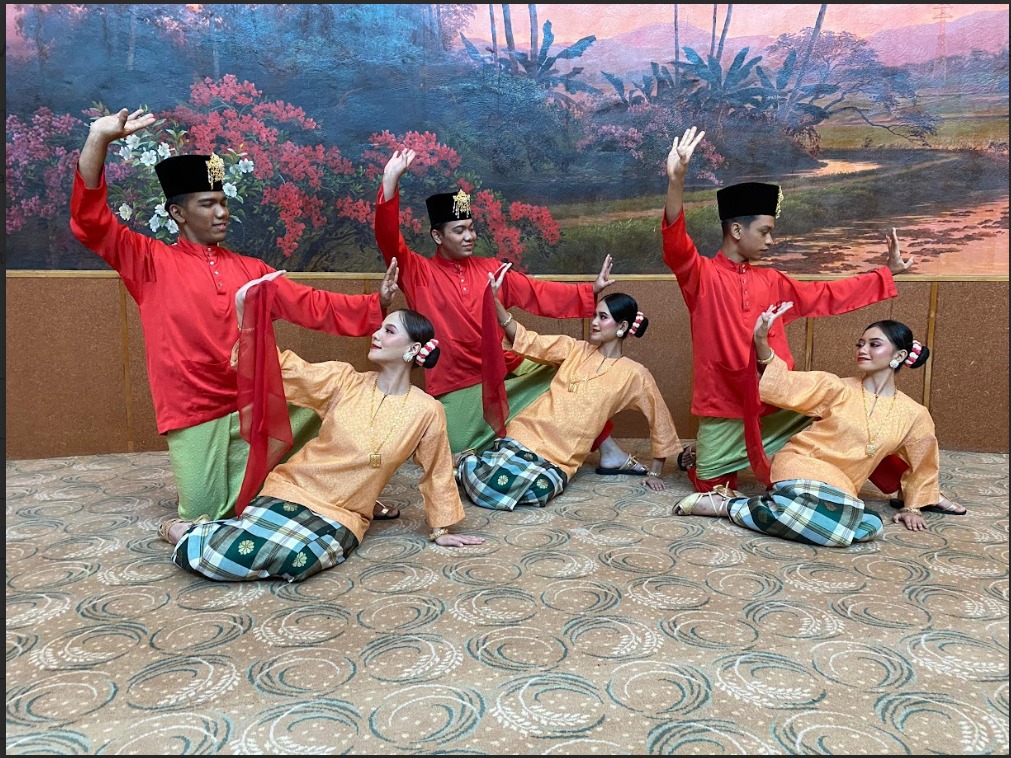



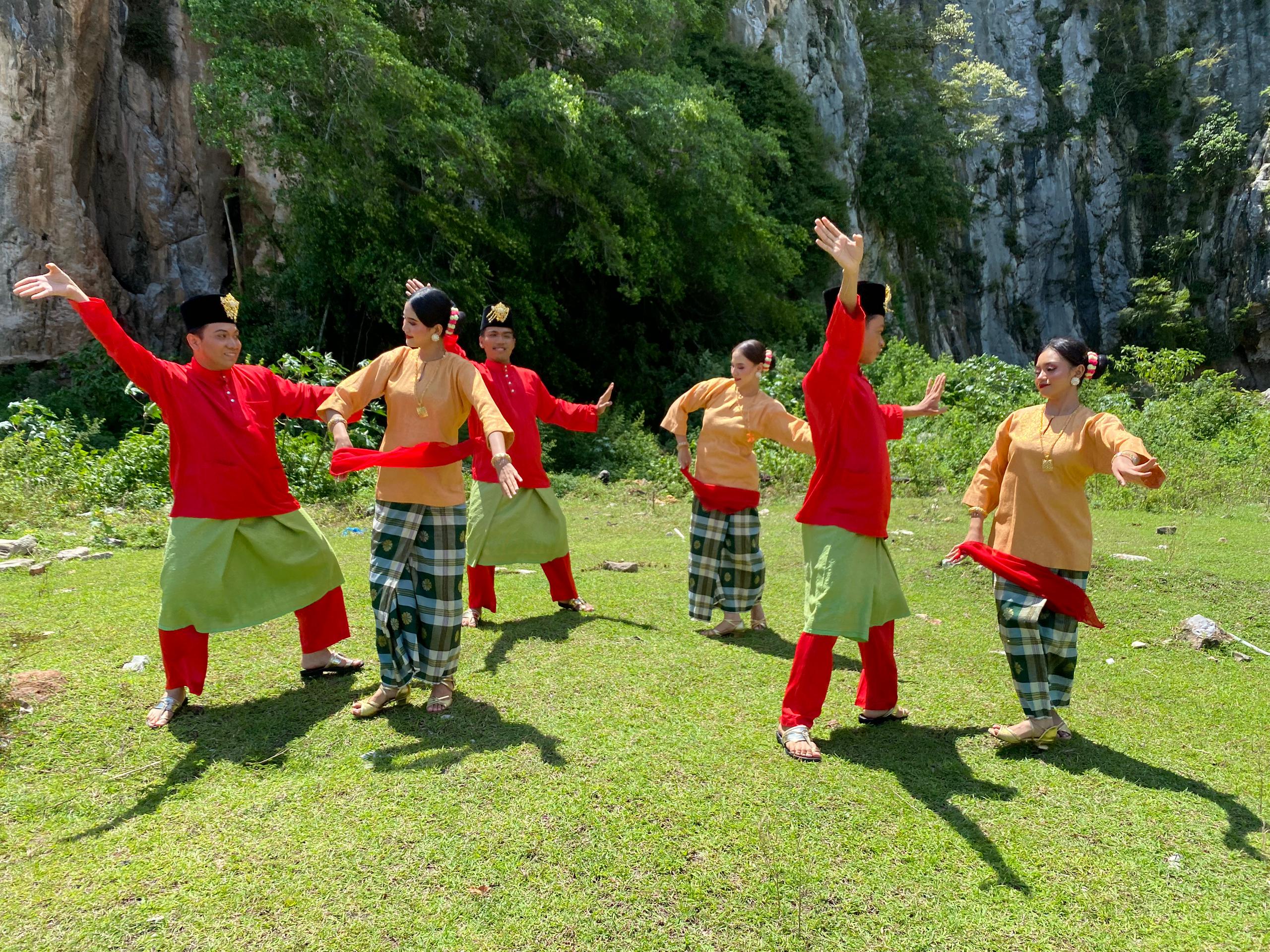
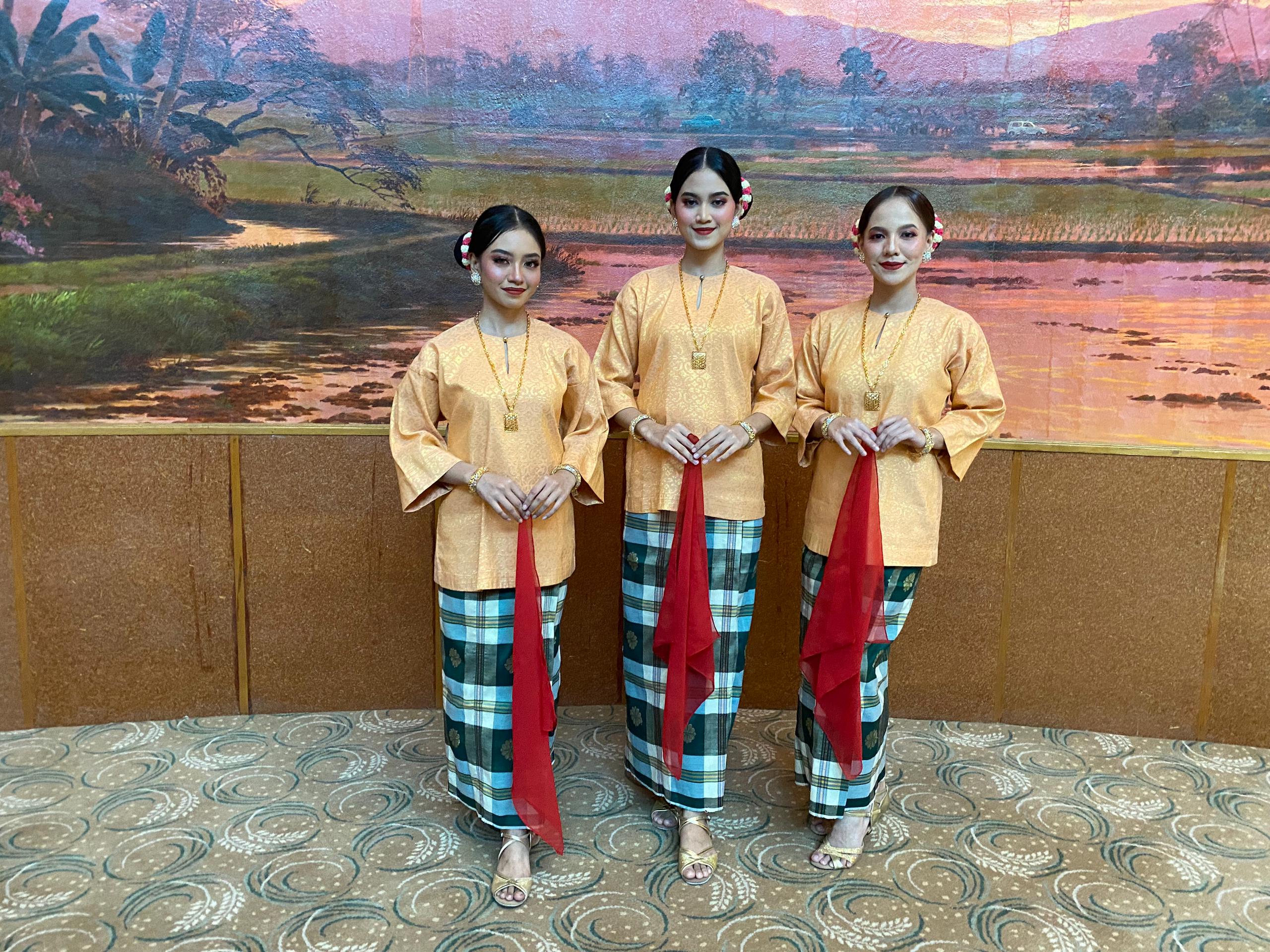
Picture
13
Video
Available
Today's Visitor
8
Number of Visitors
5295
Introduction and history
The Cinta Sayang dance is one of the traditional dances famous in the state of
Kedah and is also known in several northern states of Peninsular Malaysia. This
dance is often performed at festive events and celebrations as a form of folk
entertainment that reflects the gentleness of the culture and the values of love and
affection in community life.
Historically, the Cinta Sayang dance is believed to have originated from a
traditional dance form known as Zikir Rahmat. Its origins are linked to the lives of
fishing communities along the coastal areas, particularly in Kedah. The dance
portrays the emotional scenes of family members, especially wives, sending off
fishermen as they head to sea to earn a living. It symbolizes a temporary farewell
filled with prayers, hopes, and deep affection.
In this tradition, the fishermen pray for the safety of the family members they leave
behind, while the families in return pray for the protection and blessing of their
husbands’ journey and livelihood. Thus, the movements in this dance are not only
aesthetic but are also rich in symbolic meaning, depicting the close bonds among
family members, their prayers, and hopes in facing the challenges of life.
The Cinta Sayang dance is typically performed at various celebratory events,
particularly during weddings, royal ceremonies, and official state-level functions. It
serves as a form of public entertainment that showcases the grace, refinement,
and beauty of the Malay cultural dance movements in the state of Kedah.
Today, the function of the Cinta Sayang dance has expanded and taken on a more
modern and open role. It is frequently performed in national-level cultural
programs, traditional dance competitions, and incorporated into the performing arts
curriculum in schools and higher education institutions by cultural organizations.
The dance also serves as a form of cultural diplomacy, being featured in
international events to introduce and promote Malay artistic heritage to global
audiences.
The costumes and accessories used in the Cinta Sayang dance play an important
role in strengthening the cultural identity and aesthetic values of the performance.
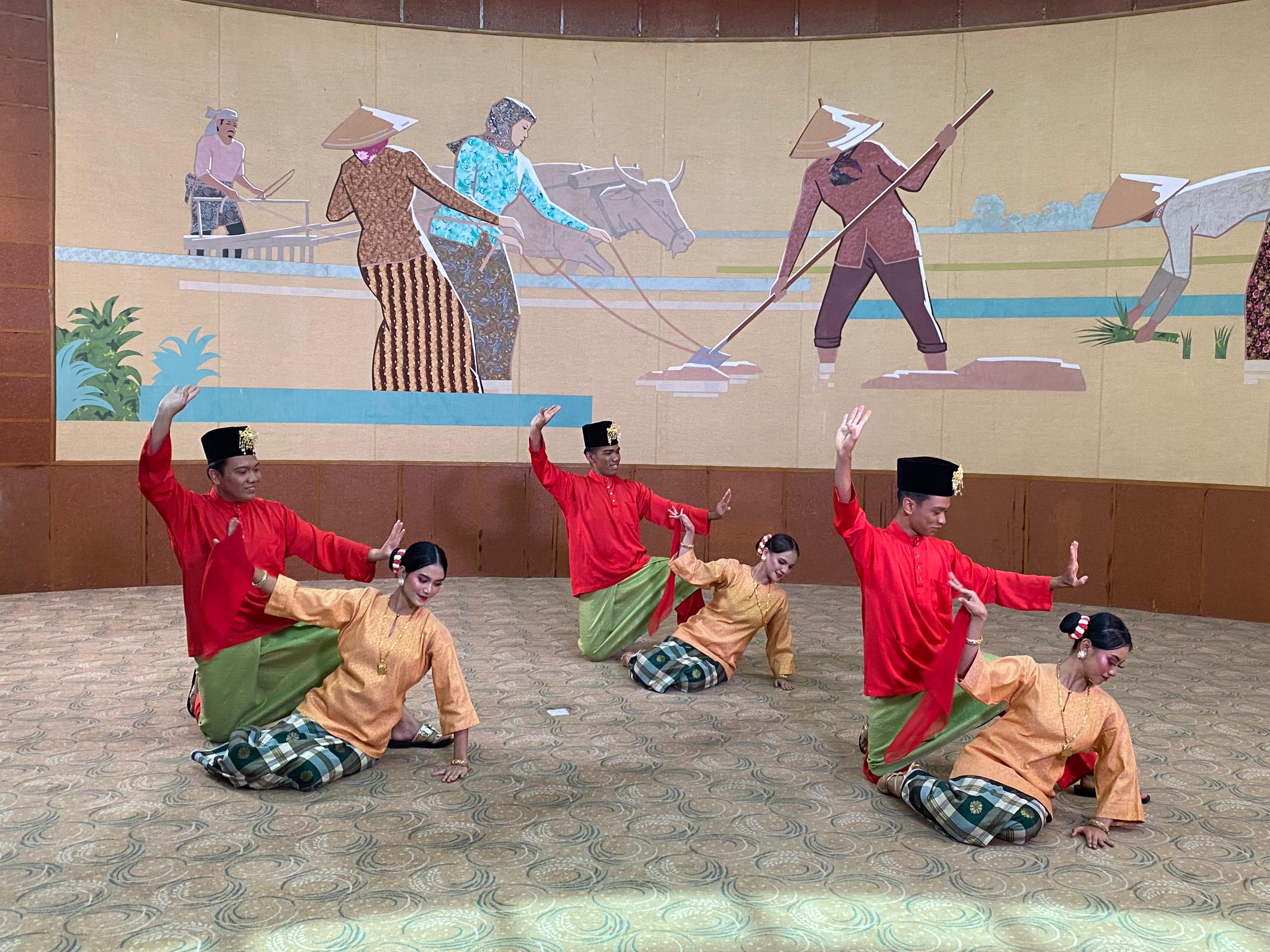
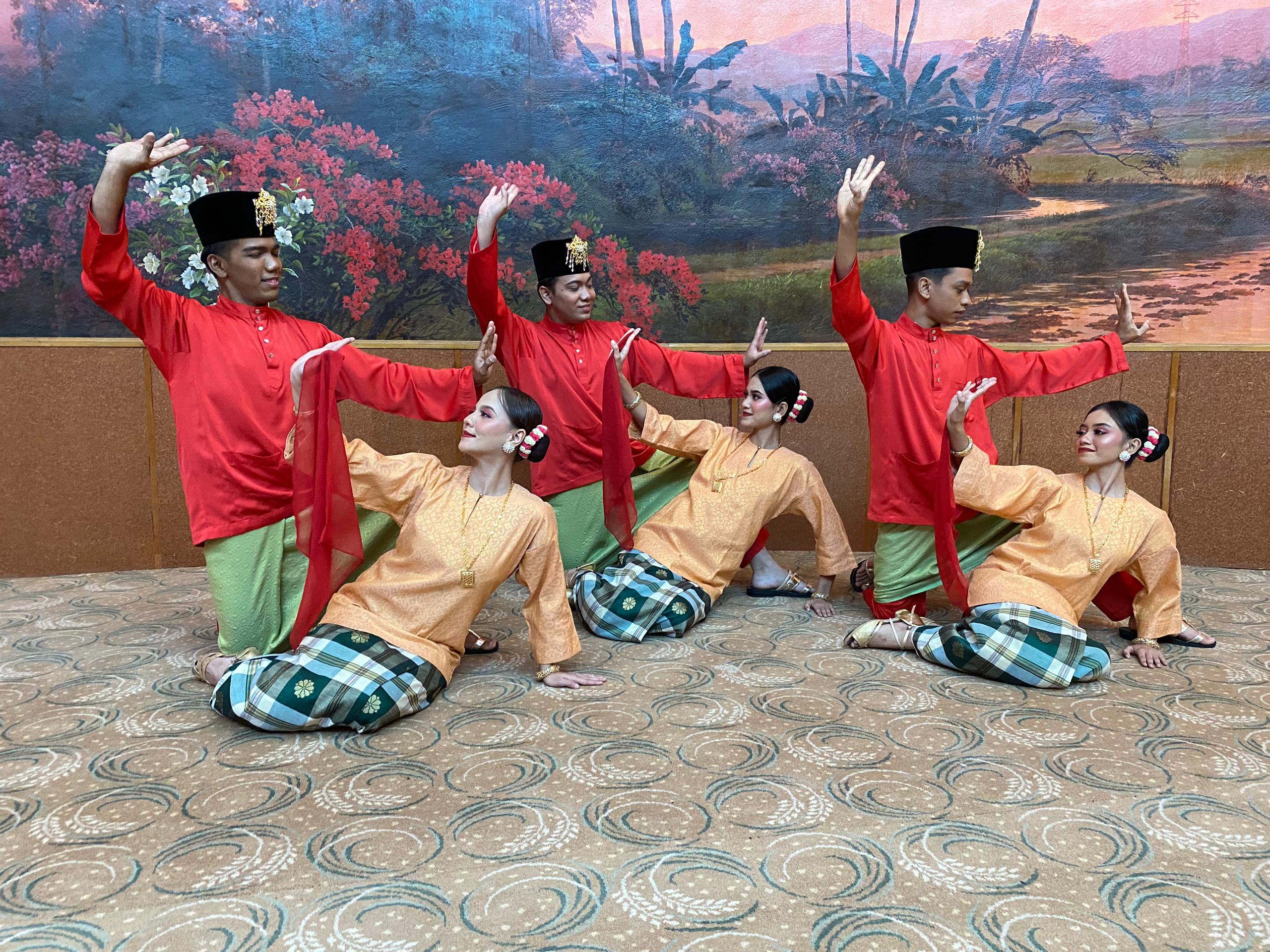
Female dancers typically wear the Baju Kurung Kedah or a loose-fitting Baju
Kurung paired with a songket. Traditional accessories such as brooches, bracelets,
and long scarves (selendang) are used to complete the appearance. The
selendang is not merely decorative but also serves as a prop in the dance
movements, enhancing the grace and fluidity of the performance, symbolizing the
modesty and gentleness of Malay women.
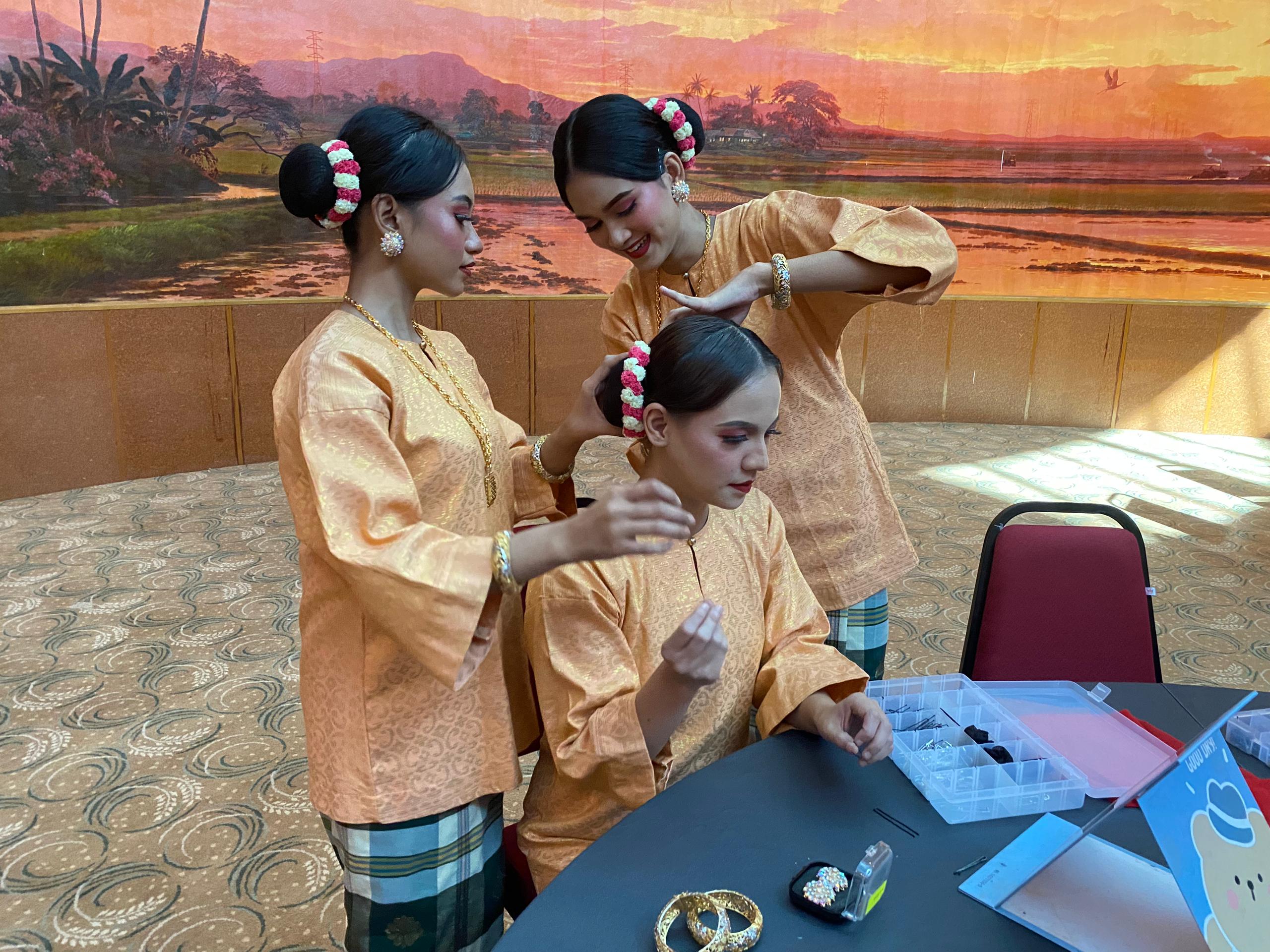
In addition, other accessories such as hair ornaments, rings, and decorative
headpieces are worn to enrich the visual dimensions of the performance. Hair
adornments, usually consisting of jasmine flowers or other local blooms, are
arranged meticulously and neatly. Some dancers also wear cucuk sanggul
(hairpins) as additional ornaments.
With the evolution and adaptation of modern stage performances, the costumes for
the Cinta Sayang dance have undergone modifications to suit commercial
performance concepts. For example, male dancers’ costumes are often
redesigned to reflect a warrior identity. This appearance includes the Baju Melayu
with either cekak musang or teluk belanga collars, long pants, and samping
dagang luar with specific knots such as ikatan pancung (typically for nobility) and
ikatan kembung (commonly worn by warriors, dignitaries, or grooms). The
headgear usually remains the songkok to maintain the dance’s identity, or may be
combined with the wearing of the tanjak (traditional Malay headgear).
The Cinta Sayang dance is accompanied by a traditional musical arrangement that
enhances the graceful and romantic atmosphere of the performance. Among the
main instruments used are two long drums: the Gendang Pengibu, which plays the
main rhythm, and the Gendang Penganak, which provides the counter and
complementary beats. In addition, a gong player plays two gongs known as Gong
Jantan (male gong) and Gong Betina (female gong) to add rhythmic emphasis and
dynamic sound layers. The main melody is further enriched by the sounds of the
accordion and violin, producing harmonious, gentle, and melancholic tunes that
perfectly match the theme of love and longing at the heart of the dance.
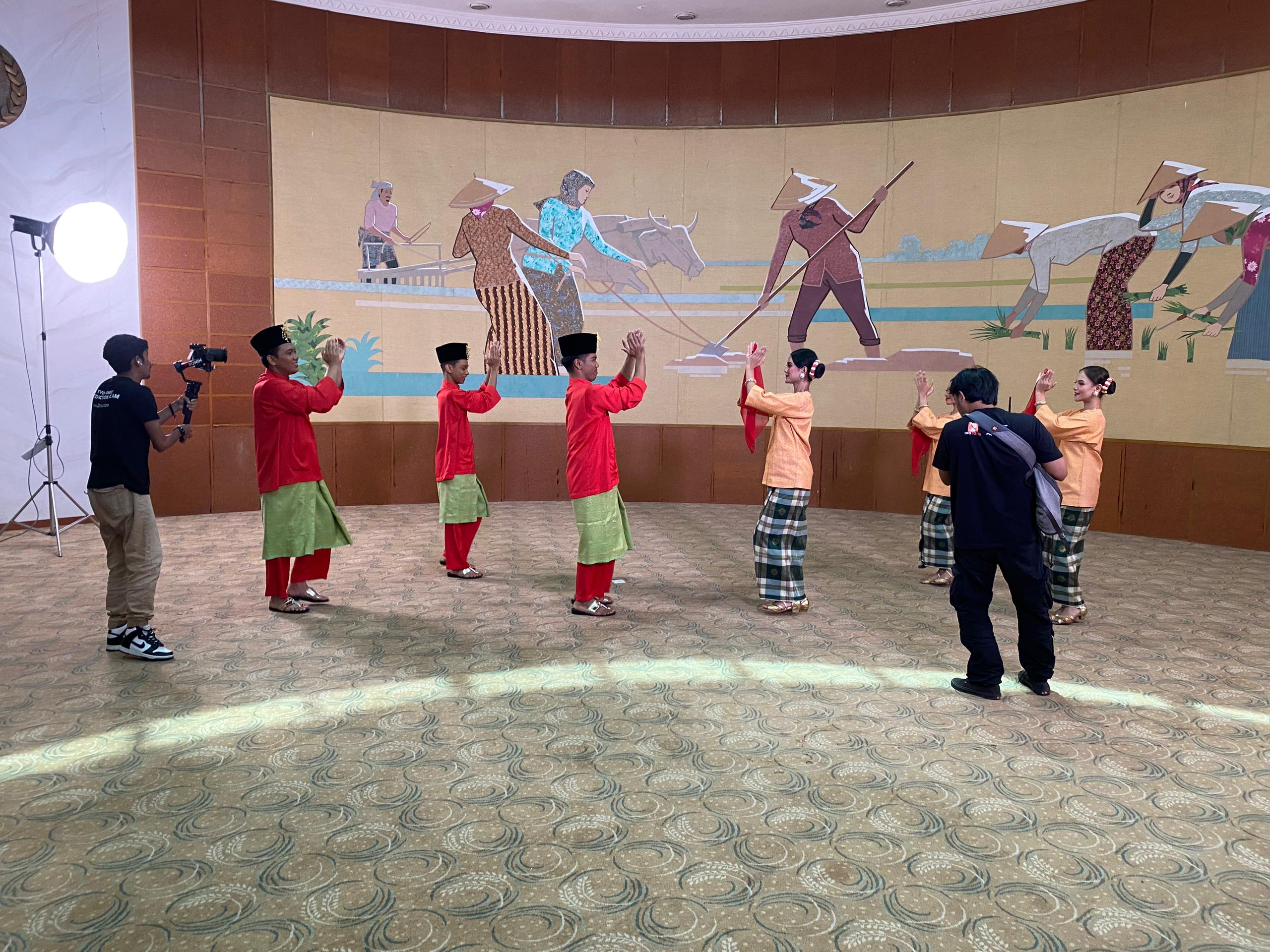
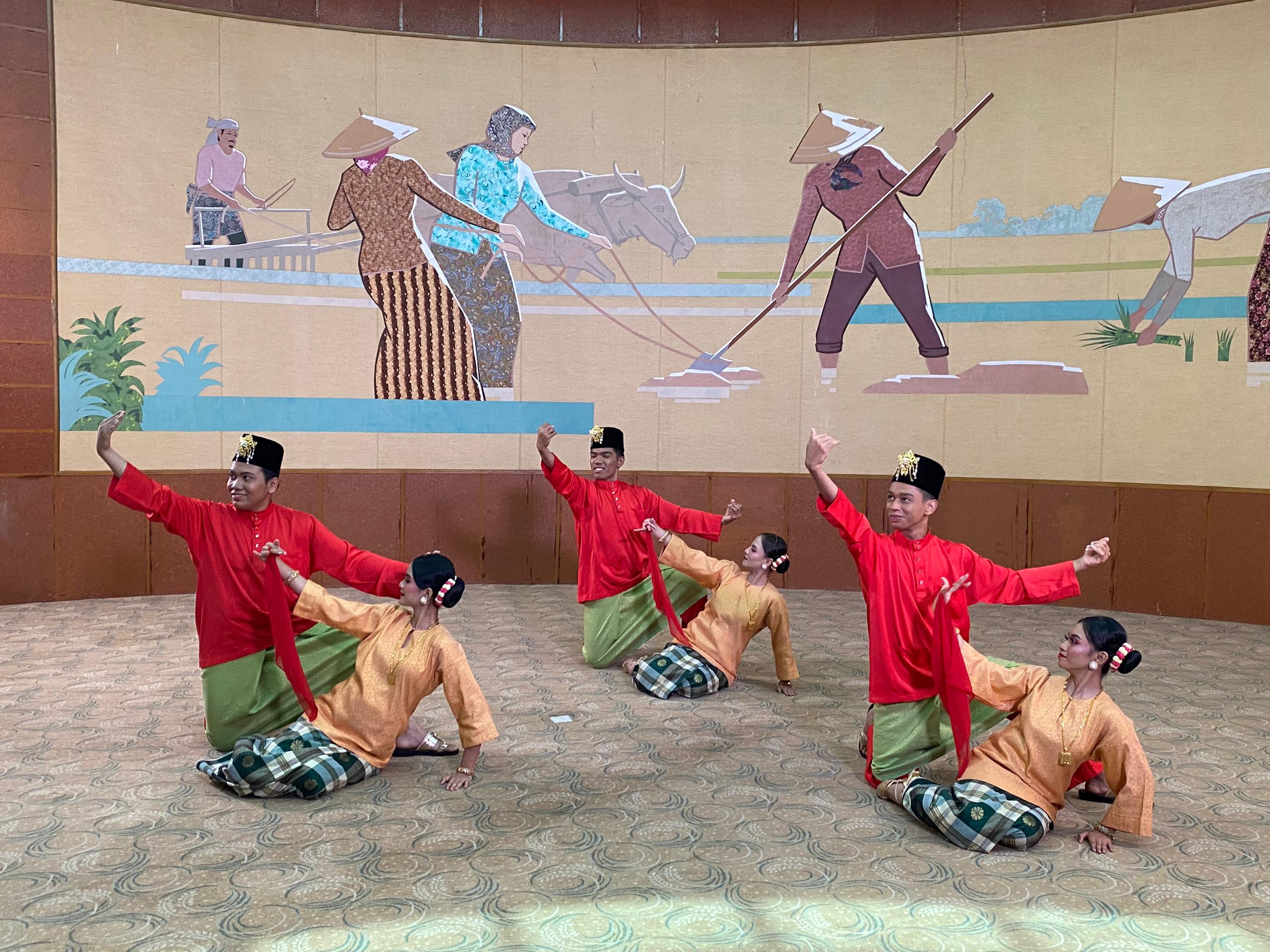
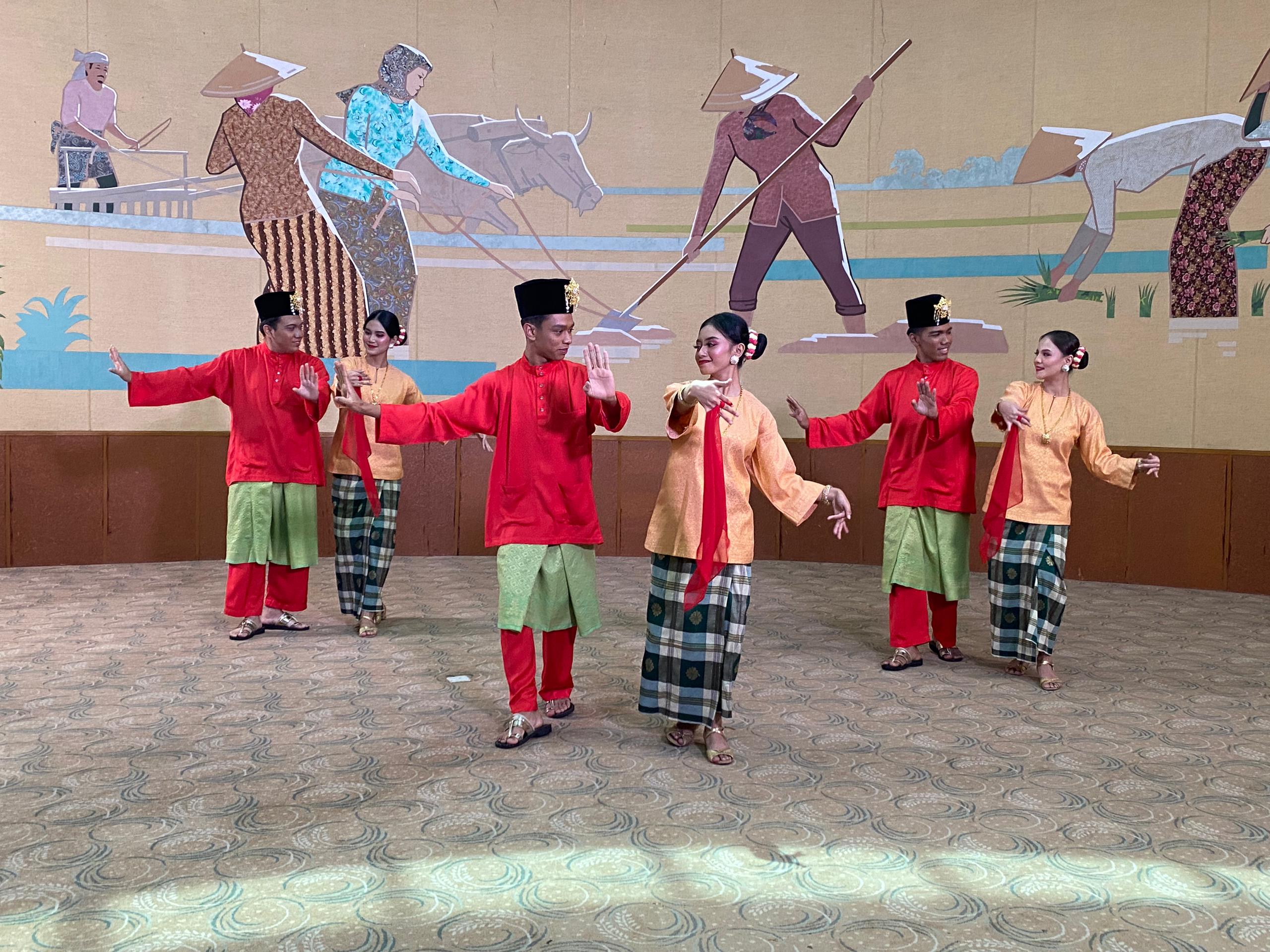
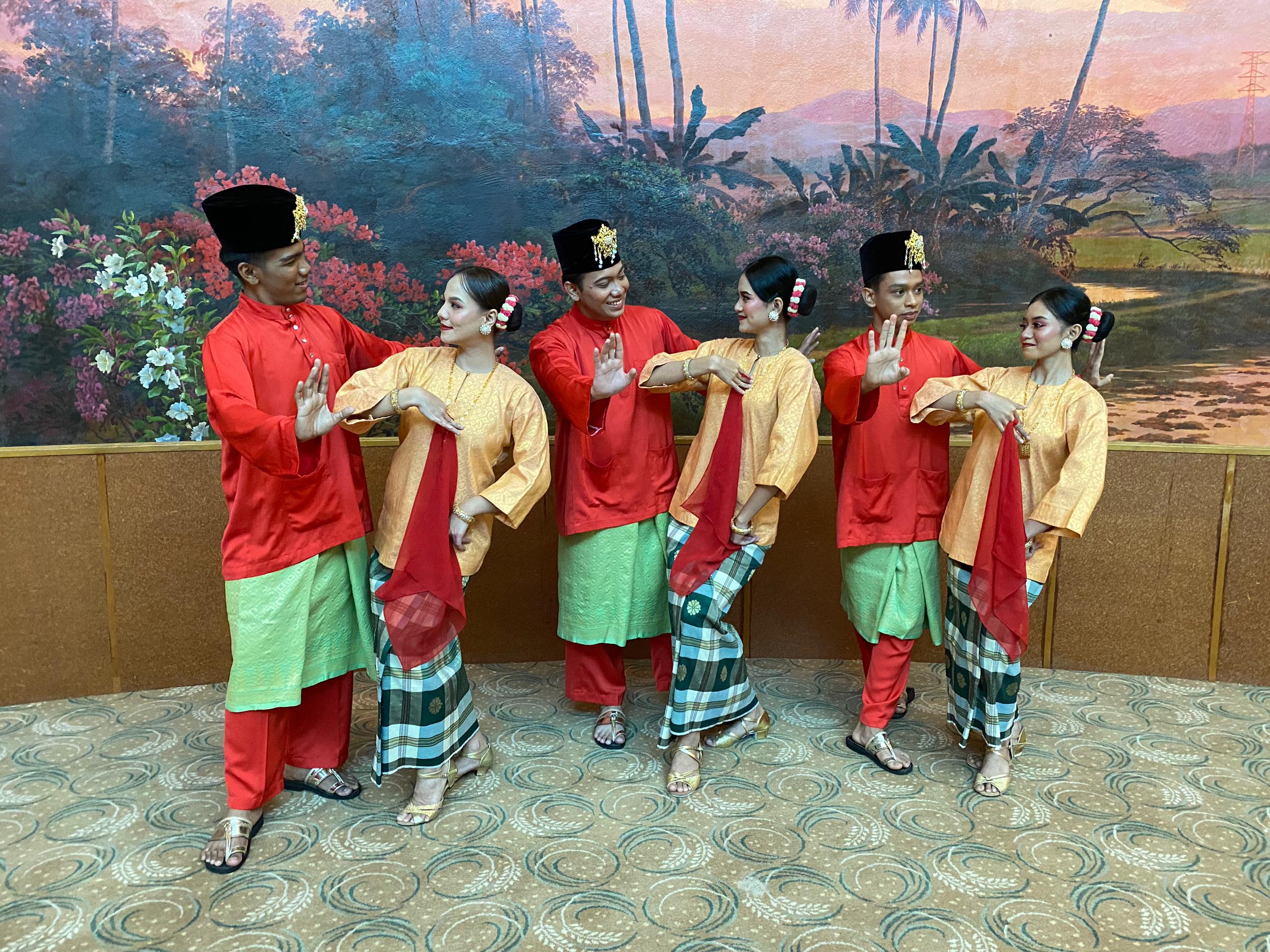
The Cinta Sayang dance is performed in pairs between male and female dancers,
with the number of pairs usually ranging from two to eight, depending on the needs
of the performance. Among the main dance movements presented are:
1. Lenggok Santun
Dancers move their bodies and swing both arms gently and rhythmically to
the right, left, forward, and backward. This movement is performed by both
male and female dancers, but with differences in arm positioning. Male
dancers usually extend their arms to waist level while slightly puffing their chest and gazing at the female dancer. Female dancers maintain elegance
and modesty with smaller, more delicate arm movements.
2. Bunga Sudi
The dancers open their arms alternately to the sides while gracefully
bending their wrists upward, symbolizing gentleness and offering.
3. Lambung Angin
Both palms are opened wide and lifted upward, as if tossing the wind with
smooth and gentle motions.
4. Ayun Selendang
The female dancers remain in place while holding the ends of a scarf
(selendang) with both hands. The scarf is gently swayed to the sides
following the rhythm of the music. As they transition into the seated
movement, the dancers release the ends of the scarf and focus on the
subsequent hand and body gestures.
5. Silat Movement
The male dancers incorporate silat (traditional Malay martial art)
movements in a relaxed manner, highlighting the strength and masculinity
of Malay men.
a) Name: Mr. Wan Mohd Nor bin Wan Alam
b) Address: Taman Malaysia, Alor Setar, Kedah
c) Phone Number: 012-5454549
Reference Source
i. Bahan Bacaan
Abdullah, W. M. A. W. (2015). Seni Tari Tradisional Malaysia. Kuala
Lumpur: Dewan Bahasa dan Pustaka.
Ariffin, J. (2010). Warisan Seni Tari Melayu: Antara Tradisi dan Modenisasi.
Kuala Lumpur: Institut Terjemahan Negara Malaysia.
Jabatan Kebudayaan dan Kesenian Negara (JKKN). (2018). Cinta Sayang:
Tarian Tradisional Negeri Kedah. Kuala Lumpur: JKKN.
Ismail, N. (2017). The Preservation of Malay Traditional Dance in Malaysia:
A Case Study of Cinta Sayang Dance. Journal of Performing Arts Studies,
3(2), 45-56.
Mohd Nasir, H. (2004). Estetika dalam Tari Tradisional Melayu. Kuala
Lumpur: Universiti Malaya Press.
Mohd Yusof, N. (2019). Cultural Significance of Traditional Malay Dances in
Malaysia. International Journal of Cultural Studies, 12(1), 22-30.
ii. Tokoh (jika ada temu bual tokoh)
Wan Mohd Nor bin Wan Alam. Taman Malaysia, Alor Setar, Kedah.

Location
State JKKN Contact Information
Encik Mohammad Salleh bin Mahmud
Cultural Officer
Jabatan Kebudayaan dan Kesenian Negara, Kedah
Kompleks JKKN Kedah
Lot PTD 400, Pumpong
05250 Alor Setar
KEDAH DARUL AMAN
011-10899646
Use the form below to contact the Informant/Figure/Editor/Researcher directly. We will respond to your inquiry as soon as possible!


