

ARTS AND CULTURE INFORMATION GATEWAY
Immerse yourself in the colorful world of art and culture! From traditional heritage to contemporary works, discover uniqueness that reflects the nation's identity and identity
 Persatuan Seni Tradisi Gendang Pahang
Rumah Kakitangan Felda Wilayah Jengka
26400 Bandar Jengka
Persatuan Seni Tradisi Gendang Pahang
Rumah Kakitangan Felda Wilayah Jengka
26400 Bandar Jengka






Picture
25
Video
Available
Today's Visitor
1300
Number of Visitors
7239
Introduction and history
Gendang Pahang is traditional musical arts influenced by Islamic music. Gendang is a Malay word for drum, a type of musical instrument made of wood. The drum is struck with a round-shaped end stick. The drummers are known as pemukul gendang (the ones who beat the drums). So important the drummer is, a royal drummer is given a special title named Kulup Raja.
Gendang Pahang was introduced after the outbreak of civil war in Chenor, Pahang in 1857. Later, it began to gain popularity in several areas such as Jerantut, Kuala Lipis, Pekan, Chenor and Temerloh, whereas in other areas, it unfortunately became extinct. In certain regions, the preference for home-grown rhythms more than those from other places retains the local tunes for generations, thus preserving it.
This music is believed to have been introduced by Dato' Purba Jelai and continued by his three generations, paving the way to be enjoyed in other areas.
Played by men and women, it generally begins with opening beats that flow into the common beats and ends with the end (‘kill’) beats. Meanwhile there are also other beats. It also has its own special song known as Bujang Hilir. The other popular songs often played are the Samaderas, Kambing Berlaga, Lenggang Janda, Bujang Hilir and Raja Berangkat. The Gendang Pahang is played at weddings and palace events. It is also performed to accompany the silat performances and Inai dances.
FUNCTION
It functions as the basis of repertoires in the following songs:
Samaderas Song
The repertoire of samadera drumbeats inspires the silat (the Malay martial art) charges and moves. Each drumbeat incites certain moves. Thus the samaderas unique beats and melody prompt the martial artist’s move more intensely, signifying spiritual denotation.
Kambing Berlaga Song
Goats are boisterous when fighting as they butt, clash, and strike each other’s horns. Their fighting character is adapted into the drumbeats, shifting back and forth from powerful striking moves to graceful. In this song too, in order to produce diverse sounds and tunes, a baloh is used to beat the drum. In Chenor, this melody is called Kambing Randuk, while in Lipis it is Kambing Mendongok.
Lenggang Janda Song
This song is sung as backup music for martial art silat. The history of this song is that there was a pretty woman wandering alone in a village. Unfortunately, she was harassed by the village youth. At first, they were just trying to annoy her but eventually it turned into a great fight as she defended herself gallantly with the silat. In the end, she defeated the young men and walked away merrily. The folks adapted this story into their drumbeats and its songs named Lenggang Janda in Semantan, Janda Numbuk in Chenor and Janda Kerat Kayu Api in Kuala Lipis.
100 GENDANG PAHANG SONGS
1. Raja Beradu
2. Raja Berangkat
3. Kambing Belaga
4. Tupai Mencalat
5. Gendang Bersunat
6. Gobek Sireh
7. Kerat Kayu Api
8. Timbang Bangkong
9. Lenggang Janda
10. Sama Deras
11. Sama Dua
12. Sama Satu
13. Berjin
14. Joget
15. Tari Caluk
16. Tari Lilin
17. Tari Pelanduk
18. Tari Piring
19. Mandi Sampat
20. Mandi Safar
21. Raja Chenor
22. Menghantar Air ke Kuala
23. Siamang Bergayut
24. Ketiting Murai
25. Sama Satu
26. Tiga Seturut
27. Raja Berjalan
28. Raja Berusung
29. Tupai Mengendap
30. Senayung
31. Tupai Berkehendak
32. Dusun Tebang
33. Gendang Suluk
34. Gobek Guba
35. Gobek Terbang
36. Janda Cari Kayu Api
37. Raja Bersiram
38. Raja Dihilir
39. Kambing Mendogok
40. Serindit
41. Bukit Kota
42. Gobek Tebang
43. Lenggok
44. Mendayung
45. Cak La La
46. Melemak
47. Sendeng
48. Samaderas Lipis
49. Bujang Hilir
50. Senayang
51. Tari Inai
52. Colet-Colet Sambe Udang
53. Pak Abu
54. Mak Yung
55. Air Boh
56. Kambing Randuk
57. Belaga Kambing
58. Kerbau Berambat
59. Sesumpoh
60. Anok Joget
61. Cak Ketibang Bangkong
62. Air Masuk Kuala
63. Cak Kedeh
64. Hempas Padi
65. Hujan Panas
66. Janda Numbuk
67. Silat Pulut
68. Gendang Perang
69. Tokek Tebang
70. Tupai Mengendak
71. Cak Lalang
72. Kuda Kepang
73. Raja Berangkat Tembeling
74. Bangkong
75. Samaderas Tok Muda Long
76. Merajok
77. Derhaka
78. Colet Colet Sambal Udang
79. Gendang Joget
80. Gendang Aur Sebuku
81. Lanun Naik Kuala
82. Lanun Naik ke Darat
83. Ratib
84. Samaderas Pekan
85. Gendang Pulau Tawar
86. Kecipung Janda
87. Nane
88. Kambing Randuk
89. Air Mata Kuala
90. Sendayung
91. Ngulit
92. Laun
93. Gendang Tembeling
94. Pintas Punggung Tangkak Hempas
95. Anok Dara Patoh Kayu Api
96. Gendang Berang
97. Petala Sambas Pedah
98. Gendang Pemberontakan Budu
99. Kuricak Gajah Maharaja Dewa Sura
100. Gendang Seladang Pulau Tawar.
DRUMMERS’ COSTUME
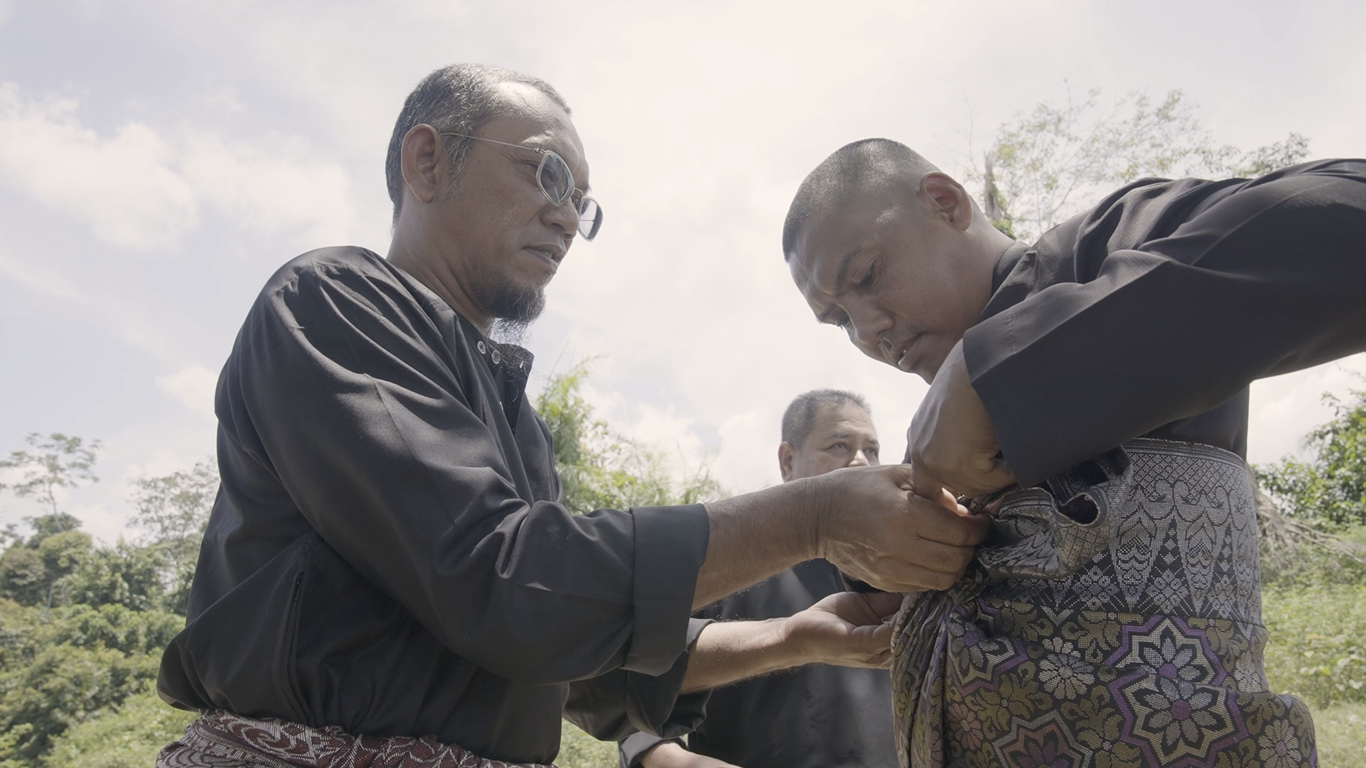
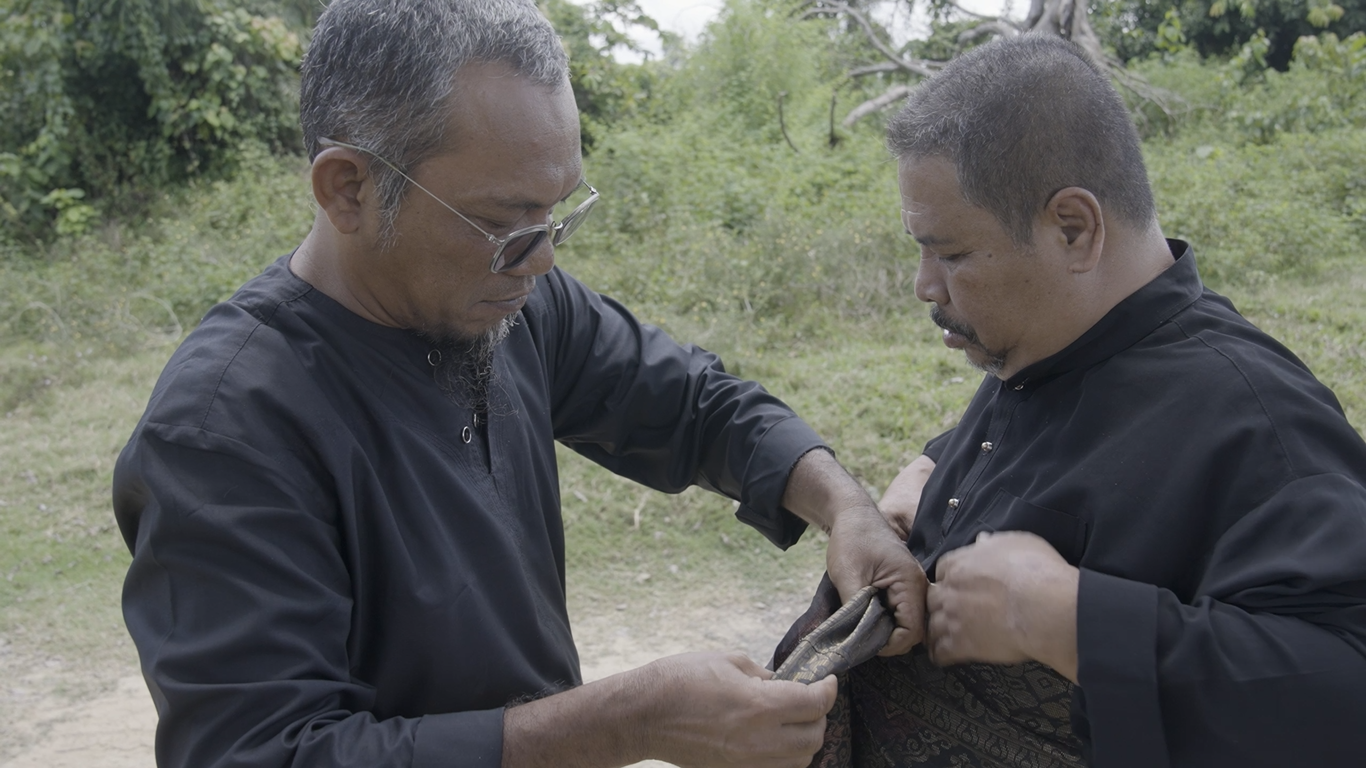
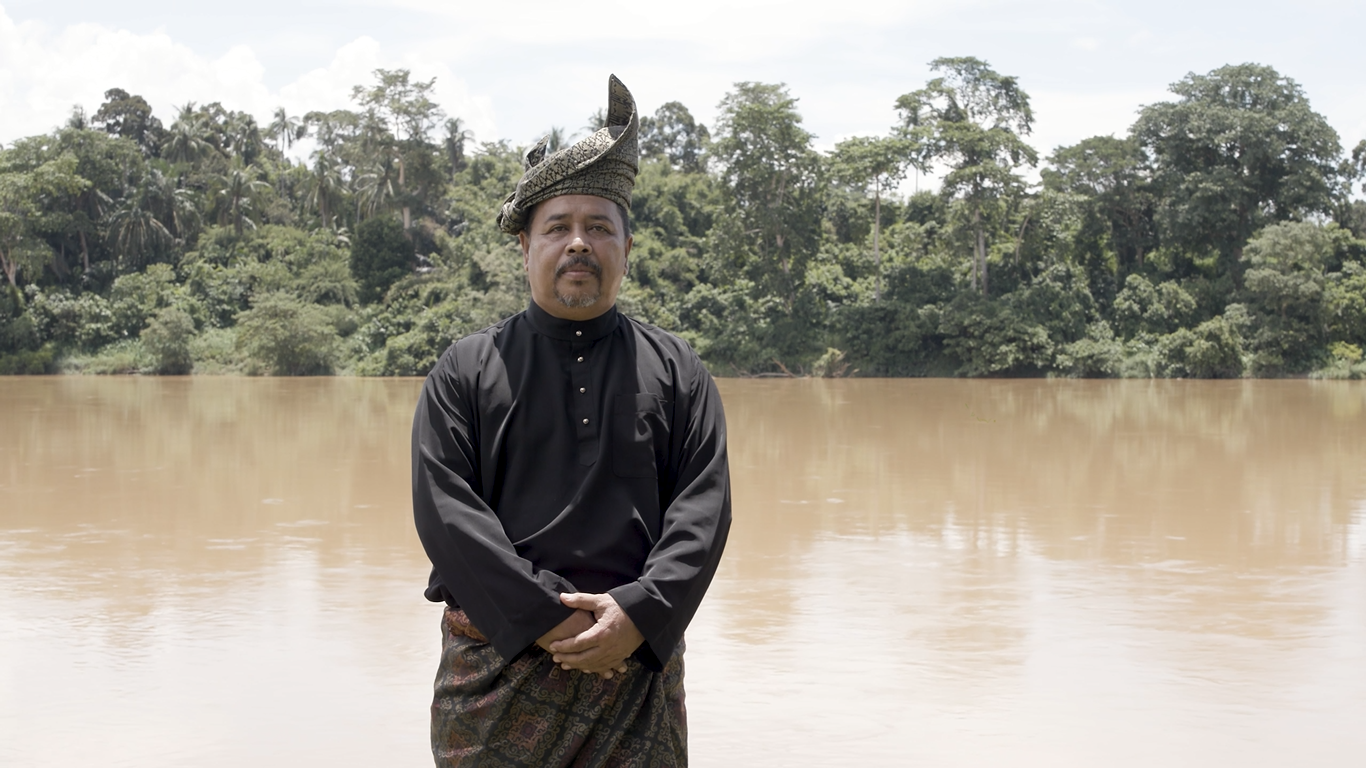
In the past, gendang Pahang drummers were very much required in silat and its arts. So did their attire as it also displayed the arts of silat. Hence when drumming, the drummer wore ethically (including covering arms and legs). The drummer was also encouraged to wear a headgear. In Pahang, Gendang Pahang artists wore the Baju Melayu berdagang luar and berdagang dalam, and a songkok. At present, the performers wear a suit of Malay dress, the Baju Melayu, with a songkok or headgear.
EQUIPMENT OF GENDANG PAHANG
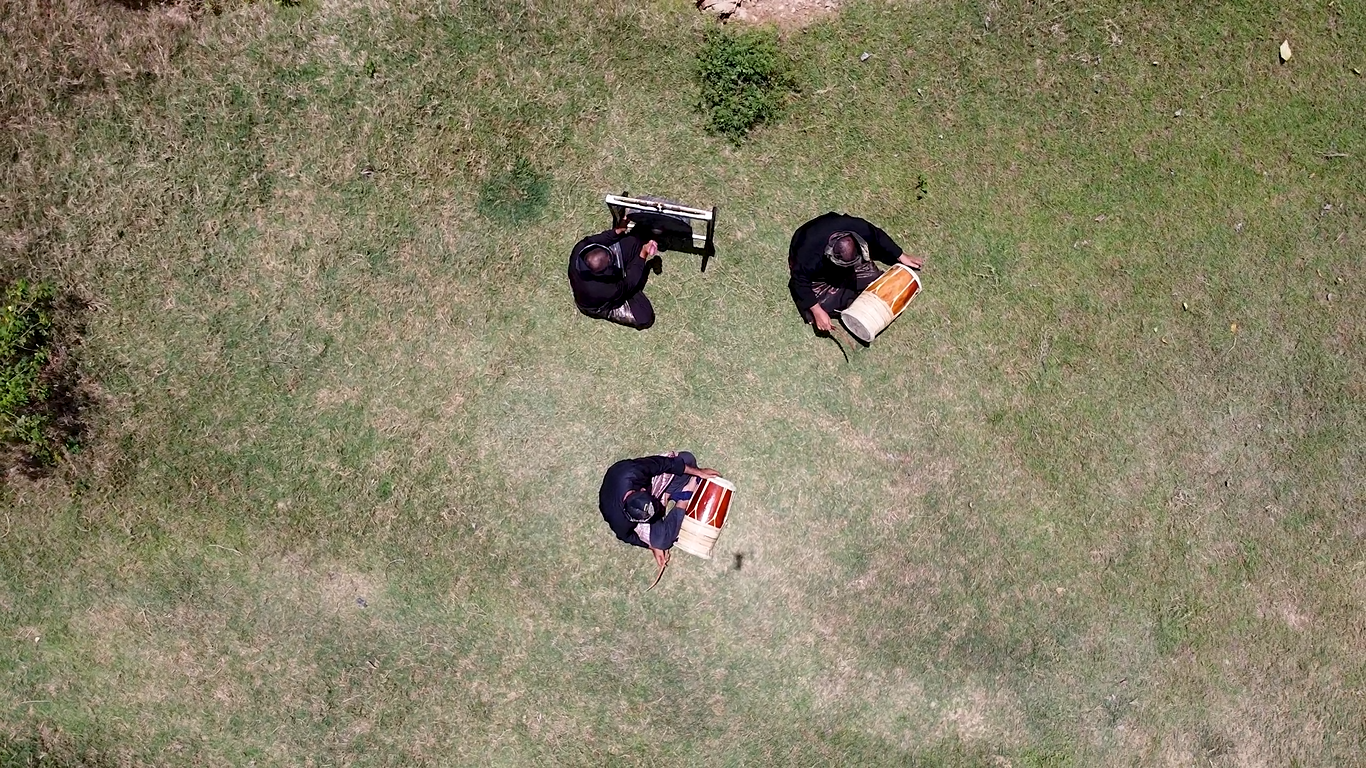
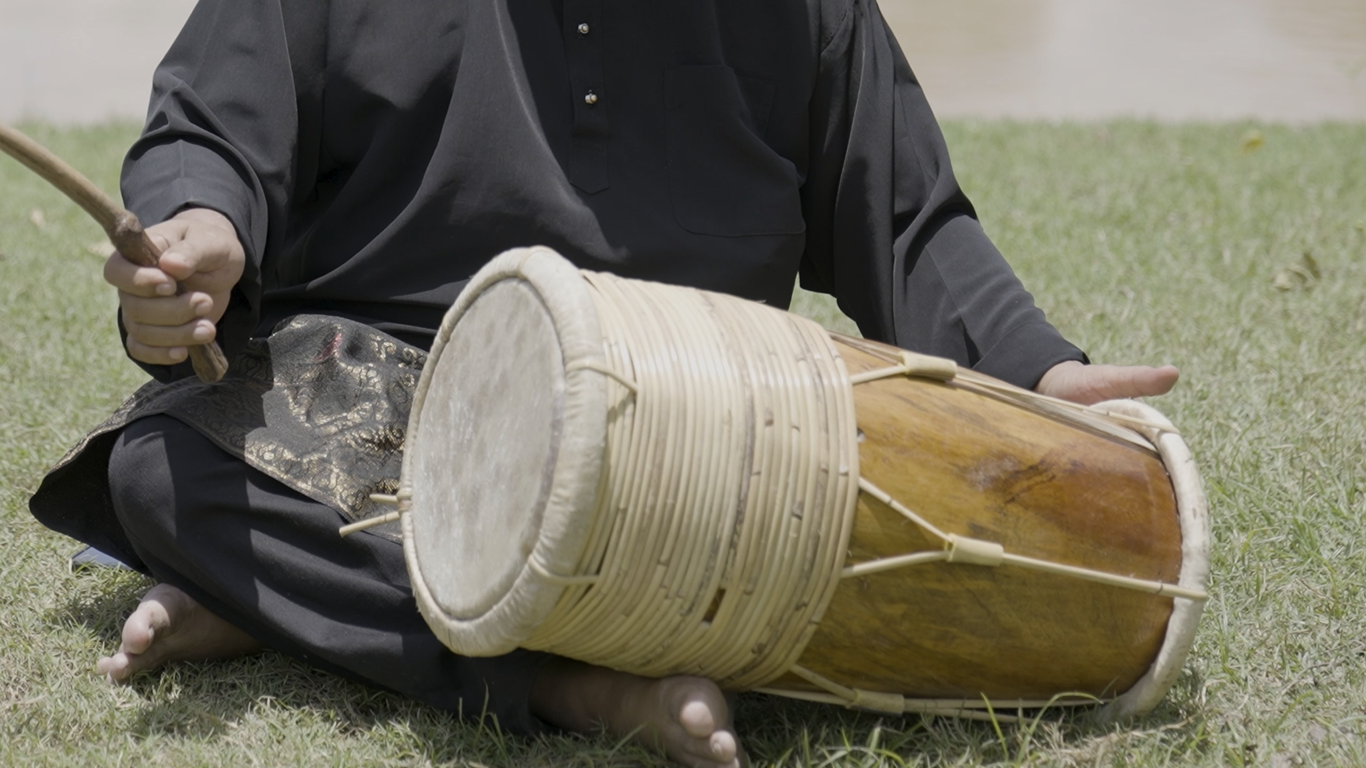
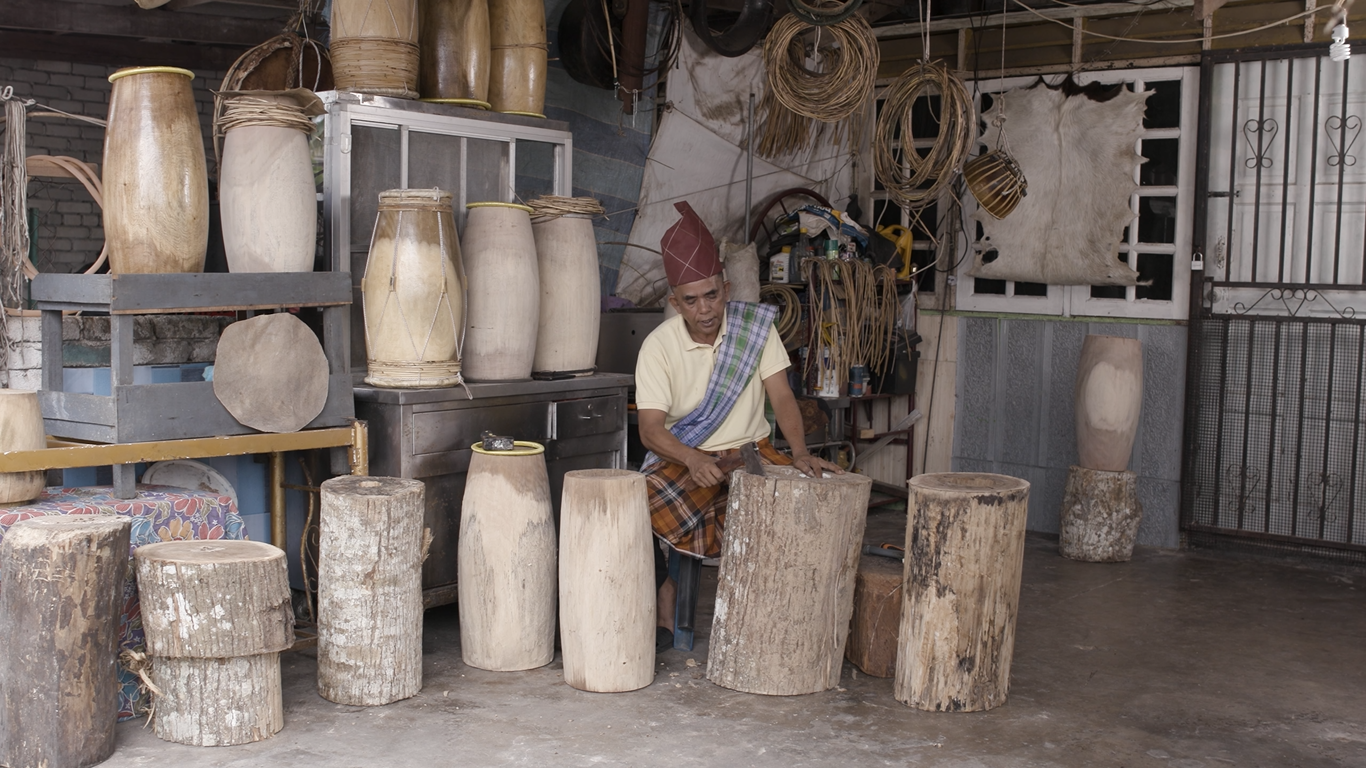
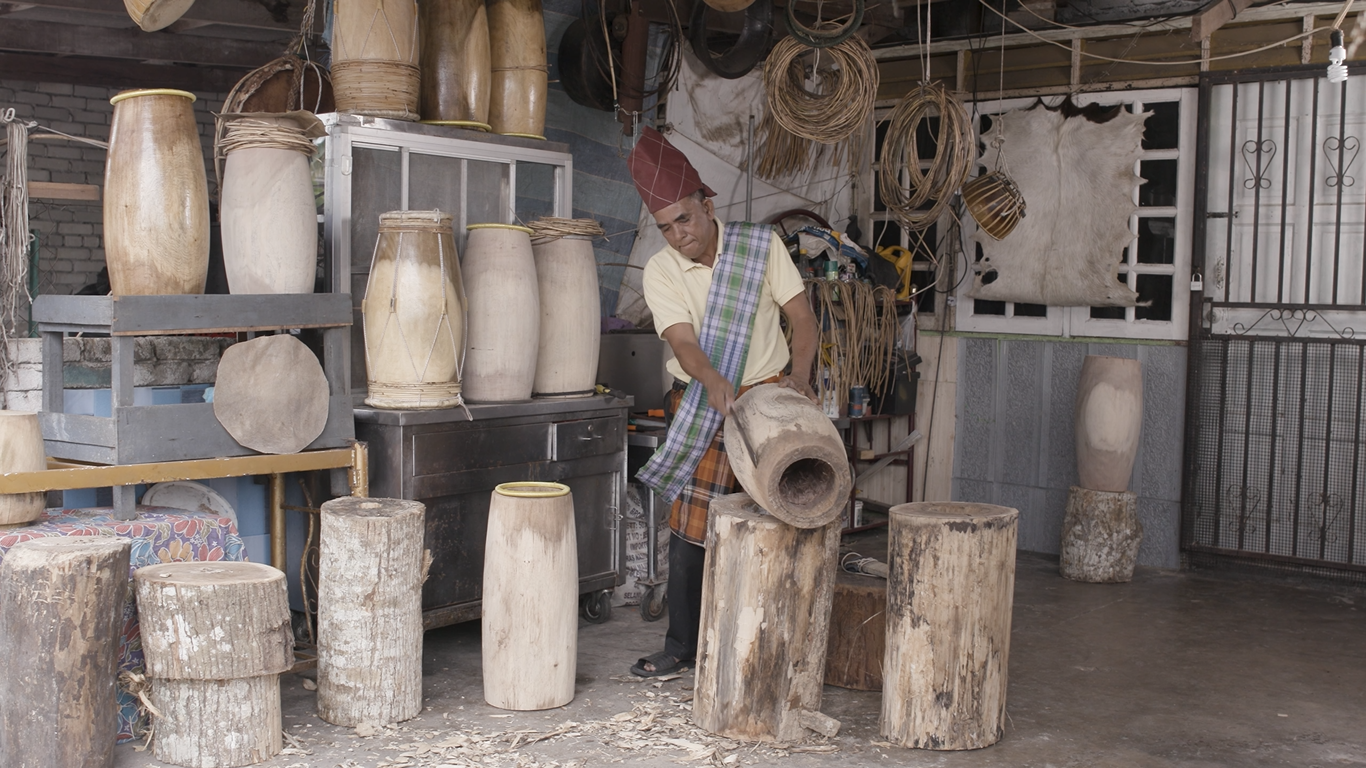
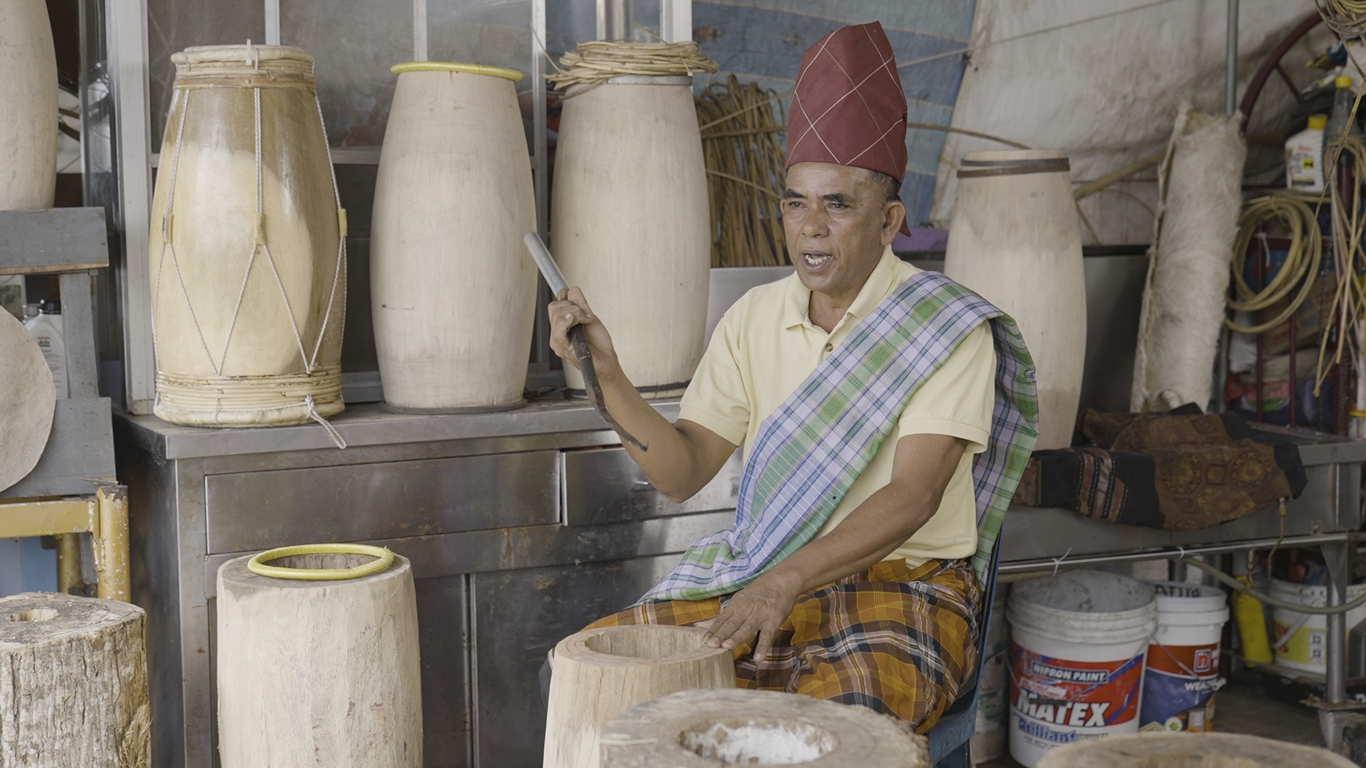
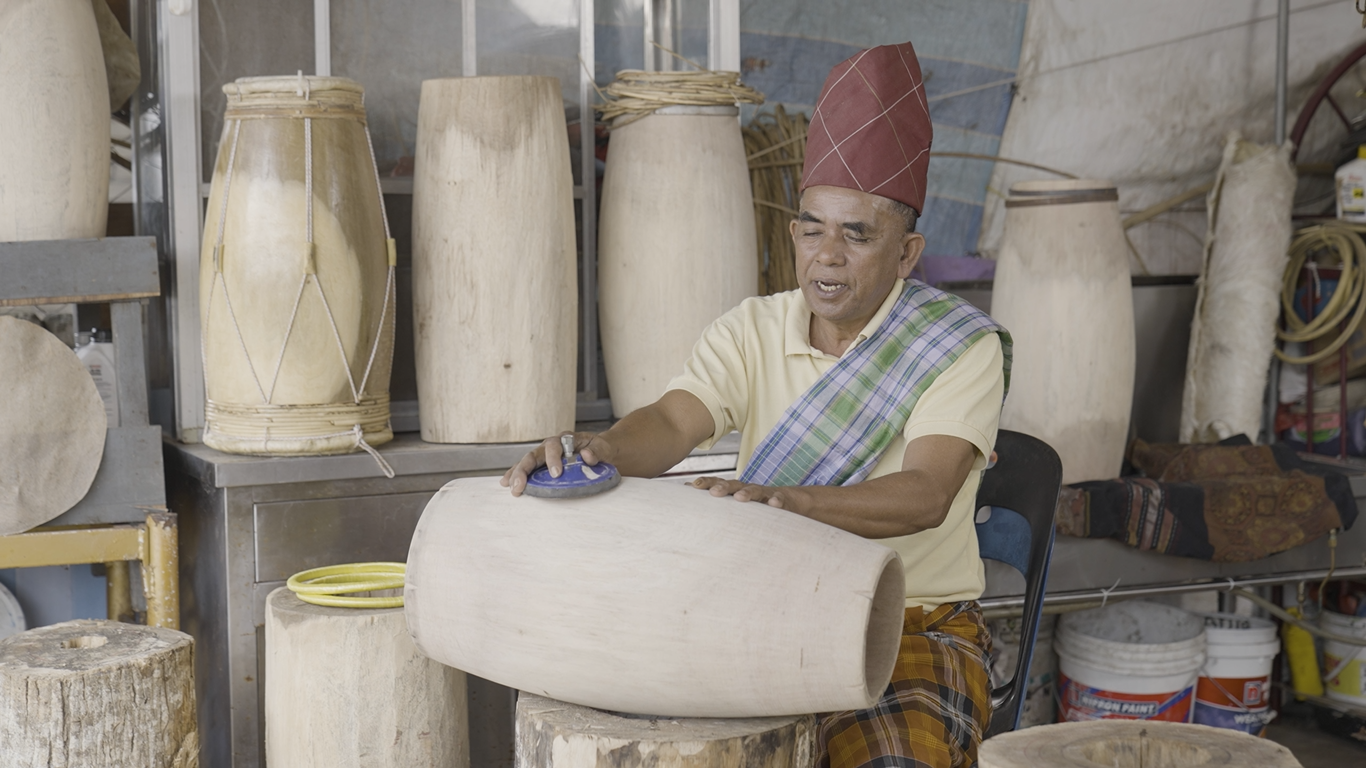
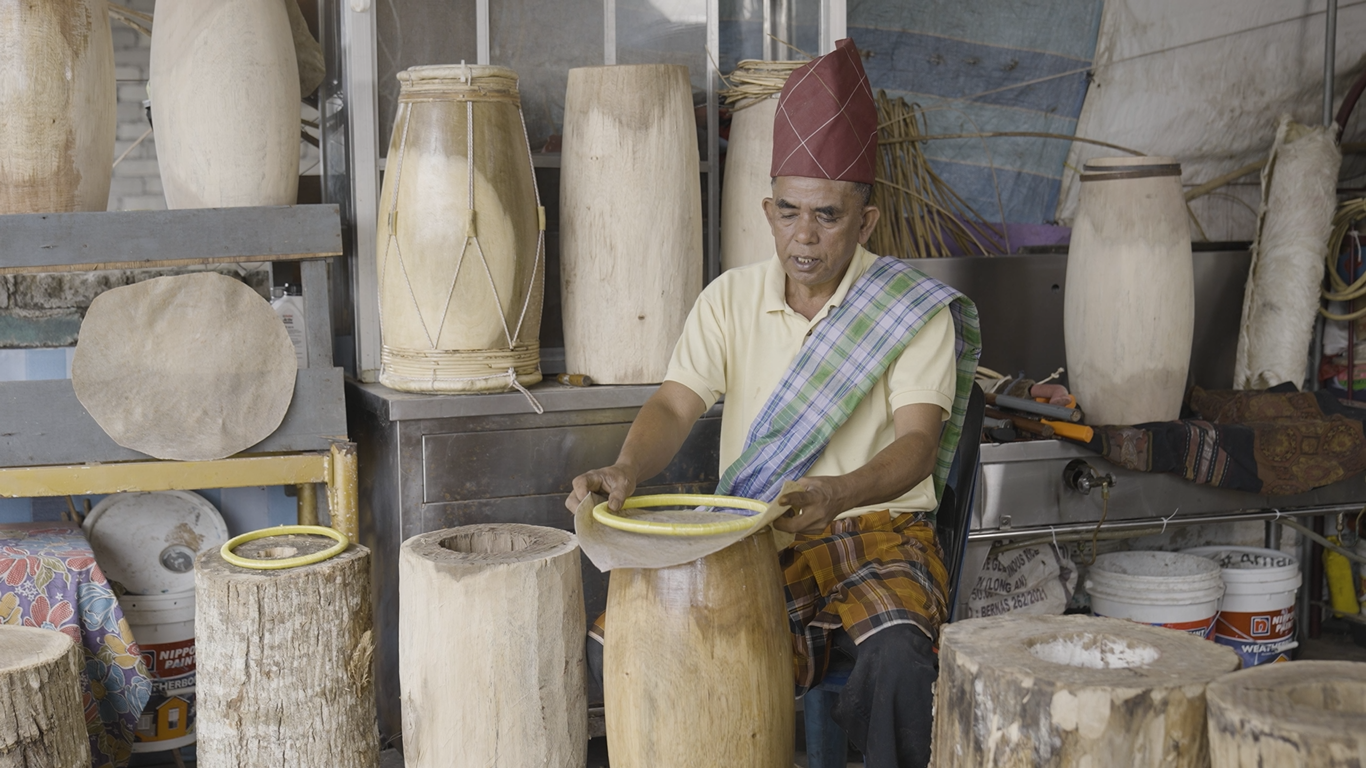
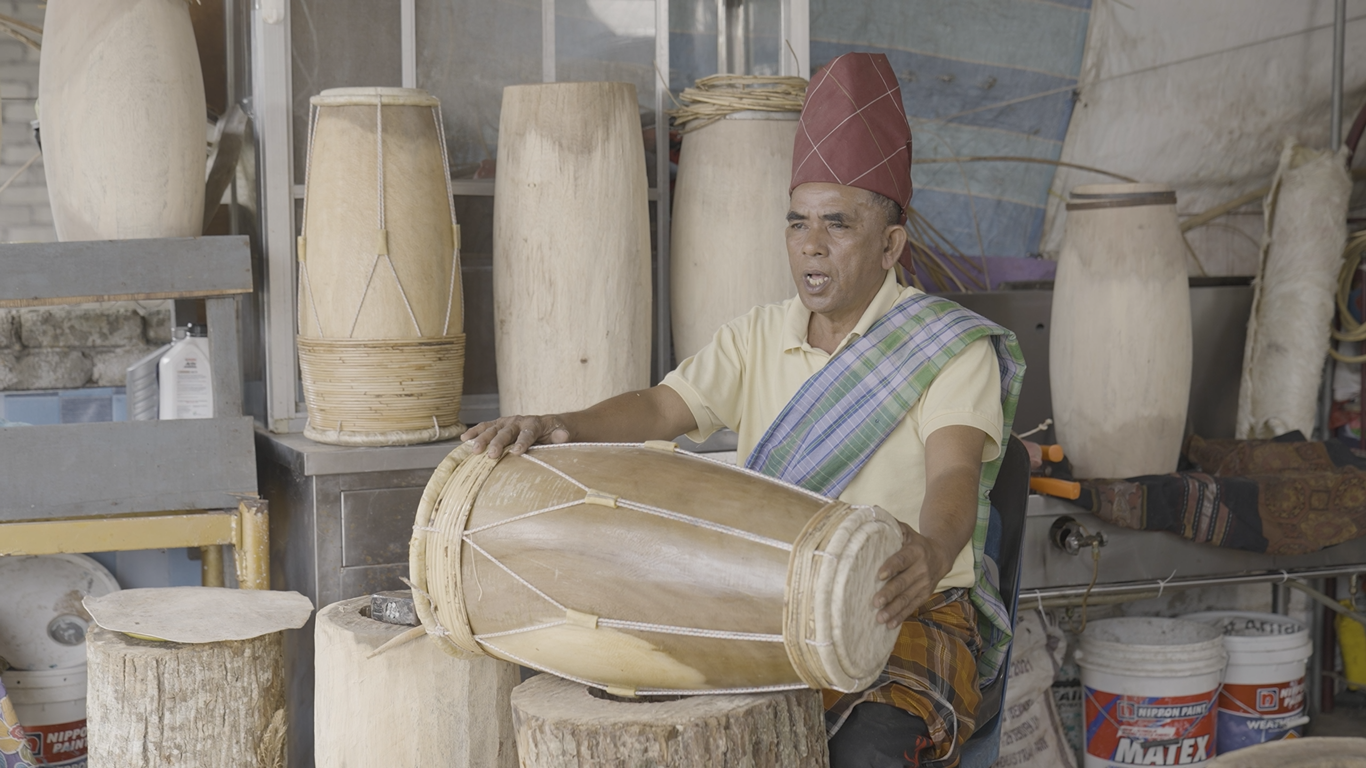
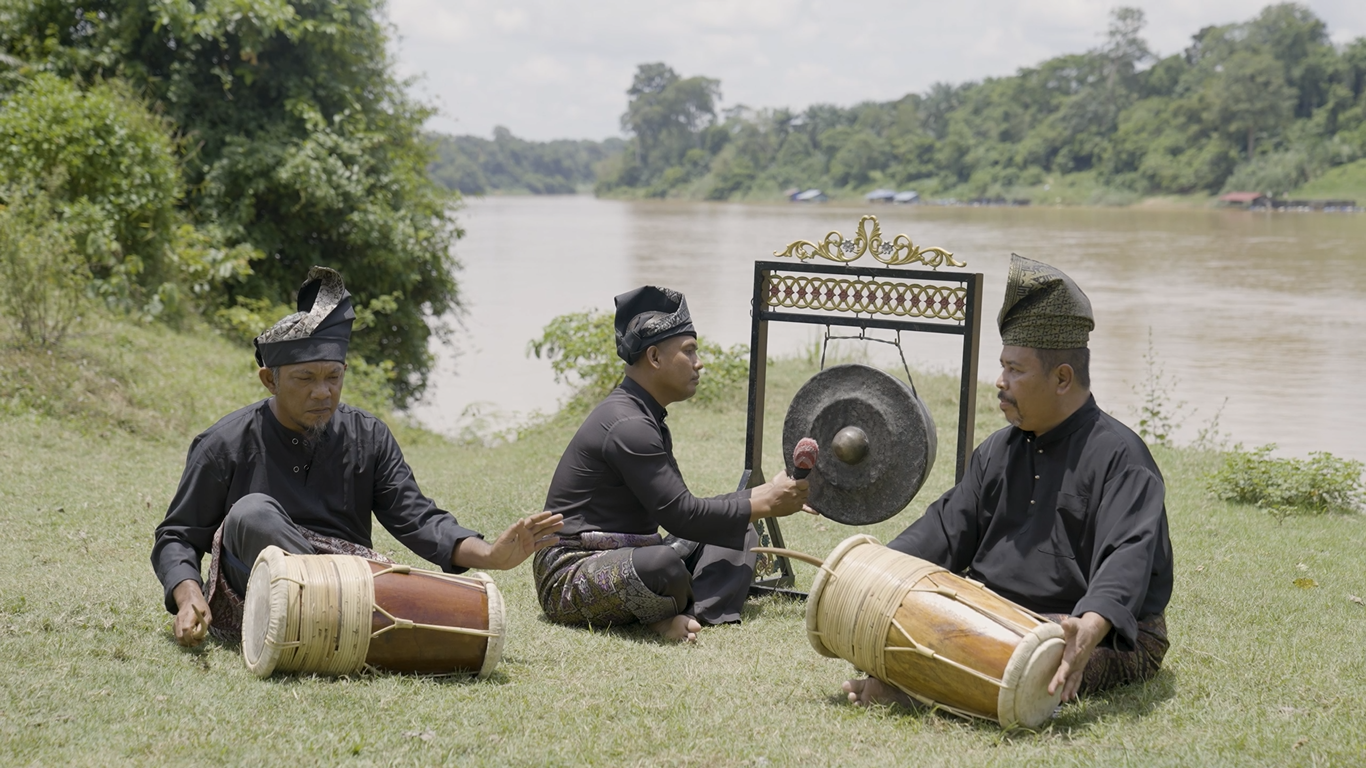
By tradition, gendang Pahang is played with three basic instruments: the main drum, the secondary drum and the gong or tetawak. The main and secondary drums are oval and hollow which produce exclusive sounds. Some describe it a long drum or gendang campak.
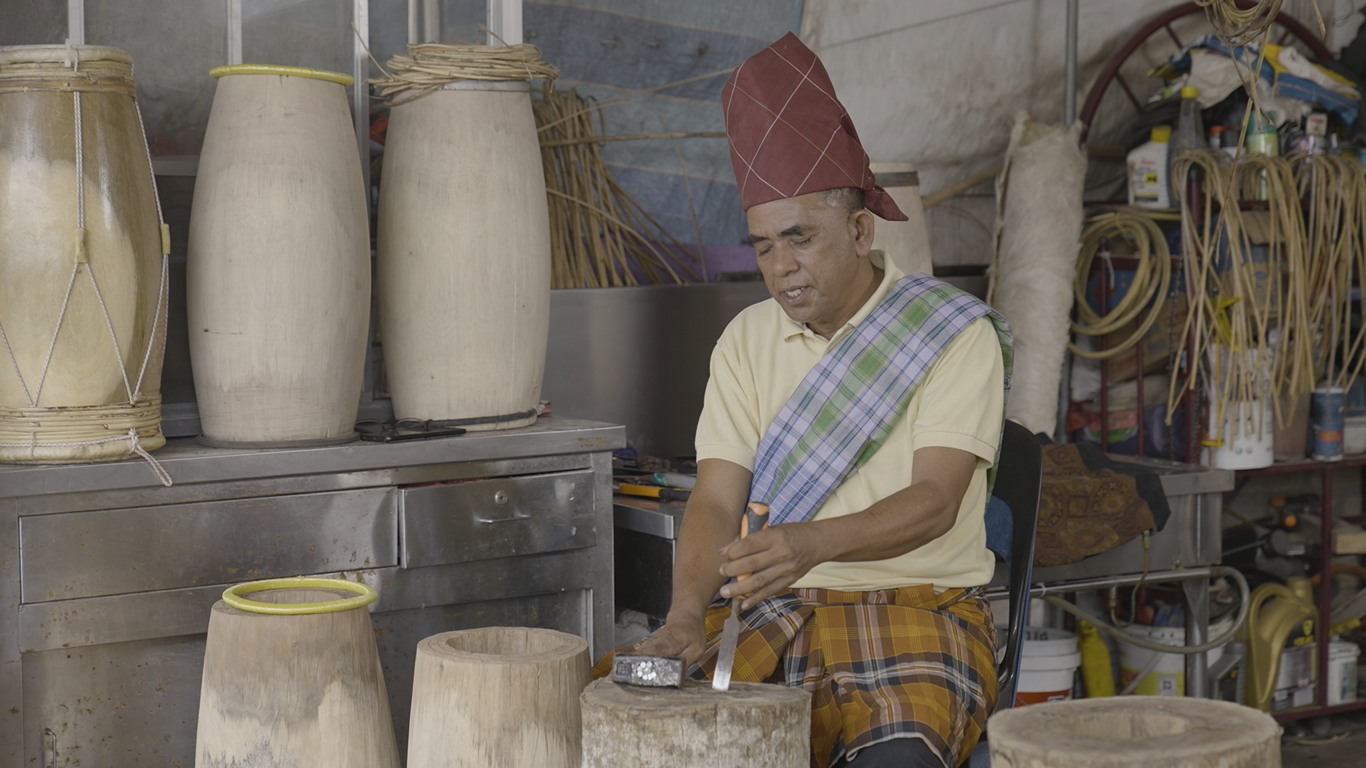
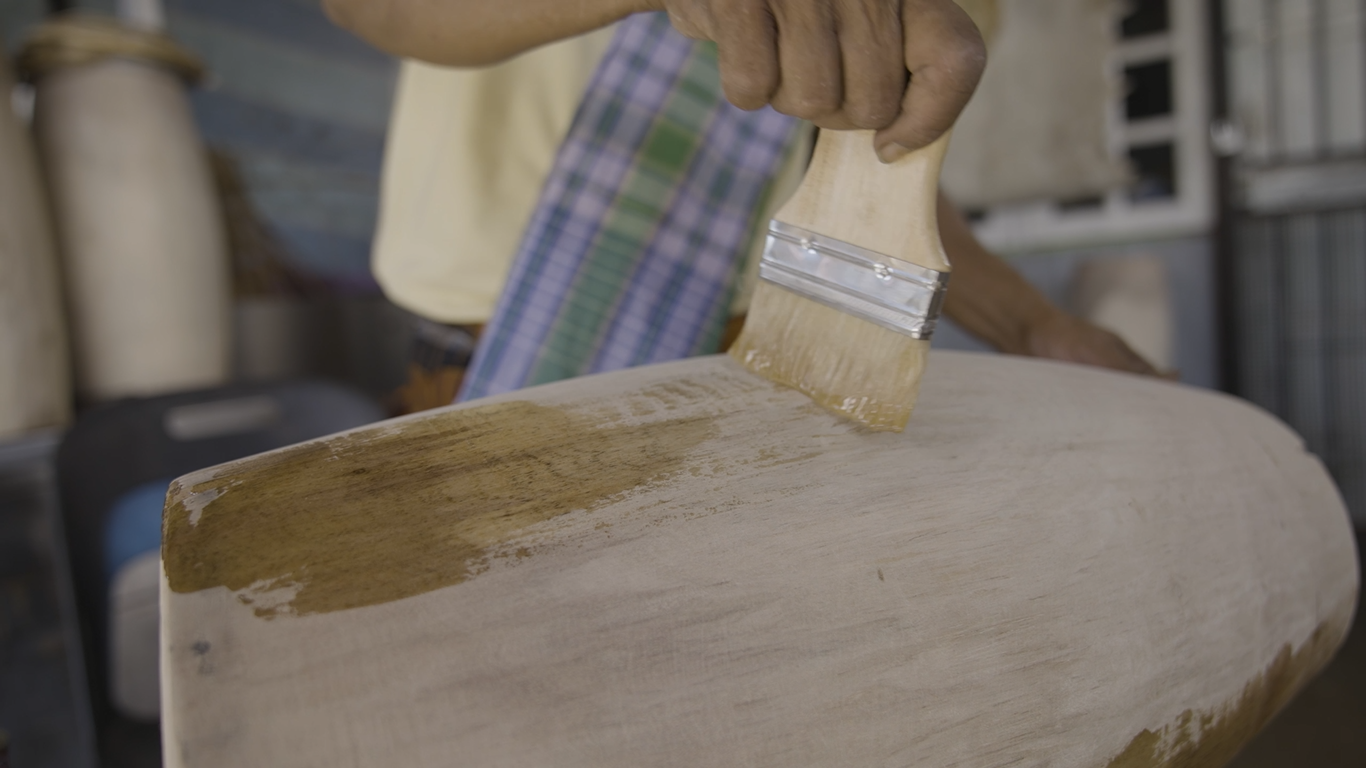
To make these drums, a few oval tube-like wood, ranging between 20 and 40 centimeters long are used. The main drum is made larger than the secondary. While the center line inside is adjusted to the length of the wood. A goat or deer hide is placed at the end of the drum and the other, either cow or goat hide.
Gendang Pahang is also known as Gendang Melela as it is tapped with a hand on one side, while the other, with wood or rattan. The gong or tetawak is an idiophone iron musical instrument popular in South and Southeast Asia. Gongs also are extensively used in Malay dances, the gamelan, puppetry show and the silat (Malay martial arts).
GENDANG PAHANG COMPONENTS
Baloh
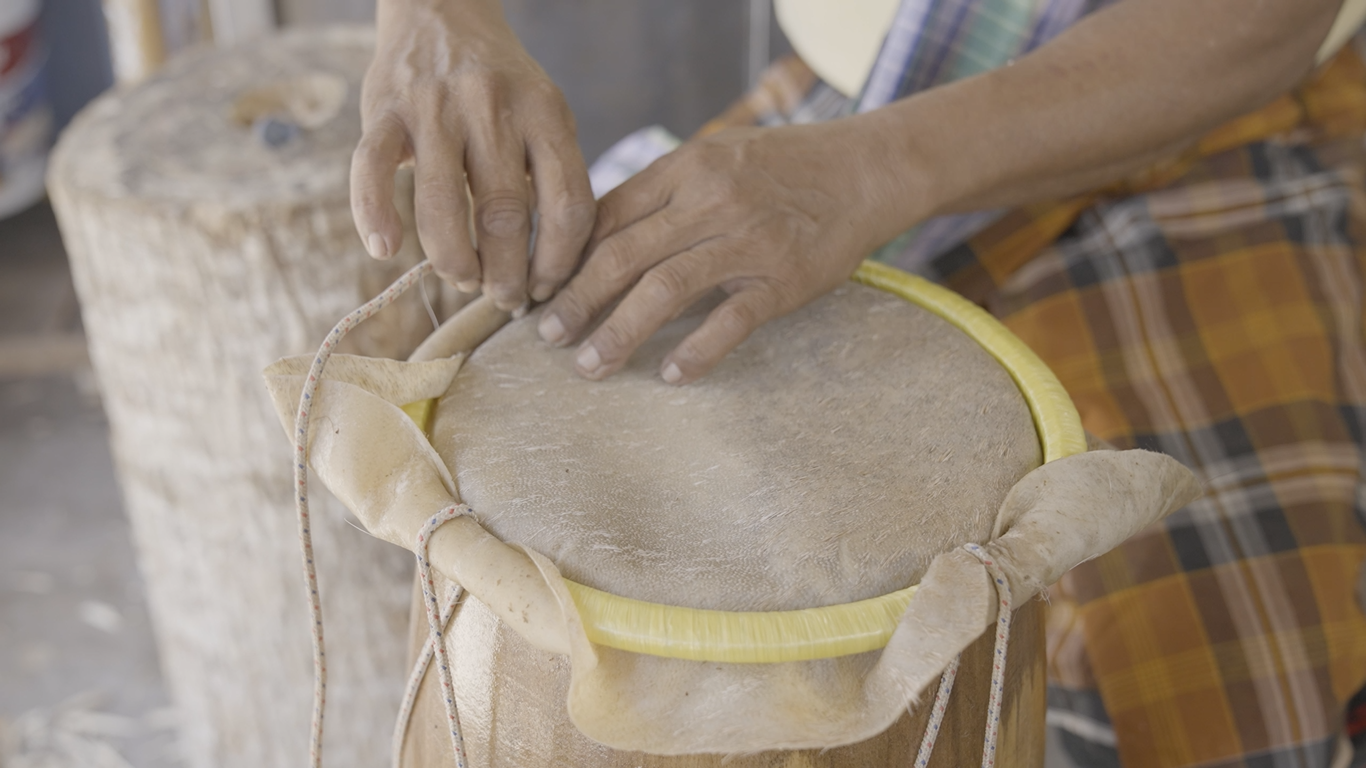
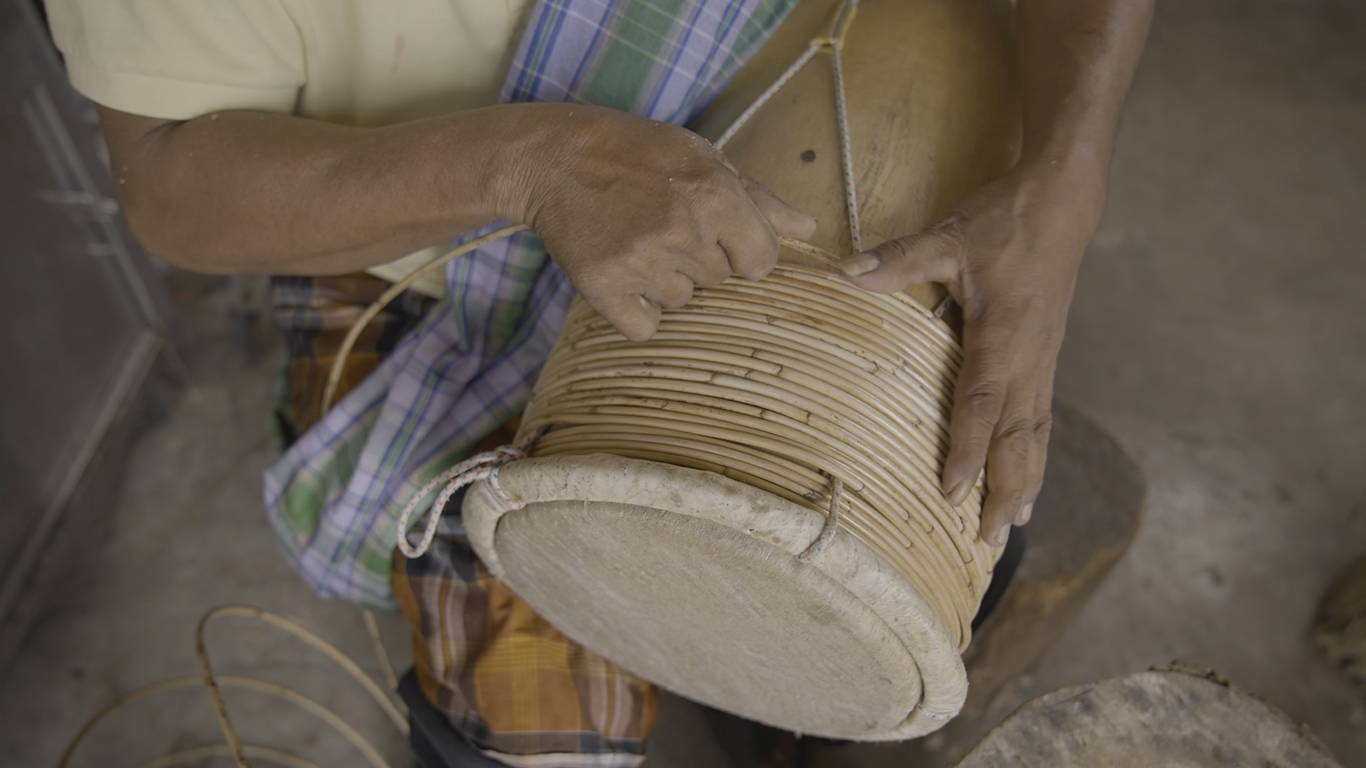
The most important instrument in gendang Pahang is a baloh, a piece of barrel shaped wood with a hole drilled in the middle. Among the wood used to make it are tutur, jackfruit or bangkung trees. The two holes at the end of the log are closed using cow or deer hides, stretched, tied strongly and neatly. The baloh produces various tones and thumps when tapped with wood or hand. When performing, the drummers beat the smaller parts or surfaces (of the hide) with one hand, and large ones with canes, sticks or specially- shaped horns.
Cowhide for Drums
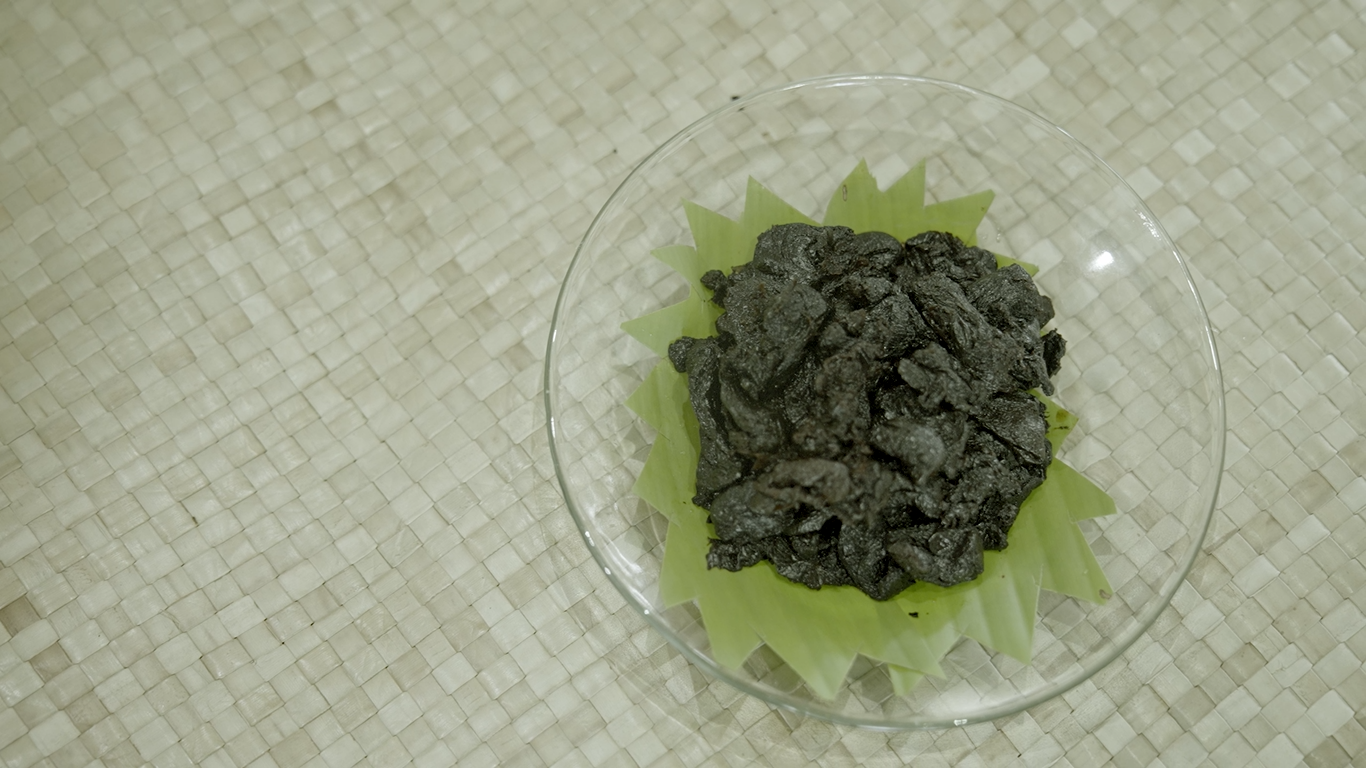
A piece of strong water-resistant (not leaking) cowhide is used to make the head of the drum. This tough and more durable cowhide is obtained from a female cow which has birthed six calves. Skinning is done carefully for a good hide which will not leak. The skin is then preserved, rubbed with salt and turmeric. Then, it is stretched and dried.
In ancient times, buck hide was used for the head of the main drum while a male goat hide was the head of the secondary drum. Due to the prohibition of obtaining deer (protected by the Malaysian Wildlife Department, Perhilitan), cowhide is used for the head of the drums instead. Goat hide is for the small head of the main and secondary drums since thinner hide produces higher pitched sounds. More durable and stretchable hide is believed obtainable from local goats.
Sergeh
Sergeh, a Pahang dialect word, is a hide stretcher. In the old days, it was made from rattan but at present it is made from a more durable and easier-to-shape fiber. The stretchers, 100-feet long, were made of a type of rattan called rotan seni or rotan batu puteh. Lately, rattan is hard to get, instead a Germany imported nylon rope is used.
Gong/tetawak
The gong family in Malaysia consists of those having mounds or buttons, made of copper, tin or iron. They are also produced in various shapes and sizes, with different pitches and timbres.
Beats of Gendang Pahang
There are ten drum beats: segeh, balun, sambar, gerpak, tala, bertala, kode, dayung, sendayung and galang ganjur.
Sergeh
Segeh is a term taken from the type of rattan to make the hide stretcher. Having nine types of tunes and beats, it is played in a soft melody with one beat at a time.
Balun
Balun, in Pahang accent, means to hit hard. There are seven hard beats on the batter and bottom heads of the drum.
Sambar
Very fast and quick struck double beats.
Gerpak
Simultaneous beats on the batter and bottom heads, hit with one’s palms.
Tala
Tala is fast and sharp beats to produce even toned sound
Betala
Betala means thumping constantly, alternating or consecutively. The sounds of the beats are a bit irregular and unsynchronized but remain in the tempo.
Kode
Kode is striking fast to end the drumming.
Dayung
Dayung means paddling a boat or a canoe. These beats resemble the rowing of a boat.
Sendayung
Sendayung is an echoing sound. The sound of the beats are undulating and echoing.
Galang
Galang means to obstruct. Hence these beats do not sound melodious. Rather, they sound uncoordinated and graceless.
Reference Source
i. Bahan Bacaan
Zainal
bin Jaslan. (2019). Warisan Budaya Identiti Malaysia: Gendang Pahang. Kuala
Lumpur : Jabatan Kebudayaan dan Kesenian Negara (JKKN)
Muhammad
Mohd Yunos. (2017). Mencari Jejak yang Hilang : Warisan Seni Gendang Tradisi
Pahang. Pahang : Perbadanan Perpustakaan Awam Pahang
ii. Tokoh (jika ada temu
bual tokoh) : Mohamad bin Mohd Yunus
Location
State JKKN Contact Information
Puan Norlelah Abd Karim
Cultural Officer
Jabatan Kebudayaan dan Kesenian Negara, Pahang
Kompleks JKKN Pahang
Lot 57100, Jalan Teluk Sisek,
25000, Kuantan,
Pahang Darul Makmur
09-517 8466
Use the form below to contact the Informant/Figure/Editor/Researcher directly. We will respond to your inquiry as soon as possible!


