

ARTS AND CULTURE INFORMATION GATEWAY
Immerse yourself in the colorful world of art and culture! From traditional heritage to contemporary works, discover uniqueness that reflects the nation's identity and identity
 Fakulti Muzik dan Seni Persembahan, Universiti Pendidikan Sultan Idris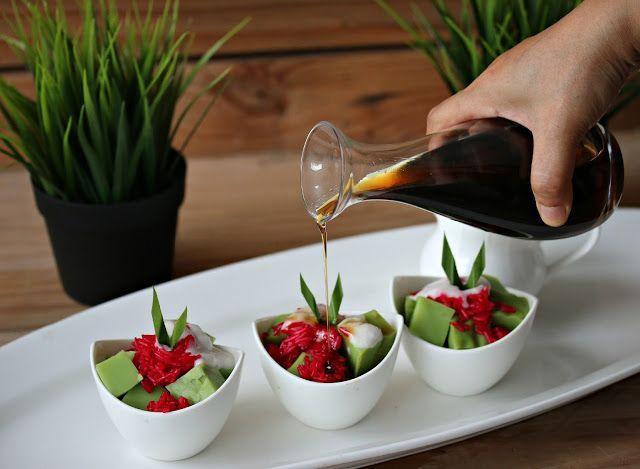
Picture
3
Video
No record
Today's Visitor
463
Number of Visitors
1757
Introduction and history
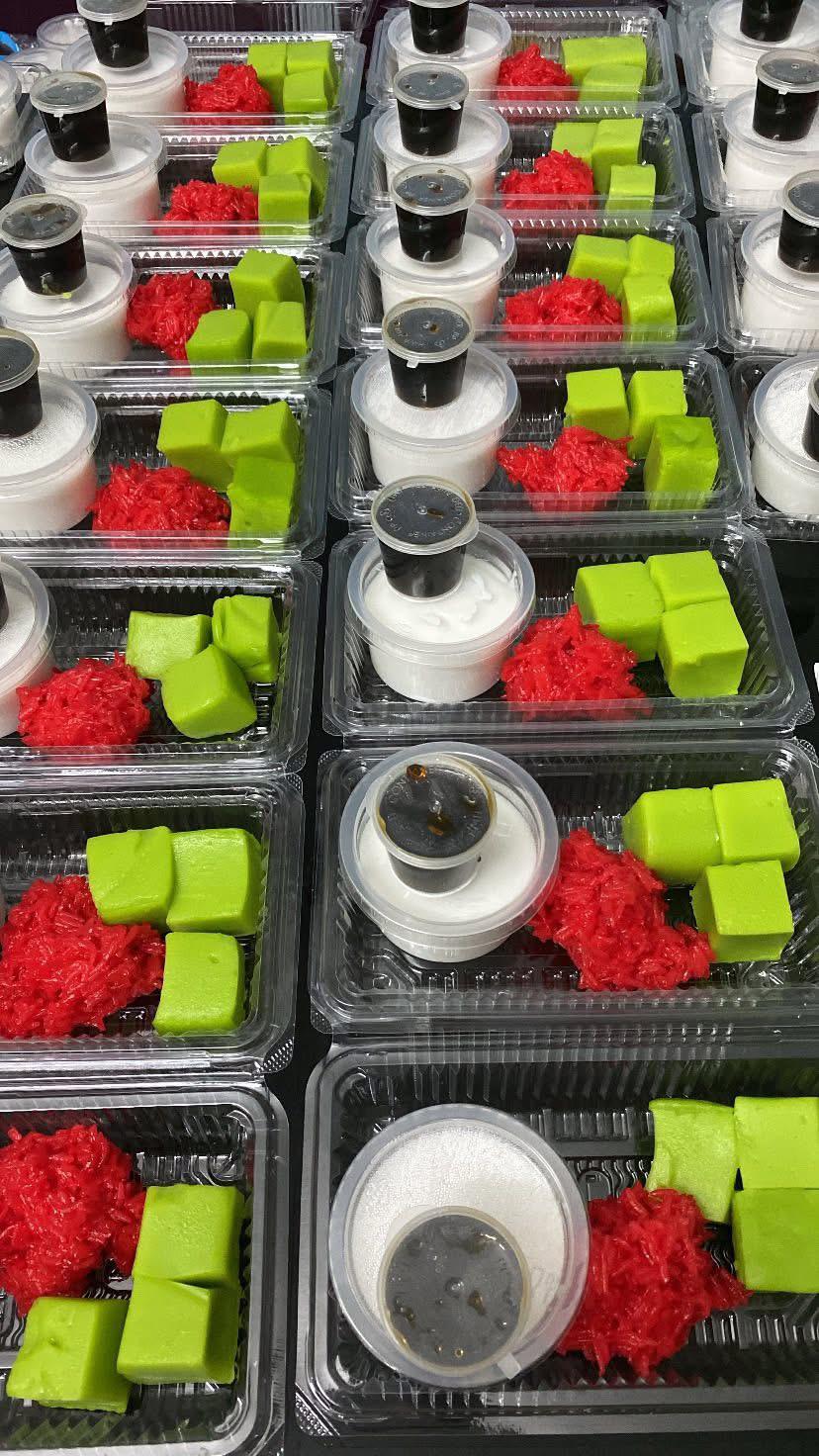
Lompat Tikam is one of the traditional desserts popular on the East Coast of Peninsular Malaysia, particularly in the state of Kelantan. Its uniqueness lies in the combination of three main elements: a green pandan-flavoured rice flour layer, a rich and creamy white coconut milk layer, and a side of red-coloured glutinous rice served with thick, sweet palm sugar syrup (nise or gula Melaka). The white layer is usually slightly salty to balance the richness and sweetness. This delicacy is commonly served during afternoon tea, often enjoyed with a cup of coffee or hot tea.
The origin of the name Lompat Tikam is linked to a folktale believed to have begun during the Majapahit Kingdom around the 1700s, when a gift was to be presented to the Kelantan royal court. According to oral tradition, several palace maids were instructed to carry trays filled with a type of delicacy with utmost care. However, one of them stumbled after tripping over the palace threshold. The incident startled the Sultan of Kelantan, who instinctively leapt in shock and, in the process, accidentally stabbed the maid. As a way to remember the incident, the Sultan named the delicacy Lompat Tikam, literally “Leap and Stab.”
Although this tale is fascinating, it remains a myth without any verified historical evidence. In reality, Lompat Tikam has long been part of Kelantan’s culinary heritage, passed down through generations and remaining popular to this day. While its preparation is relatively simple, it requires precision in creating distinct layers of colour, making it not just a dish but also a reflection of the creativity and skill of the local community.
In the context of traditional East Coast gastronomy, Lompat Tikam is more than just a traditional sweet; it is part of a cultural identity that connects taste, memory, and social values. Its primary role as an afternoon tea dessert has made it a familiar choice on village dining tables as well as at roadside stalls. Served with a cup of coffee or hot tea, it becomes a catalyst for casual conversations on the veranda, making it one of the treats that is consistently served.
In addition, Lompat Tikam often takes centre stage at celebratory occasions such as weddings, engagements, and thanksgiving feasts. Its significance lies not only in its flavour but also in the simplicity of its preparation, which is often carried out communally through the traditional gotong-royong or rewang practice. The process typically involves dividing tasks: some stir the green layer, others prepare the white coconut milk layer, while another group cooks the palm sugar syrup. This collaborative effort turns it into more than just a culinary activity; it becomes a medium for strengthening social bonds and community ties.
From a commercial perspective, Lompat Tikam holds its economic value. It is frequently ordered for special events and remains a staple offering for small-scale vendors at morning markets, farmers’ markets, and Ramadan bazaars. Its relatively low production cost compared to the steady demand makes it a lucrative source of income, especially for homemakers and traditional food entrepreneurs. Its adaptability, whether by adding more red glutinous rice, adjusting the sweetness of the palm sugar syrup, or enhancing the visual appeal of its layers, ensures that Lompat Tikam stays relevant and competitive alongside modern desserts in the market.
Ultimately, Lompat Tikam serves as a heritage dessert that not only satisfies the palate but also acts as a symbol of social connection, a medium of celebration, and a source of community livelihood. It stands as proof that a traditional dish can transcend its nutritional purpose to become an enduring part of a cultural narrative, passed down and cherished from one generation to the next.
-
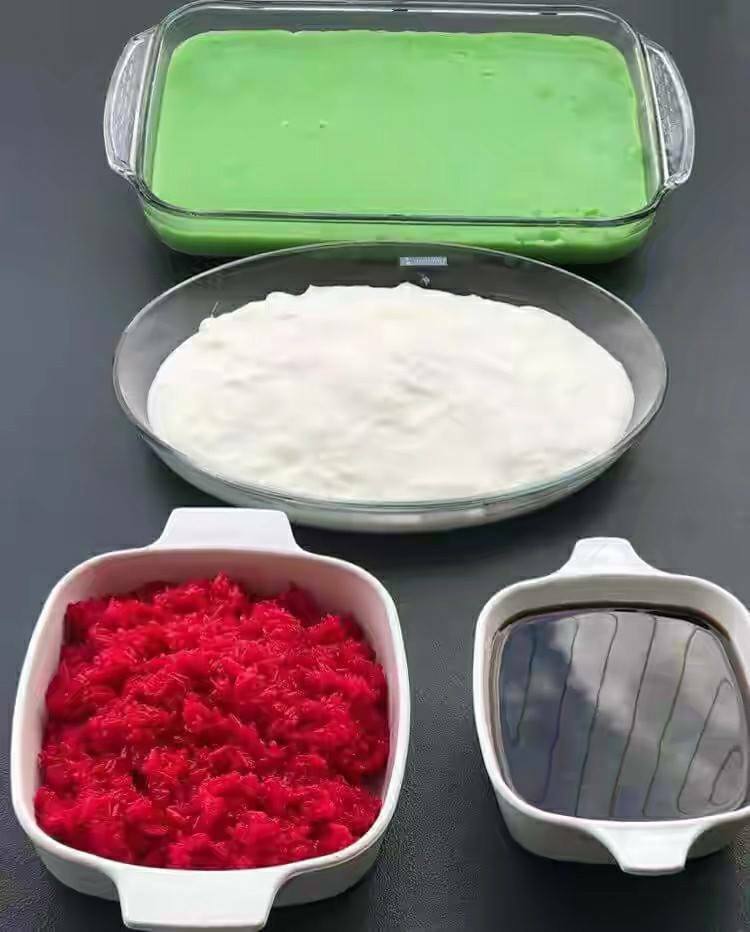
The ingredients for Lompat Tikam are divided into four main components: the green layer, the white coconut milk layer, the red glutinous rice, and the palm sugar (nise) syrup, which completes the entire dessert. The combination of these four components makes Lompat Tikam not only visually appealing but also irresistibly delicious.
Green Layer
1 ½ cups rice flour
1 teaspoon lime water (use only the clear portion)
1 cup pandan leaf juice (extracted from fresh pandan leaves)
2 drops green food colouring
2 cups plain water
White Layer (Coconut Milk)
1 packet thick coconut milk or 1 grated coconut
1 teaspoon salt
1–2 tablespoons rice flour (mixed with a little water)
Red Glutinous Rice
1 cup glutinous rice (soaked briefly before cooking)
1 tablespoon cooking oil
¼ teaspoon salt
4 drops red food colouring
Palm Sugar/ Nise Syrup
1 block palm sugar (nise)
1 cup water
1 pandan leaf (knotted)
Step 1: Preparing the Green Layer
In a pot, combine the rice flour, lime water, pandan leaf juice, green food colouring, and plain water.
Stir the mixture until well blended and free of lumps.
Place the pot over medium heat and stir continuously until the mixture thickens, becomes smooth, and turns glossy.
Pour the thickened mixture into a tray or serving dish, spread it evenly, and allow it to cool slightly.
Step 2: Preparing the White Layer (Coconut Milk)
In a pot, combine the thick coconut milk with salt.
Mix the rice flour with a little water, then add it to the coconut milk mixture.
Cook over low heat, stirring constantly, until the mixture thickens and becomes creamy.
Pour the coconut milk layer over the slightly cooled green layer and spread evenly.
Step 3: Preparing the Red Glutinous Rice
Drain the soaked glutinous rice.
Place it in a steamer with cooking oil, salt, and red food colouring.
Steam until the rice is fully cooked, soft, and evenly coloured.
Step 4: Preparing the Palm Sugar (Nise) Syrup
In a pot, combine the palm sugar, water, and pandan leaf.
Cook over medium heat until the sugar is completely dissolved.
Strain the syrup to remove any impurities, then set aside.
Step 5: Serving Lompat Tikam
Cut the Lompat Tikam (green and white layers) into the desired size.
Serve with the red glutinous rice on the side.
Drizzle with the palm sugar syrup before enjoying.
-
Reference Source
Bahan Bacaan
Cookpad. (n.d.). Kuih lompat tikam. Cookpad. https://cookpad.com/my/recipes/14857633?view=search
Discovery Terengganu. (n.d.). Kuih lompat tikam. https://www.discoveryterengganu.com/kuih-lompat-tikam/
Mawardi, Y. (2022, Ogos 2). Asal usul nama kuih lompat tikam. Mawardi Yunus. https://www.mawardiyunus.com/2022/08/asal-usul-nama-kuih-lompat-tikam.html
Cookpad. (n.d.). Resepi kuih lompat tikam. Cookpad. https://cookpad.com/my/recipes/15241109?ref=search&search_term=lompat+tikam
Location
State JKKN Contact Information
Encik Wan Mohd Rosli bin Wan Sidik
Cultural Officer
Jabatan Kebudayaan dan Kesenian Negara, Kelantan
Kompleks JKKN Kelantan
Lot 1993, Seksyen 49,Tanjong Chat,
15200, Kota Bharu,
KELANTAN DARUL NAIM
09-741 7000
Use the form below to contact the Informant/Figure/Editor/Researcher directly. We will respond to your inquiry as soon as possible!


