

ARTS AND CULTURE INFORMATION GATEWAY
Immerse yourself in the colorful world of art and culture! From traditional heritage to contemporary works, discover uniqueness that reflects the nation's identity and identity
 Kompleks Pustaka Warisan Negeri, Lot. No. 2180, Jalan Lintang P.Ramlee, Off, Jalan P. Ramlee, 10460 George Town, Penang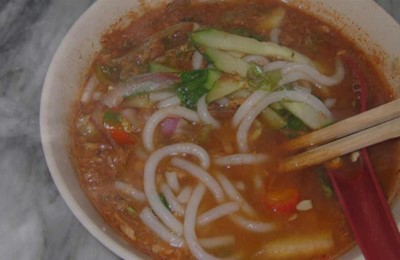
Picture
1
Video
Available
Today's Visitor
657
Number of Visitors
6323
Introduction and history
Laksa is a type of noodle soup that is delicious and healthy, as it is rich in protein. With just one sip, the laksa broth provides a taste of fish richness, spiciness, sourness, and sweetness, enhanced by the fragrant aroma of torch ginger and laksa leaves. The chewy and soft rice noodles complete the dish with a source of carbohydrates. This is why laksa is considered a healthy food, compared to other noodle dishes.
Laksa is a dish that originated from the Peranakan community. It is believed to have been brought to Malaya by traders around the 15th century, and the dish began to adapt to Malay society through the intermarriage of Chinese men and Malay women. Since then, laksa has become increasingly popular. However, when Chinese traders first introduced this dish, laksa noodles were eaten with plain broth. It was when Malay women became the wives of these traders that laksa was modified to suit local tastes.
The name "laksa" itself is derived from the Sanskrit word meaning "ten thousand." The term "ten thousand" refers to the variety of ingredients added to create laksa. The famous Penang Laksa, known for its diverse flavors in the broth, is served with slices of cucumber, salad leaves, eggs, lime, shrimp paste (petis), and bird's eye chili. In some areas around Penang, laksa is served with slices of pineapple and mint leaves. These ingredients make the laksa even more delicious and healthy. Due to its uniqueness and completeness, Penang Laksa is the only Malaysian dish ranked seventh in CNN's 50 Best Foods in the World, due to its well-balanced nutrients and delicious taste.
The basic ingredients are the same as other laksas in Malaysia. Uniquely, Penang Laksa uses noodles made from either wheat flour or rice flour. To enhance its flavor, shrimp paste or shrimp brain extract is mixed or enjoyed with the mackerel fish broth and other types of fish as additional seasonings.
-
-
Boil the fish with salt and tamarind slices. The best fish for Penang Laksa are sardines, selayang, mackerel (you can also use fish according to personal preference).
-Dried chili
-Tamarind
-Torch ginger
-Laksa leaves
-Red onions/large onions
-Lemongrass
-Accompaniments: bird's eye chili, lime (or kaffir lime), pineapple, mint, salad leaves, cucumber, eggs, shrimp paste.
-Season the boiled fish.
-Blend the red onions/large onions and dried chili.
-Heat a pot, add the blended ingredients, and cook over heat until the mixture dries.
-Blend the boiled fish bones, strain the water. Blend the fish meat.
-Once the chili and onions are dry in the pot, pour in the fish stock, the strained fish bone water, and the blended fish meat. Add water if it's too thick.
-Add tamarind water, salt, and sugar to balance the taste.
-Add lemongrass, torch ginger, and laksa leaves. Cook until it boils.
-Place the laksa noodles, pour the broth, add the accompaniments to taste, and it's ready to be served!
-
Reference Source
. Bahan Bacaan
https://katamalaysia.my/culture/laksa-penang-antara-makanan-terbaik-di-dunia/
https://www.scribd.com/document/575782149/Sejarah-Laksa

Location
State JKKN Contact Information
Zurairi bin Hanip
Cultural Officer
Jabatan Kebudayaan dan Kesenian Negara, Pulau Pinang
Kompleks Pustaka Warisan Seni,
Lot No. 2180 Lintang P. Ramlee,
Off Jalan P.Ramlee
10460 PULAU PINANG
04-281 7791 /7792
Use the form below to contact the Informant/Figure/Editor/Researcher directly. We will respond to your inquiry as soon as possible!


