

ARTS AND CULTURE INFORMATION GATEWAY
Immerse yourself in the colorful world of art and culture! From traditional heritage to contemporary works, discover uniqueness that reflects the nation's identity and identity
 Kompleks JKKN Pulau Pinang,
Kompleks Pusaka Warisan Seni,
Lot No. 2180 Jalan Rawang,
Off Jalan P.Ramlee 10460 Pulau Pinang.
Kompleks JKKN Pulau Pinang,
Kompleks Pusaka Warisan Seni,
Lot No. 2180 Jalan Rawang,
Off Jalan P.Ramlee 10460 Pulau Pinang.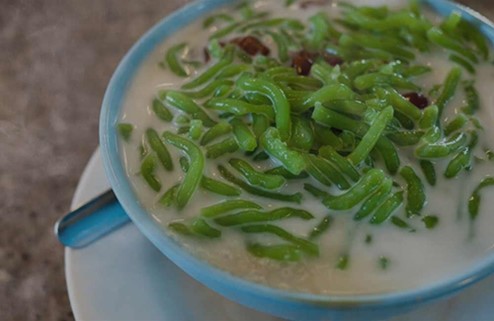
Picture
1
Video
Available
Today's Visitor
416
Number of Visitors
5293
Introduction and history
Cendol is a famous dessert in the state of Penang. In the past, cendol was sold by traders riding tricycles around residential areas and playgrounds. Some also sold it on motorcycles in specific areas, as they already had regular customers. Cendol is a heritage food that is not only popular among the Malay, Peranakan, or Indian Muslim communities but was also documented by colonialists in their records as a unique delicacy of the Malay Peninsula, especially in Penang. Evidence of this can be seen in the word "cendol" (pre-1972 Za'aba spelling: chendol, van Ophuijsen: tjendol), which appears in many 19th-century dictionaries and books in the Dutch East Indies. One of the earliest records of the term "tjendol" is found in the Oost-Indisch kookboek (1866, "East Indies Cookbook"). Cendol also has other variations in spelling, such as "chendul," and Penang locals often refer to it as "cendoi."
Dessert.
-
-Rice flour
-Green coloring or pandan leaf extract
-Coconut milk
-Slaked lime water
-Palm sugar
-Ice
-Prepare slaked lime water or its sediment.
-To make the green cendol jelly, glutinous rice flour is mixed with the clear water from the slaked lime sediment.
-Boil the water until it bubbles, then add the glutinous rice flour and stir until thickened.
-The mixture is then poured into a mold with small holes at the bottom and pressed so that it comes out through the holes into a container of cold water placed beneath the mold.
-The water in the container must remain cold to maintain the jelly’s shape.
-Traditionally, the jelly is colored with pandan leaf extract to achieve a green hue, but other colors can also be used based on personal preference. -Nowadays, many use green coloring for convenience.
-Dissolve palm sugar in hot water to make palm sugar syrup.
-Combine ice, coconut milk, cendol jelly, and palm sugar syrup. Ready to serve.
-Cendol is typically served with a mix of ice, palm sugar syrup, and coconut milk, but it can now be topped with various additions according to individual tastes.
Mr. Tan Teik Fuang successfully turned the heritage cendol into a mega business in major supermarkets.
Reference Source
i. Bahan Bacaan
https://www.facebook.com/seleramamu/posts/sejarah-makanancendolcendol-ialah-hidangan-pencuci-mulut-terkenal-di-pulau-pinan/131484928587368/
https://mollyta.com/2019/01/07/penang-road-famous-teochew-chendul-menu-pencuci-mulut-legendaris/
https://chendul.my/our-story/

Location
State JKKN Contact Information
Zurairi bin Hanip
Cultural Officer
Jabatan Kebudayaan dan Kesenian Negara, Pulau Pinang
Kompleks Pustaka Warisan Seni,
Lot No. 2180 Lintang P. Ramlee,
Off Jalan P.Ramlee
10460 PULAU PINANG
04-281 7791 /7792
Use the form below to contact the Informant/Figure/Editor/Researcher directly. We will respond to your inquiry as soon as possible!


