

ARTS AND CULTURE INFORMATION GATEWAY
Immerse yourself in the colorful world of art and culture! From traditional heritage to contemporary works, discover uniqueness that reflects the nation's identity and identity
RODAT

Picture
7
Video
Available
Today's Visitor
219
Number of Visitors
5370
Introduction and history
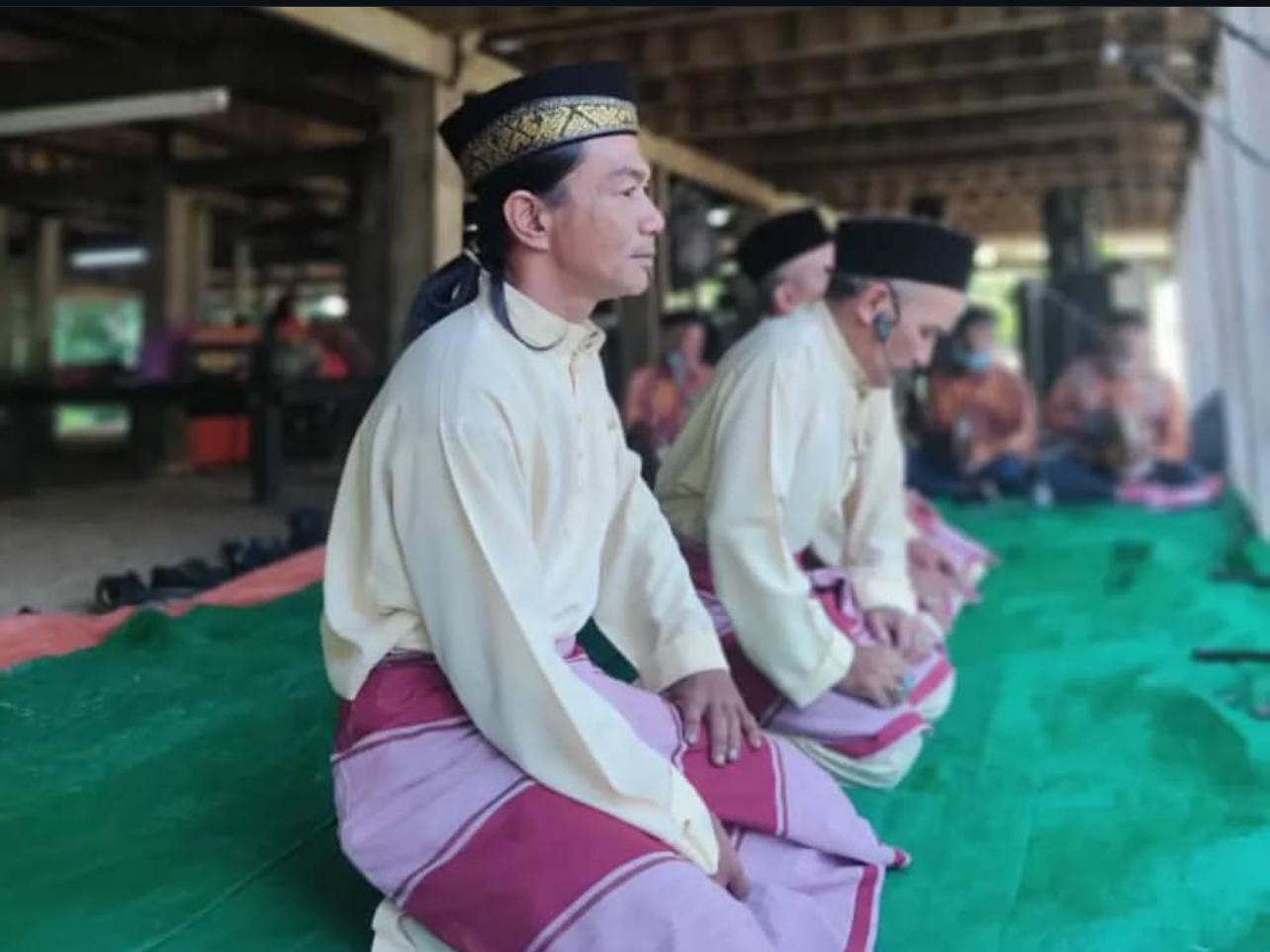
Rodat is one of the traditional performance arts of the Malay community, which is closely associated with the state of Terengganu. It combines elements of music, singing, dance, and zikir (Islamic devotional recitation), reflecting the strong influence of Islam on Malay cultural arts. The name "Rodat" is believed to have originated from the Arabic word Hadrat, which means "presence" in a zikir gathering. Additionally, in Arabic vocabulary, the word Rodat also conveys meanings such as commuting, alternating, reuniting, or responding, which indirectly reflects the performance pattern that often involves call-and-response elements between singers and musicians.
Historically, there are several versions concerning the origins of rodat in Terengganu. Some accounts state that rodat was introduced by traders from Aceh and the Middle East who conducted trade along the East Coast of Peninsular Malaysia around the early 19th century. At the same time, records indicate that traders from Sambas and Pontianak in West Kalimantan also came to Terengganu for the purpose of trading goods such as budu (fermented fish sauce), songket (handwoven brocade), and various utensils. The crew members who docked would gather in groups of around 20 people, singing (rodat) accompanied by a musical instrument known as the rebana tar until late at night. The melodious rhythm of zikir and their harmonious singing, accompanied by the beat of the rebana, captivated the local population and inspired them to learn the performance. From there, rodat began to flourish and became ingrained in the Terengganu community.
In Kuala Terengganu, Pasir Panjang Village and Gong Tok Nasek were identified as the initial locations for the dissemination of rodat. As it developed, it spread to other villages such as Surau Panjang, Beladau, Kepong, Paya Resak, and several other areas. Furthermore, in the Kemaman district, rodat is believed to have been introduced by an artist named Tuan Mandok from Beserah, Pahang, around 1936. He passed on his knowledge of the performance to Ayah Leh (Salleh), and subsequently to Ayah Teh (Tuan Haji Abdul Wahab), who then further developed the art form among the local youth.
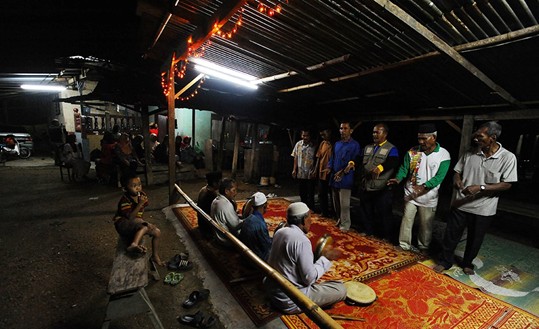
In its early stages, rodat performances were exclusively conducted by men, focusing on the recitation of selawat (praises for the Prophet), zikir, and praises to Allah SWT and the Prophet Muhammad SAW. The performances were usually held privately inside homes and performed on mattresses. However, as the audience grew in number, the performances were moved to larger spaces such as sheds or open stages to accommodate the increasing number of spectators.
Since its introduction, the rodat performance art has played a significant role in the lives of the Malay community in Terengganu. Fundamentally, rodat functions as both a medium of dakwah (Islamic proselytization) and entertainment based on Islamic principles, reinforcing faith and fostering love for Allah SWT and the Prophet Muhammad SAW. Through the chanting of selawat (praises for the Prophet), zikir (devotional recitations), and praises, these performances not only invigorate the religious spirit within the community but also strengthen the bonds of brotherhood among the villagers.
Rodat performances are typically held during religious events such as Maulidur Rasul (the celebration of the Prophet's birthday), thanksgiving feasts, and doa selamat (prayer ceremonies for safety and well-being). In addition, rodat has become an integral part of certain festive occasions involving the local community, making it a form of spiritual entertainment.
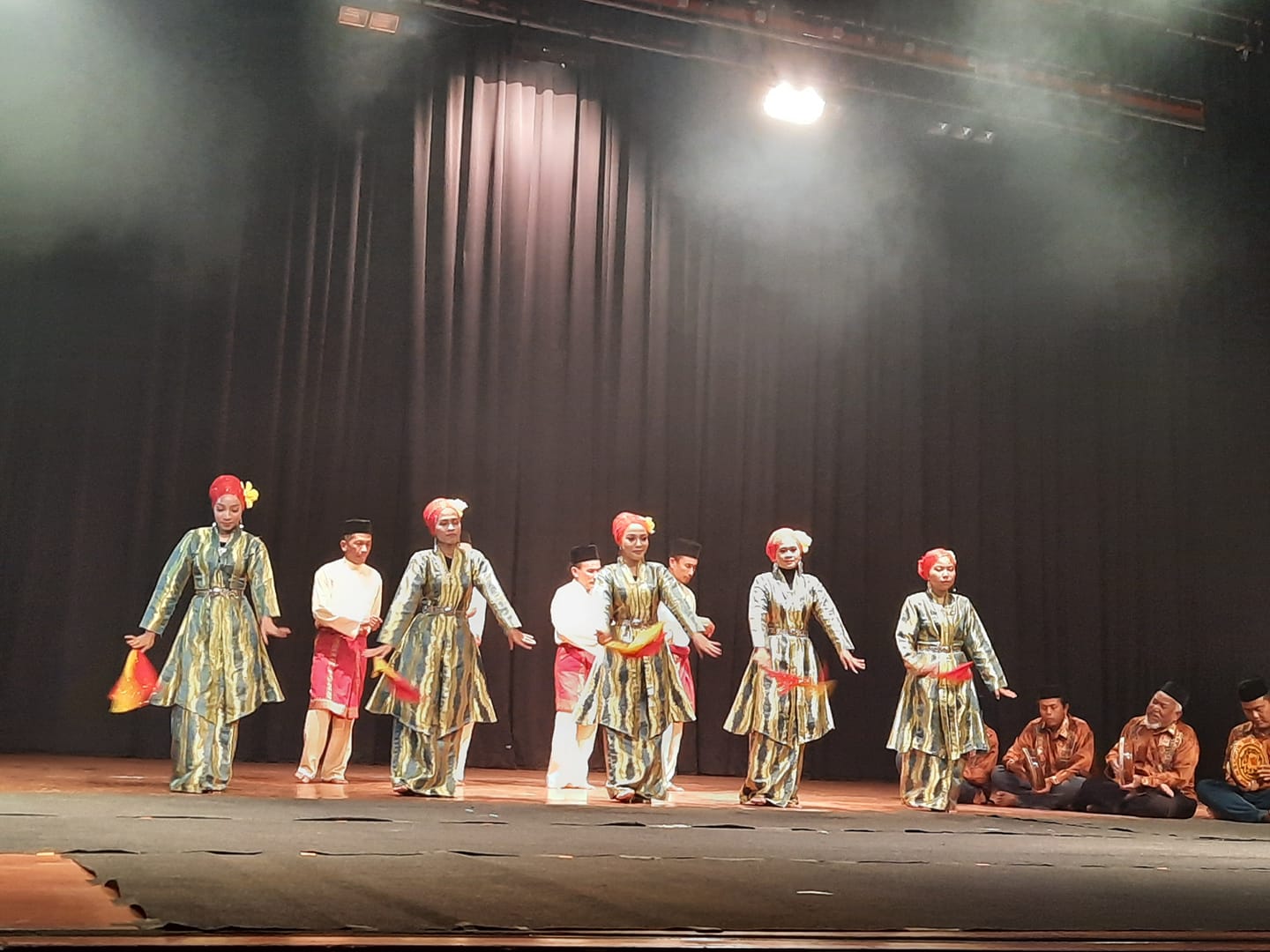
However, over time, the form and function of rodat have also changed. Around the 1930s to the 1950s, elements of popular entertainment began to be incorporated into the performances. One of the most notable changes was the addition of wadam (male dancers performing female roles) and subsequently, the emergence of the Mak Inang character—a female dancer who also serves as a singer during the performances. These changes also led to developments in terms of group organizational structure, song selection, and performance delivery.
In the contemporary era, the function of rodat has expanded to encompass various official and unofficial events. Today, rodat is often performed at cultural festivals, wedding ceremonies, national day celebrations, official state events, and is promoted as a cultural tourism product for the state of Terengganu. Its unique combination of religious elements, vocal arts, traditional music, and dance has made it highly attractive to both local audiences and foreign tourists. Despite facing the currents of change, rodat remains a vital heritage art form that reflects the cultural, religious, and social identity of the Malay community in Terengganu to this day.
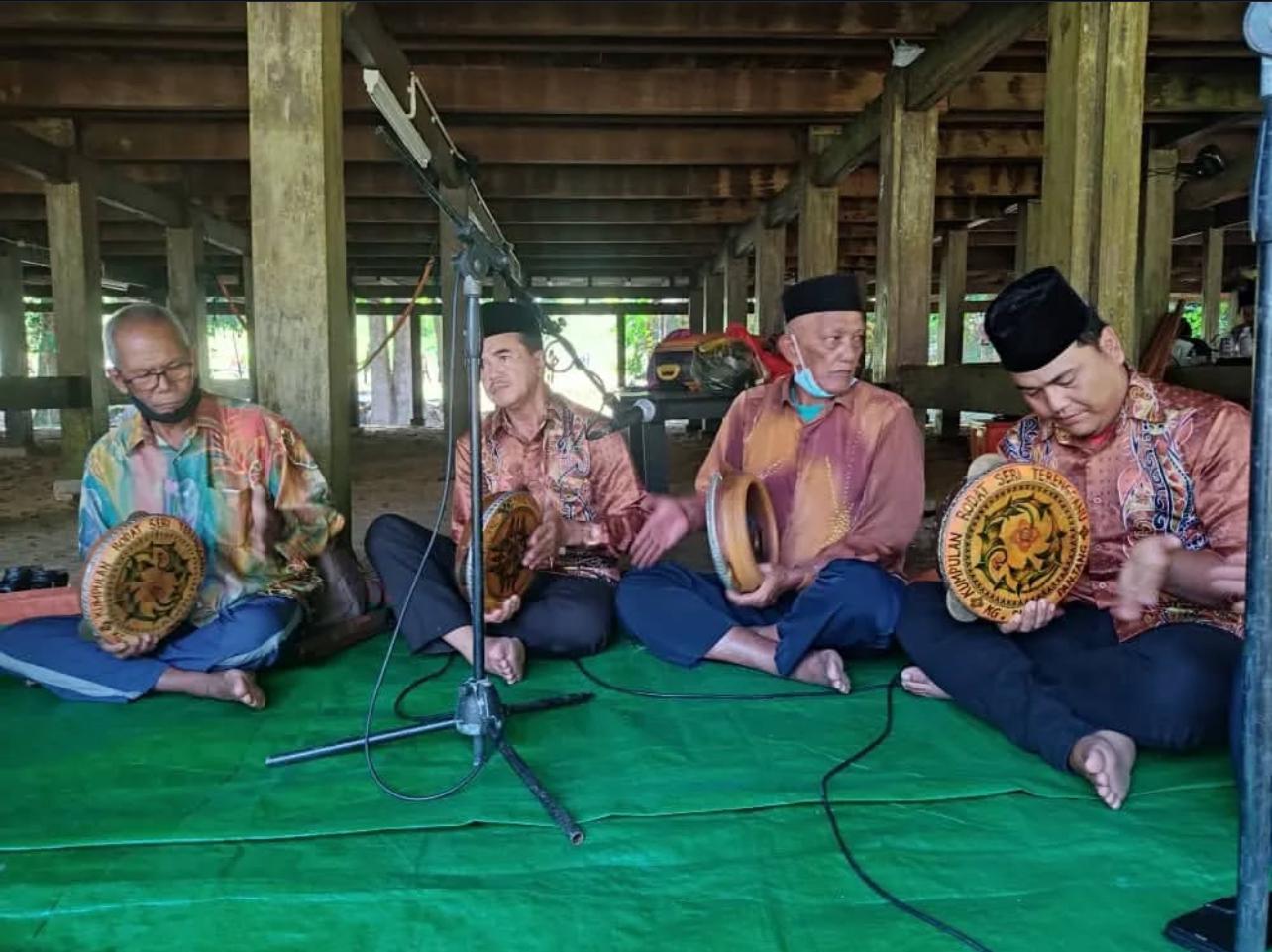
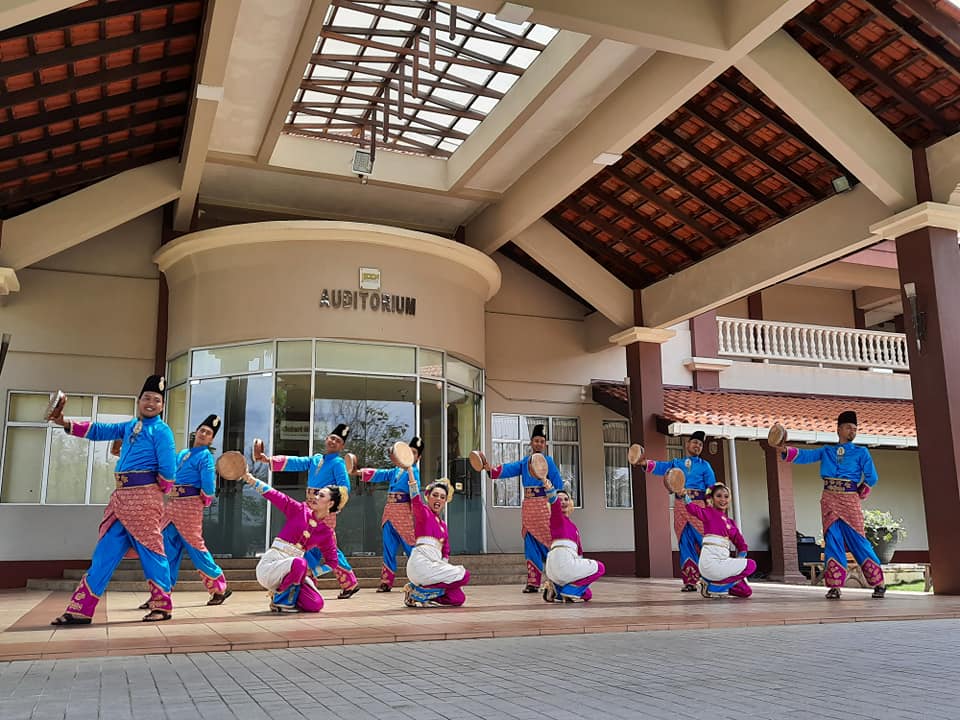
The costumes of rodat dancers play a significant role in showcasing the beauty of Malay culture while distinguishing the roles of each individual within the performance. Generally, there are three main categories of rodat costumes according to the characters and their respective roles. For the Pengadi group, who are the rebana tar (frame drum) players, they typically wear brightly colored complete Baju Melayu outfits, paired with a samping (traditional waist cloth), and complemented with a black songkok (traditional Malay headgear) to complete the traditional appearance.
Meanwhile, the Pelenggok group, consisting of male singers and dancers, also wear Baju Melayu in vibrant colors or coordinated matching colors for each group, complete with samping and songkok. Some groups further accessorize their outfits with a shoulder sash (kain selempang) to enhance the visual appeal of their costumes during the performance.
For the Mak Inang character, a female dancer introduced in contemporary versions of the performance, the costumes typically consist of baju kurung or long kebaya, paired with batik or songket fabrics featuring traditional Malay textile motifs. Their appearance is often completed with headscarves, particularly in groups that emphasize modesty. Some groups add decorative headpieces or shawls according to their creativity to further enhance the visual beauty of the performance.
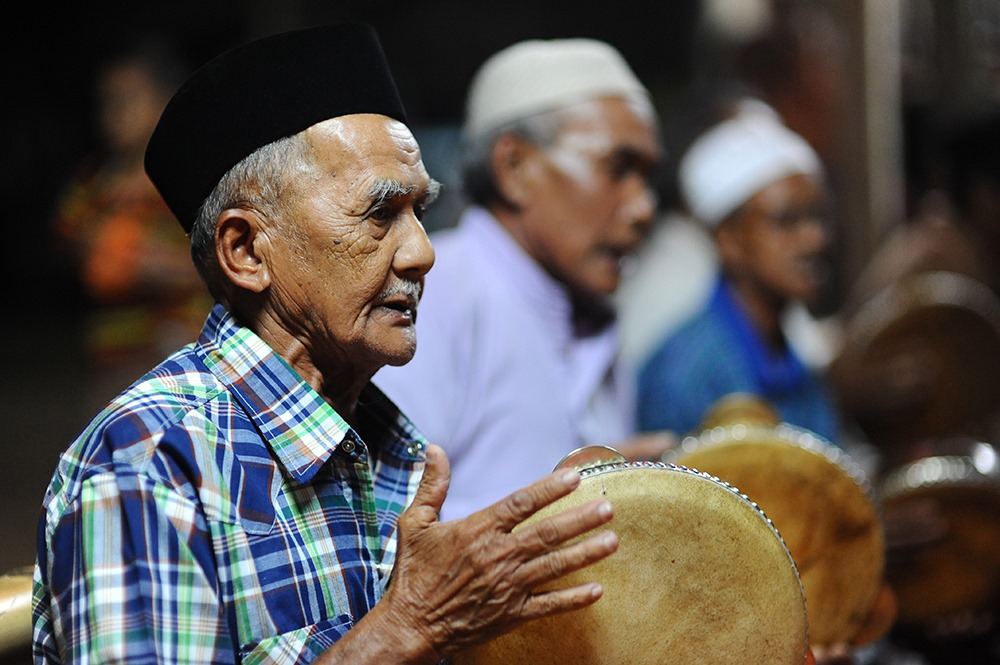
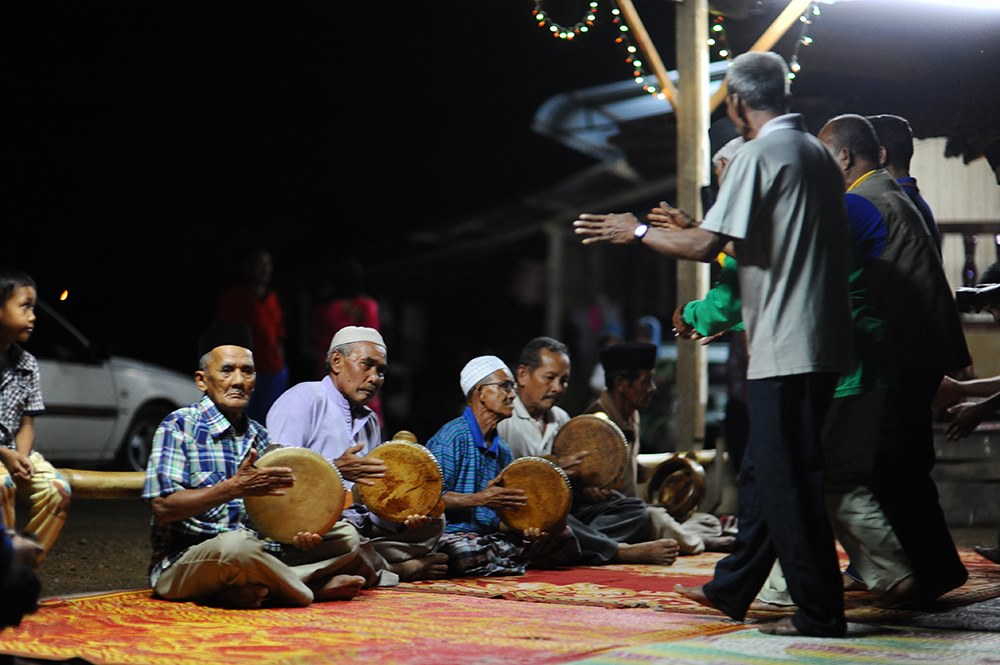
The main instrument used in rodat performances is a musical instrument known as the Tar Rodat, a type of traditional percussion instrument that is round and resembles the rebana hadrah, but is smaller in size. The tar rodat is made from durable leban wood, while its striking surface is made from buffalo hide that is at least three years old. The selection of mature buffalo hide is crucial to ensure that the sound produced is clear and melodious.
The hide is stretched tightly over the tar frame and securely fastened with aluminum or copper binding, before being nailed with a special copper nail known as Kendit. Around the frame or baluh of the tar rodat, three pairs of small copper plates called Kerincing or Caping are attached, which produce a jingling sound when the instrument is struck. The circumference of a tar rodat typically measures between 25 to 30 centimeters in diameter.
To enhance the quality of the tapping sound, a small rattan rod known as Sedak is placed between the surface and the frame of the tar, producing a more robust resonance. The striking technique also plays an important role in enriching the rodat performance. The center of the tar is struck to produce a low sound, while the edge is tapped to produce a high-pitched sound or Gemercing. Typically, in a rodat performance, at least seven tar rodat drums are used, each playing different rhythmic patterns according to the arrangement of songs and the performance’s rhythm. These features make the tar rodat not merely an accompanying instrument, but the central pulse that unifies the musical, vocal, and dance elements of the rodat performance.
Generally, rodat performances are divided into several phases, beginning with the arrangement of dancers and musicians according to their respective roles. There are two primary groups: the Pengadi (Tar Rodat players) and the Pelenggok (singers and dancers). However, beginning in the 1940s, the Mak Inang element was introduced, incorporating female singers and dancers, thus enriching the performance with greater variation.
Mr. Razak bin Senik (Pok Jak). Kumpulan Rodat Kampung Surau Panjang. 86 E, Kampung Surau Panjang, Atas Tol, 21070, Kuala Terengganu, Terengganu.
Reference Source
Bahan Bacaan Hashim Embong. (1978). Kesenian Rodat di Terengganu [Tesis Sarjana, Universiti Malaya]. Arkib Negara Malaysia. Siti Zaleha binti Yaakub. (1979/1980). Rodat: Satu permainan tradisional masyarakat Melayu di Terengganu [Tesis Sarjana, Universiti Kebangsaan Malaysia]. Arkib Negara Malaysia. Umi Abdullah. (2003). Siri mengenal budaya 1/2003: Rodat. Kementerian Kebudayaan, Kesenian dan Pelancongan Malaysia. Simpanan Arkib Negara Malaysia. Kementerian Kebudayaan dan Pelancongan Malaysia. (2002). Rodat: Sejarah dan cabaran masa kini (Cet. 1). Kementerian Kebudayaan dan Pelancongan Malaysia. Kementerian Kebudayaan dan Pelancongan Malaysia. (2004). Rodat: Sejarah dan cabaran masa kini (Cet. 2). Kementerian Kebudayaan dan Pelancongan Malaysia. Muhammad Irfan Nyia Abdullah, Abu Bakar, S., & Mohd Annuar, T. (2023, Disember 31). Rodat: Budaya tradisi yang berevolusi. Wacana Seni Journal of Arts Discourse, 12. https://ejournal.usm.my/wacanaseni/article/view/ws-vol12-2013-2
Tokoh (jika ada temu bual tokoh) Encik Razak bin Senik (Pok Jak). Kumpulan Rodat Kampung Surau Panjang. 86 E, Kampung Surau Panjang, Atas Tol, 21070, Kuala Terengganu, Terengganu.
Location
State JKKN Contact Information
Encik Azaha Othman
Cultural Officer
Jabatan Kebudayaan dan Kesenian Negara Terengganu
Kompleks JKKN Terengganu
Kuala Ibai,
20400, Kuala Terengganu,
TERENGGANU DARUL IMAN
09-617 8831


