

ARTS AND CULTURE INFORMATION GATEWAY
Immerse yourself in the colorful world of art and culture! From traditional heritage to contemporary works, discover uniqueness that reflects the nation's identity and identity
CENCALOK
 -
-
Picture
1
Video
No record
Today's Visitor
195
Number of Visitors
1407
Introduction and history
- Cencalok is one of the most iconic heritage food products associated with the state of Melaka. It is a thick seasoning or sauce produced through the fermentation of fresh krill (udang geragau). The origins of cencalok are closely linked to Melaka’s geographical position as a maritime trading hub along the Strait of Malacca since the 15th century. Its strategic location as an international port not only attracted traders from across the world but also shaped the local community’s food practices, including methods of preserving seafood.
- Historical accounts indicate that coastal communities in Melaka, particularly Malay Peranakan and Eurasian (Serani) groups, developed cencalok as a method of preserving the abundant krill harvested seasonally in large quantities. In the absence of refrigeration technology, these communities relied on simple preservation techniques using basic ingredients such as salt and water, consistent with food preservation traditions across the Nusantara region. This process not only prevented waste but also resulted in a new product that eventually became a hallmark of Melakan gastronomy. Today, cencalok stands not only as a heritage food of Melaka but also as a symbol of the enduring food preservation traditions of coastal communities that have been sustained for centuries.
- The main function of cencalok in Melaka cuisine is as a powerful appetite stimulant. Its sharp aroma and salty-sour taste make it the perfect ingredient to whet the appetite, especially when eaten with white rice.
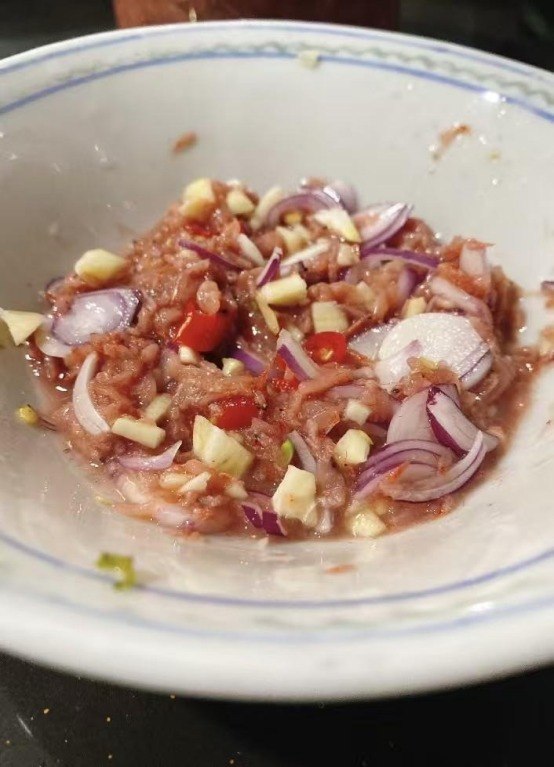
- Cencaluk's main uniqueness, which differentiates it from belacan or tempoyak, is that it is typically eaten raw and does not need to be cooked. However, it is rarely eaten straight from the bottle. The most classic and popular way to serve it is as a 'raw cencalok sambal'. A few spoons of cencalok are mixed with fresh ingredients like sliced large onions, chopped bird's eye chilies, and a generous squeeze of calamansi lime juice. The sourness from the calamansi not only balances the saltiness and aroma of the cencalok but also 'cooks' the krill chemically, making it more palatable.
- This side dish then functions as a primary dipping sauce for fresh ulam (vegetables). It is often paired with crunchy vegetables like cucumber, petai, jering, long beans, and winged beans. The combination of the salty-sour-spicy taste from the cencalok with the crunchiness of the ulam is a much-loved combination.
- Besides being eaten raw, cencalok is also used in small quantities as a flavoring in other dishes, such as being added to sambal tumis or certain types of lemak (coconut milk) dishes to add complex depth of flavor. Originally a preservation method, it has now evolved into a commercial product and tourist attraction, with instant cencalok products already mixed with onions and chilies readily available in tourist shops throughout Melaka.
-
Fresh udang geragau (krill)
Salt
Water
Additional Ingredients for Serving
Large onions
Garlic
Bird's eye chilies
Calamansi lime
Traditionally, the preparation begins with freshly caught krill being thoroughly washed to remove sand and impurities before being strained to eliminate excess water. The krill is then mixed with a saltwater solution at a specific ratio. Traditionally, the mixture is fermented in clay pots or earthenware jars, as these vessels help maintain a stable temperature, thereby supporting optimal fermentation.
Preparation Method (Fermentation Process)
Cleaning: Freshly caught udang geragau are washed clean to remove all impurities like sand.
Straining: The clean krill is strained to remove all excess water.
Mixing: The krill is then mixed and soaked in a solution of water and salt. The saltiness level is controlled by the amount of salt used at this stage.
Fermenting: This mixture of krill, salt, and water is placed in a traditional container (like a clay pot or jar) and covered. It is then fermented for several days or weeks, allowing the natural fermentation process to occur until it becomes cencalok.
Common Serving Method (To Eat)
Cencalok does not need to be cooked. The most common way it is served is:
Take a few spoons of cencalok from the bottle into a bowl.
Add sliced large onions, garlic, and fresh chopped bird's eye chilies.
Squeeze calamansi lime juice to taste.
Stir well, and it is ready to be served as a dipping sauce for ulam or as a side dish with rice.
-
Reference Source
Bahan Bacaan
Munch Malaysia. (2025). Discovering Cencalok: A Taste of Southeast Asian Tradition. https://munchmalaysia.com/malaysian-food/discovering-cencalok-a-taste-of-southeast-asian-tradition/
Visit Melaka. (n.d.). Cencaluk & Belacan. Retrieved November 1, 2025, from https://visitmelaka.com.my/index.php/lifestyles/food/103-cencaluk-belacan
Location
State JKKN Contact Information
Nur Al-Farani binti Rosli
Cultural Officer
Jabatan Kebudayaan dan Kesenian Negara, Melaka
Kompleks JKKN Melaka
Hang Tuah Jaya, Lebuh Ayer Keroh,
75450 MELAKA
06 - 763 6308
Use the form below to contact the Informant/Figure/Editor/Researcher directly. We will respond to your inquiry as soon as possible!


