

ARTS AND CULTURE INFORMATION GATEWAY
Immerse yourself in the colorful world of art and culture! From traditional heritage to contemporary works, discover uniqueness that reflects the nation's identity and identity
MENORA PERLIS

Picture
6
Video
Available
Today's Visitor
1412
Number of Visitors
7364
Introduction and history
INTRODUCTION AND HISTORY
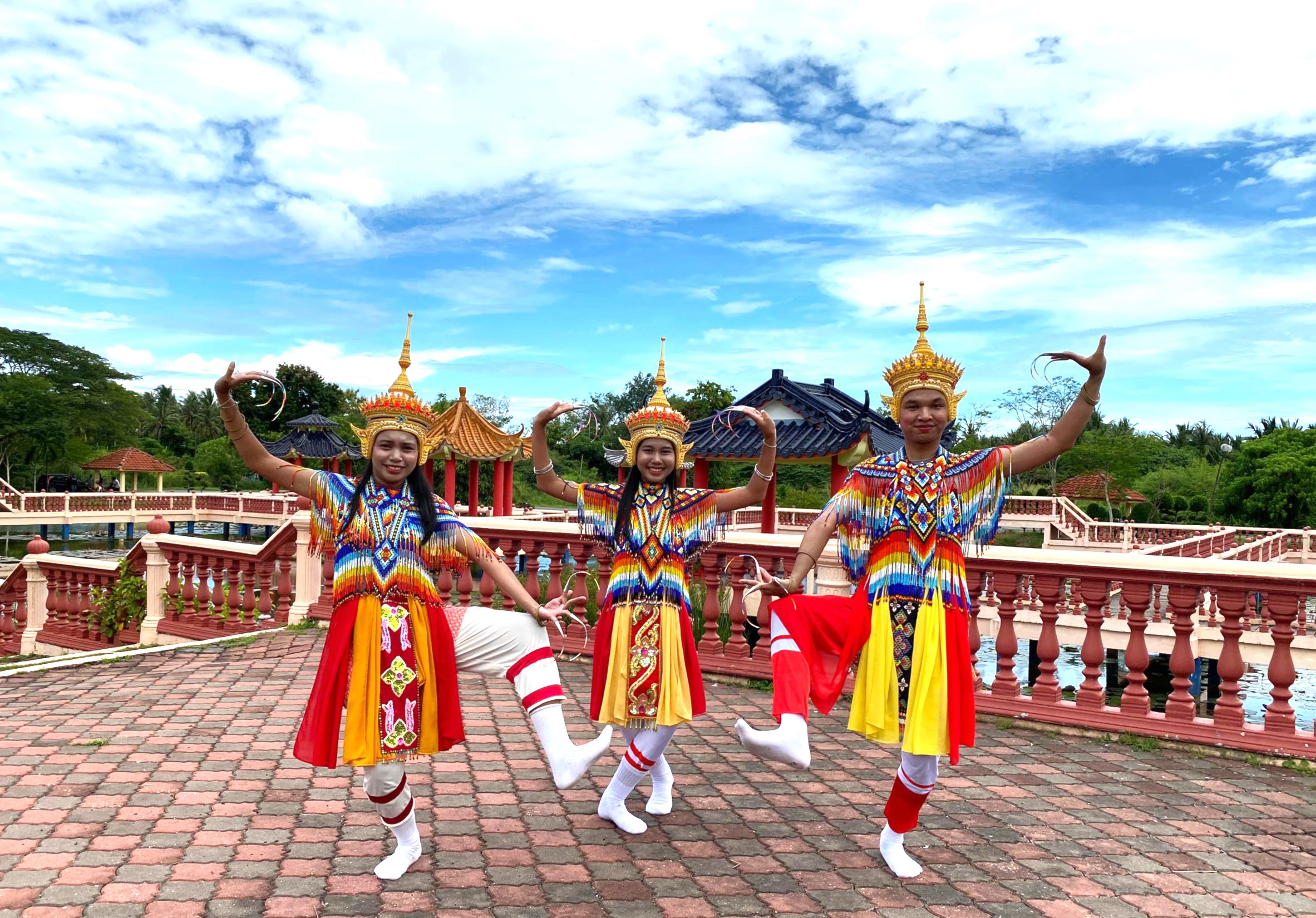
The Menora dance is one of the ancient dances of the Malays during the pre-Islamic era. This dance highlights the cultural connection between the northern states of Malaysia and the east coast, namely Kelantan and Terengganu, as well as southern Thailand (Narathiwat, Patani, Songkhla, Yala, and Satun). It is believed that the origins of this dance trace back to the ancient Malay royal lineage in the Isthmus of Kra.
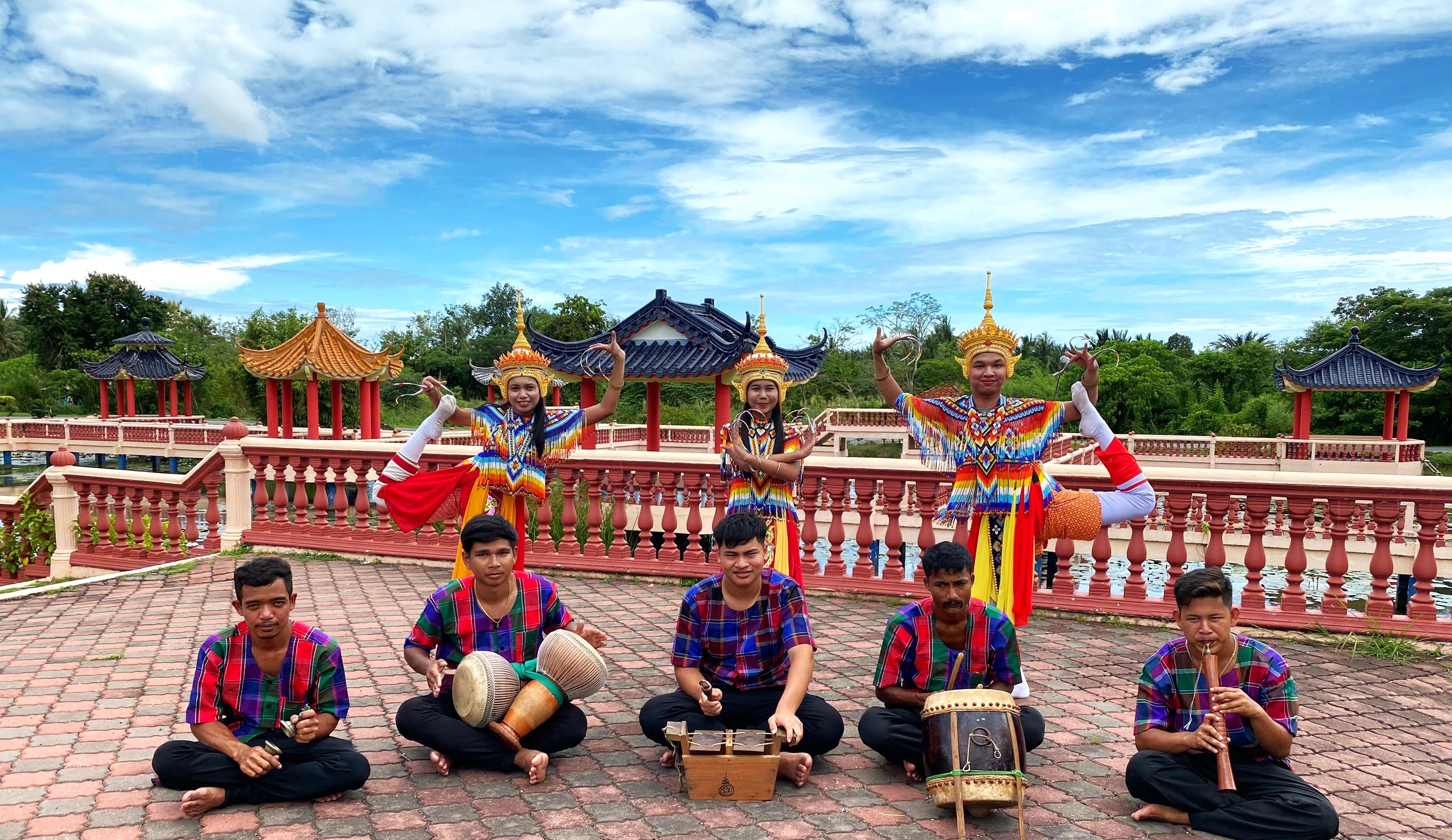
Essentially, Menora is a traditional dance-drama performance of the Siamese community in Malaysia, particularly in the states of Perlis, Kelantan, and Kedah. It incorporates singing, acting, and dancing. Menora shares some similarities with other traditional theater forms such as Makyung, Mek Mulung, and Jikey. The performances typically consist of 12 imaginative stories involving deities and celestial beings. These stories often feature a character called peran, who enacts comedic scenes.
Menora also exhibits elements of Buddhist influence, as this traditional theater was once performed in Buddhist temples. Besides serving as a source of entertainment, Menora was also conducted for ritual and healing purposes. Originally, it was believed that there were 12 dance movements and positions in Menora performances. However, over time, these movements have diminished as Menora leaders adapted and created new dance variations to suit changing times and preferences.
 Functions and Roles
● Religion
● Traditional performance
● Entertainment and educational tool
● Ritual and healing purposes
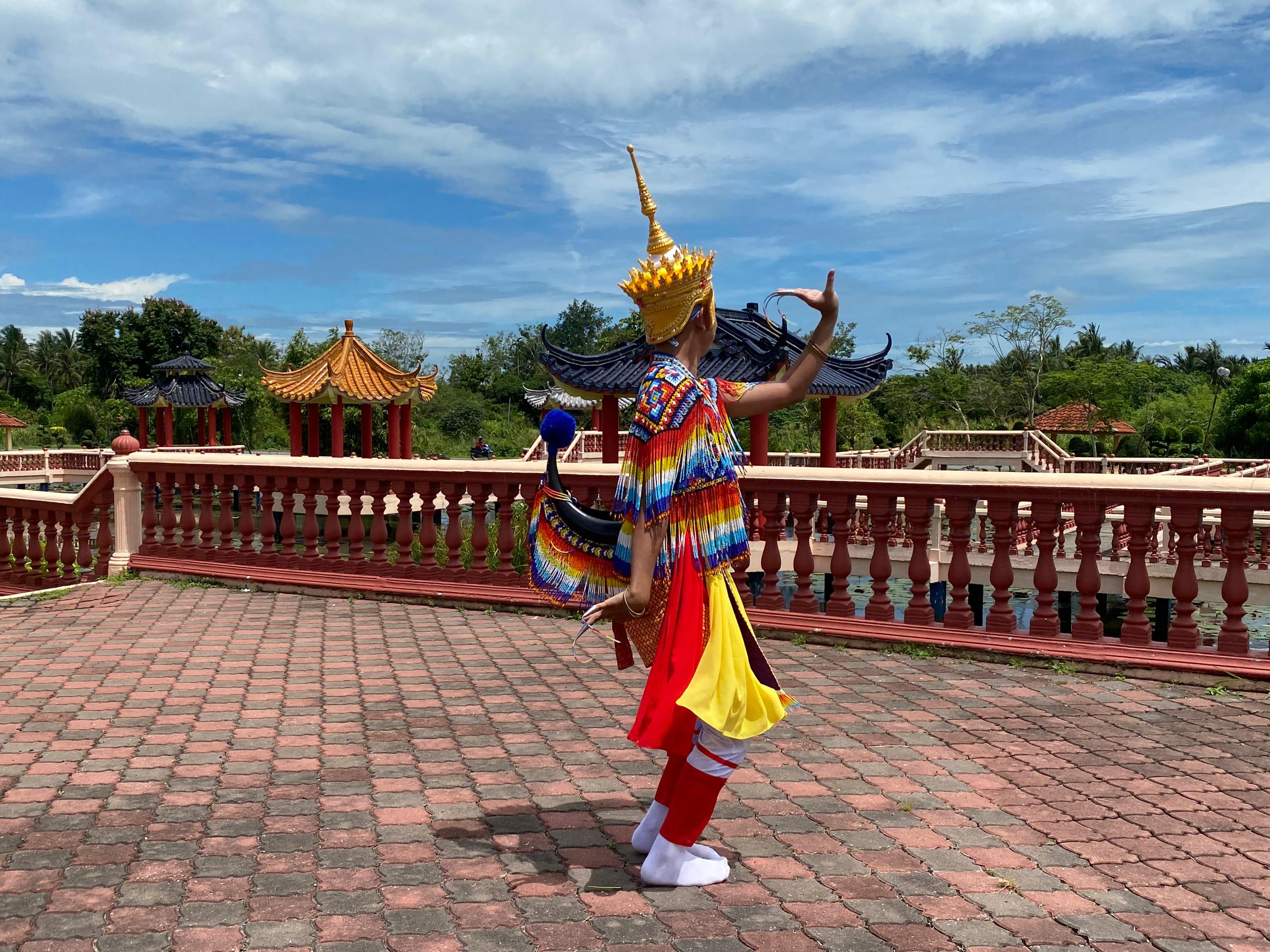
● The Menora costume is similar to that of Mak Yong, with a slight influence from Javanese elements, featuring a tail at the back and a crown-like headdress with ears.
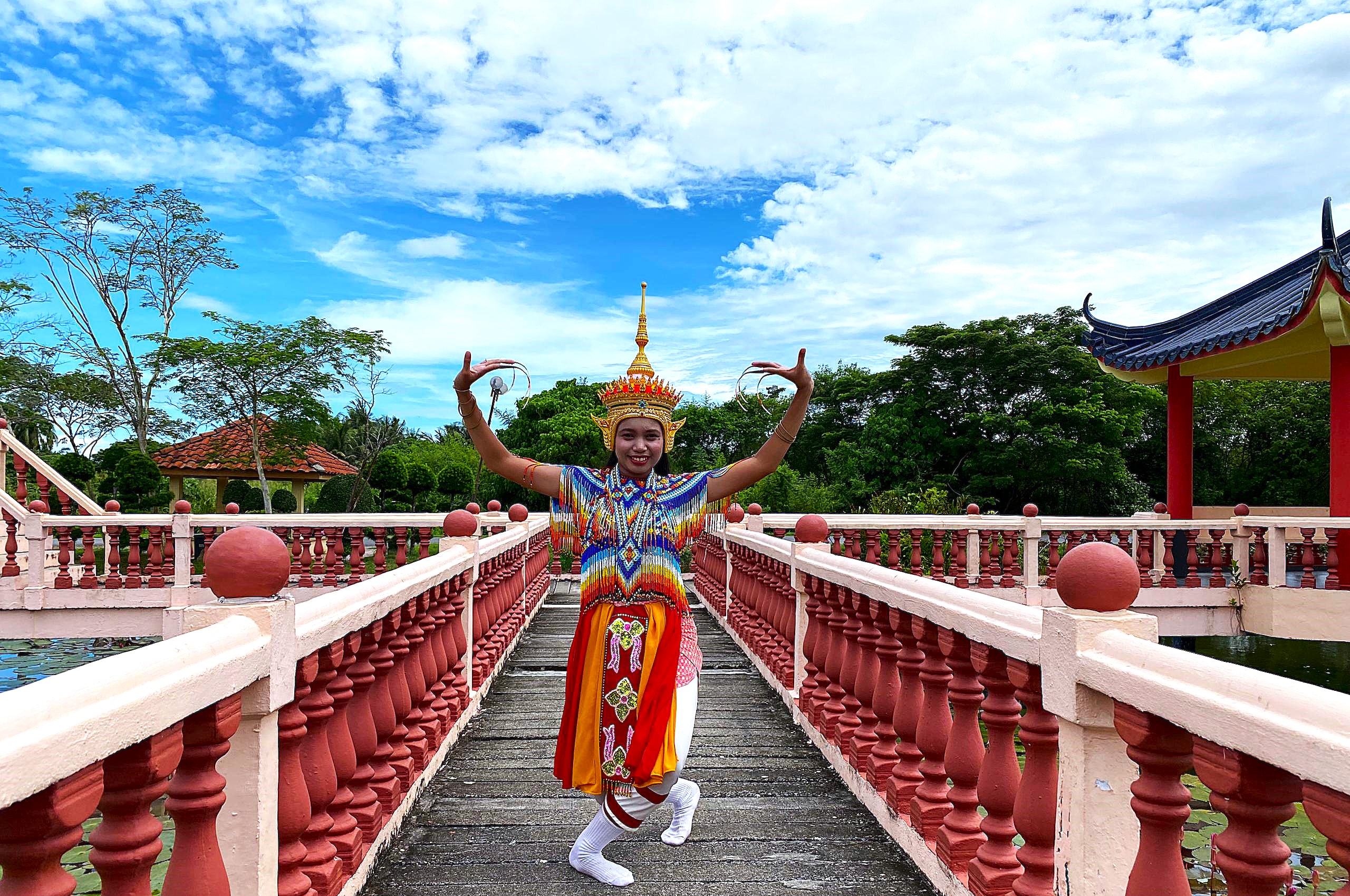
● The attire of the Menora dancers is inspired by the legend of half-human, half-bird beings. The lead dancer, referred to as the Menora, wears a kecopong, a type of tall crown made from soft metal.
● The kecopong evolved into two styles: the Malay kecopong and the Siamese kecopong. The Malay kecopong has 16 rounded points at its base, adorned with pom-poms, pointed ears, and earrings, while the Siamese kecopong features multiple tiers and tapers like a bamboo shoot at the top.
● The Menora dancers' tops are colorful and fringed, made from beads. Originally, dancers did not wear clothing underneath the beaded fringes, but in modern times, sleeveless tops are worn along with shawls.
● At the hips, dancers wear a rigid beaded tail with pom-pom tips, paired with a belt and loose fabric wings.
● For male dancers, loose pants with beaded fringes are worn, while female dancers wear similar attire but without the kecopong.
● Additional accessories to complete the Menora dancer’s costume include armlets, bracelets, and long claw-like nails known as canggai.
● The canggai, measuring 2 to 5 inches with curved tips, are made from soft metal and are also worn by the dancers.
● Knee-high white socks are used by Malay Menora dancers, whereas Siamese Menora dancers perform barefoot.
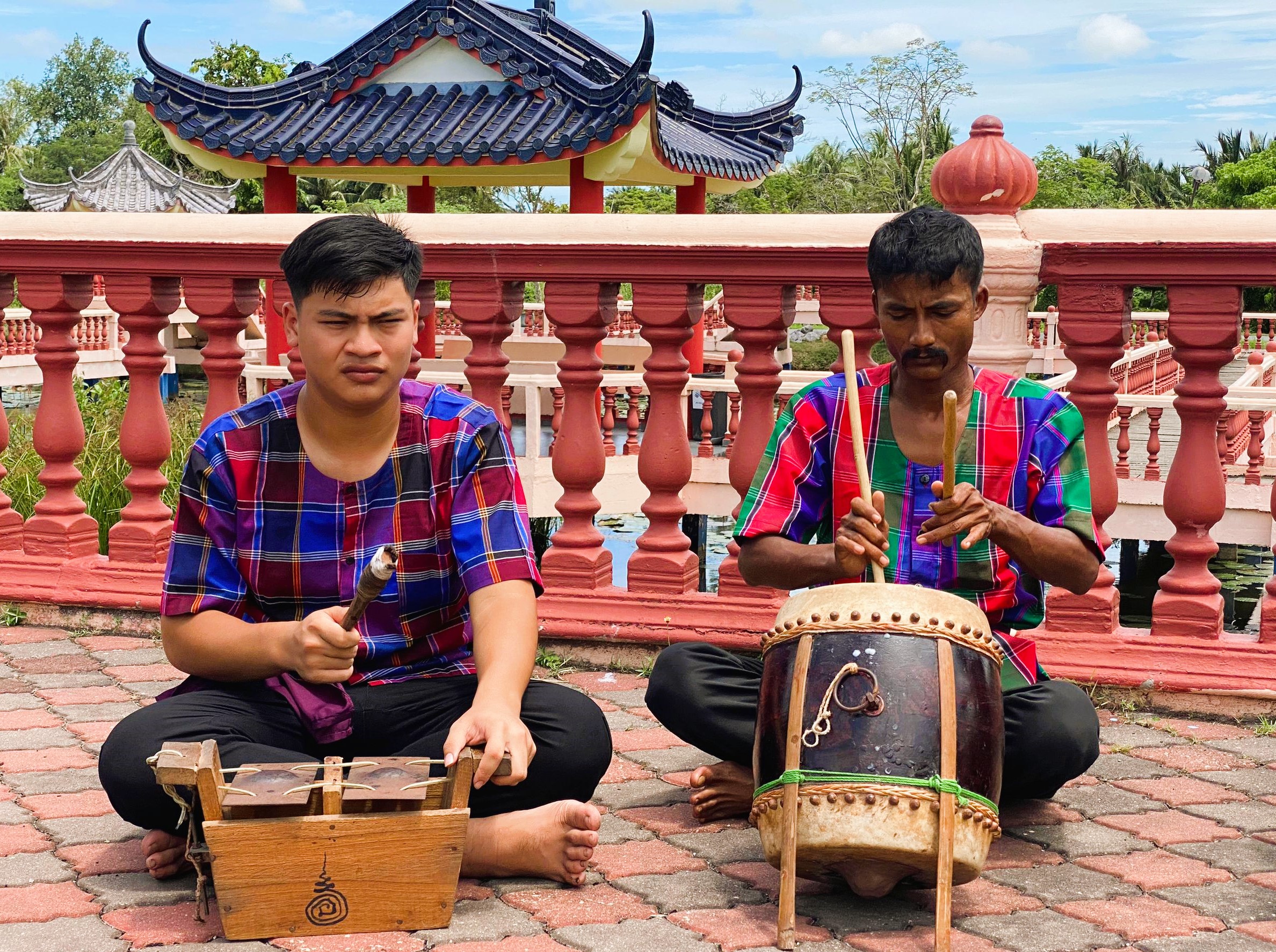
The musical instruments used to accompany this dance and singing include:
● A pair of canang (small gong-like instruments)
● A pair of kesi (small cymbals)
● Pinai (a type of traditional flute)
● Cerek or kecerek (a pair of bamboo sticks)
● Geduk (a type of drum)
● Two gedombak (traditional hand drums)
● The musical instruments are played, and the entrance dance marks the beginning of the story. Following that, 12 tales are presented, based on fantasy, involving gods and celestial beings.
● For healing purposes, the Menora performer acts as an intermediary between the sick person and supernatural powers. The musical instruments played serve as a request for specific matters.
● In modern times, this art form is gradually fading. If it is still performed, it is done to preserve the artistic performance, without carrying out any rituals or associated beliefs.
-
Reference Source
https://historianlodge.historiansecret.com/?p=409
https://journalarticle.ukm.my/3022/1/01ADNAN_JUSOH.pdf
https://www.researchgate.net/publication/322785418_HUBUNGAN_SERUMPUN_PERLIS-SETUL_ANALISIS_DARI_KONTEKS_WARISAN_DAN_BUDAYA
https://www.scribd.com/doc/280868976/Menora
Location
State JKKN Contact Information
Siti Rohayu binti Muhamad
Cultural Officer
Jabatan Kebudayaan dan Kesenian Negara, Perlis
Kompleks JKKN Perlis
Persiaran Wawasan Kangar
01000 Kangar
PERLIS
019-504 0015
Use the form below to contact the Informant/Figure/Editor/Researcher directly. We will respond to your inquiry as soon as possible!


