

ARTS AND CULTURE INFORMATION GATEWAY
Immerse yourself in the colorful world of art and culture! From traditional heritage to contemporary works, discover uniqueness that reflects the nation's identity and identity
ADAT RESAM DAN BUDAYA KAUM ORANG SUNGAI DI PITAS - ADAT KEMATIAN
 Sabah Association of Bangsa Sungai, Lot 6 ,Block B, 2nd Floor, Midtown Plaza,Lintas Road, 90000 Sandakan Sabah.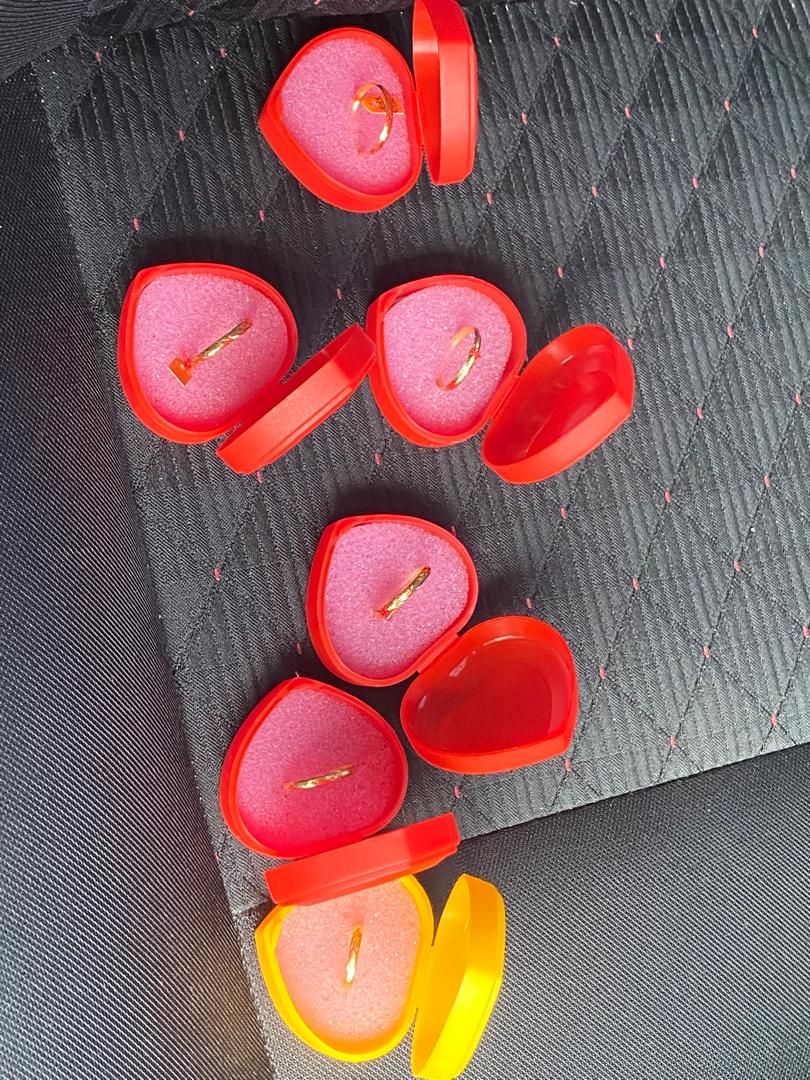
Picture
3
Video
No record
Today's Visitor
2
Number of Visitors
3272
Introduction and history
The Orang Sungai community in Pitas is one of the 30 sub-ethnic groups of Orang Sungai in Sabah. They primarily reside in the Pitas district and coexist with other ethnic groups, particularly the Rungus. While most of the Orang Sungai population in Pitas practices Islam, a minority, especially within the Tambanuo sub-group, follows Christianity. Like other sub-groups, including Buludupi, Idahan, Milian, Liwago, Begahak, Bengkoka, Dewara, Dumpas, Inokang, Kuamut, Lingkabau, Mangkaak, and Paitan, the Orang Sungai community in Pitas is characterised by distinctive customs, cultural practices, beliefs, and taboos. Their cultural identity has been shaped by processes of acculturation and assimilation, particularly through the influence of animistic beliefs, especially in rituals related to death. These rich cultural traditions continue to symbolise the heritage and identity preserved by the Orang Sungai community in Pitas.
-
-
-
Life and death are opposing concepts, and they cannot occur simultaneously. Life is characterised by movement, while the cessation of bodily motion marks death. Death is an inevitable certainty and is often regarded as a transition to existence in the afterlife. Every living being on Earth will inevitably face the moment of death.
In this context, the Orang Sungai ethnic community in Pitas, Sabah, places significant emphasis on matters related to death. Their customs and traditions surrounding death share similarities with the death-related customs of other ethnic groups. These include handling the deceased (funeral process), burial process, and post-burial practices. The following outlines the structure of death customs practised by the Orang Sungai community in Pitas.
1. Funeral Process
When a death occurs, a gong signals the villagers about the passing. Family members of the deceased express their grief by wailing, which symbolises their deep sorrow and serves as a mark of respect for the departed. Meanwhile, the imam recites prayers as part of the funeral rites. The body is then covered with cloth and placed in the living room of the deceased's home to honour their memory.
While the body is kept at home, the shaman or family members place scissors, needles, a mirror, and thread beside it. A needle is inserted into the shroud, wrapping the body to symbolically protect against disturbances from spirits or demons and neutralise any adverse effects of black magic on the deceased. The mirror serves as a protective tool, as it is believed to frighten away spirits and demons by reflecting their grotesque appearances. Meanwhile, the scissors and thread are thought to assist in separating the soul from the body.
For additional protection, some family members place thorny lime leaves under the house where the body lies in state. In the past, the people of Pitas were known for practices involving black magic, such as invulnerability spells and the belief in “Ilmu Bangkit Tua” (resurrecting the elderly), the idea that a person could return to life after death. To counteract these beliefs, mirrors and threads are placed on the deceased, and black thread is burned until it breaks. The scent of the smoke inhaled by the body is thought to prevent the deceased from "rising again."
After family and guests have paid their last respects and completed the earlier rituals, the body is prepared according to Islamic teachings. This preparation includes washing, shrouding, and performing funeral prayers. Before starting the washing process, the imam seeks the family's permission and recites “Istighfar” (seeking forgiveness), along with blessings upon Prophet Muhammad (PBUH) and verses from Surah al-Fātiḥah, al-Ikhlāṣ, al-Falaq, and al-Nās. These prayers aim to soften the body, ensuring the washing process goes smoothly. Once this is done, the body is fully prepared by Islamic guidelines.
During the body washing ritual, the attendants receive compensation based on their specific roles and responsibilities. There are two main categories of attendants: “Memiruang” and “Menyandar”. The Memiruang attendant, responsible for cleaning the body from the waist down to the feet, is typically rewarded with a gold ring as a token of appreciation. On the other hand, the Menyandar attendant, who supports the body during the washing process, is compensated with cash, batik fabric, Pelikat cloth, and dishware.

Photo 1: Gold Ring for Memiruang
Source: Amsalib Pisali
One of the taboos observed during the bathing of the deceased is that family members must not pass beneath the house. Traditional Orang Sungai homes in Pitas are elevated on stilts, creating an open space called the "Kolong." This prohibition arises from the belief that anyone exposed to the wastewater from the bathing process may experience "Badi Mayat" disturbances for 40 days, potentially leading to harm or discomfort.
After the deceased has been bathed, family members traditionally shake hands with the body as a symbolic gesture of seeking forgiveness for any wrongdoings committed during the deceased's lifetime. The deceased is then given Wudhuk (ablution) and rinsed with "Air Sembilan," special water infused with prayers and selected verses from the Quran. To complete the ritual, incense smoke is added to the water, enhancing its spiritual significance.
Afterwards, the body is covered. In some cases, if the deceased was a smoker during their lifetime, family members may place a cigarette briefly in the mouth of the deceased. This practice is believed to help fulfil any lingering desires. Similarly, if the deceased enjoyed cigars, a cigar may be placed instead. These customs reflect the community's beliefs and aim to ensure the deceased's peace as they transition to the afterlife.
It is customary for family members to sing songs accompanied by traditional musical instruments around the deceased at home. This practice is believed to comfort the departed's soul and create a peaceful atmosphere. Sometimes, the singing continues at the burial site for seven consecutive nights. During this time, lamps are lit, meals are prepared, and the soothing melodies of the songs fill the air.
2. Burial Process
Before beginning the grave-digging process, gravediggers in the Orang Sungai community perform specific rituals as a sign of respect and spiritual preparation. First, they greet "Nabi Bumi" and recite blessings to seek permission and protection for the task ahead. Next, they use a machete to carve the letter "D" into the ground, symbolising the size and dimensions of the grave.
The ritual begins with a machete being embedded into the ground, drawn along the surface without lifting it until a meticulous "D" shape is completed. Measurements of the deceased's body are taken beforehand to ensure that the grave is appropriate. Once the carving is finished, the digging process begins. As part of the tradition, the excavated soil is shaped into a pillow to serve as a headrest for the deceased inside the grave.
When a body is placed in a coffin for transport to the burial site, a special ritual known as “Naja-Naja” is performed. Family members and close relatives circle the coffin three times during this ritual. This practice is believed to help them emotionally let go of the deceased and to prevent the spirit of the departed from longing for their family or appearing as an accompanying presence.
As the body is transported to the burial site, ceremonial umbrellas, known as “Payung-Payung,” accompany the procession. These umbrellas are made of wood and feature a white fabric canopy. The handles of the umbrellas are wrapped in cloth of specific colours: white, blue, yellow, red, and black, arranged in a particular order. Each colour represents an element of Islamic prayer, corresponding to the five daily prayers. White symbolises the dawn prayer (Subuh), blue represents the noon prayer (Dzuhur), yellow signifies the afternoon prayer (Asar), red denotes the evening prayer (Maghrib), and black symbolises the night prayer (Isyak). In contemporary burial practices, these cloths have been replaced with traditional fabrics: five Pelikat cloths for male deceased individuals and seven batik cloths for female deceased individuals. After the procession, these clothes are handed over to the person overseeing the funeral.
Upon arriving at the burial site, the coffin is carefully opened by lifting only one side without removing the lid. Before the body is lowered into the grave, the Adzan or iqamat is recited. If the deceased is male, the Adzan is recited; if female, the Iqamat is performed. These prayers may be recited inside the grave or at the burial site, symbolising the cycle of life. Just as a person is welcomed at birth with the Adzan, they are sent off at the end of their life with the same prayer.
Once the body is placed in the grave, several betel nuts wrapped in white cloth are placed beside the deceased. These betel nuts symbolise the young descendants of the deceased and their connection to the departed. The burial attendants then form three clumps of soil and place them at the feet of the deceased. According to traditional beliefs, these clumps signal the deceased that they have been properly laid to rest in the grave.
The process begins with reciting “Salawat” to mark the start of the burial. As the attendants cover the grave with soil, they carefully ensure their hands do not extend beyond its surface. This practice is believed to maintain spiritual harmony, as exceeding this boundary is thought to cause the spirit of a sinful deceased to wander and potentially disturb their living relatives. This ritual reflects a commitment to traditional beliefs and the community's efforts to harmonise the spiritual and physical realms.
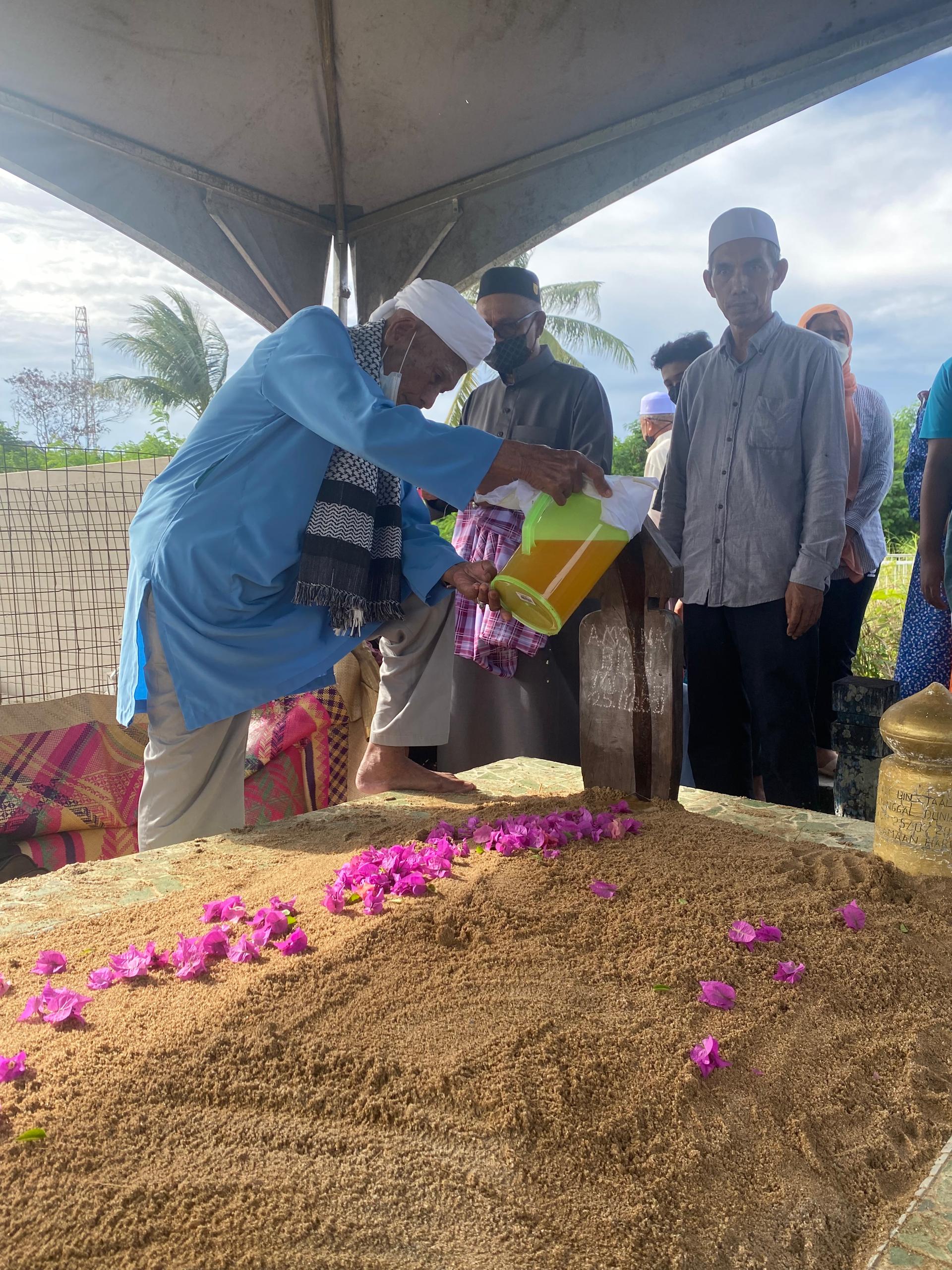
After the burial, family members and relatives sprinkle water mixed with sandalwood or fragrant flowers over the grave. This practice is believed to quench the thirst of the deceased, who is thought to feel parched in the grave. Additionally, a piece of cloth used to tie the shroud is retrieved and tied to the headstone as a symbolic gesture. Initially, temporary headstones made of wood or branches are used; however, these markers are later replaced with permanent headstones made of stone or cement, particularly during festive occasions such as Hari Raya, especially Hari Raya Aidiladha.

Photo 2: Grave Sprinkling Ritual
Source: Amsalib Pisali
3. Post-Burial Practices
In the days following a death, memorial feasts or “Tahlil Arwah” ceremonies are traditionally held to honour the deceased. These feasts occur on specific significant days, each with a particular name and believed to have mystical meanings. The selection and timing of these days are traditionally linked to the journey of the soul as it transitions from one realm to another, culminating in its arrival at the "Alam Arasy" on the 100th day.
Traditional beliefs associate these memorial days with the physical changes to a body in the grave. Each memorial day corresponds to a specific transformation of the deceased’s body, symbolising stages in the soul's journey. Below is a schedule of the memorial feast days, along with the traditional beliefs linked to the physical changes that happen to the body in the grave:
Table 1: Kenduri Arwah
(Memorial Feast) of the Orang Sungai in Pitas
|
Feast Day |
Description |
|
3 |
The
body of the deceased begins to swell. It is believed that the soul feels
sorrow and torment upon witnessing the condition of its body. Therefore, the
feast and tahlil
(prayer ceremony) serve as a form of comfort to the soul. |
|
7 |
The
skin of the deceased begins to peel, exposing the flesh beneath. |
|
10 |
The
entire skin of the deceased detaches. |
|
17 |
The flesh on the
body of the deceased decays and falls off. |
|
20 |
The
joints and limbs of the body separate. |
|
27 |
The
stomach of the deceased is believed to rupture, releasing internal organs. |
|
30 |
All
bodily fluids have dried up, and the remaining flesh begins to decay. |
|
37 |
This
stage is known as “Koturuan
Dos,” marking the end of the ritual cycle. It is believed to
coincide with the rupture of the last internal organ, the gallbladder. |
|
38 |
The
feast held at this stage is called “Lantang,”
and it is conducted without prayer recitations. Its purpose
is to gather close family members to prepare for the 40th-day memorial feast. |
|
39 |
Known
as “Luba,” it involves
prayers for the deceased recited before dawn, attended by family members and
neighbours. Elders invite guests using metaphorical language. In earlier
times, men would hunt deer in preparation for the 40th-day feast, while women
managed the kitchen, which included drying rice and pounding paddy. |
|
40 |
Known as Momupus, this is the central feast in
the Orang Sungai tradition. It symbolises the conclusion of the soul's return
to seek sustenance. On the day of Momupus, guests are given food,
batik or pelikat fabric, money, and a copy of Surah Yasin as offerings
for the deceased. On the 40th day, it is believed that the deceased's
hair begins to fall out, the brain dries up, and the body becomes fully
integrated with the earth. The teeth and hair are the last parts of the body
to decompose. |
|
44 |
On
the 44th day, it is believed that only the teeth and bones remain in the
grave. During this feast, a special meal served on a tray (talam or dulang) is prepared as a
token of gratitude for the Memiruang
attendants who washed the deceased. The bangkai-bangkaian
mattress is given to the imam, while the deceased's clothing is donated to
other attendants who assisted in the funeral rites. |
|
100 |
The
100th-day memorial feast, known as the "turun batu nisan"
ceremony, commemorates 100 days since the death. From a spiritual
perspective, the 100th day is regarded as the moment when the soul joins the
congregation of the departed or reaches its final destination, the Alam Arasy. |
|
Annual
Memorial Feast |
The
annual memorial feast is typically held for the first three (3) years
following a death. After this period, the family has the flexibility to
decide whether to continue the tradition or not, depending on their financial
and logistical capacity. |
Source: Khairulnazrin Nasir, Rahim KZ & Saifullah Mamat (2019).
In the post-death process, village imams perform individual recitations of Dzikir and prayers. In return for their services, they receive a token of appreciation. This practice, known as “Fidyah Tahlil” or “Fidyah Jenazah”, is viewed as a gift of reward (Pahala) for the deceased. During the Dzikir recitation, the imam chants "Lā Ilāha illa Allāh" 7,777 times, accompanied by head movements and controlled breathing. As a gesture of gratitude for their spiritual service, each imam is compensated RM 77.70.
According to the beliefs of some individuals, particularly village imams, the memorial feast is typically held during the Maghrib prayer time. The imams invited to lead and officiate the Tahlil often condition their attendance on the feast being conducted at Maghrib. Traditional beliefs hold that the deceased's soul does not appear during the daytime, making Maghrib the most suitable time for this ritual.
However, there are instances where the tahlil begins before the Maghrib Adzan (call to prayer) and continues beyond the Isyak prayer time. In such cases, attendees delay performing their Maghrib prayers until the tahlil ceremony concludes. This practice highlights integrating cultural traditions with religious observances, reflecting the community's reverence for ritual and spiritual harmony.
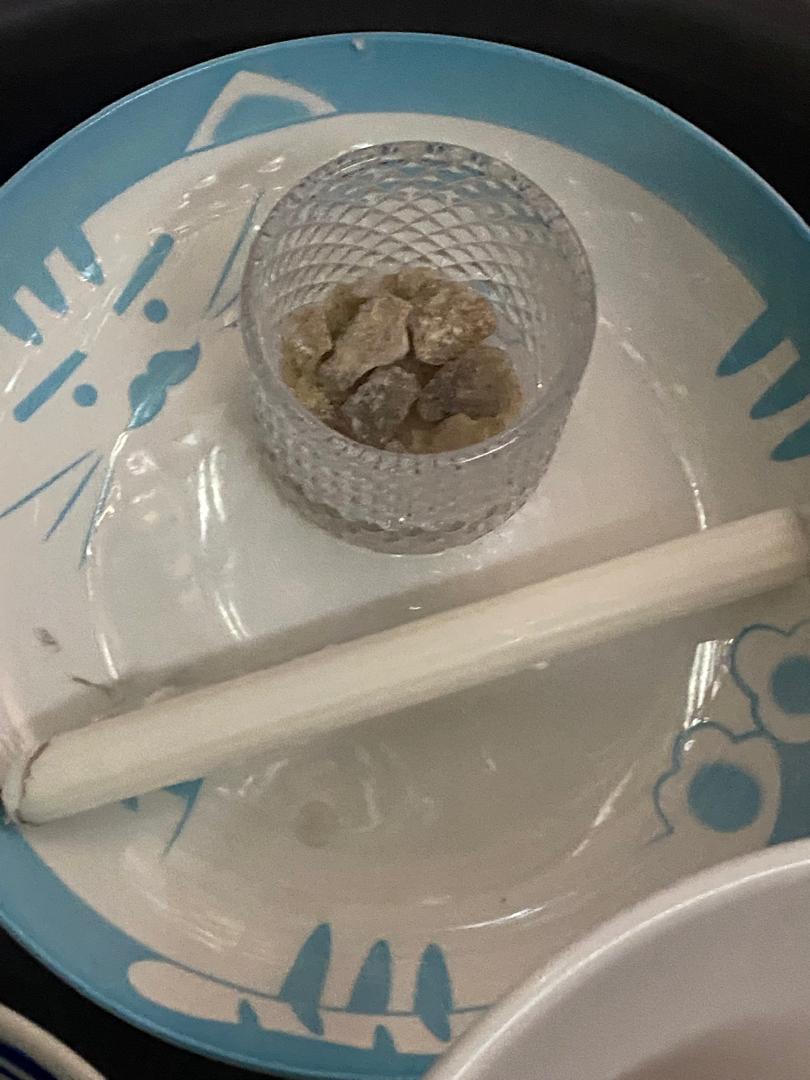
Before the tahlil ceremony begins, the imam prepares the prayer beads (tasbih) by exposing them to the smoke of burning incense (kemenyan). This smoke is inhaled through specific techniques and is accompanied by particular recitations. Kemenyan is believed to have unique properties often associated with traditional healing practices and mystical rituals. It is thought to be able to carry smoke to the seventh heaven. In the context of memorial feasts, incense is used symbolically to facilitate the transmission of spiritual rewards (pahala) to the deceased.

Photo 3: Incense and Candles
Source: Amsalib Pisali
In the past, a copper container for burning incense was considered essential for ceremonies. If a family failed to provide this copper vessel, it was viewed as a sign of disrespect or a lack of care for the deceased. However, this practice has evolved. Today, incense is often burned in ordinary containers, such as ceramic bowls or metal plates. This change reflects how traditional customs have adapted to contemporary needs and circumstances, ensuring that rituals remain relevant and accessible.
During the tahlil ceremony, the lights are dimmed because the deceased's spirit is believed to attend the gathering. In the past, it was customary to sprinkle wheat flour in the living room to help detect the spirit's footprints, which were thought to become visible once the lamps were relit. However, this practice has been discontinued recently to avoid associations with superstitious or potentially un-Islamic elements, ensuring that the ritual remains aligned with contemporary religious principles.
The main dish at every memorial feast is a traditional cake called Pinjaram. This cake is believed to hold mystical significance and is considered a mandatory part of the feast. Additionally, the deceased's family prepares a tray of offerings for the deceased during the tahlil process. This tray typically includes hand-washing water, rice, side dishes, cigarettes, coffee, and other foods that were the deceased's favourites during their lifetime.
In addition, all clothing and belongings of the deceased, referred to as Bangkai-Bangkaian, must remain undisturbed and unused. These items are collected in a designated area of the house and left untouched until the 40th day following the death. A mirror and a needle are placed among them to prevent these items from becoming vessels for the deceased's spirit. After the 7th-day feast, the Bangkai-Bangkaian is wrapped and suspended. On the 37th day, the bundle is unwrapped and kept until the 40th-day feast. Once the 40-day mourning period, the clothing and belongings are donated to those who actively assisted with the funeral arrangements, showing gratitude and fostering community solidarity.
The practice of preparing Bangkai-Bangkaian is believed to confuse spirits or demons, specifically a mythical bird-like creature known as "Pendoatan". This creature is thought to come and carry away the deceased, mistaking the clothing for a human body. Additionally, there is a belief that the soul enters the Bangkai-Bangkaian, as it is believed that the soul returns home during the first seven days after death.
Another significant tradition is an annual event known as “Sampang Arwah”, which occurs on the last day of the Islamic month of Sha'ban. During this time, it is believed that the souls of deceased family members return to their homes to visit their descendants and partake in the family’s offerings before the arrival of Ramadan. The Sampang Arwah ceremony begins with visits to relatives' graves, followed by a ritual cleansing known as “mandi sunat puasa”. Family members come together to clean the gravesites of their deceased loved ones. In the evening, they perform the mandi sunat puasa, which serves as an act of purification and preparation for the holy month of Ramadan.
According to tradition, those who do not perform the mandi sunat puasa may have their fast invalidated, and Allah SWT may not accept it. In the evening, families gather at the mosque or prayer hall for a tahlil arwah prayer ceremony to honour their deceased loved ones. Each family brings food to share with the congregation attending the event. This communal meal is called the “kenduri talam” (tray feast). In keeping with ancestral practices, families exchange trays of food, which are later consumed during the Sahur meal on the first day of Ramadan. This tradition highlights a deep connection among familial bonds, spiritual practices, and community cooperation.
Hj Muminin Hj Norbinsha. Sabah Association of Bangsa Sungai, Lot 6, Block B, 2nd Floor, Midtown Plaza,Lintas Road, 90000 Sandakan Sabah. 12 November 2024.
KAN Panglima Abd Aziz Angau. a) Sabah Association of Bangsa Sungai, Lot 6, Block B, 2nd Floor, Midtown Plaza,Lintas Road, 90000 Sandakan Sabah. 12 November 2024.
Reference Source
Josin Romut, Hamrah@Amirah Haji Liwangsa & Denis J. Sading. (2011). Inventori budaya etnik negeri Sabah: Etnik Orang Sungai Buludupi. Lembaga Kebudayaan Negeri Sabah.
Mahali, S. N. (2010). Adat dan ritual kematian di Sabah. Penerbit Universiti Malaysia Sabah. eBooks. http://eprints.ums.edu.my/18085/
Nasir, K., Zaman, A. R. K., & Mamat, S. (2019). Pengaruh Animisme dalam Adat Kematian Orang Sungai di Daerah Pitas, Sabah: Satu Tinjauan. Borneo International Journal, 1(3), 1–11.
Zainal, S., Abdul Rahman, M. K., & Ibrahim, M. A. (2018). ’Melabuh Ajung’: Signifikasi Kepercayaan Kosmologi Dalam Pembentukan Identiti Teater Tradisional Etnik Pantai Timur Sabah. Jurnal Gendang Alam (GA)
Location
State JKKN Contact Information
Puan Nurshahrinna Syahrial
Cultural Officer
Jabatan Kebudayaan dan Kesenian Negara, Sabah
Kompleks JKKN Sabah,
Jalan Tasik off KM4 Jalan Penampang,
88200 Kota Kinabalu
SABAH
088-205070
Use the form below to contact the Informant/Figure/Editor/Researcher directly. We will respond to your inquiry as soon as possible!


